

Published on July 20, 2026
10 min to read
What Is AI Ops? Meet the Marketer Running Your AI

Summarize with AI

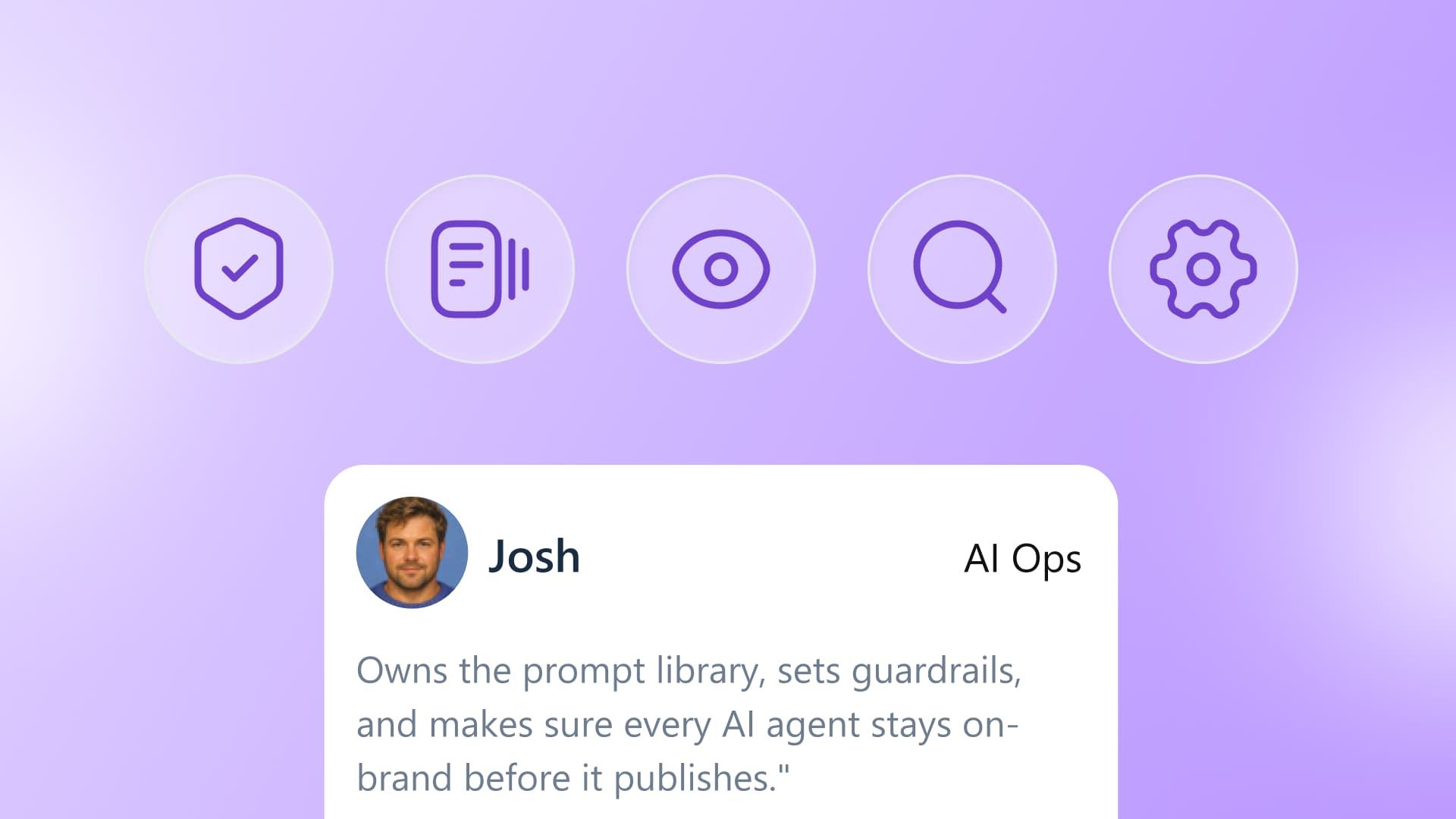
Table of contents
Summarize with AI

ChatGPT

Claude

Perplexity
Share

Vista Social

X (Twitter)


Maya is away for a week, and the team’s AI has developed amnesia. The launch-post prompt is in her private notes. Nobody knows which agent can draft customer replies without sending them, and the product name has started appearing with an extra capital letter again.
Her job title says social media manager. Her week says something else. She maintains the prompts her team borrows, checks what the agents produce, teaches the tools how the brand sounds, and decides which actions need approval.
If you’ve been wondering what AIOps in marketing is, you may already be looking at it. AIOps is the person who turns a pile of AI tools into a system the marketing team can use without losing its voice, facts, or judgment.
Table of contents
The short version if you’re scanning
- The role: AIOps owns the prompts, agents, workflows, guardrails, and quality checks behind AI-assisted marketing.
- The distinction: AIOps is an established IT discipline. Marketing AIOps is a human role that operates AI to produce marketing work.
- The likely owner: The role often begins as part of a marketer’s existing job, so the first move is to name the work and protect time for it.
- The hiring path: A marketer with brand judgment can grow into the role without becoming a machine-learning engineer.
What is AIOps?
AIOps is the marketing role responsible for running a team’s AI. The person maintains prompts, builds and supervises agents, sets approval rules, grounds output in brand knowledge, and checks whether the system is saving time without lowering the standard.
The role appeared because AI added a new operating layer to marketing. Someone still has to decide which sources the tool should trust, what it may do, when it must stop, and how a good result is measured.
The work becomes visible when it goes missing. A prompt changes and every caption drifts. A team member connects a new tool without telling anyone. An agent does exactly what its instructions said, although those instructions stopped matching the campaign two weeks ago.
You can try it free with no credit card required and give one person a shared place to run the first workflow.
How is this different from AIOps in IT?
AIOps uses artificial intelligence to monitor and improve IT systems. A marketing AIOps person is someone who operates AI tools to produce and review marketing work.
That first meaning is established and useful. IBM’s definition covers the IT discipline, including event detection, root-cause analysis, and incident response across technology systems.
The marketing role sits beside that idea rather than trying to replace it. The shared word is “operations,” because both disciplines turn complicated technology into work people can rely on.
| Question | AIOps for IT | AIOps for marketing |
|---|---|---|
| What does it operate? | Infrastructure, applications, service data, and incidents | Prompts, agents, brand knowledge, approvals, and marketing workflows |
| Common owner | IT operations or platform teams | A marketer, marketing operations lead, or named AI owner |
| What does success look like? | Faster detection and more reliable systems | On-brand output, fewer avoidable errors, and time returned to higher-value work |
| Where does the human sit? | Governing the systems and responding to incidents | Setting direction, reviewing sensitive work, and approving public actions |
Who is already doing AIOps on your team?
Look for the person coworkers message when the AI sounds wrong. They know which prompt produces a useful first draft, where the current brand rules live, and why one client account needs a shorter leash than the others.
The role can exist before the title does. A social media manager may already be running AI agents, fixing shared instructions, and reviewing the work that comes back. Calling it AIOps makes that labor discussable, measurable, and trainable.
Carla Johnson, a marketing strategist who writes about organizational design, puts the leadership problem plainly:
“Telling employees to embrace AI without defining what that means for their specific role is nothing more than posturing.”
Carla Johnson, AI Adoption (2026)
Naming the role gives the operator more than a flattering label. It creates permission to document the system, train the team, and say no when a tool is being asked to make a judgment it can’t carry.
What a marketing AIOps person does
The job covers five connected areas. Each one gives the team a shared way to work instead of leaving every person to rebuild their own AI setup.
Owns the prompt and skills library
A good prompt is operating knowledge. The AIOps owner stores the version that works, notes where it should be used, and keeps the launch prompt in a shared system instead of Maya’s Notes app.
They also remove old instructions before the team keeps producing content from them. A prompt library needs an owner for the same reason a content calendar does: useful work decays when nobody maintains it.
In Vista Social, reusable Skills can hold the playbook an agent follows, while Scheduled Agents run recurring assignments and report back. The operator can improve one shared instruction instead of asking every coworker to paste a new paragraph into a blank chat.
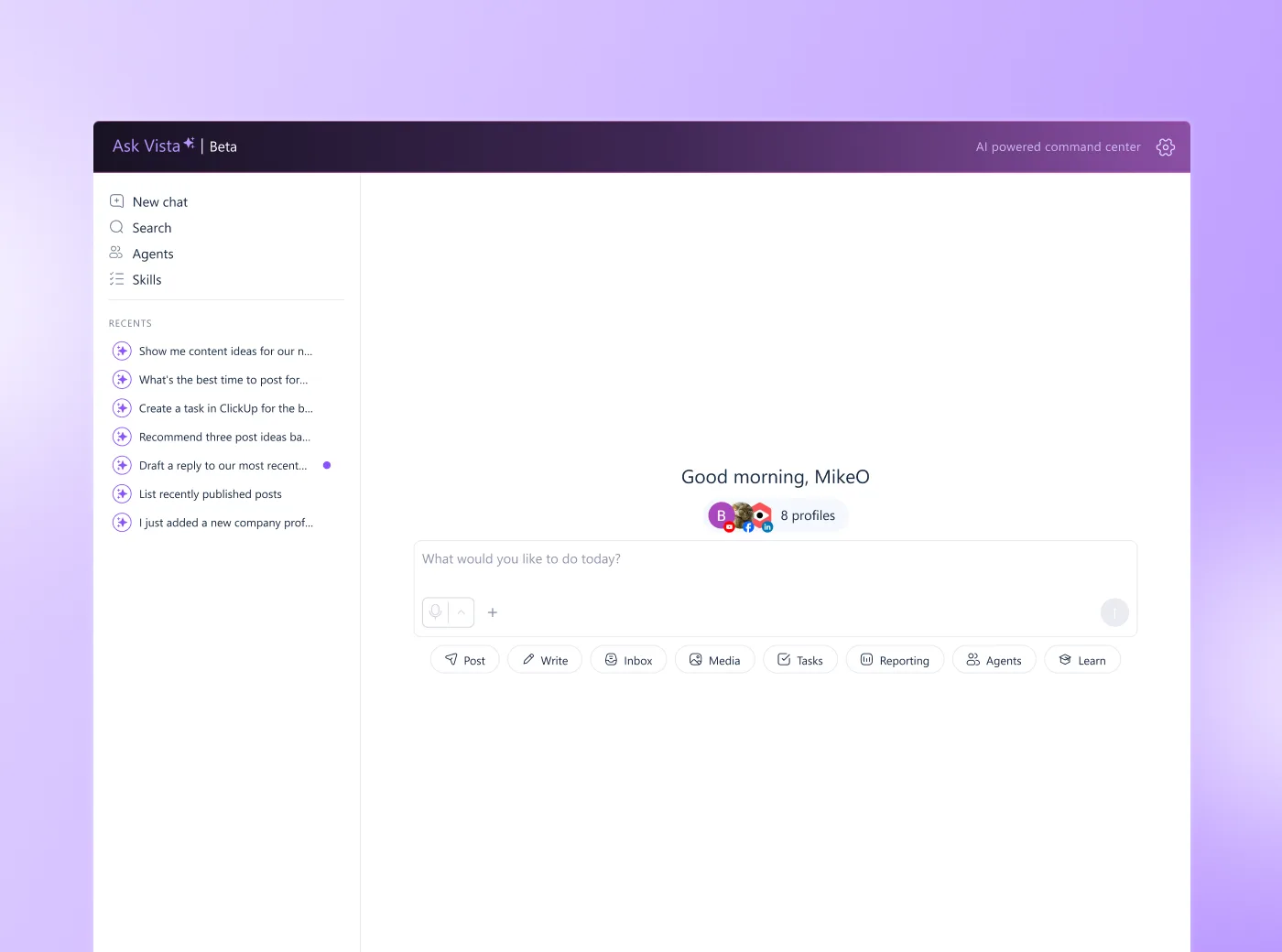
The Vista Social fast path: Keeping the instructions beside the profiles, calendar, inbox, and reports cuts the copy-and-paste handoffs that make a shared prompt library hard to follow.
Builds and supervises agents and workflows
An agent needs a clear job description. The operator defines the source it can use, the profiles it covers, the schedule, the expected output, and the action that requires a human decision.
This is also where the AIOps owner chooses a control level. A trend-monitoring agent can read and report. A caption agent can prepare a draft. Publishing, sending a reply, or changing a connected account should wait for consent.
Ask Vista works from the connected social workspace, so an operator can use it to draft posts, inspect performance, triage inbox work, and prepare actions for confirmation. Our guide to custom agents shows how a recurring assignment moves from one sentence to a supervised workflow.
You can start free with no credit card required and turn one repeated task into an agent your team can inspect.
Sets guardrails and approvals
Guardrails tell the AI what it may prepare and where a person takes over. The rules should reflect the risk of the account and the content, because a weekly tip needs less scrutiny than a regulated claim or a reply to an angry customer.
The operator can map those decisions into a simple table:
| Work type | AI prepares | Human decision | Vista Social control |
|---|---|---|---|
| Low-risk evergreen post | Caption and media options | Final wording and schedule | Single-step approval |
| Product claim | Draft grounded in approved facts | Accuracy and legal sign-off | Multi-step approval |
| Routine inbox question | Suggested reply | Approve or revise | Knowledge-guided draft and confirmation |
| Sensitive complaint | Summary and escalation | Personal response from the right owner | Inbox assignment and no automatic send |
Vista Social’s approval workflows support one or several review steps. Single-step approval is available on Professional, while multi-step workflows are available on Advanced and above as of July 2026.
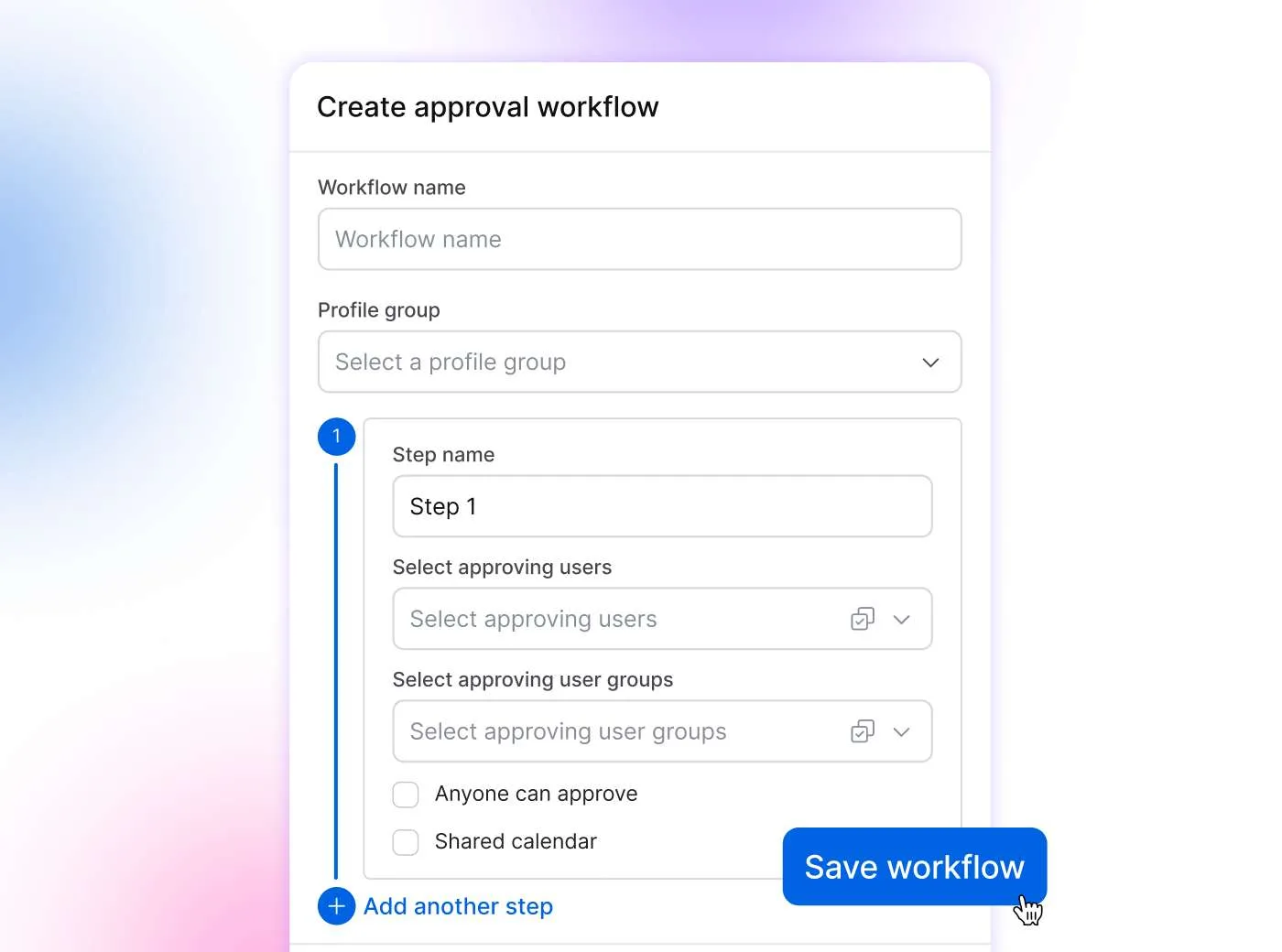
The need is measurable. CMI research for 2025 found that 38% of responding organizations had AI guidelines, while 23% had guidelines inside the marketing team. A policy earns its keep when it changes what happens before a post goes live.
Grounds the AI in brand voice and knowledge
Brand voice gives the AI a style to follow. Knowledge gives it the approved facts, policies, product pages, and support material it should use when writing.
Vista Social keeps those jobs separate inside AI Training & Knowledge. An operator can create knowledge for a profile group and add documents, webpages, sitemaps, or Zendesk articles. They can also write guidance, test the results, and review the Activity log.
The selected Knowledge can then support content creation, inbox replies, automations, and a Vista Page chatbot on eligible plans.
That structure matters for a marketer managing several brands. One client’s return policy shouldn’t leak into another client’s reply, and a friendly voice won’t rescue an answer built on the wrong facts.
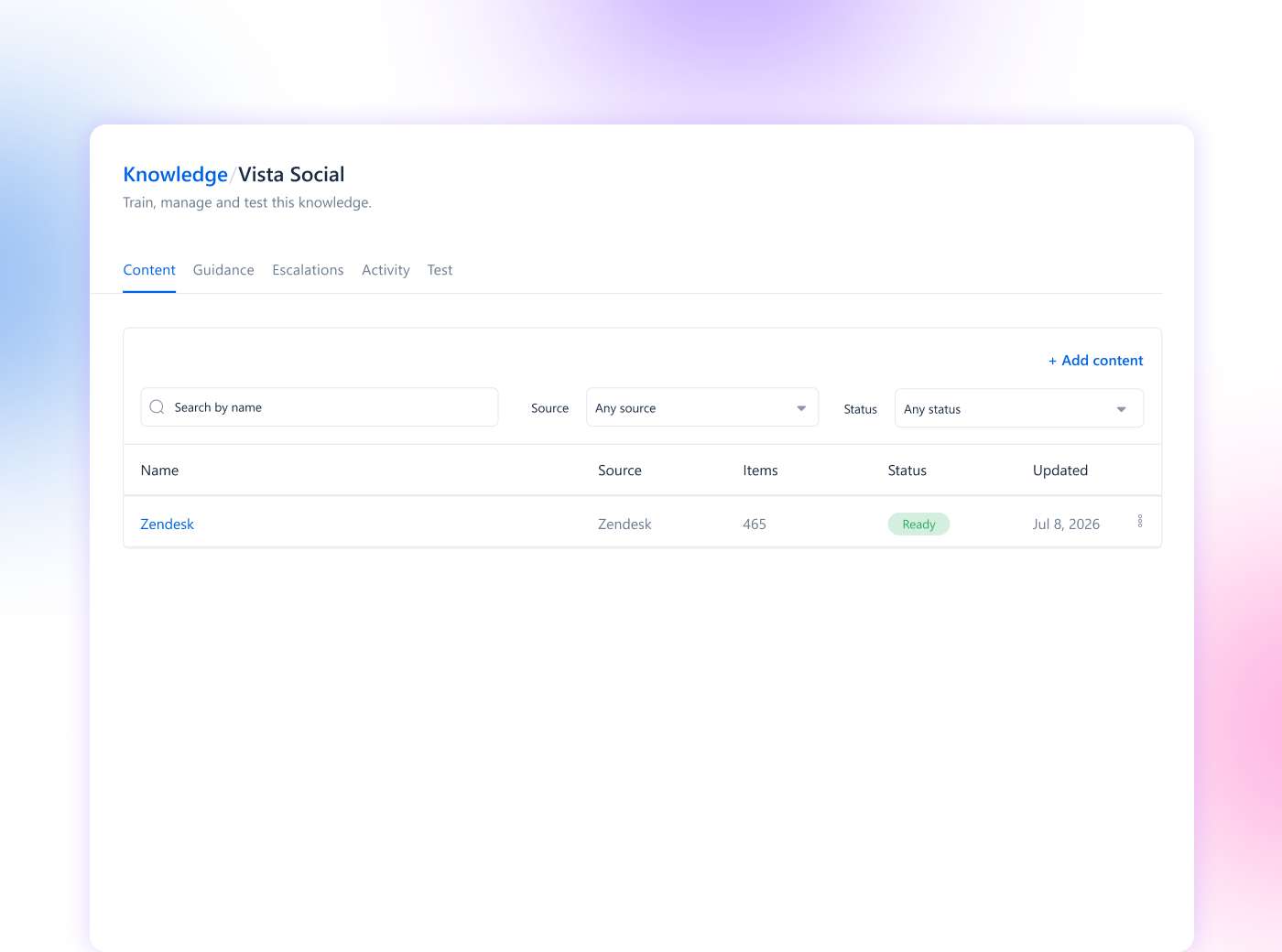
The Vista Social fast path: Profile-group scoping keeps each brand’s facts and voice together, which removes the brittle ritual of pasting guidelines into every new conversation.
Runs quality assurance and measures the system
The operator reviews the work at two levels. Each output needs to be accurate and on-brand, while the whole workflow needs to return more time than it consumes.
Track a small set of operating measures:
- Approval rate: How often the first draft is accepted with no major rewrite.
- Correction themes: Which facts, tones, or instructions keep causing edits.
- Time returned: How long the task took before and after the agent was introduced.
- Escalation quality: Whether risky work reaches the right person with enough context.
- Workflow health: Whether schedules, sources, permissions, and profile assignments still match the campaign.
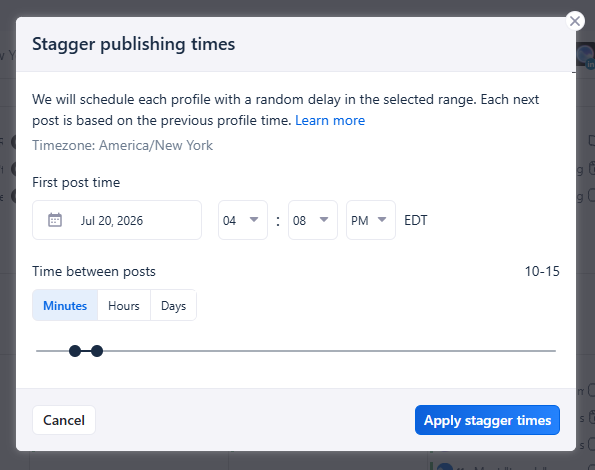
Product operations belong here too. Vista Social’s July 2026 stagger update lets teams add randomized gaps when publishing the same content across several profiles. The AIOps owner decides when that rule applies, documents it, and makes sure scale doesn’t create a spam-like posting pattern.
The skills an AIOps person needs
Start with the person who can hear when a caption is half a degree off. Technical curiosity helps, but judgment gives the system a standard to aim at.
- Brand judgment: Knows the audience, the promises the company can make, and the lines it won’t cross.
- Prompt fluency: Turns a repeated task into clear inputs, rules, examples, and an expected result.
- Workflow thinking: Sees the path from source to draft to review to publication, including where work can break.
- Quality discipline: Checks facts, tests edge cases, and records patterns instead of fixing the same miss forever.
- Tool literacy: Understands permissions, integrations, schedules, and plan limits well enough to run the stack responsibly.
- Change leadership: Can teach coworkers the shared method without becoming a permanent help desk.
The role needs someone who enjoys improving a system after the first version works. A prompt that performs well today still needs review after the product, platform, campaign, or team changes.
How to grow or hire your first AIOps person
For a one-person or two-person marketing team, AIOps should begin as a named part of someone’s job. Protect a few hours for it, define the responsibilities, and stop treating the operating work as free labor squeezed between posts.
Use a four-stage path:
- Find the operator: Choose the marketer who already documents useful prompts, checks risky output, and helps coworkers recover when a workflow breaks.
- Give the work a mandate: Make them responsible for one prompt library, one approval rule, and one recurring agent before expanding the scope.
- Build the operating habits: Teach prompt design, source management, permissions, testing, and a monthly review of corrections and time saved.
- Add headcount when the scope earns it: A dedicated role makes sense when several teams depend on the system, failures carry material risk, and maintenance can no longer fit inside a partial week.
The job market is already testing names for this work. This comes with responsibility for AI-driven workflows, reporting, analytics, and campaign operations.
You can test Vista Social free with no credit card required and use one agent plus one approval rule as the role’s first operating win.
Where AIOps fits in the organization
Marketing AIOps belongs close to the work it governs. On a lean team, it can report to the marketing lead. In a larger organization, it can sit inside marketing operations and partner with IT, legal, security, and brand leaders.
At a greater scale, the function may report to a Head of Marketing AI or Chief AI Officer. The reporting line matters less than the authority to set rules, maintain shared systems, and pause a workflow when the evidence says it isn’t ready.
Maya shouldn’t have to answer messages on leave for the team’s AI to behave. A named owner, a shared operating system, and visible approval rules let her step away without the work forgetting how the brand runs.
If your team is asking what AIOps is, start with the work already hiding in someone’s week. Name it, give it time, and let that person build the system that makes every marketer around them more capable.
When you’re ready, start free with no credit card required and put the first shared workflow where the whole team can use it.
Frequently asked questions
What is AIOps in marketing?
AIOps is the marketing role that runs a team’s prompts, agents, workflows, guardrails, knowledge, and quality checks. The person makes AI-assisted work more consistent and keeps public actions under human control.
Is AIOps the same as AIOps for IT?
No. AIOps applies artificial intelligence to IT operations such as monitoring systems and responding to incidents. Marketing AIOps is a human role that operates AI tools to produce and review marketing work.
Who should own AI on a marketing team?
Start with the marketer who already maintains the useful prompts, catches weak output, and helps coworkers use the tools. Formal ownership gives that person time and authority to build a shared system instead of serving as the unofficial AI help desk.
Is AIOps a rebranded social media manager?
The responsibilities are different, although the same person may carry both on a small team. Social media management owns the channel strategy and community, while AIOps owns the system that supports AI-assisted execution.
Do I need to hire an AI engineer?
No. This role needs strong brand judgment, workflow thinking, prompt fluency, and quality discipline. Technical support may help with complex integrations, but the day-to-day operator can grow from the marketing team.
What skills does an AIOps role need?
The core skills are brand judgment, prompt design, workflow thinking, quality assurance, tool literacy, and change leadership. The operator should be comfortable improving instructions and controls as the campaign and tools change.
Try Vista Social for free
A social media management platform that actually helps you grow with easy-to-use content planning, scheduling, engagement and analytics tools.
Get Started NowAbout the Author

Content Writer
Orion loves to write content that refuses to be boring. As part of Vista Social, he helps brands, creators, and agencies stop doom scrolling and start winning with social media. When he's not in front of a keyboard, he's watching films in IMAX with his wife, dissecting football tactics (the European kind), and getting lost in a good book.
Loading related tools...

The most complete social media management platform for teams who demand more.






Tools
PublishingAnalyticsEngagementIntegrations
FacebookInstagramLinkedInRedditSnapchatThreadsTikTokX (Twitter)YouTubeMCPVista Page (link-in-bio)All IntegrationsCopyright © 2026 Vista Social LLC. All Rights Reserved.