


Social Media Center of Excellence: A Multi-Brand Guide
October 28, 2026
11 min read

Summarize with AI

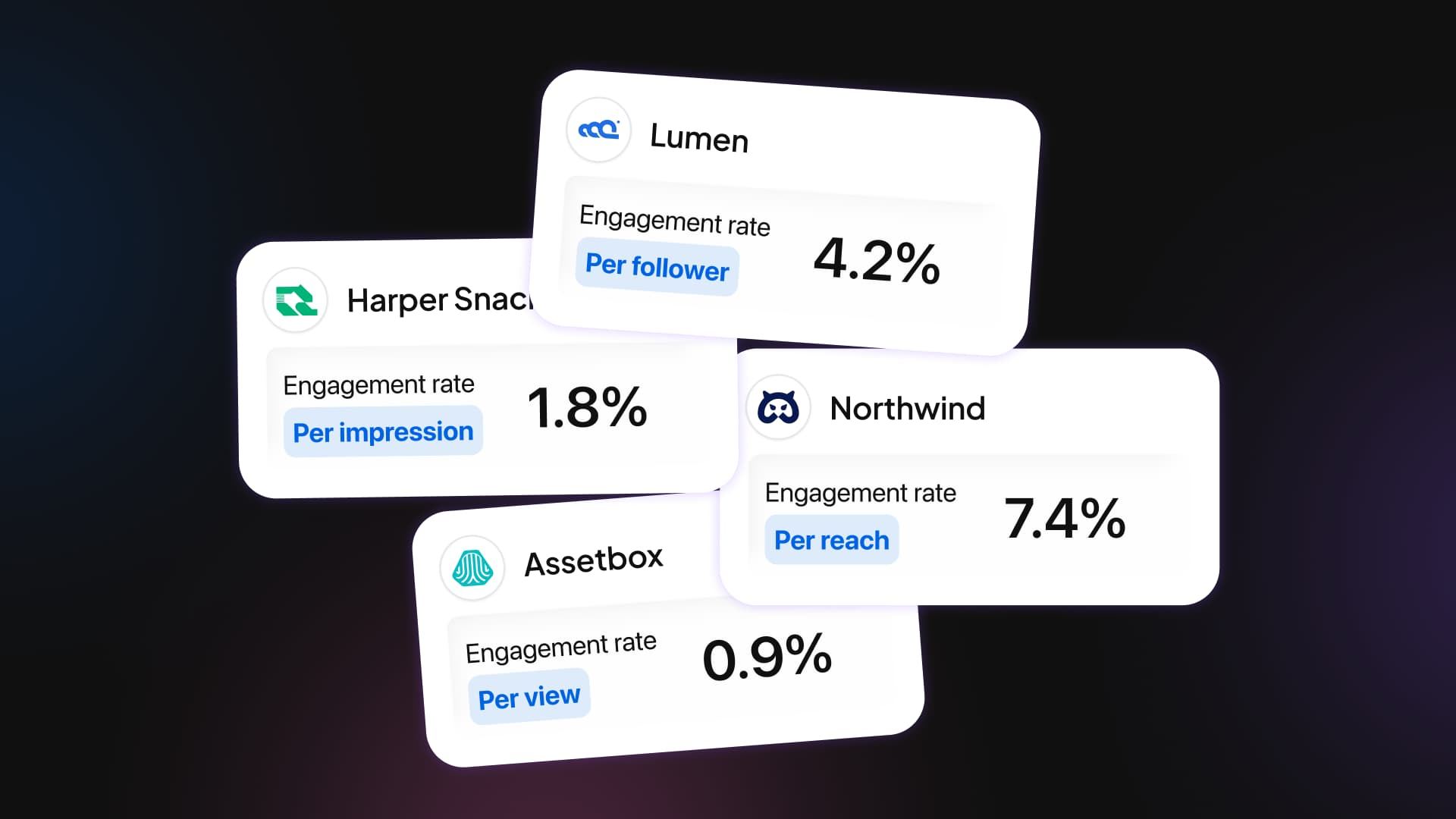
Table of contents
Share

Vista Social

X (Twitter)


Try making a company-wide recommendation when the brand reports stop at “here are the numbers.” Before you ask for more support for a brand, you need the bit that never made it into the deck: what changed, what the team learned, and what they’d do next.
Those answers are with the people who ran the work. Getting them into the review, without another last-minute round of messages, is one of the jobs of a social media center of excellence. You can give that shared work a home without taking over every brand’s creative decisions.
Standardize what leadership compares. Leave local what the audience feels.
Table of contents
Why separate brand reports leave leadership guessing
You wouldn’t ask an acquired brand to drop a good agency just to make reporting tidier. Nor would you expect every regional team to use the same creative approach. You do need their work to make sense in a company review.
Put a launch-week report beside a full-quarter report, and both can show engagement growth. You’re still left asking whether either brand needs more creative support. Until the periods and goals are clear, the charts give you something to discuss rather than a decision to make.
Look beyond the reports, and the same ownership question turns up in other work:
- Shared expertise has no priority order: Brand leads are asking the same analyst or platform specialist for help. Unless someone sets priorities, the latest urgent message can decide what gets done.
- Useful tests stay inside one team: A good finding gets a slide at the brand review, then goes no further. Somebody needs to help the next team try the idea and follow up on what happened.
- The same capability gets bought repeatedly: Brand leads commission training, templates, or tool evaluations without knowing what another team has already paid for. You keep funding separate answers to the same question.
- Standards lack a maintenance owner: A guide gets published, then a brand lead has a question it doesn’t answer. With nobody responsible for updates, the team works around it and carries on.
In the 2025 CMO Survey, 63% of responding marketing leaders felt growing CFO pressure to prove marketing’s value. That compares with 52% in fall 2023. Social’s reported share of marketing budgets was 11.3%, down from 12.1% in fall 2024.
Those figures don’t explain an individual budget decision. They do put a useful question on your own review: can leadership see enough of the work to decide where support belongs?
Agree what the center will deliver
Before you give the central team another job, put its commitments in writing. What will it deliver, who can ask for help, and how much time and budget does it actually have? Agree that with the brand leads and the marketing leader, who can fund the work and settle competing requests.
Fill out this template for the company-wide social review first. Then use it for support, training, or test design where brands need help.
| Plan field | What to fill in |
|---|---|
| Service | The deliverable and the brands it covers, such as a monthly company-wide social review |
| Owner | The named person responsible for delivery, plus a backup |
| Request route | Where brands submit requests and the information each request needs |
| Response target | When the center acknowledges a request and when it commits to a delivery date |
| Capacity | The time reserved for this service and how urgent requests affect other work |
| Funding | The costs paid centrally and any costs charged to a brand |
| Success evidence | The decision the service supports and how you will establish that it was useful |
If everyone has to squeeze the shared work in around a full-time brand role, you’ve promised more support than you’ve staffed.
Decide what the center owns and what brands keep
Start with these five shared jobs. Put names against the role labels so brand leads know who to ask; one person can cover several rows if they have the capacity.
| Shared responsibility | The center owns | Each brand keeps |
|---|---|---|
| Measurement and reporting | Reporting lead: agreed measures, schedule and company-wide review | Local goals, context and recommendations |
| Tools and support | Platform owner: shared requirements, company ownership and specialist help | Daily operation and requests for local needs |
| Campaign labels | Social operations owner: common categories and their upkeep | Local campaign detail within those categories |
| Minimum standards | Standards owner: maintaining guidance and teaching teams to use it | Voice, creative choices and community relationships |
| Learning | Test coordinator: sharing methods, findings and follow-up | Experiments, local adaptation and calendar decisions |
Robert Rose puts the shared-method point neatly in his 2026 essay on content orchestration:
“Content operations involve everyone in the marketing organization following their own playbook. Content orchestration means everyone follows the same one.”
For a real example of shared expertise with room for local ideas, look at Unilever’s Sketch Pro studios in 2025. Designers worked directly with marketers, using AI and social insights to create content.
That support fed different work: Rinso and Sunlight picked up Ramadan trends in Indonesia, while Brilhante connected with Fernanda Torres’s Oscar nomination in Brazil. Sharing specialist help didn’t require the brands to tell the same story.
Set one reporting agreement for every brand
Give leadership one company-wide view, broken out by brand, with context and a recommendation.
Choose a small set of measures that helps answer the questions coming into that review. The reporting lead keeps the definitions, format, and schedule consistent; brand leads explain what happened in their part of the business.
For engagement rate, write down which interactions count and what you divide them by. Record the networks and treatment of paid activity too.
Keep each brand’s target separate from that shared definition: comparable measures don’t make different audiences or business goals interchangeable.
Make it easy for brand leads to bring their side of the story. Ask each one for three things:
- Results: The agreed measures for the common reporting period, shown against that brand’s own targets.
- Context: What changed in the campaign, audience, or business that helps explain the result.
- Recommendation: What they’d continue, change, or test next, and what they need from you to do it.
Our data-silos guide covers the work of connecting the evidence underneath the report. Once that’s in place, the center keeps the agreement useful as requests change. If the report list keeps growing, why reporting never gets faster can help you decide what to retire.
Provide platform expertise brands don’t need to rebuild
The next brand asking for a tool shouldn’t have to repeat the research another team just finished. Have the platform owner gather the needs across brands, starting with what people can’t do in the current setup. Then share the evaluation, including why a tool or add-on did or didn’t fit.
One of your existing social team roles can own this, provided support and onboarding are part of their workload.
Use campaign labels everyone can understand
Give campaign, objective, and format labels short definitions and examples. This shared vocabulary, sometimes called a taxonomy, gives new teams something they can use without guessing. Name someone who can decide whether a proposed label adds useful detail or duplicates one you already have.
When a brand joins, work through its labels with the lead and map them into the common set. Keep the local detail that helps explain its work. Nobody should have to throw away a useful campaign history to fit your naming system.
Teach brand leads to use the standards
Give the standards owner responsibility for keeping the company’s social media guidelines and the team’s AI usage policy useful, with help from the relevant specialists. Keep publishing approval routes in a separate agreement.
Then work through a new lead’s actual campaign together: label it, explain the report, and spot a question that needs specialist help. If you get stuck interpreting the guidance, you’ve found something to fix before the next person joins. Brand leads keep their own voice guidelines and creative direction.
Make a test result useful to the next brand
Suppose one brand tests a product demo that shows the finished result before explaining the setup. Another brand wants to try it. To make that handoff useful, the test coordinator needs to carry over what the first team tested, the conditions, and the question still worth asking.
Keep that learning record short enough to use. Include three things:
- Finding and conditions: Link to the work and explain the audience, format, measure, comparison period, and paid support.
- Limits on reuse: Spell out what depended on that brand’s product, offer, or audience. The next team gets a question to test, not a guarantee that the creative will work for them.
- Next action: Name the second brand’s owner, what they will adapt, and when they will report back.
Use the monthly cross-brand session to work through one record and agree to the next test. That gives the second team something to do after the call.
Use Vista Social for the shared leadership review
In Vista Social, brand teams can work in their own profile groups while the reporting lead prepares a review across the participating profiles. The reporting lead can work in Ask Vista or use the company’s approved AI assistant through MCP (Model Context Protocol). That connection lets the assistant retrieve performance data within the connecting user’s Vista Social permissions.
- Set brand-level access: Put each brand’s profiles in its own profile group and assign access to the people who need it. Group membership and user permissions, not a reporting prompt, define access.
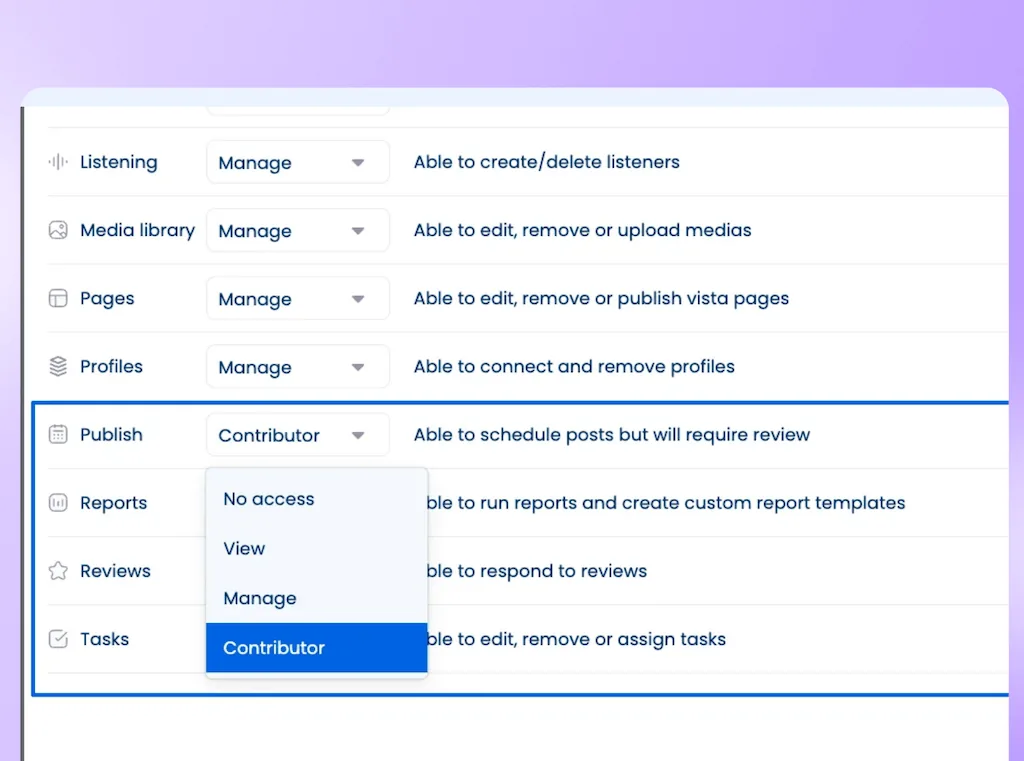
- Prepare the review: Tell Ask Vista which profiles, period and measures the review needs. Add the brand leads’ context and ask for the summary broken out by brand. Have the reporting lead check coverage and figures, then ask brand leads to check the interpretation before it goes to leadership.
- Keep the reviewed method reusable: When the format works, save the tested instructions as a shared Ask Vista Skill. Teammates can use it with their brand context, while only its creator can edit or delete it. Put that owner in the plan so feedback has somewhere to go.
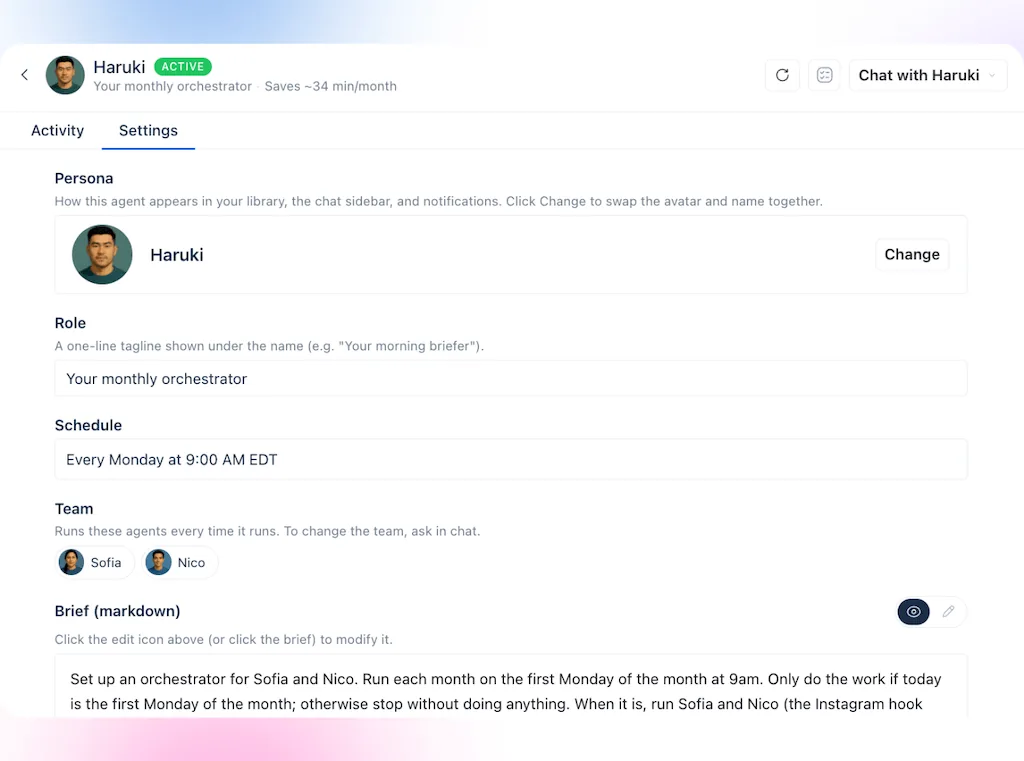
- Schedule recurring preparation: An Ask Vista agent can generate weekly or monthly reports across connected profiles. Set up the recurring job after the method passes review, and keep the findings internal until the named reviewer clears them. Count AI credits, setup and review effort in the service budget too.
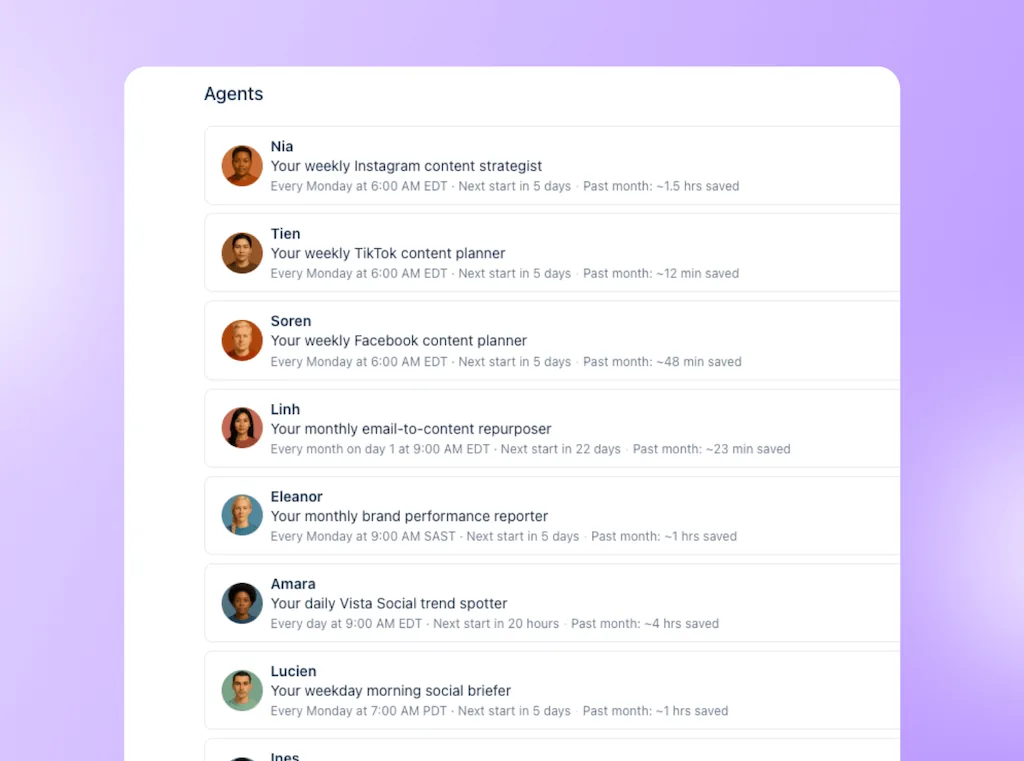
Vista Social also offers scheduled PDF or report-link delivery for supported report types, including to recipients outside the platform. Before you put a company-wide report on that schedule, test that it includes the profiles and brand breakdown you need.
Agree the reporting timezone as well as the date range, especially across regions. In a multi-group Vista Social report, the first selected profile group’s timezone controls the report. Check that selection before scheduling.
Make the next leadership review useful
The next time leadership asks where social needs more support, you should have a recommendation ready. Your CoE earns its place by helping brand teams bring their results, reasoning and proposed next steps into that conversation. You can make the case for what they need without turning the meeting into another reporting request.
Start with two brands and one question you need to answer. Try Vista Social for free to put the reporting preparation into practice, with your team checking the output. Use that first review to work out what deserves a shared approach and what each brand should keep doing its own way.
Frequently asked questions
Do you need to hire a separate center-of-excellence team?
Start with people who have the skills, time and authority to take on the shared work. Add a dedicated role when demand has outgrown that capacity. Brand count alone doesn’t tell you whether you need another hire.
Who should the center report to?
Choose the leader accountable for marketing across the participating brands, often the CMO or a marketing VP. They need enough authority to fund the work and settle competing priorities when two brands both need help.
What if a shared standard doesn’t fit one brand?
Bring the owner of that standard a clear reason and a proposed alternative. Record whether the change is for that brand alone or improves the rule for everyone. Don’t leave a brand lead inventing a workaround because they can’t get an answer.
How do you measure the center’s success?
Look at which services brands use, what they’re still waiting for and whether they can apply the shared methods without help. Check whether a finding changed another team’s plan. Keep those measures alongside brand results so the center’s activity doesn’t become its own definition of success.
Is this useful for a single-brand company?
If one team already runs the work together, a separate CoE can add more coordination than help. Shared support may still be useful across regions with recurring needs. Start with those needs rather than building a new function for the name.
Do you need new software to start?
No. Agree the central team’s plan and try the first shared review with the tools you have. You’ll be in a better position to choose software once you can point to a job the current setup can’t do.
About the Author

Content Writer
Orion loves to write content that refuses to be boring. As part of Vista Social, he helps brands, creators, and agencies stop doom scrolling and start winning with social media. When he's not in front of a keyboard, he's watching films in IMAX with his wife, dissecting football tactics (the European kind), and getting lost in a good book.