


What Does a Social Media Manager Really Cost a Small Business?
November 13, 2026
7 min read

Summarize with AI

Table of contents
Share

Vista Social

X (Twitter)


Ever since your social media manager left, the person at the front desk has been checking Instagram between customers. It was supposed to be a favor for a couple of Fridays. Then, while you’re putting together the job ad, they ask whether they should block out next Friday too. There are still people in the inbox waiting to hear if they’ve got a spot.
Even if a candidate says yes this week, they probably won’t be the one answering messages next Friday. A few weeks of covering the work can also change what you put in that job ad. Do you need someone to run social again, or help with the parts your team can’t keep fitting in?
If you’re working out how much a social media manager costs, start with what goes on top of the salary. In the US example below, a roughly $66,000 salary comes to $84,565 in the first year. You can use the same breakdown to price your hire, then work out what it’ll take to cover the gap before they start.
Table of contents
Decide what the person covering actually needs to do
Once you know how long you might need cover, work out what you’re asking someone to keep up with. You can wait for a recap of the month’s top posts. The customer who asked whether their Friday booking is confirmed needs an answer before Friday.
- Answer customers waiting on you: Give your backup the open bookings, quotes, and other promises that need follow-up. Include what the customer was told and when they’re expecting an answer. Our social media lead guide shows how to track an inquiry through to a booking.
- Check what’s about to publish: Give your backup the calendar, approved assets, and a way to check whether an offer is still valid. Agree who can hold a post if something changes.
- Trim the publishing plan: Keep the posts that customers are counting on, such as a class opening or holiday hours. If you’re reconsidering your usual pace, Vista Social Research’s industry benchmarks show how often brands in your industry post. Use that for context, not as a quota.
If nobody can get into the accounts yet, start with the social media handover plan. Once your backup has access, make sure they can find the inquiries that need an answer without combing through every conversation.
Help your backup find inquiries that need a reply
Set the Ask Vista lead scout to check one connected inbox on a schedule. It can turn messages that look like sales leads into follow-up tasks. If a customer asks whether there’s room in Friday’s class, your backup opens the original message, checks availability, and replies. The task gives them somewhere to start; it isn’t a reply or a confirmed booking.
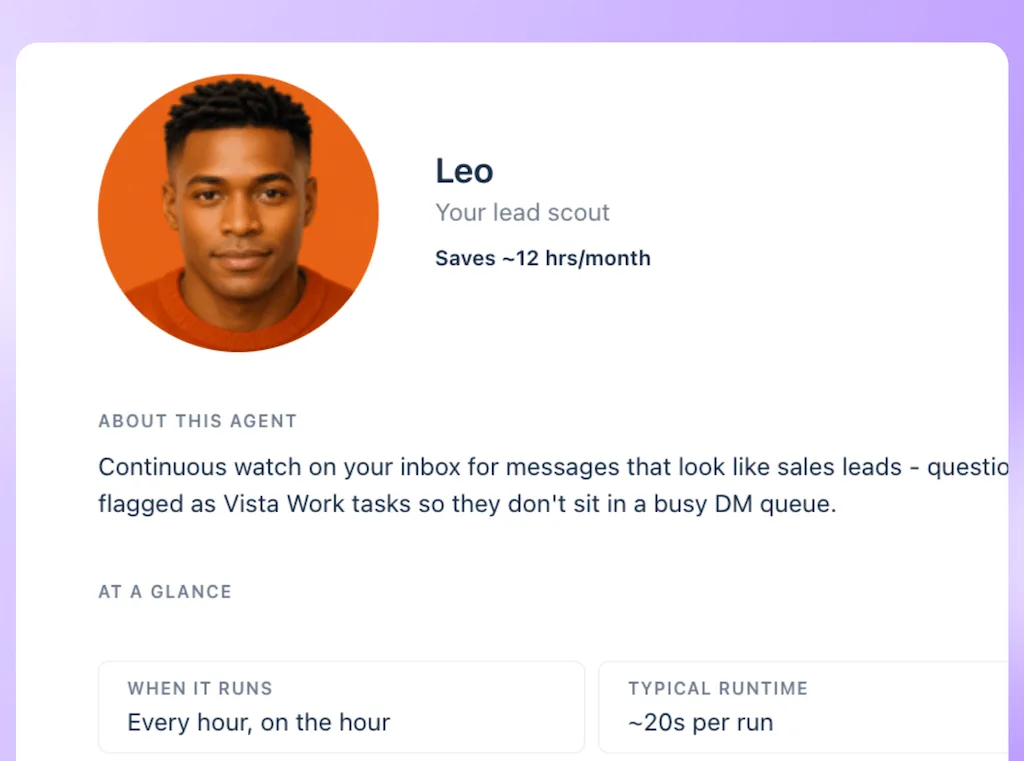
After a run, open Activity and match the result to the inbox and the task it created. Check for inquiries it missed, too. Your backup still checks the inbox at the times you’ve agreed to cover.
Use the preflight agent for a shorter calendar check. It can surface the day’s scheduled posts, including a promo for an item that sold out overnight. Your backup checks stock and holds or updates the post if needed. The agent can’t infer that you’re sold out from the schedule.
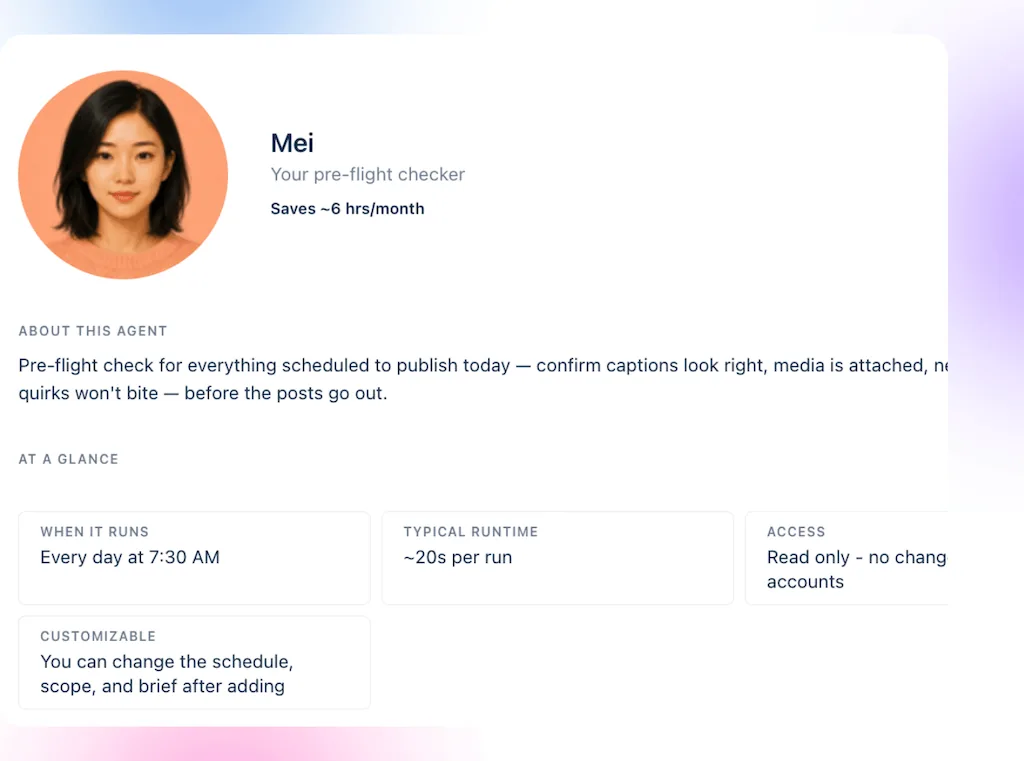
Ask Vista agents are available on Advanced, Scale, and Enterprise. Runs use AI credits, and agents pause if those run out. Keep a person responsible for both checks.
Run one morning without stepping in
Before the job ad goes live, let your backup handle one morning while you’re available if something urgent comes up. Can they find an unanswered inquiry, get the right person to reply before the customer expects an answer, and check the next scheduled offer? If the inquiry gets found but nobody can answer it without you, that’s the work you still need to cover.
Use the test to write down three things:
- Work you still need help with: Turn it into the scope of the job. If it fits a few hours a week, compare part-time help with a virtual assistant before budgeting for a full-time role.
- Coverage until day one and beyond: Put a name next to each job and confirm when the new hire can take it over. If you’re still the Friday backup, block out the time.
- Budget to approve: Separate the first-year spending the hire adds from the temporary coverage bill and the hours your team needs to set aside.
If that leaves you with a role to fill, use the hiring guide to write the brief around the work you actually need done.
Start a 14-day Vista Social free trial and run the morning test on one connected profile: have your backup pick up a flagged inquiry and check the next scheduled offer.
Frequently asked questions
How much does a social media manager cost per year?
In this US example, a $65,977 salary comes to $84,565 in year one and $83,365 in a year without recruiting. Your offer, employer costs, and software bills will change those totals.
How much does a social media manager make in the US?
Indeed’s November 8, 2026 update puts average US base pay at $65,977. Use local salary data for jobs with a similar scope when setting your offer.
How much does it cost to replace a social media manager?
In the worked example, recruiting again, temporary coverage, and extra onboarding help total $3,900. Use your own dates and rates; this isn’t an industry average.
Is it less expensive to hire a part-time social media manager?
A part-time hire usually means fewer paid hours, but it doesn’t make the work outside those hours disappear. Price any work you’ll keep yourself or pay someone else to cover before comparing the budgets.
About the Author

Content Writer
Orion loves to write content that refuses to be boring. As part of Vista Social, he helps brands, creators, and agencies stop doom scrolling and start winning with social media. When he's not in front of a keyboard, he's watching films in IMAX with his wife, dissecting football tactics (the European kind), and getting lost in a good book.