

Published on May 28, 2026
20 min to read
50 YouTube Channel Ideas for Brands and Social Media Managers

Summarize with AI

Table of contents
Summarize with AI

ChatGPT

Claude

Perplexity
Share

Vista Social

X (Twitter)


You already know YouTube is worth being on. Two and a half billion logged-in users visit every month, and more than 500 hours of video get uploaded every single minute. The opportunity is real. The harder question is, what should your brand’s channel actually be about?
That question matters more than most people give it credit for. YouTube’s algorithm rewards consistency, and consistency is a lot easier to maintain when you’ve picked a clear content direction from the start. Without it, you end up with a channel full of unrelated videos that confuses both the algorithm and the audience.
This guide breaks down 50 YouTube channel ideas across nine industries so you can gather inspiration for your own channel.
Table of contents
YouTube channel ideas for ecommerce
1. Product demos
A tight product demo video is one of the most reliable tools in ecommerce marketing. Viewers watching a demo have already moved past the awareness stage, so they don’t need the brand story or the lifestyle pitch. They need to see the thing work.
Film it in a real setting, not a staged one. A kitchen gadget being used in an actual kitchen tells viewers far more than a white background ever will. The closer the demo matches the viewer’s own context, the more they trust the product.
2. Testimonial and customer story videos
A genuine customer walking through their experience on camera does more work than any ad a brand could produce. It’s the kind of social proof that can’t be manufactured, and viewers know it.
Ask customers to cover three things: the problem they had before, how they found the product, and what changed after. Keep the format conversational. An overly polished testimonial looks scripted, and the moment it looks scripted, it stops being useful.
3. Product spotlight and unboxing
Product spotlight videos are built for seasonal launches and limited editions. The format gives you room to slow down on details that photography flattens out: texture, packaging quality, and how components fit together.
Unboxing content drives strong watch time because viewers stay for the full reveal. Pair a new launch with a well-filmed unboxing and you have a piece of content that works as entertainment and a sales asset at the same time.
4. Behind the scenes and brand story videos
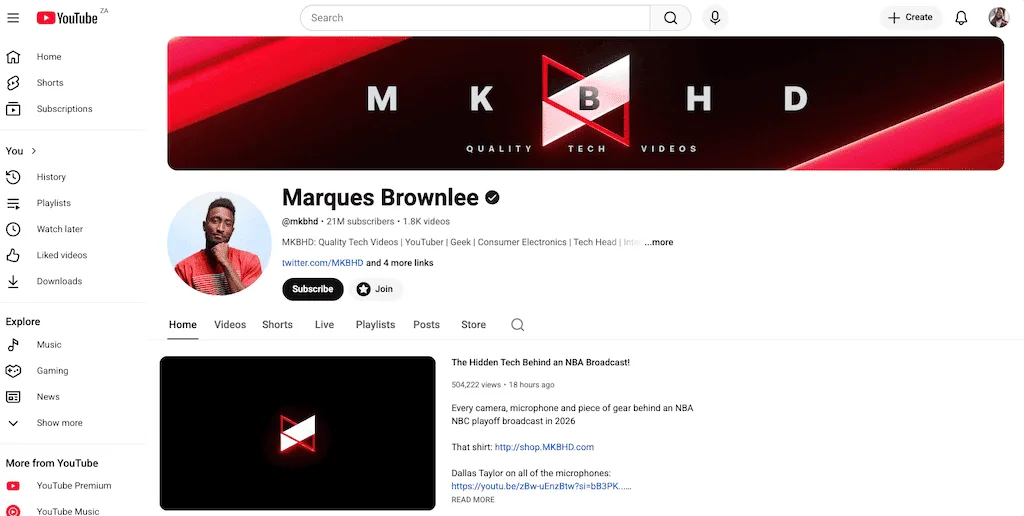
Showing how a product is made, sourced, or designed builds the kind of brand trust that advertising alone cannot. Viewers who understand where something comes from are more likely to buy it and more likely to come back.
This format works especially well for brands with a strong sustainability or craftsmanship story. If the process is genuinely interesting, film it. You don’t need to manufacture drama; the real thing usually does more.
5. Haul and comparison videos
Comparison videos are high-intent content. A viewer watching a side-by-side product comparison has already decided they want something in that category; they’re just working out which one. Brands that create honest comparisons, even ones that acknowledge trade-offs, consistently outperform purely promotional alternatives.
Haul videos work well for fashion, beauty, and home goods brands. They give you a natural format for showcasing multiple products in a single video without the whole thing feeling like a catalogue.
YouTube channel ideas for SaaS
6. Tutorial and how-to videos
The clearest way a SaaS brand earns trust on YouTube is by teaching viewers how to actually use the product. Tutorial videos reduce the support burden, speed up onboarding, and signal to prospects that the software is worth learning.
Break them into single topics. “How to set up your content calendar in Vista Social” will consistently outperform “Getting started with Vista Social” because it maps to the exact search someone runs when they’re stuck on that specific thing.
7. Explainer videos for complex features
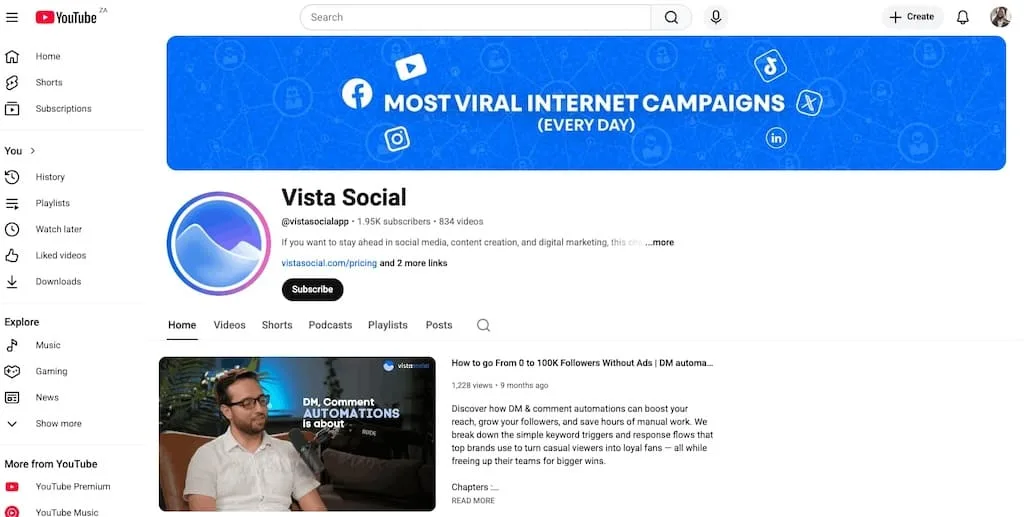
When a feature sits on top of an unfamiliar concept, a good explainer video does what documentation alone cannot. It makes something abstract visual, and that’s often the only thing standing between a curious prospect and a converted one.
Keep explainers under three minutes when possible. The goal is clarity, not comprehensiveness. If a feature genuinely needs more than three minutes to explain, it probably needs two separate videos.
8. Troubleshooting and FAQ videos
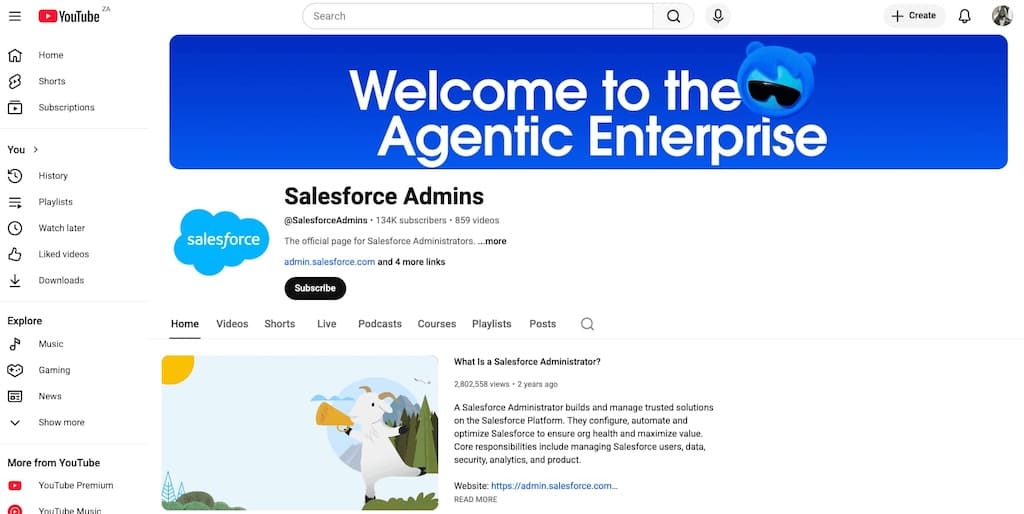
When a user hits an error, they go to YouTube before they open a support ticket. That’s just the reality. A well-organized library of short troubleshooting videos keeps users moving, reduces churn, and shows prospects that you actually support what you sell.
These don’t need high production values. A clean screen recording with a clear voiceover is all you need. Group them in playlists by feature area so users can find what they need without hunting through the whole channel.
9. Use case and workflow videos
A use case video shows the product solving a specific problem for a specific kind of person. Instead of “here’s what our analytics dashboard can do,” you’re showing how a social media manager at a mid-sized brand uses that dashboard to prep their monthly report.
That specificity is what converts. Prospects recognize their own situation in the content and start mapping themselves into the workflow being shown.
10. Customer success and case study videos
Video case studies outperform written ones because they put a face and a voice to the result. A real customer explaining how your product turned a three-hour process into a 20-minute one is a piece of content that does actual sales work.
Keep the customer as the hero. The brand’s job is to have built the tool; the customer’s job is to show what was possible with it. That framing consistently outperforms testimonials that lead with the product.
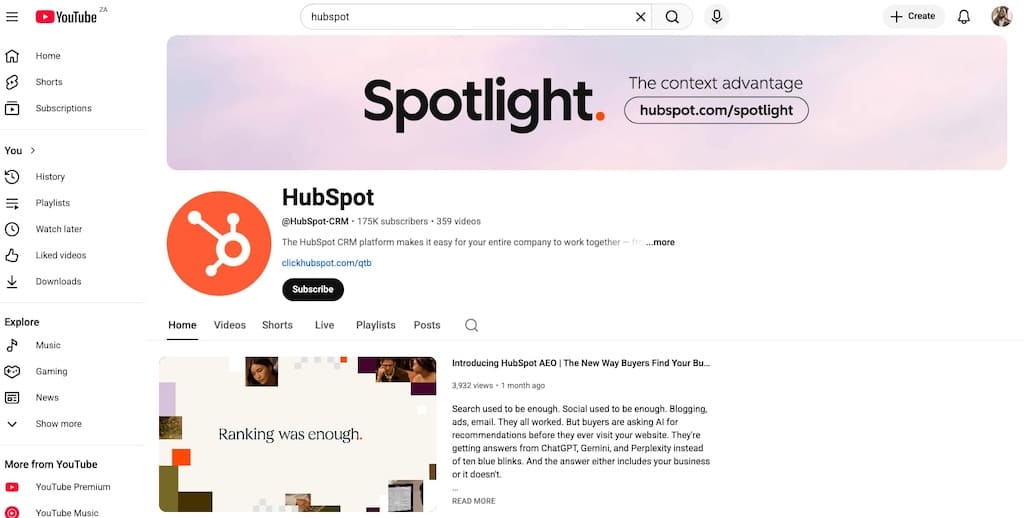
YouTube channel ideas for gaming brands
11. Game review videos
Game reviews are one of YouTube’s most established formats, and they still perform because the demand never goes away. Every new release triggers a fresh wave of viewers looking for honest assessments before spending their money or their weekend.
The channels that build real audiences here have a clear reviewing lens: a specific genre, a distinct scoring approach, or a personality that viewers trust. A review that sounds like every other review is quickly forgotten.
12. Developer deep dives and behind-the-scenes content
For gaming brands and studios, behind-the-scenes content showing the development process consistently outperforms pure promotional material. Players want to understand how decisions get made, what got cut, and what the team was actually trying to create.
Channels that do this well treat the development process as an ongoing story rather than a series of press releases. Each video reveals a little more, keeping the community invested long before a release date is even announced.
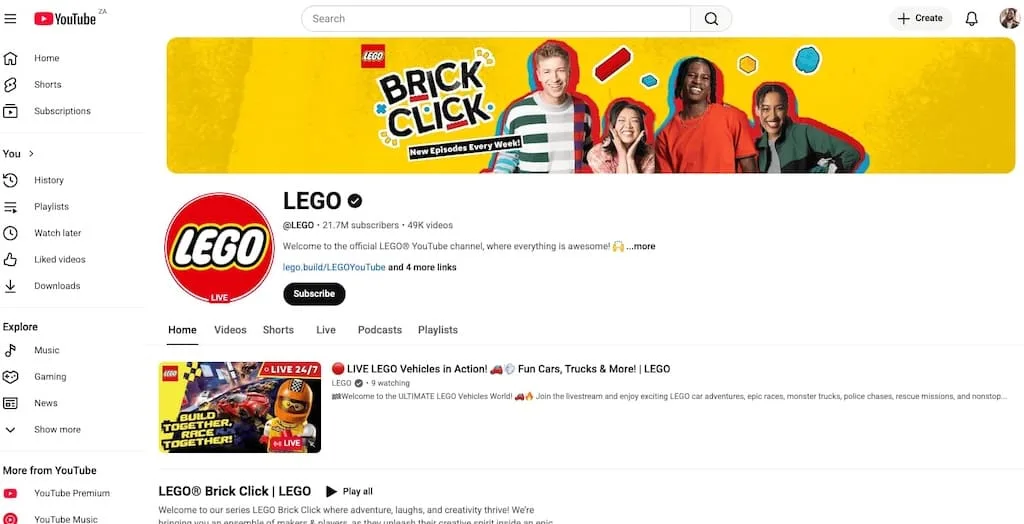
13. Gaming news and industry updates
Gaming news channels win when they’re fast and opinionated. Viewers can get raw news anywhere; what they come to YouTube for is someone they trust giving a quick, clear take on why a development actually matters.
Patch notes, studio acquisitions, platform announcements, and hardware releases: all of these generate consistent search volume. A brand that responds to major news within 24 hours with a clear, informed breakdown builds a reputation as a channel worth following.
14. Live streaming and community events
Live streaming builds an audience in a way on-demand content cannot replicate, because it creates real-time shared experiences. Viewers who watch a live stream feel more connected to the brand than viewers who watch uploaded content, and that connection shows up in subscriber loyalty.
Gaming brands can use live streams for first plays of new releases, live Q&As, and community tournaments. A strong live event also keeps generating value after it ends, because the replay is available to anyone who missed it.
15. Speed runs and challenge series
Challenge and speed run content drives engagement because it gives viewers a clear goal to watch toward. They stay to see whether the challenge gets completed, which pushes watch time in exactly the direction the algorithm rewards.
For brands, sponsoring or producing challenge series around their games creates content with a competitive energy that’s genuinely hard to manufacture through other formats. It also invites community participation, which generates additional content and word of mouth organically.
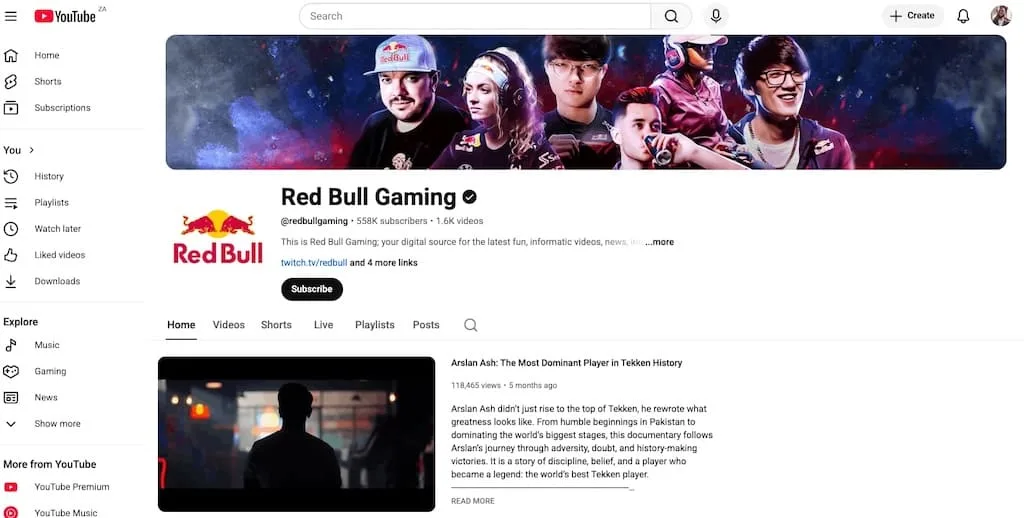
YouTube channel ideas for real estate brands
16. Virtual property tours
Virtual house tours have gone from a nice-to-have to an expectation. Buyers and renters routinely research properties on YouTube before contacting an agent, and high-quality tour videos are one of the main factors that determine whether a listing gets any traction online.
The format rewards clarity: show the property in a logical walkthrough order, give viewers a sense of actual scale, and include the details photography flattens out, like ceiling height, natural light, and how rooms connect to each other.
17. Neighborhood and market guides
Neighborhood guides fill a genuine information gap. People relocating to a new city actively search for this content, and they’ll subscribe to channels that deliver it well because they need to keep coming back as they narrow down their search.
Cover the practical details that actually matter to buyers: commute times, school information, what walkability really feels like in that area, where people eat and shop. The more specific the guide, the more useful it is, and the more likely it surfaces in searches from people already planning a move.
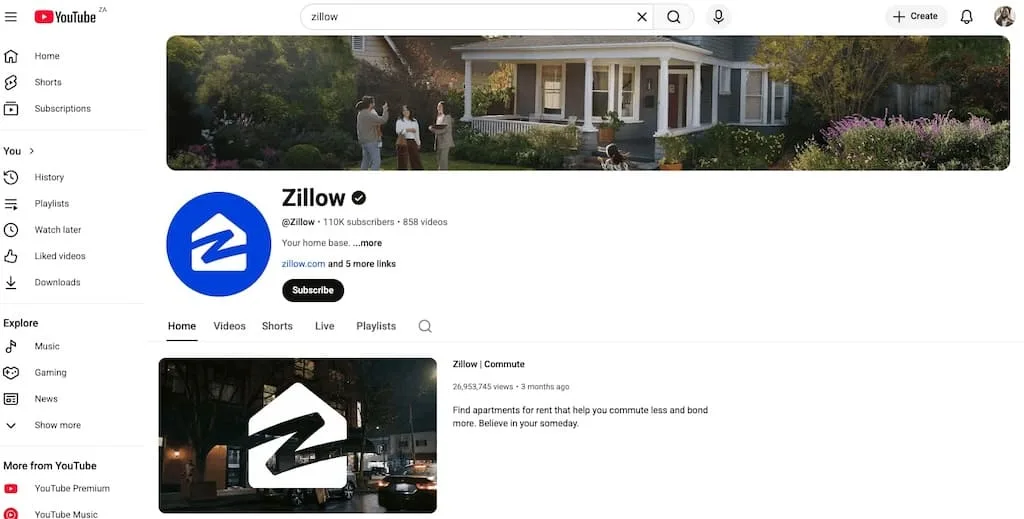
18. Home maintenance and ownership tips
Maintenance content keeps a real estate brand present in a homeowner’s life long after a transaction closes. A buyer who subscribes to the channel’s maintenance content is far more likely to return to that brand when it’s time to sell or buy again.
The format works best when it’s practical and specific: how to prepare your home for winter, what to check before calling a plumber, how to tell if a repair is DIY-worthy. Viewers appreciate honesty here more than polish.
19. Renovation and home improvement inspiration
Renovation content drives strong view-through rates because viewers invest emotionally in transformation stories. Before-and-after content in particular tends to hold attention all the way to the end, which signals quality to the algorithm.
For real estate brands, this content also serves a practical function: it helps sellers understand what upgrades actually move the needle on property value, and it helps buyers visualize what a property could become rather than what it currently is.
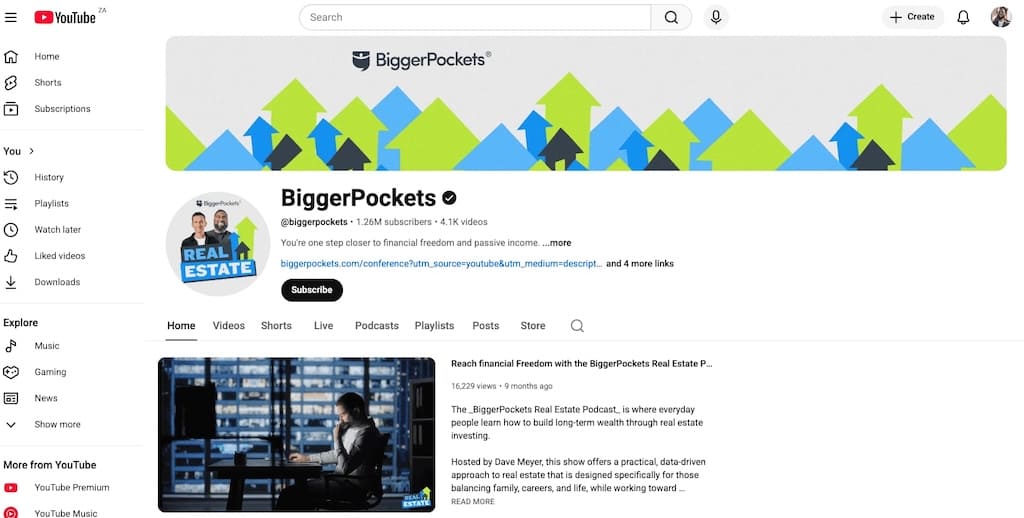
20. Investment and buying strategy videos
Educational content for first-time buyers or property investors positions a real estate brand as a trusted advisor rather than just someone who handles transactions. Viewers who learn from the channel are more likely to work with that brand when they’re ready to act.
Topics like how to evaluate a property’s investment potential, understanding market cycles, and what to look for in a first home consistently generate search traffic from high-intent audiences. These are real questions people have before making significant financial decisions, and they search YouTube for answers.
YouTube channel ideas for fitness brands
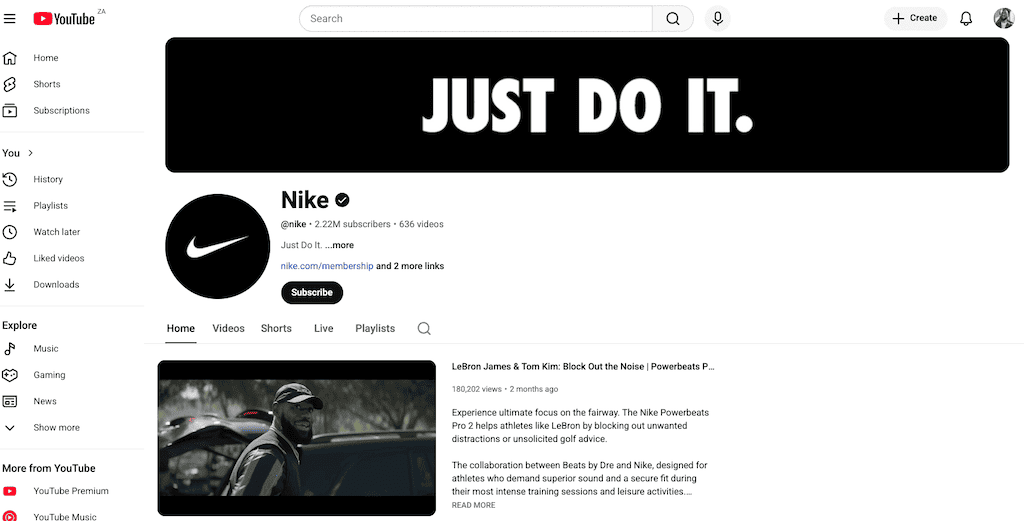
21. Workout and training videos
Workout content remains one of YouTube’s most consistently watched categories. The audience is large, the repeat view rate is high (people come back to follow along with the same workout multiple times), and the content ages well when it’s built around fundamentals rather than whatever trend is circulating that week.
Fitness brands that structure their channel around specific goals, such as strength training for beginners, mobility work for desk workers, or home workouts with no equipment, build more loyal audiences than channels that try to cover everything at once.
22. Nutrition and meal prep content
Fitness and nutrition content works together on YouTube because the audience overlap is nearly total. Viewers who work out also care about what they eat, and brands that address both sides of the equation give viewers less reason to go elsewhere for information.
Meal prep videos perform well because they solve a recurring logistical problem that comes up every week. Viewers aren’t just watching for inspiration; they’re looking for a system they can actually use. Content that delivers a repeatable process consistently outperforms content that only delivers ideas.
23. Fitness journey and transformation series
Transformation content generates strong engagement because it follows a narrative arc that viewers can track over time. Subscribers stay because they want to see what happens next, which is a more sustainable engagement driver than one-off viral moments.
This format works best when it features real people rather than professional athletes. Viewers identify with someone at a similar starting point far more readily than they identify with someone who has been training for years.
24. Expert Q&A and myth-busting content
The fitness space is full of misinformation that circulates endlessly. Brands that consistently call out myths and replace them with accurate, well-sourced information build reputations as reliable authorities in a category where trust is genuinely hard to earn.
Q&A formats work especially well here because they surface real questions from real people. Pulling questions from comments, DMs, and YouTube’s “people also ask” data ensures the content addresses what viewers are actually confused about, not what a brand assumes they’re confused about.
25. Recovery and mobility content
Recovery content is an underserved niche in fitness YouTube that consistently punches above its weight in search traffic. People searching for recovery content are often dealing with something specific: a tight hip flexor, a sore lower back, or persistent knee pain. That specificity makes the search intent highly targeted.
This content also reaches a broader audience than standard workout videos, because many people who wouldn’t describe themselves as fitness enthusiasts are still interested in moving without pain. That’s a wide net for a fitness brand to cast.
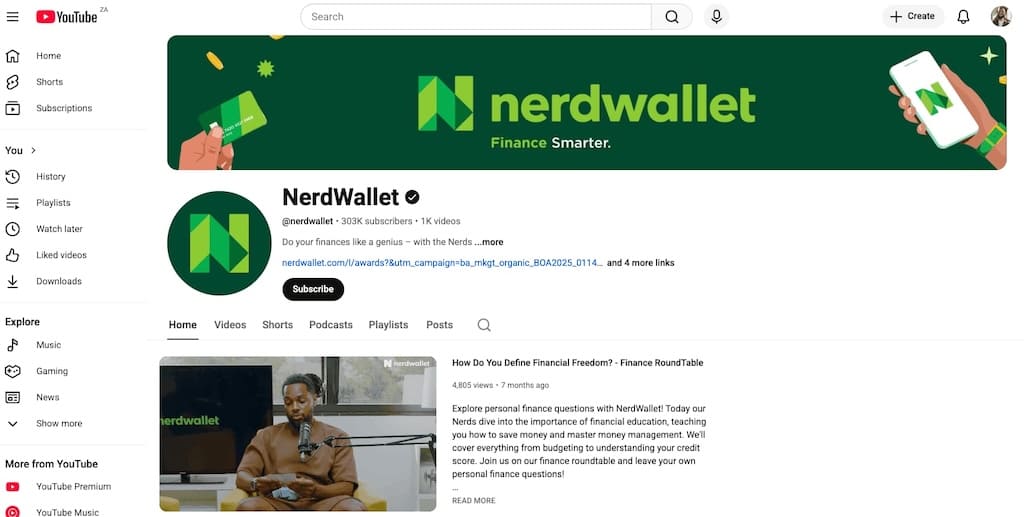
YouTube channel ideas for finance brands
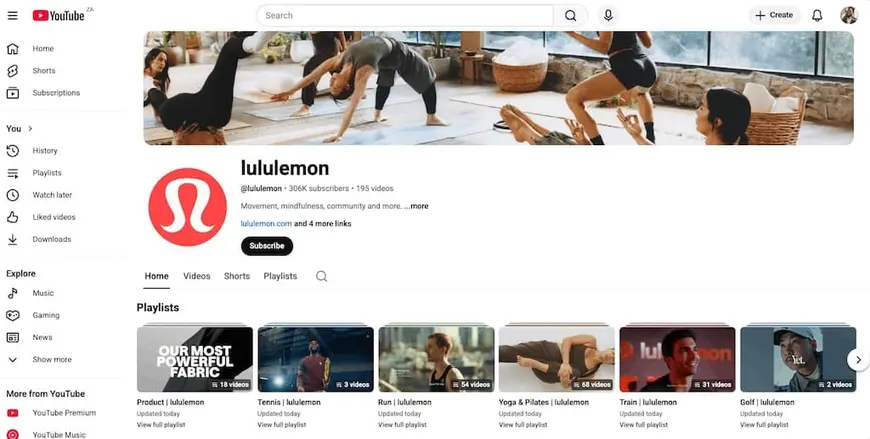
26. Personal finance fundamentals
Personal finance content on YouTube reaches an audience that is genuinely trying to fix something, not just passively scrolling. People who don’t understand how to budget, save, manage debt actively, search for help, and use channels that explain these concepts clearly to earn significant loyalty fast.
The key is keeping the content accessible without being condescending. Viewers searching for financial basics are often anxious about money, not just curious. Content that meets them where they are and makes financial literacy feel learnable, converts viewers into long-term subscribers.
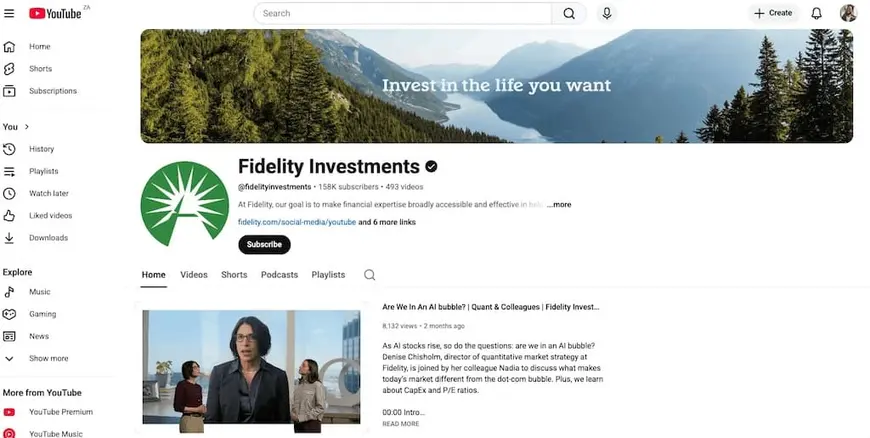
27. Investment strategy and market analysis
Investment content attracts a higher-income, higher-intent audience than most financial content categories. Viewers watching investment breakdowns are actively looking for information they can act on, which makes this a strong category for financial brands building authority in the space.
The challenge is accuracy and nuance. Investment content that oversimplifies, or appears designed to push viewers toward a specific product or position, quickly loses credibility. Channels that perform well here treat market analysis as a genuine service to viewers.
28. Side income and entrepreneurship content
Side income content consistently generates strong watch time because it addresses a growing, real-world pressure: wages aren’t keeping pace with costs, and more people are looking for ways to build income outside of their primary job.
Brands in the financial space can approach this honestly by covering what actually works, what realistic timelines look like, and what the tax and legal considerations are. That grounded approach stands out sharply in a category otherwise dominated by hype.
29. Financial literacy for specific life stages
Segmenting financial content by life stage allows brands to speak directly to someone’s actual situation rather than producing generic advice. Content for new graduates, for people navigating their first home purchase, or for those approaching retirement maps naturally to the specific, high-intent searches those audiences actually run.
People don’t search for “financial advice.” They search for “how to pay off student loans fast” or “should I buy or rent in my 30s.” Life-stage specific content answers those exact questions.
30. Financial success and case study stories
Financial success stories work because they make abstract goals feel achievable. A viewer watching someone explain how they paid off significant debt or reached a savings milestone while working a regular job sees a version of themselves in that story.
For brands, these stories function as social proof without requiring a product pitch. When the brand is the resource someone used to reach their goal, that’s more persuasive than any advertisement could be.
YouTube channel ideas for education brands
31. Explainer and concept breakdown videos
Educational explainer content thrives on YouTube because the demand for clear explanations of complex ideas is essentially infinite. Whether it’s a curriculum brand, a test prep company, or a continuing education provider, the format is the same: take something genuinely difficult and make it understandable.
The best explainers anchor abstract concepts in concrete analogies. Viewers remember an explanation that maps a new idea to something they already know far longer than one that stays purely theoretical.
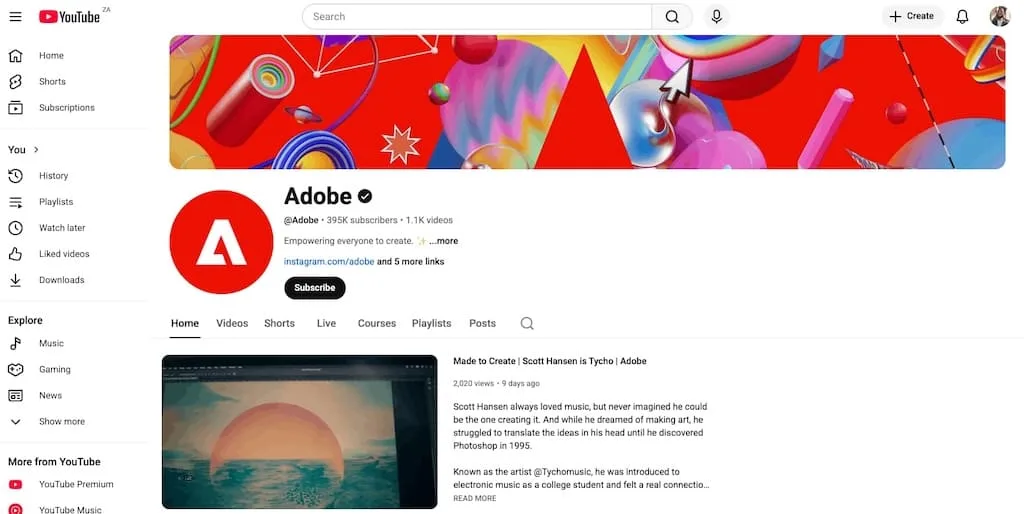
32. Skills-based tutorial series
Skills-based tutorials cover practical, learnable abilities: how to write better, how to code in Python, how to speak a language, how to read financial statements. This format works because viewers return to follow a structured learning path, which drives both watch time and subscriptions.
Series structure is the key. A playlist that takes a viewer from beginner to intermediate on a specific skill gives the channel a product-like feel, which increases the likelihood that viewers treat it as their primary resource for that topic.
33. Study techniques and academic strategy content
Study technique content has a built-in audience that refreshes every year as new students enter high school and university. The topics are relatively stable, which means content produced today will continue to drive search traffic years from now if it’s done well.
Brands in the education space can use this format to position themselves as allies in the learning process rather than just content providers. Content that genuinely helps viewers succeed academically builds the kind of goodwill that translates into long-term loyalty.
34. Industry certification and career prep content
Certification and career prep content attracts a highly motivated audience with strong purchase intent. Viewers preparing for a professional certification or career change are actively investing in themselves, and they’re willing to pay for resources that help them succeed.
For brands in the education and professional development space, this is one of the clearest paths from YouTube audience to paying customer. The content itself demonstrates competence, and a viewer who learned from the channel is likely to trust that brand’s premium offerings.
35. Live learning sessions and interactive content
Live learning creates a sense of accountability that pre-recorded content cannot replicate. Viewers who show up for a scheduled live session are more engaged than passive viewers, and that engagement shows up in comment activity, question submissions, and watch completion rates.
Education brands that run regular live sessions build communities rather than just audiences. The difference matters: a community returns, refers others, and advocates for the brand in ways that a passive viewership simply doesn’t.
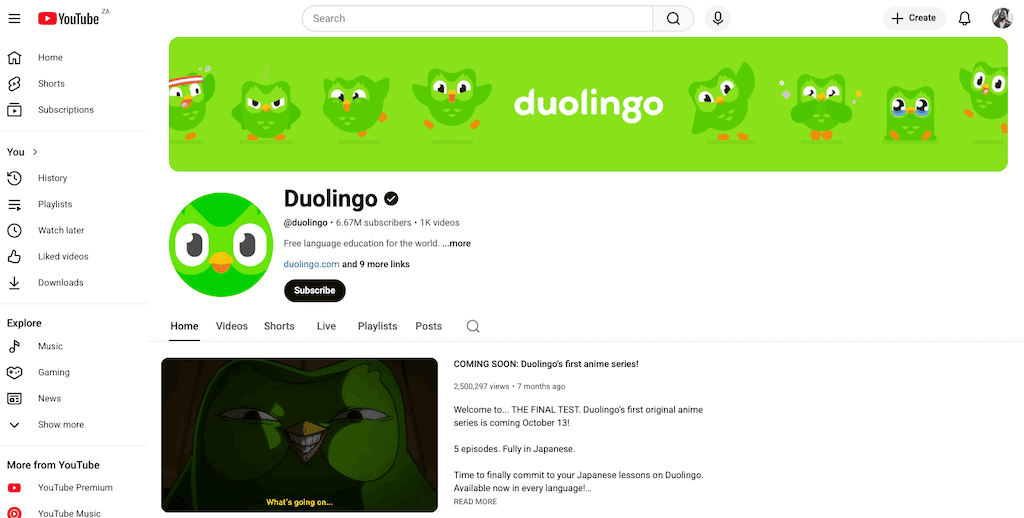
YouTube channel ideas for B2B brands and agencies
B2B YouTube is a different game than B2C. The buying cycle is longer, decision-makers are more skeptical, and the content needs to demonstrate expertise rather than trigger emotion. These channel ideas are built specifically for brands selling to other businesses, including marketing teams and enterprise organizations.
36. Industry insight and trends content
B2B buyers use YouTube to stay informed, not just to find demos. Brands that consistently publish credible, opinionated takes on what’s happening in their space, and what it means for the people watching, build trust with decision-makers long before a sales conversation begins.
An opinion is more useful than a summary. Viewers who find a brand’s perspective genuinely valuable are more likely to share it internally within their organization, which is often how B2B brand awareness actually spreads.
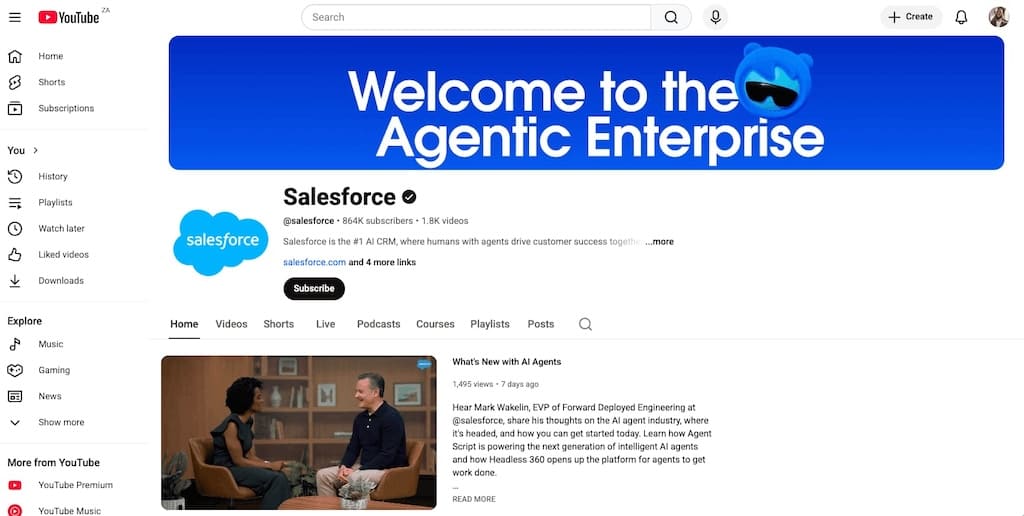
37. Webinar recordings and panel discussions
Repurposed webinar content is one of the most efficient assets a B2B brand can put on YouTube. The production cost is already sunk, the subject matter is usually high-value, and the format signals credibility through the expertise of the people involved.
A well-organized playlist of webinar recordings effectively becomes a content library that prospects can browse before they ever engage with sales. Brands that build this library consistently report shorter sales cycles because prospects arrive already familiar with the brand’s thinking.
38. Product deep dives and feature walkthroughs
B2B products are complex enough that prospects genuinely want to understand how they work before sitting through a discovery call. Detailed product walkthroughs give those prospects what they need without requiring them to enter a sales cycle just to get basic information.
These videos also function as sales support materials. A salesperson who can direct a prospect to a specific walkthrough video saves both parties time, and the video does a more consistent job of explaining the product than any informal conversation would.
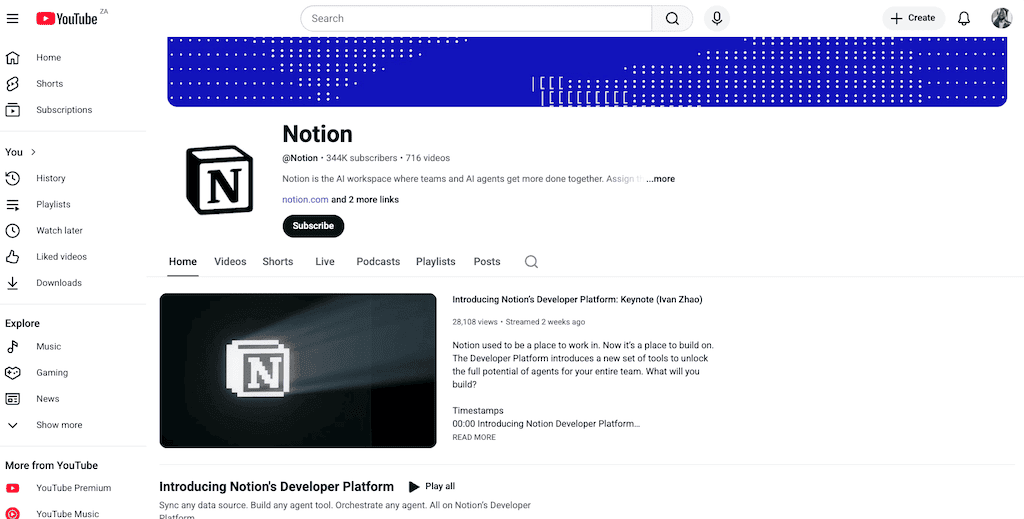
39. Customer case study and results breakdowns
B2B buyers are risk-averse. Before committing to a vendor, they want evidence that the product delivered results for someone in a comparable situation. Video case studies provide that evidence in a format that’s both more compelling and more credible than written versions.
The most effective B2B case study videos focus on a specific problem and a specific outcome, with the customer doing most of the talking. When a customer describes a workflow challenge and explains how it was solved, that narrative carries more weight than any claim the brand makes about itself.
40. Thought leadership and executive content
Executive content from founders, product leads, and subject matter experts gives a B2B brand a human face and a distinct perspective. This performs well in enterprise sales cycles because buyers making high-stakes decisions want to know who they’re ultimately working with.
The format can be as simple as a recording of an executive presenting at an industry conference, a structured conversation between two subject matter experts, or a regular series where a founder shares their thinking on topics relevant to their buyers.
YouTube channel ideas for food brands
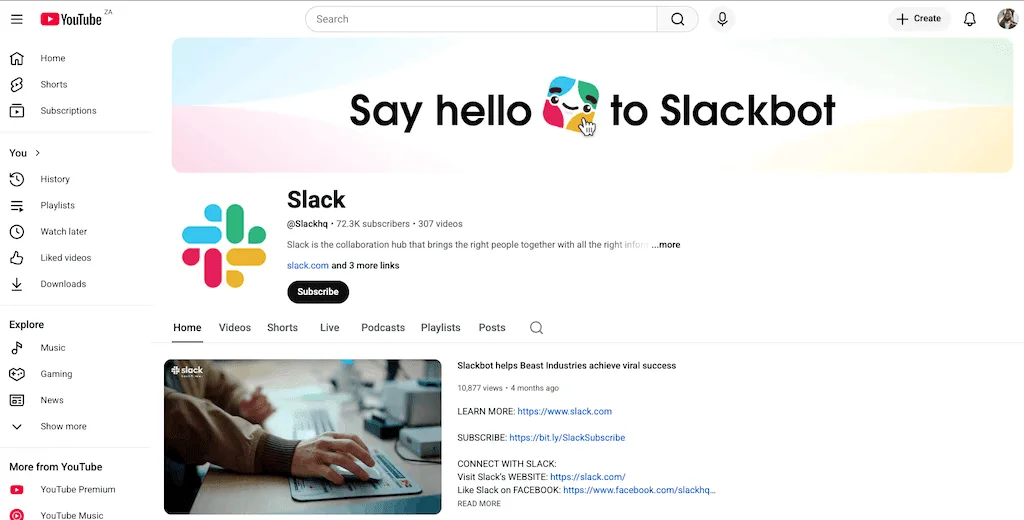
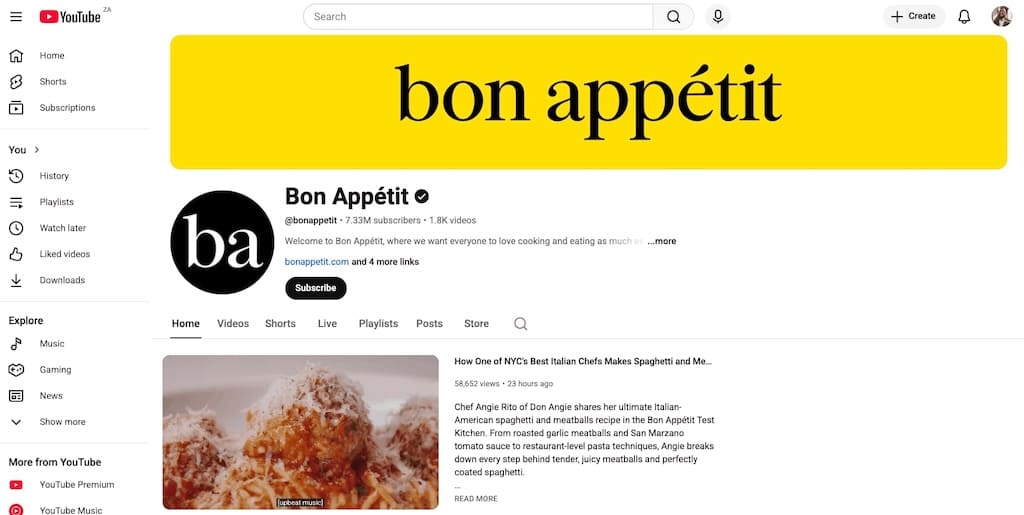
41. Recipe development and cooking technique videos
Cooking content on YouTube has one of the highest engagement rates of any category because it combines practical value with genuine entertainment. Viewers don’t just watch once; they come back when they want to cook the same dish again, which drives the kind of repeat views that build loyal audiences over time.
For food brands, the most effective recipe content features the brand’s products in a genuine cooking context rather than a promotional one. The product earns its place by doing something in the recipe that a generic version wouldn’t.
42. Behind the scenes and sourcing stories
Food brands with a real story about ingredient sourcing, production methods, or culinary heritage consistently find strong audiences on YouTube. Viewers who care about where their food comes from are actively looking for this content, and it builds the kind of brand affinity that translates into repeat purchases.
This format works especially well for premium or specialty food brands, where the story behind the product is part of what justifies the price point. A viewer who understands how something is made is more likely to appreciate the care that went into it.
43. Trend response and seasonal content
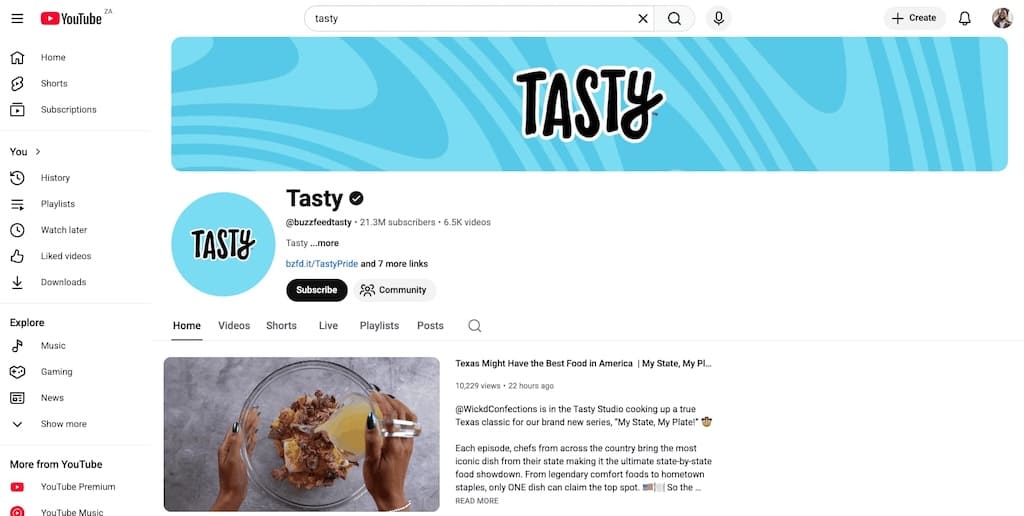
Food trends move quickly, and brands that respond with speed and quality capture search traffic at the moment it peaks. When a dish or food moment goes viral, the viewers who head to YouTube looking for recipes and technique videos are a highly engaged, high-intent audience.
Seasonal content also provides a reliable content calendar structure. Holiday recipes, summer grilling content, and back-to-school meal prep ideas generate predictable traffic at predictable times, which makes planning and production considerably easier.
44. Food science and educational content
Food science content attracts a highly engaged niche audience that overlaps significantly with the kind of enthusiastic home cook who shares content, leaves comments, and advocates for brands they believe in. These viewers have disproportionate influence compared to passive recipe viewers.
Content that explains why a technique works, what actually happens during a chemical reaction in baking, or what distinguishes a specific regional cuisine builds credibility in a way that pure recipe content simply doesn’t.
45. Product review and taste test formats
Honest taste test and product review content performs well because it mirrors what viewers already do before buying a food product they haven’t tried. Brands willing to participate in genuine comparative taste tests, including ones where a competitor performs well, build significant credibility.
This format also creates natural partnerships with content creators in the food space. A brand that facilitates genuine taste test content rather than controlled promotional placements consistently generates more authentic and shareable results.
YouTube channel ideas for pet industry brands
46. Pet care and training tutorials
Training content is among the most searched categories in pet YouTube because every new pet owner faces the same immediate problems: housetraining, stopping bad behaviors, building basic commands. Brands that address these problems effectively capture an audience at the exact moment they’re forming loyalty to a pet brand.
Specificity wins here. A video titled “How to crate train a puppy in a week” will consistently outperform “Puppy training basics” because it matches the actual search behavior of someone dealing with that exact situation right now.
47. Health and nutrition education for pet owners
Pet health content generates strong engagement because pet owners are emotionally invested and often under-informed. A video that clearly explains what to look for in pet food ingredient lists, or how to spot early signs of a common health issue, builds the kind of trust that translates into long-term brand loyalty.
For pet food and supplement brands, this content also functions as category education. A viewer who understands why ingredient quality matters is more likely to choose a higher-quality product, and the brand that taught them that is in a strong position to benefit.
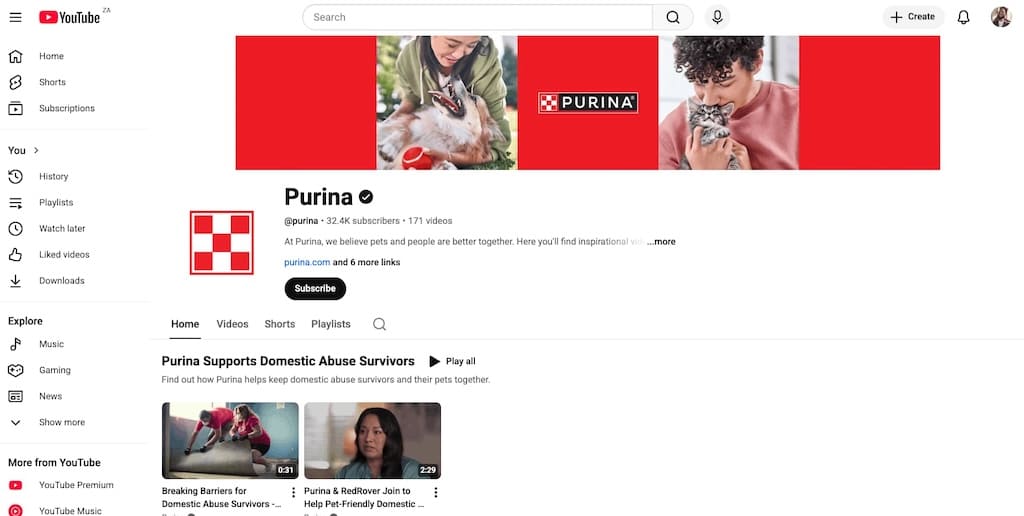
48. Product reviews and unboxing content
Pet product reviews attract viewers in the consideration phase of a purchase. Honest, detailed reviews of toys, food, accessories, and health products help pet owners make confident decisions, and brands associated with that kind of trust benefit from it even when they’re not the specific product being reviewed.
Unboxing content, especially for subscription boxes and new product launches, drives strong early views because it satisfies curiosity at the moment it’s highest. Brands that send products to channels their audience trusts extend their reach into an engaged community at minimal cost.
49. Breed-specific and species-specific content
Breed-specific content performs well in search because it’s specific enough to rank and broad enough to have a real audience. Someone who just got a French Bulldog isn’t searching for generic dog content; they’re searching for French Bulldog-specific advice. A channel that provides that becomes a trusted resource fast.
This model works across the entire pet category: specific dog breeds, specific fish species, specific reptiles, specific small animals. The more targeted the content, the more likely it becomes the go-to resource for a passionate niche audience.
50. Pet owner community and lifestyle content
Lifestyle content built around pet ownership creates community in a way that purely informational content cannot. Viewers who connect with a channel’s perspective on life with animals, the funny moments, the unexpected challenges, and the deep bond that develops become long-term subscribers and natural brand advocates.
For pet brands, sponsoring or creating lifestyle content that genuinely reflects how pet owners feel about their animals is one of the most effective ways to build emotional brand affinity. It positions the brand as a fellow pet lover rather than a product company, and that distinction matters to this audience.
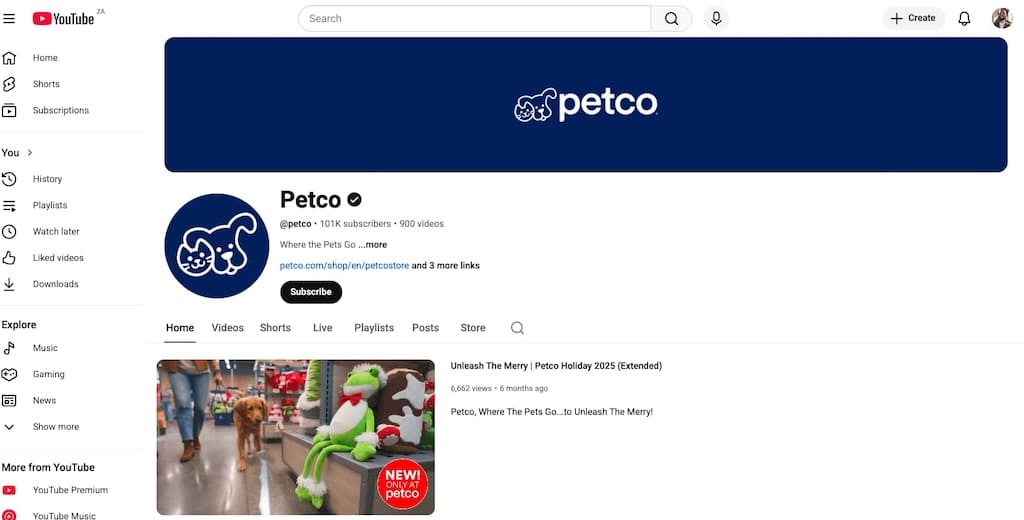
Gather inspiration from these YouTube channel ideas
The brands that build durable YouTube audiences all do the same thing: they pick a clear direction and stay in it long enough for it to work. That’s less glamorous advice than most people want, but it’s what the data consistently shows. Consistency gives the algorithm something to recommend and gives viewers a reason to subscribe.
From the 50 ideas in this guide, the ones that perform over time are the ones that match a brand’s genuine expertise to a real audience need. Pick the direction that fits what you already know and who you’re already trying to reach. Start there, build a content calendar around it, and give it enough runway to gain traction before second-guessing the strategy.
If you’re managing YouTube as part of a broader social media strategy, Vista Social keeps everything organized in one place so you can focus on creating content instead of managing the logistics around it. Try Vista Social’s YouTube management tools and see how much easier it is to run a consistent, multi-platform strategy when it all lives in one dashboard.
YouTube channel ideas FAQs
What makes a good YouTube channel idea for a brand?
A good YouTube channel idea maps a genuine area of expertise to a specific audience need. The channel should be able to answer a clear question for viewers, such as “where do I go to learn this?” or “who covers this topic well?” A content direction that can’t answer one of those questions will struggle to build a consistent audience.
How do I choose between a broad or niche YouTube channel direction?
Niche channels typically grow faster and retain subscribers more reliably than broad ones, especially in competitive categories. A channel built around a specific type of content for a specific audience gives the algorithm a clearer signal about who to recommend the videos to. Broad channels can work, but they require significantly more content volume to gain traction.
How often should a brand post on YouTube?
Consistency matters more than frequency. A brand posting one high-quality video per week will outperform one that posts daily for a month and then goes quiet. Start with a cadence you can actually sustain. Most brands find one or two videos per week is a manageable and effective starting point.
Do YouTube Shorts help a brand’s channel grow?
YouTube Shorts can drive subscriber growth, but subscribers acquired through Shorts don’t always engage with long-form content at the same rate. The most effective approach uses Shorts to surface specific moments or topics from longer videos, driving viewers who want more toward the full content. Building a channel on Shorts alone tends to create an audience that’s difficult to convert.
What should a brand do before launching a YouTube channel?
Before launching, have at least six to eight videos ready to publish. Starting with only one or two signals to both viewers and the algorithm that the channel may not be active for long. A small content library at launch also helps the algorithm understand what the channel is about and who to surface it to.
Try Vista Social for free
A social media management platform that actually helps you grow with easy-to-use content planning, scheduling, engagement and analytics tools.
Get Started NowAbout the Author

Content Writer
Orion loves to write content that refuses to be boring. As part of Vista Social, he helps brands, creators, and agencies stop doom scrolling and start winning with social media. When he's not in front of a keyboard, he's watching films in IMAX with his wife, dissecting football tactics (the European kind), and getting lost in a good book.
Loading related tools...

The most complete social media management platform for teams who demand more.






Tools
PublishingAnalyticsEngagementIntegrations
FacebookInstagramLinkedInRedditSnapchatThreadsTikTokX (Twitter)YouTubeMCPVista Page (link-in-bio)All IntegrationsCopyright © 2026 Vista Social LLC. All Rights Reserved.