

Published on August 19, 2026
8 min to read
What Social Media Attribution Can and Cannot Tell You

Summarize with AI

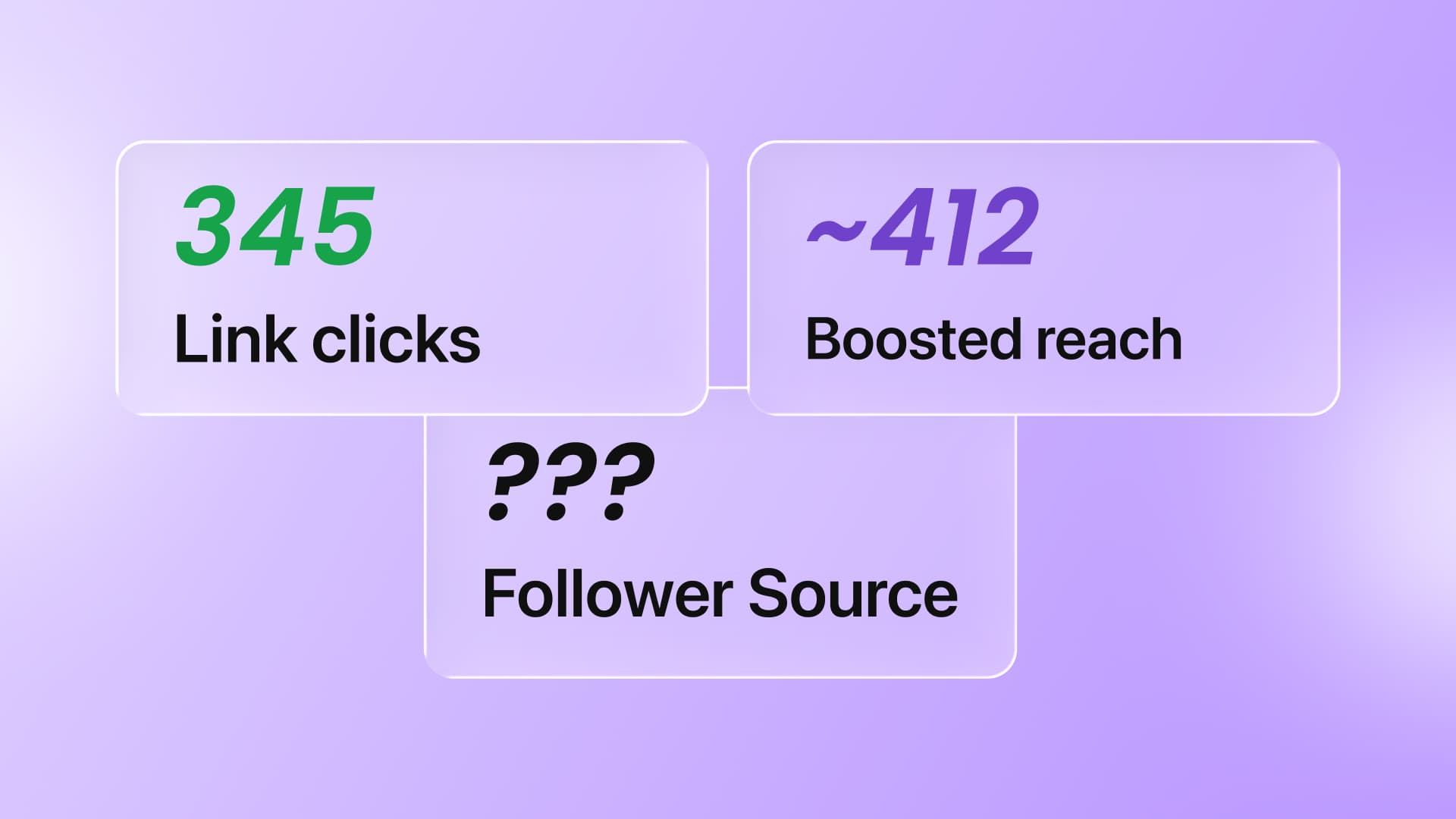
Table of contents
Summarize with AI

ChatGPT

Claude

Perplexity
Share

Vista Social

X (Twitter)


The post with 3,000 comments sits at the top of your report. Someone senior points to it and asks: “How much business did that bring in?”
You can show reach, replies, profile activity, and maybe a few clicks. But social media attribution depends on a recorded link between the post and what the person did next. Without it, a confident revenue number would be fiction.
Social teams are not alone in feeling that pressure. Duke Fuqua surveyed 281 senior marketing leaders in April 2025.
It found that 63% faced greater pressure from CFOs to prove marketing’s value. Sort each question into one of three groups. The platform recorded the link; your team needed to build it before publishing, or no reliable link exists.
Attribution starts with an identifier. The report comes later.
The short version
- Look for an identifier: A click ID, tagged URL, promo code, or native result must connect the post with the later action.
- Set it up early: Many useful signals exist only because you create the identifier before publishing.
- Check each network: A signal shown for one post type or inside one native app may be absent elsewhere.
- Name the limit: Separate causal results from directional evidence inside the report.
An attribution identifier is a shared marker that connects something you published to something a person did afterwards. Without one, a connection between the two can be inferred but not measured.
| Attribution bucket | What it means | Example question |
|---|---|---|
| The platform records it | The network keeps a direct connection between the post and the action. | Which LinkedIn post gained followers? |
| Your team builds it | Tracking must exist before the audience acts. | Which post sent visits to our campaign page? |
| No identifier exists | The person’s path leaves nothing reliable to connect. | Did this viewer search for us and buy next week? |
Table of contents
What does the platform record for you?
Start with the network’s own analytics. Some platforms tie a post to a follow, profile visit, click, view, or engagement. That link is strong because both actions happened inside the same system.
Scope matters. Although Instagram documents follows from a Reel, the help page does not make the same promise for every post type. LinkedIn reports followers gained from a post, while YouTube breaks subscriber sources down by content surface.
Can you tell which post gained followers?
Sometimes, but general follower analytics are not enough. Check whether the network, post type, and reporting screen preserve the post-to-follow link.
| Network | Direct follow signal found in current official documentation | What the documentation supports |
|---|---|---|
| Yes, for Reels | Native Reel insights include follows attributed to viewing that Reel. | |
| Yes | Individual post analytics include followers gained and profile viewers from the post. LinkedIn calls these estimates. | |
| YouTube | Partial | Subscriber sources separate videos, Shorts, live streams, posts, and other surfaces. The available detail depends on traffic and content type. |
| TikTok | No comparable field located | The documented Video Object includes views, likes, comments, and shares, but no follower-gain field. |
| Facebook Pages | No comparable direct signal located | The checked Page Insights documentation covers post reach and engagement, but does not document a direct post-to-follow result. |
| Threads | No comparable direct signal located | Native Threads insights document follower growth trends, not a direct follower result for each post. |
Even when a result appears in the native app, the API may not expose it. Check the native screen, then confirm whether your reporting tool receives the signal.
Use Instagram analytics to read the surrounding metrics, but keep the claim narrow. A post-level result supports “this content produced this many follows.” It does not show whether those followers became customers.
What do you have to set up yourself?
Because a sale happens outside the social network, it needs a bridge back to the post. Tagged links, promo codes, dedicated pages, and a source question at signup can create one. They cannot recover activity from before the tracking existed.
A pre-commitment metric is one that only exists if you set it up before publishing, such as a tagged link, a promo code, or a dedicated landing page. No reporting tool can create one retroactively.
| Tracking method | What it can answer | Setup cost |
|---|---|---|
| Tagged link | Which network, campaign, or outgoing message sent a website visit | Low once naming rules are agreed |
| Promo code | Which code appeared in an order or booking | Low, plus code management |
| Dedicated page | Which campaign path produced visits or conversions | Medium, because the page and analytics need setup |
| Signup question | Which source the person remembers | Low, but the answer is self-reported and may be imprecise |
What does a UTM tag do?
A UTM tag adds campaign details so analytics can identify the link. When someone clicks, analytics can also save the network and content that sent the visit. The click then links the post with the website session.
Vista Social’s URL Tracking rules live under Settings → Publishing Settings. Set the campaign, source, and medium. Then use a unique ID in utm_content to trace each link use to an outgoing message.
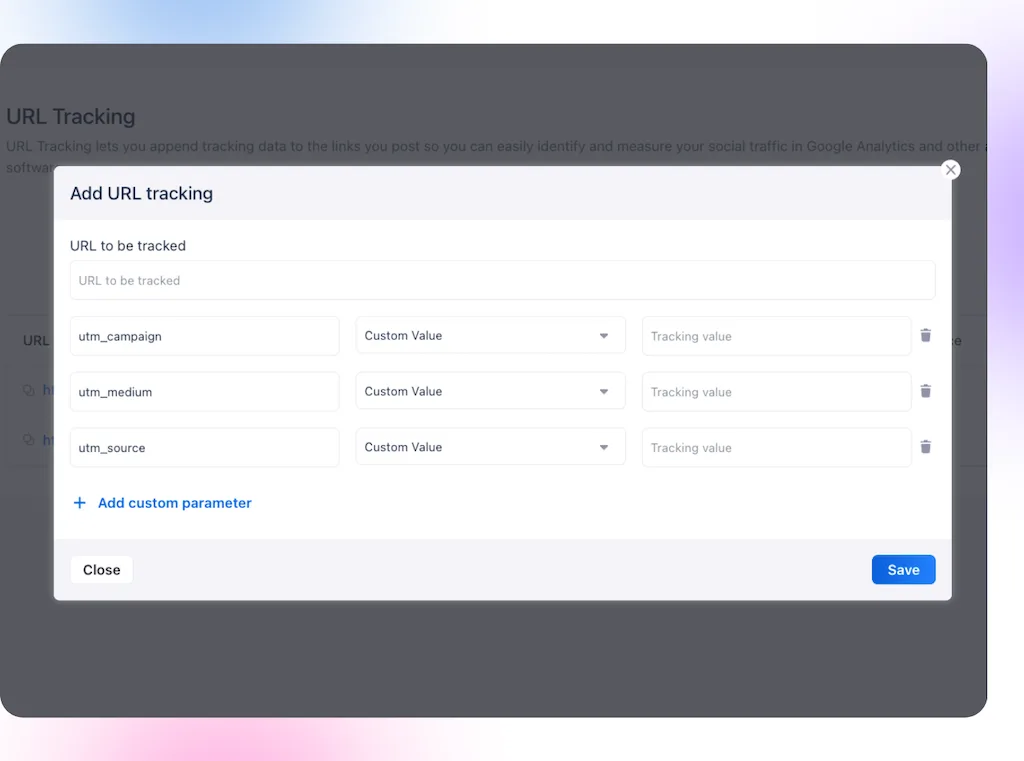
That ID can show that a visit arrived through one published link. If your site records a conversion during the same session, you can defend the link between the message and the action.
Which setup should you choose?
Match the tracking method to the action you care about:
- Choose a tagged link because the action ends on your website.
- Pick a promo code when the path may end in a store, restaurant, or phone booking.
- Create a dedicated page when one campaign needs a clean reporting path.
- Add a source question because people often return through another channel or convert offline.
Post labels solve a related problem. They do not connect a person to a purchase, but post labels keep campaign content together for later filtering. A label organizes the evidence, while a UTM or code connects the action.
Set up your tracked link before the next campaign goes live.
What is only partly connected?
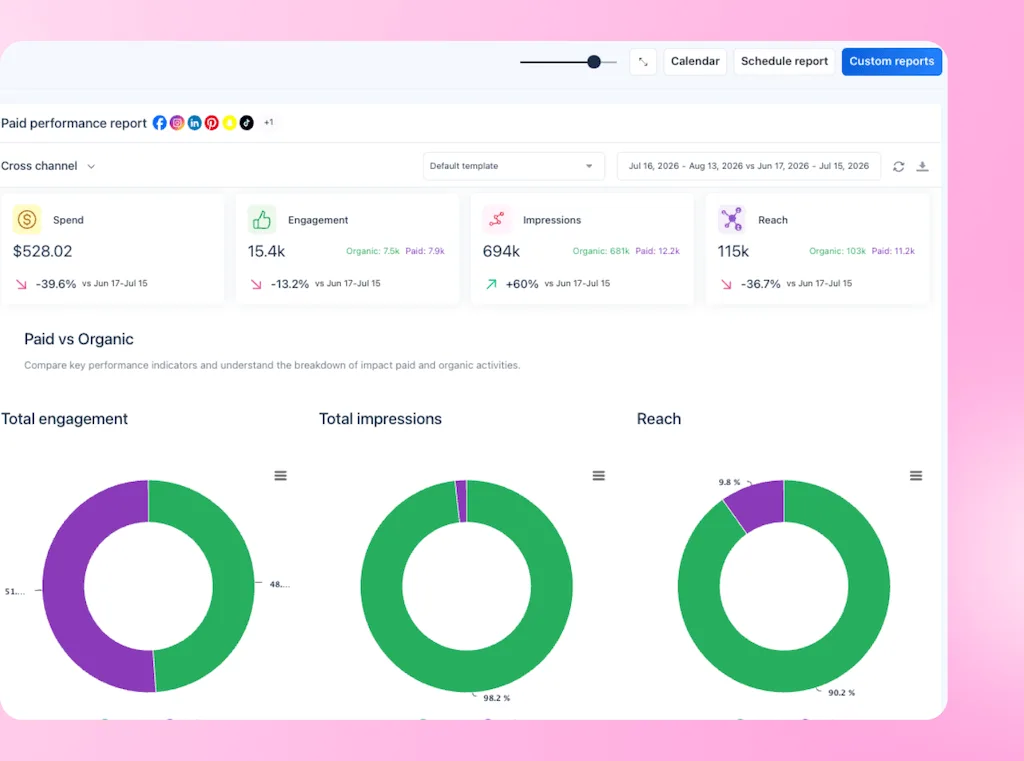
Organic and paid performance can share a campaign name without sharing one data object. A boosted post adds paid distribution to published content. A dark ad never appears as a normal Page post, so its results live on the ad side.
Vista Social’s Paid Performance reporting separates paid and organic metrics when the network makes that split available. It brings boosted posts and ad campaigns into the paid view, but those objects do not become one causal path.
Campaign labels group published posts, while paid reporting covers the ad side. If those objects have no shared ID, use them for campaign context rather than one attributed total.
Partial data should produce a partial claim. Say that the campaign generated a known amount of paid and organic activity, then state which downstream actions were tracked. Do not let a shared campaign name stand in for a missing customer path.
Which questions have no answer at all?
Somebody sees your video, remembers the brand, and keeps scrolling. A week later they search your name on a laptop and buy. The post may have helped, but no shared ID survived that path.
Two limits need different labels. An untagged campaign was not measured, so the team can fix it next time. A no-click path across time and devices is not measurable with certainty because no recorded trail remains.
Why can a viral post produce no customers?
Reach and acquisition measure different outcomes. In 2024, TIME reported that creator Marc Sebastian published 40 TikToks from Royal Caribbean’s world cruise that collected more than 55 million views. He earned no direct video revenue because he chose not to monetize them, even though he believed the visibility served a longer-term goal.
The content still had value. But attention, direct revenue, and future value need separate labels. One number cannot stand in for the others.
Dr. Karen Nelson-Field, founder of Amplified Intelligence and a media-attention researcher, put the boundary bluntly in a 2025 interview with The Drum:
“Any vendor who tells you that attention is perfectly related to outcomes is lying to you.”
Dr. Karen Nelson-Field, The Drum
For a social media manager, the lesson is plain: attention proves attention. Connect it to leads or sales only when your tracking has saved that link.
What should you report instead?
Report the strongest claim each number can support. Tagged sessions and recorded conversions can support a causal claim within the chosen model. Reach, views, saves, and follower trends, meanwhile, show content and audience patterns.
How should social media attribution appear in your report?
Use three labels so leadership can see what each result means:
- Attributed: A recorded identifier connects the social activity to the outcome.
- Directional: The metrics moved together, but the data does not prove that one caused the other.
- Unavailable: The required identifier was never captured or doesn’t exist for that path.
Put the label beside the number rather than in a footnote. It makes custom reports easier to defend because the reader can see where the evidence stops.
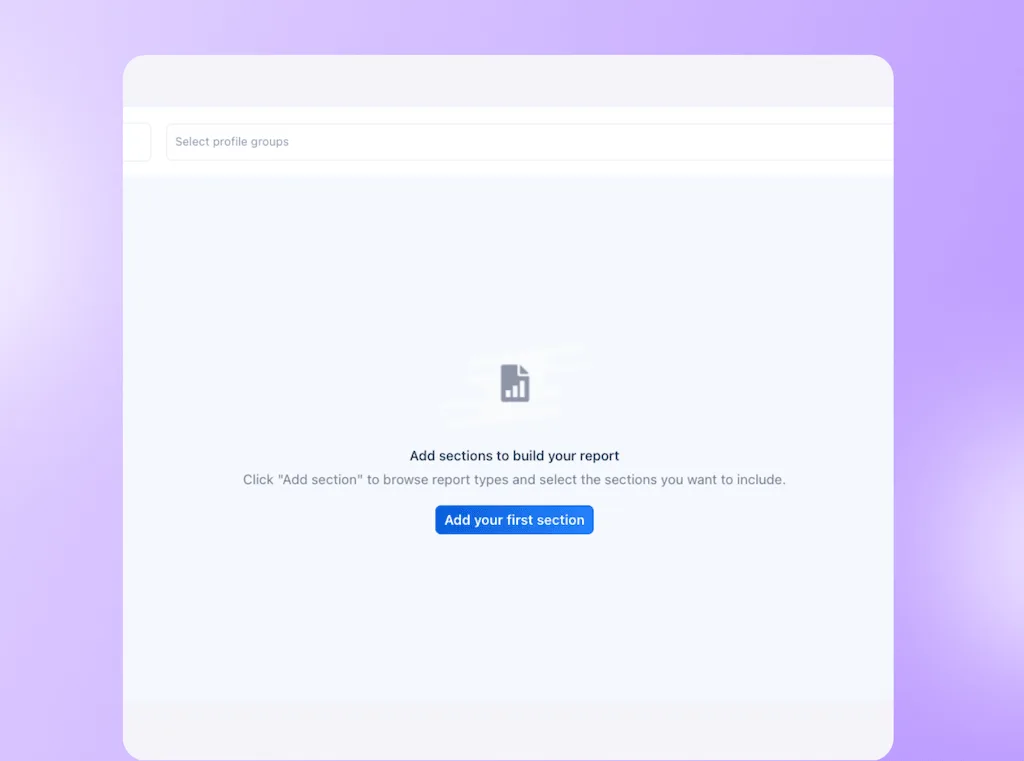
What can you actually prove about one post?
The numbers below are illustrative. Replace them with one real post before using the table in a leadership report.
| Question about the post | Evidence available | Honest answer |
|---|---|---|
| Did people engage? | 42,000 views, 1,180 reactions, 210 comments, 96 saves | Yes. Report the platform results. |
| Did it send website traffic? | 164 sessions carried the post’s unique UTM content ID | Yes. Attribute those sessions to the tracked link. |
| Did tracked visitors submit the form? | 11 form submissions retained the same campaign data | Yes, within the site’s attribution rules. |
| Did every later branded search begin with this post? | No shared identifier | Unknown. Leave the attribution field blank. |
| Did the post influence people who never clicked? | No shared identifier | Directionally possible, but not measurable with certainty. |
Where does Vista Social fit?
Vista Social helps preserve and organize the evidence you have. URL Tracking adds reusable UTM rules and a message-level ID. Post labels group campaign content, while the GA4 connection and Post Performance bring web and social results into reporting.
Its AI report summary can describe patterns in the data you collected, while AI Agents can help run defined reporting workflows. A human still decides whether the tracking supports a causal claim or only a directional one. AI cannot restore an identifier that was never recorded.
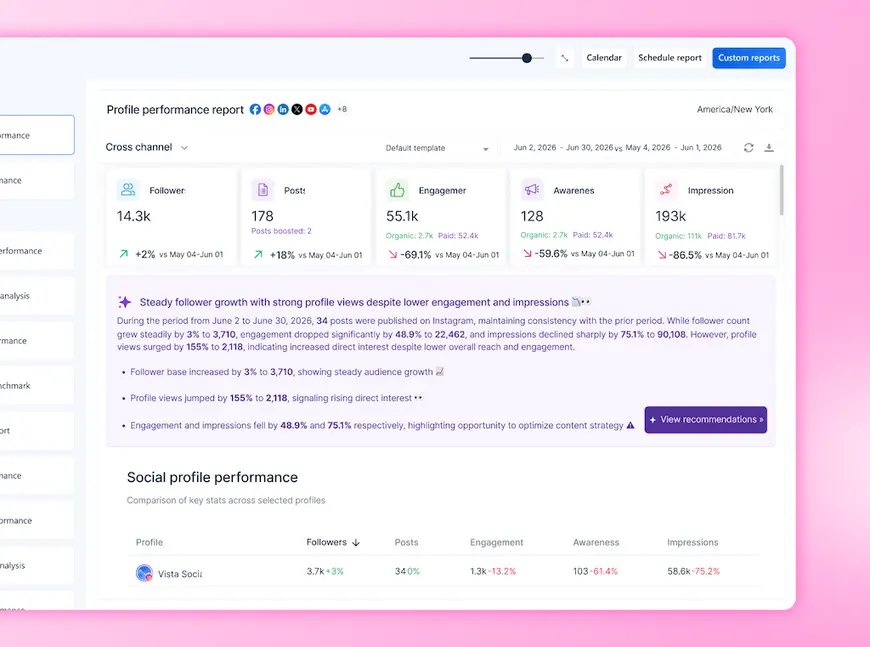
Use reporting dashboards for the numbers your audience needs. A short report with clear labels builds more trust than a larger one that blurs reach, correlation, and revenue.
What will you say next time?
When the senior person asks what the 3,000-comment post produced, you no longer need to hide behind the engagement chart. Give them the boundary and the next move:
“We can prove the reach, engagement, and tracked visits from this post. We cannot connect later direct visits or searches to it because that path carries no identifier. For the next campaign, we are adding a unique tagged link and reporting attributed results separately from directional signals.”
That answer protects the truth without underselling the work. Add one tracked link before your next campaign, then relabel one unsupported causal claim in the report you already have. Build your first tracked campaign in Vista Social.
Frequently asked questions
Can social media ROI be measured?
Partly. Revenue from tagged links, promo codes, and instrumented pages can be measured when the identifier survives through conversion. Exposure that produces no click cannot be tied to a later sale with certainty.
How are correlation and attribution different?
Attribution uses a shared identifier to connect a social action with a later outcome. Correlation shows that two patterns moved together. Correlation can guide content decisions, but it does not prove cause.
Does last-click attribution work for social media?
It works for tracked sessions where social supplied the final click. It misses people who saw the content, returned later through search or direct traffic, and converted without carrying the original identifier.
Can I add tracking to posts I already published?
You can update some live links, but you cannot recover earlier untagged activity. Treat tracking as part of campaign setup and apply the new standard from the next post onward.
How do I answer an unanswerable leadership question?
Name the missing identifier, share the closest result you can prove, and explain what you will track next time. A clear limit is more credible than a causal claim the data cannot support.
Why did my viral post produce no customers?
The post may have reached people who enjoyed the content but had no buying intent. Check audience fit and the conversion path before treating reach as acquisition.
Do platforms show which post gained followers?
Some do. Instagram Reel insights and LinkedIn post analytics document direct follower results, while YouTube offers subscriber-source reporting at several content levels. Availability varies by network, post type, native surface, and API, so check the current documentation before reporting it.
Try Vista Social for free
A social media management platform that actually helps you grow with easy-to-use content planning, scheduling, engagement and analytics tools.
Get Started NowAbout the Author

Content Writer
Orion loves to write content that refuses to be boring. As part of Vista Social, he helps brands, creators, and agencies stop doom scrolling and start winning with social media. When he's not in front of a keyboard, he's watching films in IMAX with his wife, dissecting football tactics (the European kind), and getting lost in a good book.
Loading related tools...

The most complete social media management platform for teams who demand more.






Tools
PublishingAnalyticsEngagementIntegrations
FacebookInstagramLinkedInRedditSnapchatThreadsTikTokX (Twitter)YouTubeMCPVista Page (link-in-bio)All IntegrationsCopyright © 2026 Vista Social LLC. All Rights Reserved.