


Merging Social Media Accounts After an Acquisition: A 90-Day Plan
November 5, 2026
10 min read

Summarize with AI

Table of contents
Share

Vista Social

X (Twitter)


An acquisition can put you in charge of a social team that already has next week’s campaign ready. Their lead knows how to get it out the door. What they need from you is clarity about which decisions now need your approval.
You’ll be working that out while customers keep sending messages and posts keep moving through the calendar. There may be new owners, but the audience still expects an answer.
Merging social media accounts can be part of the handover. Before you move anyone’s followers, though, agree on how the two teams will run the work. The 90-day checklist below gives you a starting point, with owners and checks for each stage.
The short version
- Protect ongoing work: Secure access and name interim approvers while customer replies and checked content continue.
- Decide the brand’s future: Keeping the brand can mean keeping its accounts, even when tools and reporting come together.
- Control the switch: Preserve records and compare scheduled posts before changing publishing systems.
- Explain the acquisition effect: Separate inherited audiences and historical results from growth achieved after close.
Table of contents
Why the first week needs clear ownership
Imagine Friday’s promotion is already scheduled when you discover that the person who used to approve offers has left. The scheduler renews next week, and leadership wants a combined report before the teams have agreed how to calculate engagement.
You’re being asked to clear a campaign, approve a renewal, and explain the numbers while you’re still learning how the acquired team works. The pressure comes from having to make those decisions now, not from moving a few accounts later.
You’re responsible for both social operations before you’ve had a chance to bring them together. Start by finding the decisions that need an owner today.
A 90-day plan for integrating the acquired brand
Take this checklist to the integration meeting and put names against the suggested roles. Start jobs together where you can. The windows help you review progress; they don’t mean you must wait for the next phase or finish a brand merger within 90 days.
Days 0 to 7: Secure access and cover live work
- Action: Test access, assign customer coverage, start exports and renewal checks, and set temporary review rules.
- Suggested owner: Platform owner, supported by IT and the acquired brand’s lead.
- Done when: Every known account has tested access or a named recovery owner. Sensitive posts have an approver, backup and someone authorized to hold them.
Days 8 to 30: Decide which accounts stay and test the setup
- Action: Confirm what will happen to the brand and test the new setup with an approved post.
- Suggested owner: Head of Social, with brand leadership and the publishing lead.
- Done when: You know what will happen to each account, or who will decide by when. Exports and scheduled work are checked before switching tools.
Days 31 to 60: Switch publishing and check the first report
- Action: Move publishing work once its checks pass, agree who will own it and prepare the first combined report.
- Suggested owner: Publishing lead and reporting lead, each named for their part.
- Done when: Each post or automated job has only one system set to send it. The report separates inherited audiences from performance since the deal and explains any gaps.
Days 61 to 90: Check the handover and make approved account changes
- Action: Ask both teams what’s still getting in their way. Begin account changes only when the business has approved them and the platform allows them.
- Suggested owner: Head of Social and the acquired brand’s lead.
- Done when: Accounts you’re keeping have owners. Before retiring another, you’ve checked its audience notices, redirect links, customer coverage and saved records.
If the acquired business is keeping its own team, budget and contracts, you may only need shared oversight for now. A single-account acquisition may need a straightforward handover rather than this full program. Use the parts that match the work.
Secure access without stopping daily work
Keep replies and checked posts moving on the accounts you can reach while the access work carries on. There are four things worth checking before anyone leaves the handover:
- Find every business account: Include profiles, ad accounts, dormant channels, and assets managed by an agency. Record who administers each one and how the business can recover access.
- Test the continuing admin: Make sure someone staying with the business can manage the account. Name an owner for any transfer or recovery still waiting on approval.
- Keep recovery with the business: Use business-controlled contact details where supported, approved multifactor authentication, and a company vault for business secrets. Don’t ask for personal passwords.
- Remove departed staff promptly: Coordinate prompt removal of departed staff’s access with IT. Verify continuing admin access in parallel and escalate recovery gaps immediately. Review agency and integration access too. Removing someone from your social platform won’t remove a role they still hold on the network itself.
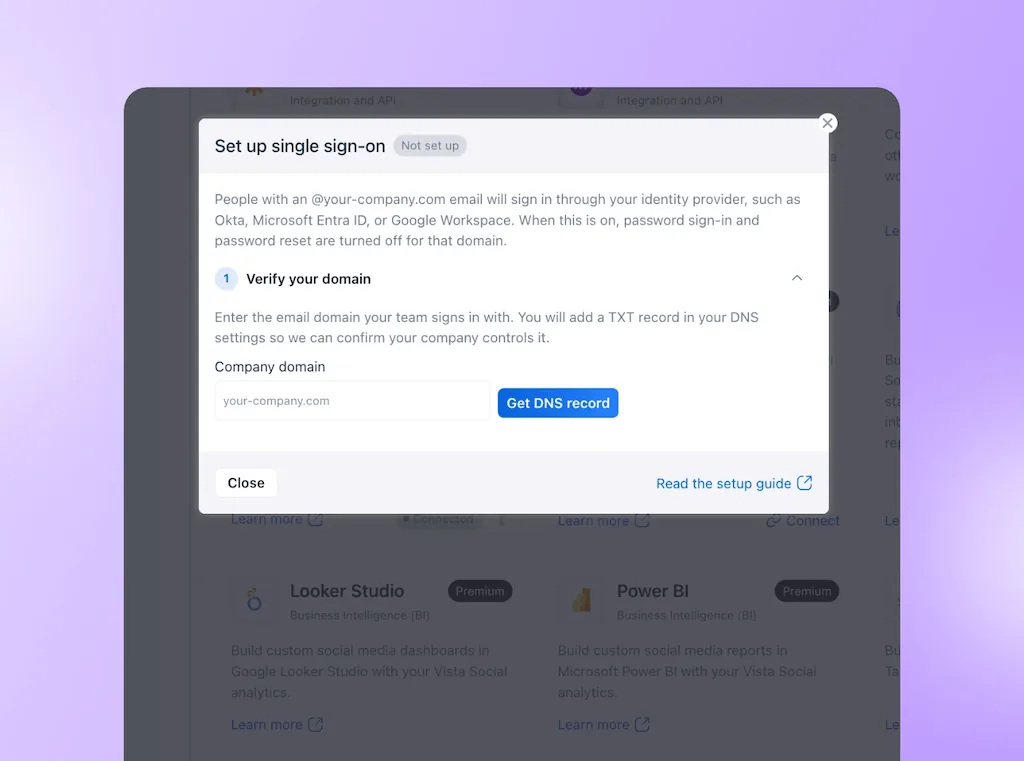
Some networks require a real person’s identity to administer a business asset. Give the right people business permissions without taking over their personal accounts. Our access guide covers that ongoing process.
Once people can reach the right accounts, make sure they also know which posts they can release.
Give sensitive posts a temporary reviewer
The acquired team shouldn’t have to guess whether an old approval still counts. Agree on a temporary review route for sensitive content while routine, checked work continues.
- What needs another pair of eyes: offers, prices, product claims, regulated subjects, and statements about the acquisition.
- Who can give the answer: A named approver and backup, plus someone who can hold a scheduled post when a question is unresolved.
- How the check happens: Required approval and publishing permissions, with native publishing and automations included in the review.
If your setup can’t reliably separate those categories, use a broader review requirement for now. A rule people have to remember under pressure is a weak safeguard.
Work out the permanent process with the acquired lead once the immediate gaps have owners. Our governance guide covers the detailed design.
Move publishing without losing posts or history
The renewal notice may be the first thing that gets everyone’s attention. It still isn’t a safe migration deadline. Before cancelling anything, ask the acquired team to show you what they use it for.
In Gartner’s 2023 survey of 405 marketing leaders, respondents said they used an average of 33% of their marketing technology’s capabilities. That’s a reason to examine overlap, not to assume you can remove a tool because its name sounds familiar.
- Open the exports: Save reports, content, approvals, and listening records before cancellation, then check the files. Find out what’s missing while you can still get back into the old tool.
- Check what’s still due to publish: Compare future posts, recurring schedules, and automated replies. At the switch, each job needs one system responsible for sending it.
- Try a real piece of work: Run an approved post, a customer handoff, and a report in the new setup. Keep the old system available until the checks and required exports are complete.
- Agree on what happens if it fails: Hold the affected batch and inspect the live account before retrying. Confirm which system will send it, so the fallback doesn’t publish a second copy.
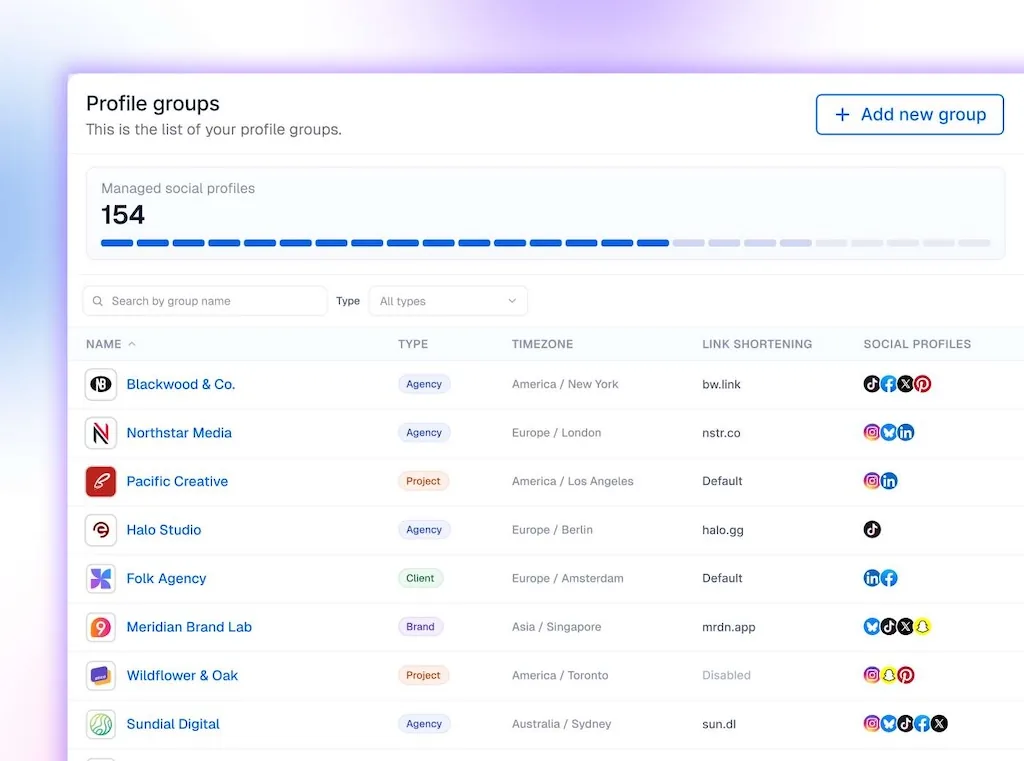
Vista Social’s multi-brand setup lets both brands work in one account with separate permissions. Keep a specialist tool if it does a job the combined setup can’t cover; our stack guide helps with that choice.
The tool switch also changes where the numbers come from. Give that its own check before the first leadership report.
Separate acquired audiences from new growth
Adding a brand can make the company-wide audience look much bigger overnight. Your first report needs to explain that change before anyone credits the content strategy.
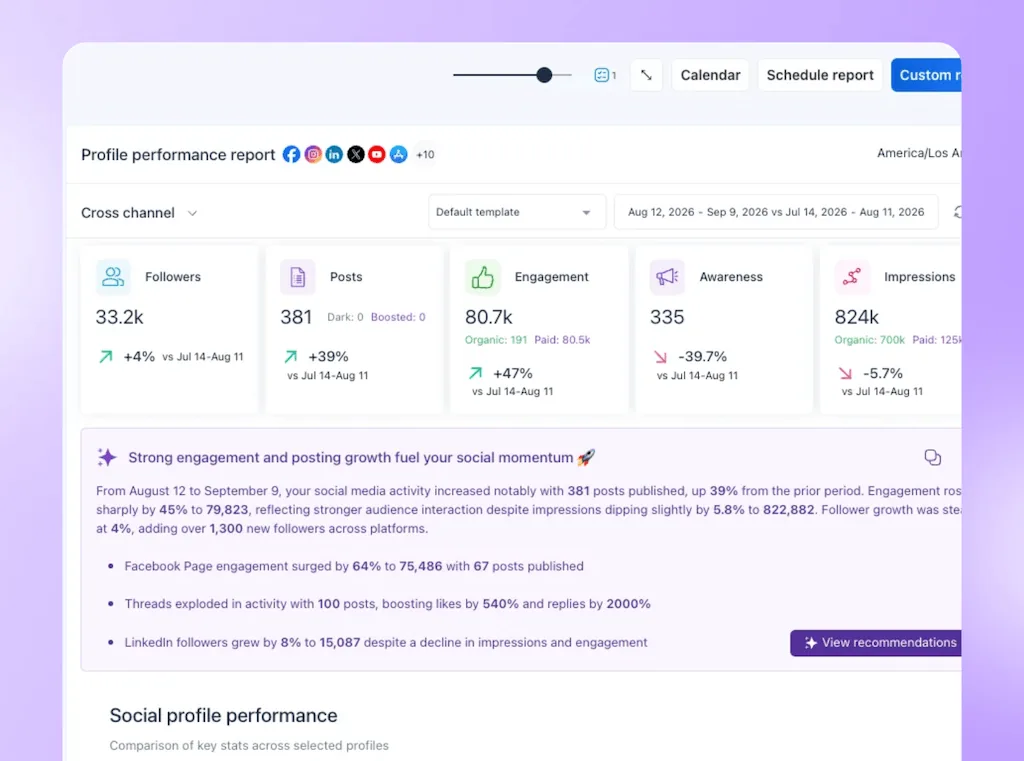
- Save the starting figures: Keep the profile IDs, audience totals, recent results, reporting dates, and metric definitions as they stood when the deal closed.
- Show the brands separately: Present the parent and acquired brand before adding company-wide totals. Mark the acquisition date and say which profiles joined the report.
- Check what you’re combining: Inherited followers aren’t organic growth. Reach can overlap between brands, and you need the underlying counts before combining engagement percentages.
- Be clear about a broken trend: Compare earlier periods only where you can match definitions, dates, time zones, and paid or organic treatment. If the data won’t support that, explain the gap.
Keep the people who know the audience involved
The acquired team can tell you why an apparently ordinary post worked, which complaints come back every month and which creator relationships need care. Ask for that knowledge before replacing their templates.
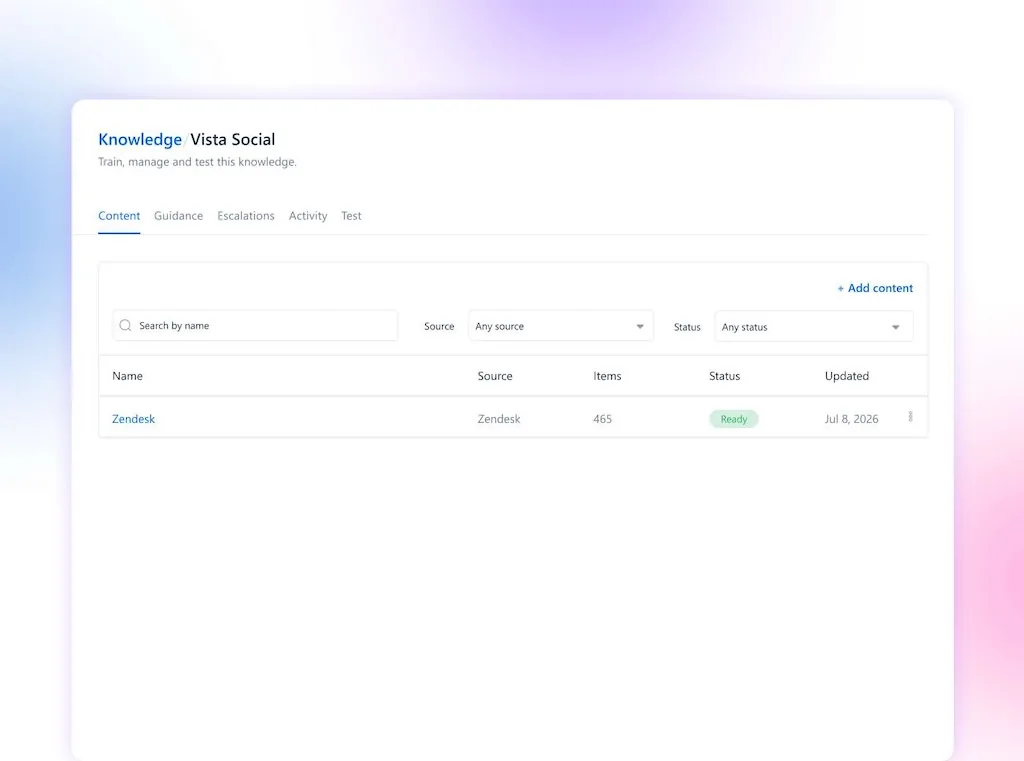
- Keep the audience context: Save useful examples, recurring questions, and promises already made in comments or messages.
- Be clear about creative decisions: Tell the lead what they can keep deciding and which company requirements change.
- Give AI the right brand examples: Keep voice instructions specific to the acquired brand. Don’t overwrite them with the parent’s guidance simply because the tools are coming together.
Check the publishing handover in Vista Social
Start with the acquired brand’s next batch of posts. Have your company’s approved AI assistant compare the old publishing list with the Vista Social calendar through MCP (Model Context Protocol).
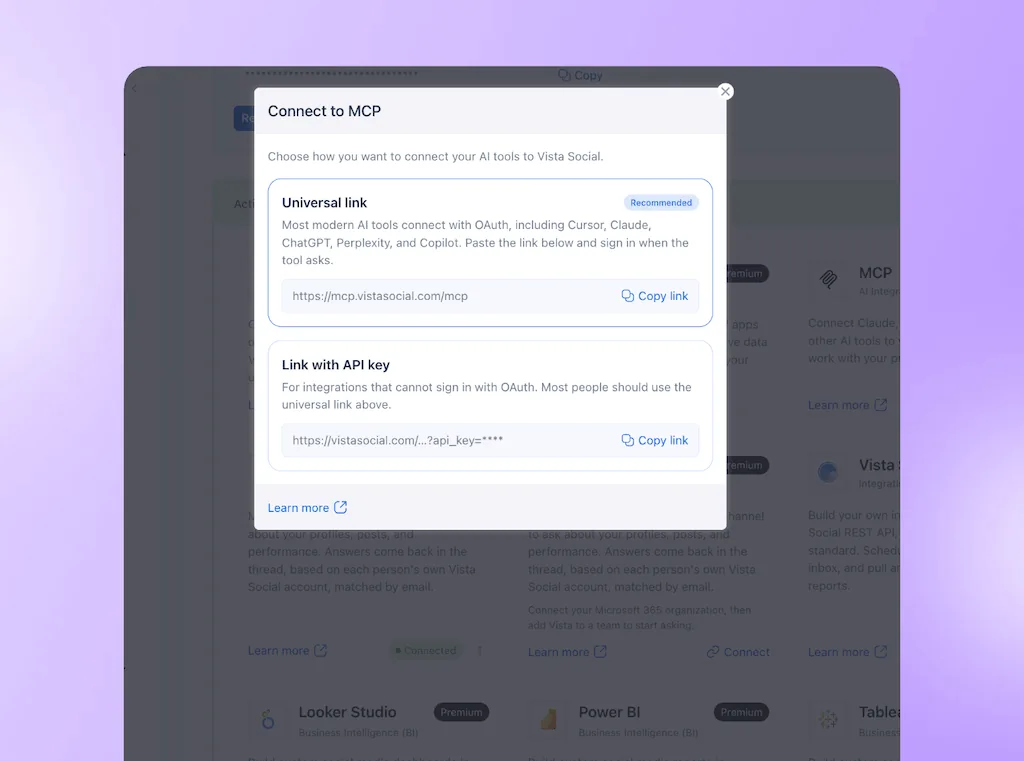
MCP lets the assistant work within your Vista Social permissions. You’ll still need to supply the old export; connecting the profiles doesn’t give it access to the previous scheduler.
- Give the brand its own group: Put the acquired profiles together and give the continuing team the access it needs.
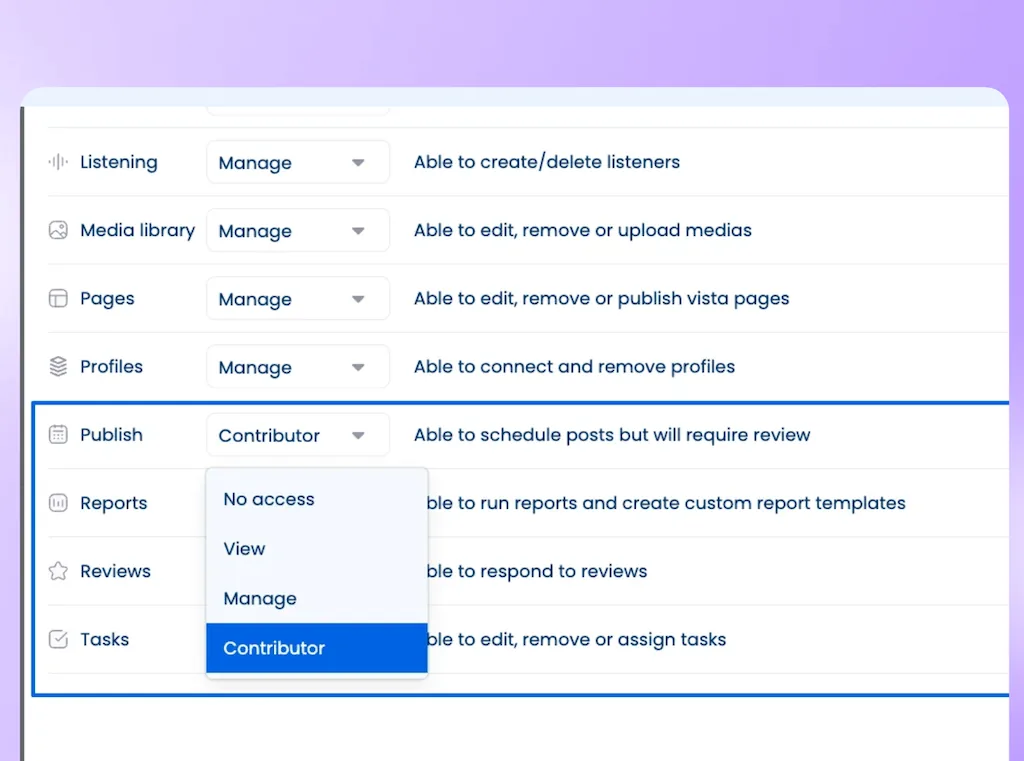
- Make the review part of publishing: Use the Contributor role, where posts must be checked, with the group’s default approval workflow. Putting accounts in a group doesn’t, on its own, require approval.
- Ask AI to find possible gaps: Supply an approved, non-sensitive export, select the Vista profiles and ask for possible missing posts, duplicates or status differences. Have your publishing lead check both sources before authorizing a change.
Single-step approval is available across paid plans; multi-step workflows require Advanced, Scale or Enterprise. Vista Social doesn’t merge native accounts or automatically import another tool’s historical records.
Put the handover to work on one campaign
Your acquired team should be able to get on with the next campaign without guessing which rules have changed. Work through one upcoming batch together, agree who signs it off and confirm where it will publish. That gives both teams something useful to build on while the bigger brand decisions take shape.
Start your 14-day free trial to try that handover in Vista Social. Check that the right people can work on the brand, required reviews happen before publishing and both teams can follow the calendar. Expand from there as each part is tested.
Frequently asked questions
Does putting two brands in one dashboard merge their accounts?
No. You can manage both brands in one place while keeping their accounts and audiences separate. Any native account merge or follower transfer still depends on the network’s rules.
What happens to content when you merge Facebook Pages?
Meta says the merged-away Page’s posts, photos, reviews, ratings and username are deleted. The operation cannot be undone. Save the records you need and review the current eligibility rules before requesting it.
Can followers move from an acquired LinkedIn Page to the parent?
LinkedIn reviews follower-migration requests separately through support. An acquired-page banner and affiliation don’t themselves combine followers, admins or analytics, so keep both Pages managed while the request is assessed.
Should the acquired brand keep its own social accounts?
If customers will still know it as a separate brand, keeping its accounts may be the right choice. Agree that with leadership before moving followers or changing names. Shared tools and approvals can sit behind an account that still looks familiar to its audience.
Does social integration have to take 90 days?
No. Use the windows to review progress, not to hold up work that’s ready. Access recovery, contracts or platform decisions may take longer, and the brand itself doesn’t have to merge by day 90.
What should happen first after the acquisition closes?
Make sure the business can access its accounts and the team knows who can approve sensitive posts. Keep customer replies covered while you check scheduled work, renewals and exports. Those jobs can start before the final brand decision.
About the Author

Content Writer
Orion loves to write content that refuses to be boring. As part of Vista Social, he helps brands, creators, and agencies stop doom scrolling and start winning with social media. When he's not in front of a keyboard, he's watching films in IMAX with his wife, dissecting football tactics (the European kind), and getting lost in a good book.