


Published on October 1, 2026
14 min to read
How to Get Your Brand Recommended by ChatGPT and Perplexity

Summarize with AI

Table of contents
Summarize with AI

ChatGPT

Claude

Perplexity
Share

Vista Social

X (Twitter)


ChatGPT or Perplexity may narrow a buyer’s shortlist before that person reaches your website. An absent brand, an old price, or the wrong use case puts the evaluation on the wrong footing before your demand team can see it.
Run a buyer question with web search active and open the sources beneath the answer. You may find a comparison page, a review profile, a video, or a community thread that predates your latest product changes.
AI recommendations reflect the wider source footprint around your brand: owned pages, earned coverage, reviews, and public conversations.
In BrightLocal’s 2026 US consumer survey, use of generative AI for local recommendations rose from 6% to 45% in one year. That local-business result shows the direction of buyer behavior, not a universal benchmark.
This playbook gives every brand or region a repeatable baseline, a prioritized source list, and a named owner for the work that follows.
Table of contents
The short version
- A citation and a recommendation are separate outcomes. A page can support an answer even when the assistant leaves your brand off the shortlist.
- Start with a repeatable baseline. Run 15 buyer questions in ChatGPT, Perplexity, and Google AI Mode, then record the brands named, reasons given, visible sources, and factual errors.
- Work from the source list. Fix inaccurate brand facts, strengthen useful owned pages, improve review profiles, and participate honestly in relevant communities.
- Keep the operating model visible. Give each brand or region an owner, route scheduled content through the required review, and report portfolio totals alongside local breakouts.
- Expect variation. Answers differ by platform, location, personalization, and date. No honest marketer can promise a recommendation or a deadline.
What AI search optimization covers
AI search optimization improves how accurately and appropriately your brand appears when buyers ask AI assistants about your category.
| Outcome | What it means | Work that supports it |
| Citation | A page appears among the visible sources. | Make the page crawlable, specific, current, and useful for the question. |
| Recommendation | The assistant includes your brand among the options that fit. | Build a credible footprint across owned pages and independent sources. |
| Accuracy | The answer describes your capabilities, audience, and limitations correctly. | Keep important facts consistent across product pages, profiles, reviews, and coverage. |
Ross Simmonds, founder and CEO of Foundation Marketing, summarized the wider shift in May 2026:
“The 10 blue links + keywords + backlinks model of SEO is over.”
Ross Simmonds, founder and CEO of Foundation Marketing
Websites still matter, but assistants can also retrieve evidence from:
- Community discussions and review profiles
- Videos and professional posts
- Editorial roundups and comparisons
- Product documentation and support content
The source mix depends on what appears for your buyers. Vista Social’s guide to LLM visibility covers the broader measurement question. This article stays focused on the work your team can complete.
Why your website is only part of the source footprint
Current research points to a mixed-source environment rather than one channel that controls every answer.
| Evidence | What the study found | How to use it |
| Foundation Marketing, 8,566 shared keywords | In three of four B2B software verticals, Reddit outranked every vendor at once on 50.3% to 66.5% of shared Google search terms. | Treat community pages as part of category discovery. The study measured Google rankings, not AI recommendations. |
| Peec AI, 30 million cited sources | Reddit, YouTube, and LinkedIn were the three most-cited domains across the AI answer products studied. | Check which social and community sources appear in your own answers. This vendor dataset does not reveal an engine’s ranking rules. |
| SurveyMonkey and Reddit, 1,202 US decision-makers | 73% trusted peer insights, compared with 55% for vendor websites, 54% for search engines, and 39% for AI chatbots. | Invest in credible peer evidence. Keep the Reddit sponsorship beside the result. |
| BrightLocal, 200,000 local AI searches | Business websites supplied 42% of citations in the local searches studied. | Keep owned pages crawlable and useful. Local findings will not transfer perfectly to every B2B category. |
Google’s July 2026 guidance confirms that AI Mode and AI Overviews use its core search systems. Your audit should therefore inspect the whole source footprint without neglecting the website.
What it looks like when brands hold their ground
The Foundation dataset shows how category conditions can change the balance between vendor and community pages.
| Category | Vendor visibility in Google’s top 10 | Reddit visibility | Practical reading |
| Unified communications | Nextiva 50.9%, RingCentral 50.2%, Dialpad 43.7% | 36.5% | Sustained educational libraries helped vendor pages remain competitive. |
| Sales technology | Salesloft 15.7%, Apollo.io 12.3% | 73.3% | Community pages held far more of the category conversation. |
Foundation linked the stronger vendor performance to glossaries, selection guides, comparisons, and category explainers. The study did not test ChatGPT recommendations or prove causation. Its useful lesson is narrower: strong owned resources can stay visible while independent sources carry the surrounding conversation.
The seven-step AI search optimization playbook
1. Record what the assistants say today
A fixed-source audit turns a vague visibility problem into a list of pages and claims you can inspect.
Keep the run conditions stable:
- Use ChatGPT with web search enabled, Perplexity, and Google AI Mode.
- Start a clean conversation for every prompt and engine.
- Use the same location and account state where possible.
- Complete the full run on the same day.
One run provides a baseline rather than a permanent ranking.
Use these prompts, replacing the brackets with details a real buyer would include:
Create one row per prompt and engine.
Record the following:
| Field | What to capture |
| Run details | Date, engine, location, and whether web search was active |
| Brands named | Every brand in the recommendation, in the order shown |
| Reason given | The stated reason each brand fits the request |
| Visible sources | Source domain and exact page URL, or “no visible source” |
| Brand accuracy | Correct, incomplete, outdated, or wrong |
| Next action | Owned page, review profile, editorial source, community, or monitor |
Use three reporting guardrails:
- A source chip shows that a page supported the visible answer. It does not prove that the page caused the recommendation.
- The source-frequency list gives you investigative leads, not a map of a private ranking system.
- Run a high-value prompt three times. Disagreement is evidence of volatility, not an average position to report.
2. Remove the technical and factual blockers
Crawler access and accurate brand facts are binary checks. Complete them before investing in outreach or new content.
| Check | What good looks like | Owner |
| Search crawler access | Robots.txt and the firewall allow OAI-SearchBot, PerplexityBot, and Googlebot where appropriate. Training crawlers remain a separate choice. | Developer or SEO lead |
| Brand facts | Category, audience, capabilities, pricing model, and material limitations agree across the homepage, product pages, location pages, and public profiles. | Product marketing |
| Page access | Important URLs load for signed-out visitors, return a successful response, contain readable text, and point to the intended canonical version. | Developer or SEO lead |
| AI-specific extras | Clear, indexable pages take priority. Google says special AI files and markup are unnecessary for its generative search features. | SEO lead |
Done when: Search crawlers can reach the public pages you want surfaced, and your core facts match across current owned profiles and pages.
3. Work on the sources already visible in the answers
Sort the source column from step one by frequency. The three most common relevant domains become this month’s assignment.
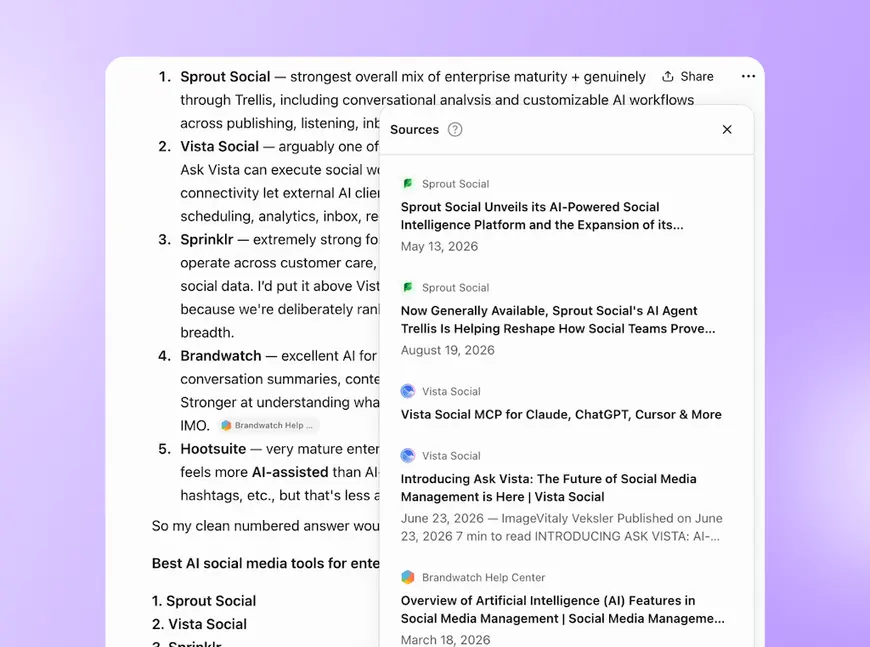
Match the action to the source:
| What you find | Responsible next move |
| A page states an old price or capability | Send the author a concise correction with a current primary source. |
| A roundup omits a product that meets its published criteria | Ask the editor to evaluate it, and provide verifiable evidence instead of promotional copy. |
| A community thread contains a factual error | Check the rules, disclose your affiliation, and correct the fact without turning the reply into a pitch. |
| A buyer question has no useful answer | Contribute a complete answer where brand participation is allowed, even when your product is only one option. |
| A video or post shapes the category but is already accurate | Build a relationship or publish a useful response, rather than asking for an unnecessary edit. |
Use a short correction note when the problem is factual:
That final sentence protects the editor’s independence. A factual correction should not become pressure to change a verdict.
Prioritize sources that meet all four conditions:
- They appear repeatedly in the audit.
- There is a match for a valuable buyer question.
- It contains a material gap or error.
- It offers a legitimate route for correction or contribution.
Monitor an accurate page instead of requesting an unnecessary edit. For an old community thread, check the rules before replying. A moderator message or a new educational post may be more useful than reviving a stale discussion.
Vista Social can schedule and publish content to Reddit, YouTube, and LinkedIn from the same calendar used for the rest of your social program. Adapt each post to the platform and keep replies human.
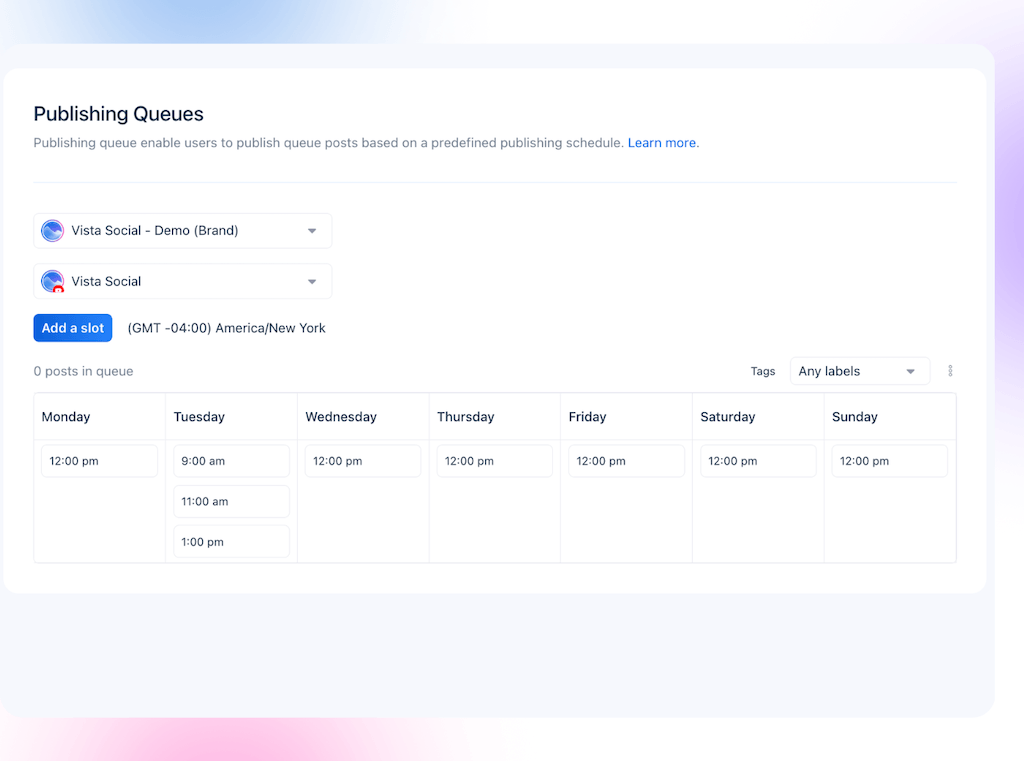
Vista Social’s guides to Reddit marketing and Reddit SEO cover the channel-specific work.
Done when: You have completed an appropriate action on the three most frequent sources where your brand was absent, incomplete, or inaccurate.
4. Put the review surface on a real workflow
Review pages give buyers specific language about strengths, weaknesses, service, and fit. They also expose neglect quickly.
| Workstream | Routine | Guardrail |
| Profile accuracy | Claim the profiles that matter and keep descriptions and product details current. | Use the same core facts as your product pages. |
| Response coverage | Assess recent reviews and send specific, useful replies where the network allows it. | Include critical reviews. Do not turn the response into a sales pitch. |
| Review requests | Ask after customers have enough experience to give an informed opinion. | Avoid review gating, prohibited incentives, and pressure toward a positive score. |
The scale of review behavior is clearest in local search. BrightLocal’s 2026 US consumer survey found that 97% read reviews for local businesses, 41% always read them, and 31% would only use a business rated at least 4.5 stars. Use those figures for local-business planning, not as universal B2B benchmarks.
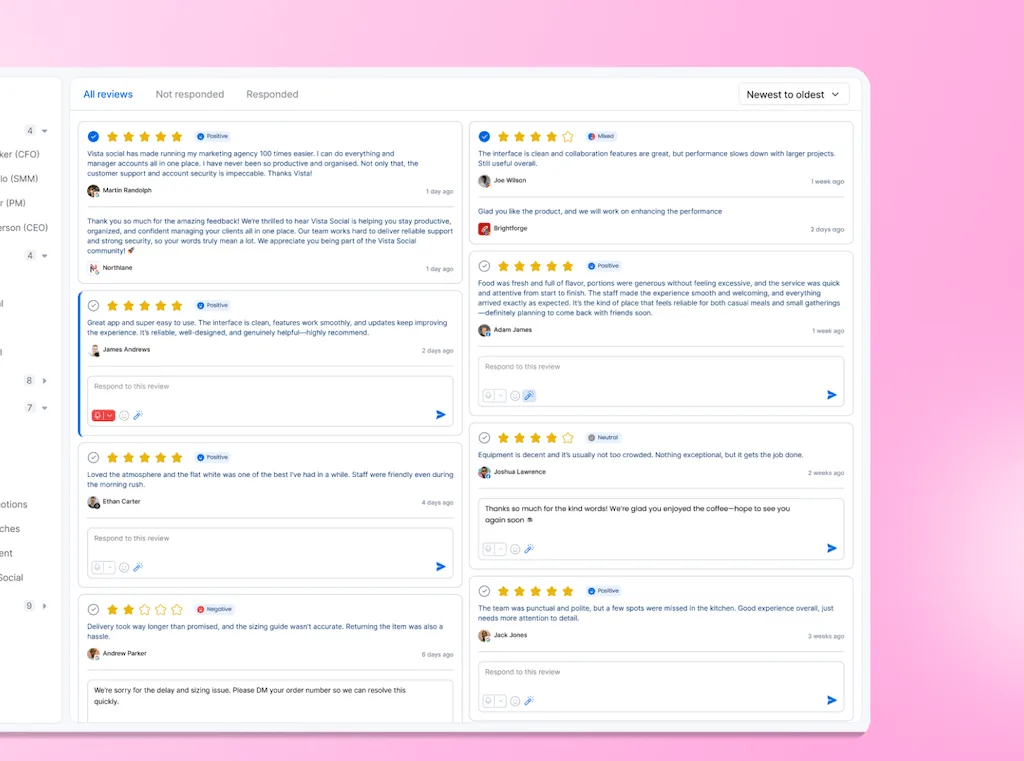
| Vista Social review workflow | Sources |
| Monitor and reply | Facebook, Google Business Profile, Apple App Store, and Google Play |
| Monitor only | Trustpilot, Yelp, TripAdvisor, and OpenTable |
| Separate workflow | G2 and Capterra |
For a wider reputation routine, use the guide to brand reputation.
Use a neutral request that asks for an honest account of the customer’s experience:
Done when: Relevant profiles are claimed, every review from the last 90 days has been assessed, replyable reviews have a response, and review requests have a named trigger and owner.
5. Publish something another source can verify and quote
Generic advice gives an assistant little reason to choose your page over dozens of similar pages. Original evidence creates a distinct source.
Publish information your team can prove:
- Anonymized customer patterns
- Product screenshots and tested workflows
- Benchmarks with a disclosed method
- Decision criteria grounded in experience
- A precise definition your team can defend
Cyrus Shepard’s May 2026 synthesis of 54 AI citation studies scored URL accessibility, traditional search rank, and direct query-answer fit highest. He explicitly describes the list as correlated characteristics rather than confirmed ranking factors.
Google’s own July guidance likewise favors original, useful, non-commodity content and warns against rewriting pages solely for AI systems.
Make the evidence easy to quote:
- Answer the page’s central question early.
- Place the method and limitation beside the finding.
- Prefer “Across 214 support conversations from January through March” to “customers often ask.”
Done when: Your three most important category pages answer their main question immediately and contain a useful fact, example, or piece of evidence that competing summaries cannot reproduce.
6. Give source-building work a recurring calendar slot
Source visibility compounds through repeated, useful participation. Choose the platforms that appeared in your audit rather than opening accounts everywhere.The calendar can stay light:
| Cadence | Task | Time box |
| Weekly | Review new mentions, reviews, and questions on priority sources | 30 minutes |
| Twice monthly | Publish or contribute one useful answer where the audit shows demand | 45 minutes |
| Monthly | Refresh one high-value owned source with new evidence or a necessary correction | 60 minutes |
| Monthly | Re-run the baseline and assign the next three actions | Two to three hours |
Assign both publishing and response coverage. Community participation weakens when a scheduled post appears and nobody returns to answer the people who engage with it.
Vista Social can keep the relevant Reddit, YouTube, and LinkedIn work on the same publishing calendar as your other channels. The calendar solves consistency; your team still supplies the judgment, disclosure, and replies.
Apply the review rule before content enters that calendar.
| Control | Applies to | Rule |
| Approval workflow | Scheduled posts | Hold the post until the required internal or external reviewers approve it. |
| Contributor permission | Scheduled posts | Prevent the creator from bypassing the default post workflow. |
| Named reviewer | Sensitive comment and DM replies | Route the draft to a person and keep the final send manual. Post approvals do not govern inbox replies. |
Done when: Each recurring task has an owner, a frequency, and enough response time to support the content after it goes live.
7. Re-run the audit and report movement honestly
Repeat the same prompt set monthly. Preserve the wording, run conditions, and raw answers so you can distinguish a real pattern from an interesting screenshot.
| Measure | Question it answers | Calculation |
| Presence rate | How often was the brand named? | Prompts naming the brand divided by completed prompts |
| Recommendation fit | Did it appear for use cases the product can serve? | Right-fit recommendations divided by prompts naming the brand |
| Factual accuracy | Were material brand facts correct? | Accurate descriptions divided by assessed descriptions |
| Source coverage | Did owned, review, or earned sources appear visibly? | Runs with a relevant visible source divided by completed runs |
Use each system for a specific job:
| System | Job | Guardrail |
| Audit workbook | Preserve prompts, raw answers, sources, accuracy, owners, and next actions. | Keep the engine output and source URLs unchanged. |
| HubSpot or another CRM | Connect verified referral or buyer-reported discovery to qualified conversations and pipeline. | Keep the original acquisition source. Log an AI touch only when a buyer, referral URL, or tracked form supports it. |
| AI assistant | Normalize domains, group repeated errors, and summarize changes in captured evidence. | Limit it to organizing the evidence. |
| Vista Social listening | Monitor supported social, web, news, and review sources for relevant conversations and factual problems. | It does not report whether ChatGPT or Perplexity recommended your brand. The assistant-by-assistant audit remains manual. |
Add referral visits, qualified conversations, assisted conversions, review volume, and customer language beside the four visibility measures. Report sequence and correlation without claiming that one outreach email caused an answer to change.
The guides to social media brand monitoring and social listening strategies can help you build the wider monitoring routine.
Done when: The audit is a recurring calendar item with one owner, and the report separates observed answers from theories about why they changed.
For larger teams: roll up the signal without flattening it
Vista Social customer Norstella manages social across several pharma intelligence brands. Its workspace was set up brand by brand, with users invited into the brands they manage.
Apply the same operating principle to AI search: preserve a separate baseline for every brand or region, then combine the same four measures for leadership.
| Level | Owns | Reports |
| Central team | Prompt method, engine conditions, definitions, and reporting cadence | Portfolio totals and cross-brand patterns |
| Brand or regional owner | Factual corrections, source outreach, review coverage, and scheduled content | Local measures, open actions, and risks |
| Leadership | Priority, resourcing, and escalation decisions | Portfolio total beside every brand or region breakout |
Brand, legal, or regulated claims need formal review before a scheduled post publishes. Sensitive replies remain human-routed because the post approval workflow does not govern inbox replies. A portfolio average should never hide one market carrying an outdated claim.
The downloadable workbook includes a brand-and-region roll-up so marketing operations can produce the leadership view without copying results into another report.
What to avoid while improving AI brand visibility
Glenn Gabe’s warning about copying a platform’s scale is blunt and useful: “You are not Reddit.” A smaller brand cannot reproduce its user base, conversation history, or search relationship by publishing a large volume of generic pages.
Treating llms.txt as the strategy
Google states that its Search systems do not use llms.txt and that the file neither helps nor harms visibility there. Shepard’s third-party synthesis scored it last among 23 citation characteristics and found no credible experiment showing an effect.
Teams may maintain the file for another service, but it should not displace crawl access, accurate facts, original material, or reputation work.
Reporting one answer as a ranking
Answers can change between runs.
- Save the raw output and repeat important prompts.
- Describe what appeared under the recorded conditions.
- Use “Named in two of three runs on September 29.”
- Avoid “Ranked second in ChatGPT.”
Buying a score before deciding what it predicts
A dashboard may help collect answers at scale. It becomes useful only when the team can explain how its score connects to accurate inclusion, qualified discovery, or revenue. Establish the manual baseline and business question before paying for automation.
Manufacturing reviews or community support
Fake reviews, undisclosed employee endorsements, and sockpuppet accounts damage the exact trust this work is meant to build.
Communities remove manipulative posts, review platforms penalize coordinated activity, and buyers remember deception. Participate under your real identity, disclose the relationship, and accept that an editor or moderator may say no.
Use the downloadable AI search audit
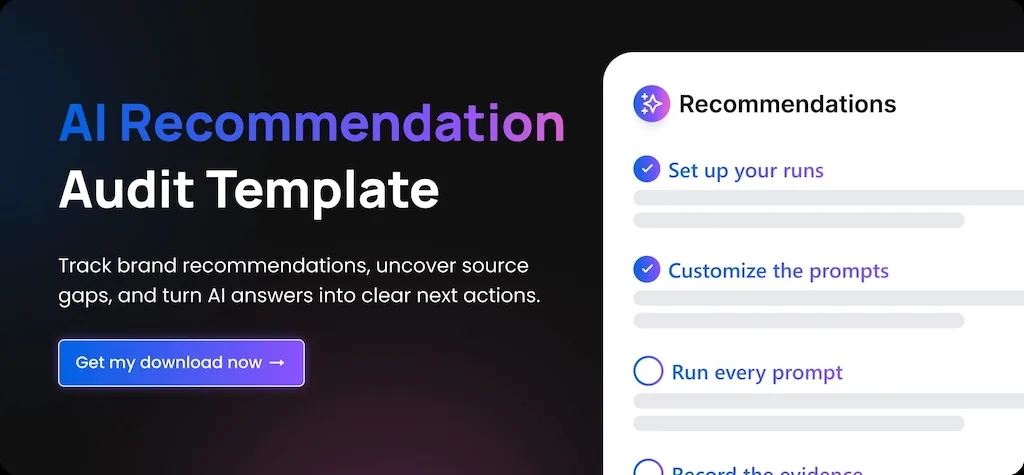
Use our free AI visibility audit to run the 15 buyer prompts above across three assistants. Record the brands named, visible source URLs, factual accuracy, and next action in one place, then use the source-gap and brand-and-region views to decide what to fix first.
Your first month
Keep the plan smaller if your audit shows that buyers rarely use AI recommendations for your category. A twice-yearly accuracy check may be enough. If reviews are the obvious weakness, spend the month there instead of spreading effort across seven tactics.
Build a source footprint worth recommending
AI search will keep changing. The work in this playbook survives those changes because it improves the same evidence buyers use everywhere: clear product facts, useful first-party material, credible reviews, accurate third-party coverage, and visible participation in relevant conversations.
Start with the baseline, choose three sources, and make those sources more accurate and useful this month.
Larger teams should run the same method for each brand or region, keep the local evidence visible, and give leadership one roll-up they can defend.
Running this across several brands or regions? Request a Vista Social demo to see how publishing approvals, review management, listening, and reporting can support the operating model. If you prefer to test the workflow first, start a free 14-day trial.
Frequently asked questions
How long does it take before ChatGPT recommends my brand?
No reliable universal timeline exists. Answers and visible sources can change between platforms and runs. Keep the prompt set stable, record the conditions, and review movement monthly instead of promising a date.
Can I pay to be recommended by an AI assistant?
You cannot buy a guaranteed organic recommendation in the same way you buy an ad placement. You can pay for legitimate PR, customer research, creator partnerships, useful content, and review-program operations. Treat any promise of guaranteed inclusion inside an organic answer with serious skepticism.
Do reviews affect what AI assistants say?
Reviews influence buyer perception and may appear among the sources assistants use, but the major engines do not publish a universal review-weighting formula. Build an honest review presence because it helps buyers and strengthens your public evidence, then verify whether review pages appear in your own source audit.
Should I post about my own product on Reddit?
Only where the community rules allow it and with your affiliation visible. A concise correction to a wrong product fact can be helpful. Undisclosed promotion, repeated pitching, and employee sockpuppets undermine trust and can remove your access to the community.
Is an llms.txt file worth adding?
It is a low-priority task. Google’s current guidance says llms.txt has no effect on its Search systems, while a 2026 third-party synthesis found no credible evidence that the file affects AI citations. Maintain one if a service you use explicitly supports it, but complete the higher-value work in this playbook first.
Try Vista Social for free
A social media management platform that actually helps you grow with easy-to-use content planning, scheduling, engagement and analytics tools.
Get Started NowAbout the Author

Content Writer
Orion loves to write content that refuses to be boring. As part of Vista Social, he helps brands, creators, and agencies stop doom scrolling and start winning with social media. When he's not in front of a keyboard, he's watching films in IMAX with his wife, dissecting football tactics (the European kind), and getting lost in a good book.