

Published on April 7, 2026
14 min to read
Brand Reputation: What Is It & Why It Matters

Summarize with AI


Table of contents
Summarize with AI

ChatGPT

Claude

Perplexity
Share

Vista Social

X (Twitter)


There are a million old sayings about reputation:
- “It takes twenty years to build a reputation and five minutes to ruin it.”
- “A good reputation is more valuable than money.”
- “Reputation is like fine china: Once broken it’s very hard to repair.”
And honestly, all of these relate to brand reputation as well. It takes a hot minute to build up a solid brand reputation, but keeping it is most of the battle.
Having a solid brand reputation means you’ve built a business that people can trust and rely on. And that’s something money can never buy.
So how do you build a reputation for your brand? We’re going to dive into what this looks like and how to get started in this guide.
Table of contents
What is your brand reputation?
Brand reputation is the collective perception held by customers, potential customers, employees, partners, and the broader public about a brand.
Shaped by every review, social media interaction, piece of press coverage, customer service exchange, and public statement a brand has ever produced, it’s ultimately filtered through the experiences and opinions of the people on the receiving end rather than the intentions of the people producing the content.
Stripped back, brand reputation is what people actually think of a brand when nobody’s asking them to be polite about it. That perception is being formed constantly, across every channel and platform, whether or not your team is paying attention.
In 2026, that dynamic carries new stakes because of how AI search has changed the picture.
Edelman’s 2025 research on brand trust found that 91% of people who use generative AI platforms use them for shopping in some way, including researching brands, comparing products, and summarizing reviews.
When someone types “is [your brand] trustworthy?” into ChatGPT or Perplexity, the answer is synthesized from your public reputation record.
Things that play a role include:
- Your review volume
- Your sentiment history
- Your response rate
- Your presence in credible sources
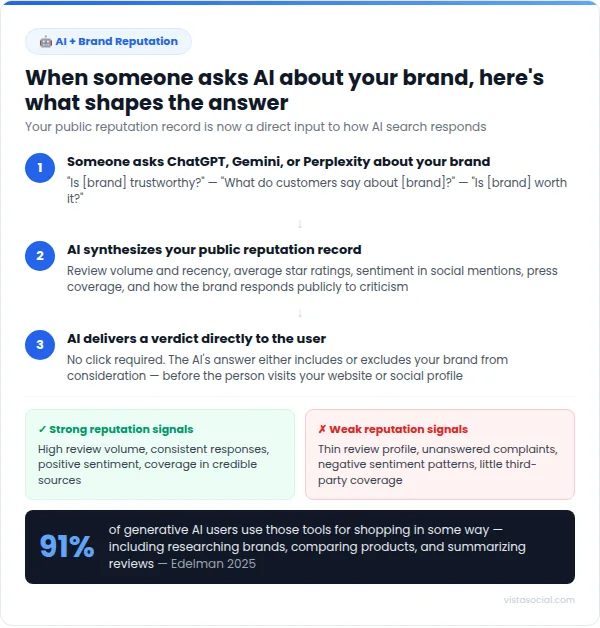
The quality of the public record surrounding your brand determines how the AI answers, which means your reputation feeds the machine whether you’re actively managing it or not.
A vivid example of how fast this plays out: In February 2024, WK Kellogg’s CEO Gary Pilnick appeared on CNBC’s Squawk on the Street and suggested that cash-strapped families eat cereal for dinner to manage grocery costs.
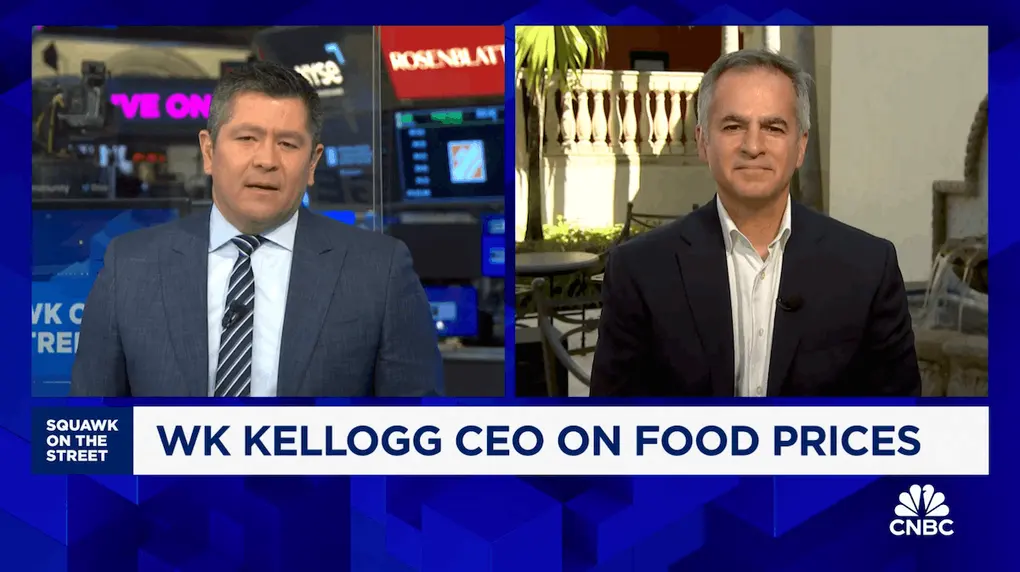
Social media reacted accordingly. #BoycottKelloggs trended across TikTok, the clip circulated widely on X, and the company’s silence in response left a vacuum that critics filled for days.
The issue wasn’t really about cereal. If you think about the comment with no other context, of course a CEO is going to promote buying his product.
But it’s about public perception. And responding “eating cereal for breakfast” as a solution feels incredibly out of touch with a customer base facing astronomical grocery prices (especially given that the cereal in question had also increased in price).
A few other things that can negatively impact your brand reputation include:
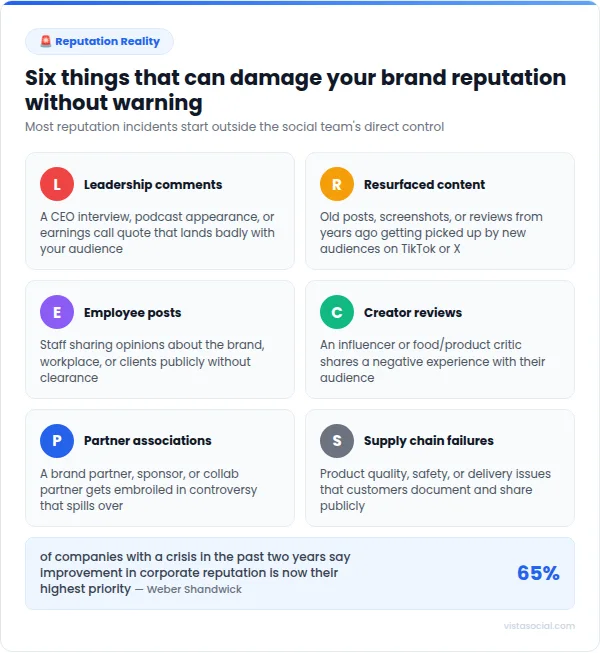
- Leadership comments: Like we just covered, a CEO interview, podcast appearance, or earnings call quote that lands badly with your audience can cause a major stir
- Resurfaced content: Old posts, screenshots, or reviews from years ago getting picked up by new audiences can have a negative impact all over again
- Employee posts: Be careful about staff sharing their opinions about the brand, workplace, or clients publicly without clearance—but also be careful about staff sharing other opinions (like politics, religion, and other sensitive subjects) as that can also come back to bite your brand
- Creator reviews: If an influencer or critic has a negative experience and shares it with their audience, your brand can find itself in hot water fast
- Partner associations: A brand partner, sponsor, or collab partner getting embroiled in their own controversy can sometimes lend negative press to your brand
- Supply chain failures: Product quality, safety, or delivery issues that customers document and share publicly can easily lead to negative coverage and conversations around your brand
Why does your brand reputation matter?
AI has turned reputation into a literal business input. With 91% of generative AI users drawing on those tools for shopping research (per that same Edelman study), what surfaces when someone asks an AI about your brand is directly shaped by the quality and volume of your public reputation signals.
Thin records, unanswered reviews, and negative sentiment patterns don’t just hurt you with human searchers but also shape what the AI concludes and then tells the next person who asks.
How you handle reviews has a measurable effect on whether people choose you at all.
BrightLocal’s Local Consumer Review Survey from 2024 found that 88% of consumers would consider using a business that responds to both positive and negative reviews, compared to just 47% who’d consider one that doesn’t respond at all.
That’s not a marginal gap, and it’s entirely within a social team’s control to close.
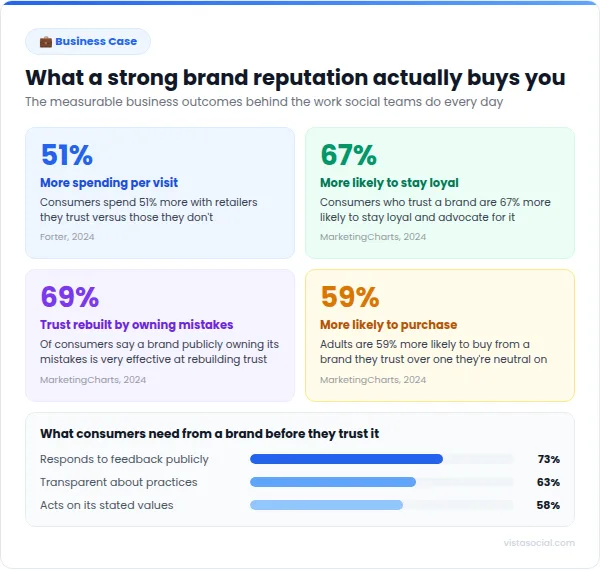
Star ratings have shifted from a preference signal to a threshold. BrightLocal’s 2026 edition of the same survey found that 68% of consumers will only consider a business with a rating of 4 stars or above, meaning slipping below that mark seriously affects your ability to be competitive. A majority of your potential customers will now remove you from consideration before they’ve even learned anything about your brand.
How to build a strong brand reputation
Reputation doesn’t arrive fully formed from a single campaign, rebrand, or viral moment. It accumulates through consistent, deliberate decisions made across every channel, compounding over time into something that either protects the brand when things go wrong or amplifies the damage.
Here’s where that effort is worth focusing.
1. Build your brand identity
Every reputation strategy needs something consistent to protect, which makes brand identity the foundation everything else is built on. This encompasses visual language, tone of voice, stated values, and the way all of those things show up uniformly across every platform and touchpoint the brand occupies.
The practical challenge for social media managers is that brand identity tends to live in a document most people have only skimmed. A style guide only works as a reputation tool when everyone with access to the brand’s channels is genuinely working from it, from the social team to the exec who decided to reply to a LinkedIn comment at midnight.
Getting clear on what the brand stands for, documenting it precisely, and making it genuinely accessible to everyone who represents it is the unglamorous foundation that makes everything else possible.
Let’s talk about just why this matters.
Think about Starbucks. Its visual branding has become so recognizable and familiar that the company was able to completely drop its name from the logo, relying only on its deep forest green and siren identity to represent it.
Because its brand identity has become so successful, it’s helped the brand build up a reputation of trustworthiness and stability. Starbucks is now a staple, and its brand identity is a key part of that.
2. Improve brand awareness
Reputation can’t grow among people who don’t know the brand exists, making awareness the prerequisite to everything else. Building it effectively in 2026 is less about broadcasting into every available channel and more about earning genuine presence in the conversations your audience is already having.
Boost your brand awareness through initiatives like:
- Short-form video
- SEO-driven content
- Creator partnerships
- Consistent community participation
All of those strategies compound into the kind of organic recognition that paid media alone can’t fully replicate. The brands with the most durable reputations tend to be the ones showing up consistently in places their customers actually care about, long before anyone is searching for them during a purchase decision.
3. Create an amplification strategy
Getting great content seen consistently across every platform your audience uses is where even well-resourced teams fall short. An amplification strategy is the system that makes sure your work actually reaches the right people at the right time, rather than sitting in a content calendar that someone forgot to post.
Vista Social’s scheduling and publishing tools handle multi-network distribution from a single dashboard, removing the coordination overhead that causes inconsistency. Going quiet on a platform because the posting workflow broke down is its own reputation signal, even when nothing actively went wrong.
Employee advocacy is one of the most underused amplification levers available, worth making a deliberate plan for. When employees share brand content with their own networks, the reach extends into audiences no brand account can directly access, with a credibility that branded posts rarely carry on their own.
Vista Social’s advocacy features make this practical without requiring the slightly uncomfortable all-hands Slack message asking people to share the latest post. The Vista Social guide on online reputation management covers the full picture of how these pieces fit together.
4. Focus on social media customer service
The comment section and the DM inbox are the front lines of customer service for most brands, with every response, or deliberate non-response, visible to a much wider audience than just the person who sent the message.
Handling this well at any meaningful scale requires a system, because manually reviewing every touchpoint across channels is a reliable path to burnout and inevitable gaps.
Automation workflows inside Vista Social let you build instant response flows for common inquiries, route more complex issues to the right person, and ensure nothing gets buried during off-hours. From the customer’s perspective, and from the perspective of everyone else watching that thread publicly, a brand that responds promptly reads as one that’s paying genuine attention.
5. Respond to all reviews
Review response is one of the highest-leverage reputation activities available and one of the most consistently underinvested. Every response, whether to a glowing five-star review or a frustrated two-star complaint, is being read by prospective customers using those exchanges to evaluate what the brand is actually like to deal with.
Getting this wrong in a public, visible way has a compounding effect that’s genuinely costly to unwind.
In May 2024, food creator Keith Lee, who has over 16 million TikTok followers, posted a viral review complaining that his Chipotle chicken bowl had barely any chicken in it. Thousands of customers piled on with similar complaints across TikTok and Reddit.
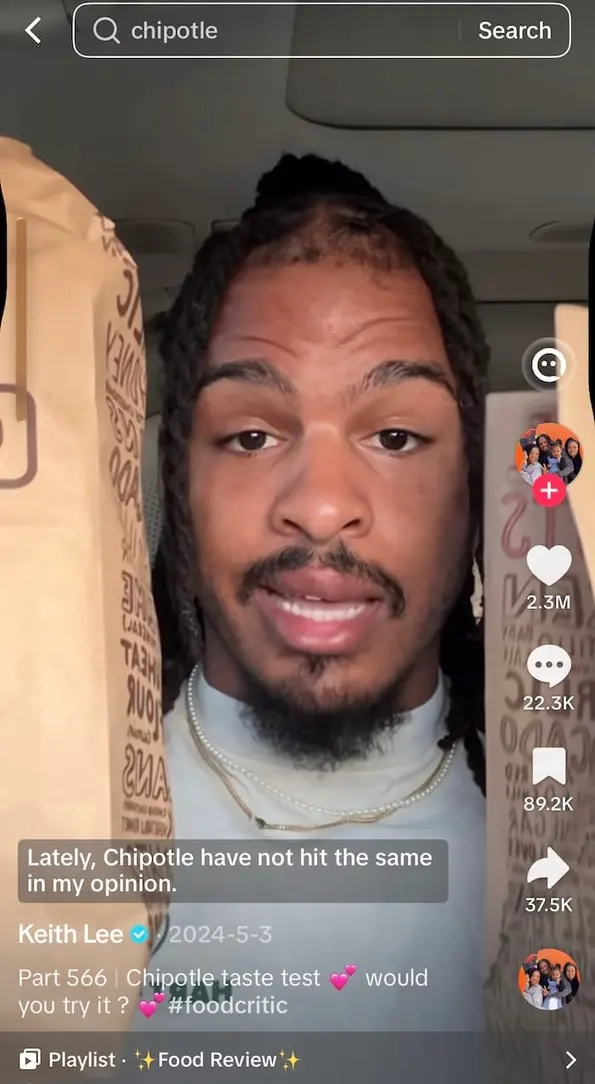
When Chipotle’s CEO Brian Niccol responded publicly, he denied portions had gotten smaller and offered customers a tip: give the workers a subtle look to signal you want more food.
The response, captured in a Fortune TikTok video that racked up 913,000 likes and 32,000 comments, was mocked across social media for weeks.
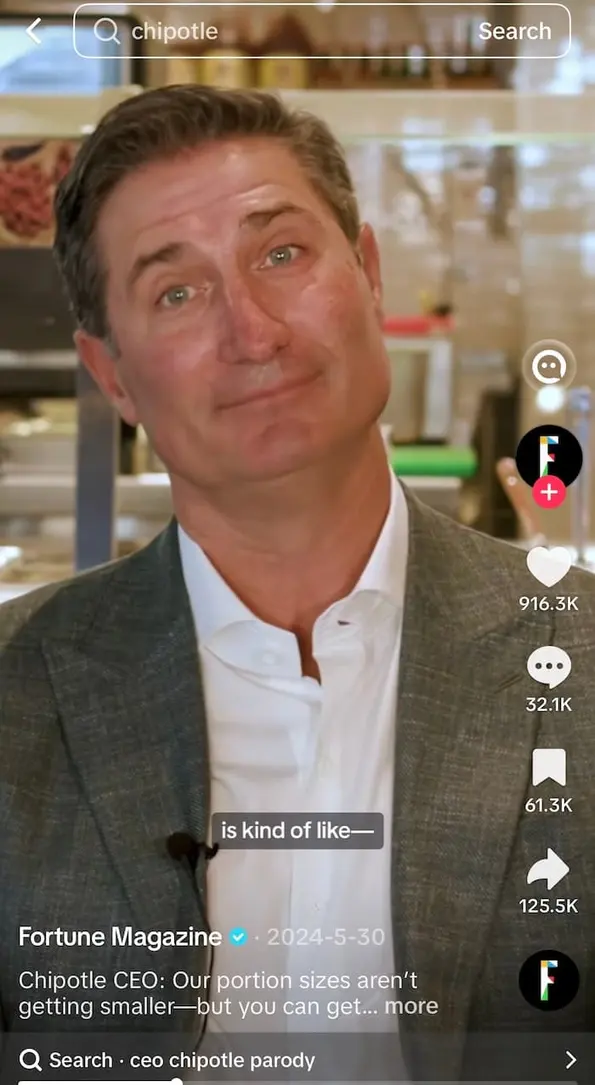
A Wells Fargo analysis then confirmed the customer complaints were valid, the Chipotle app got review-bombed, and on the company’s Q2 earnings call, Niccol was forced to publicly acknowledge that over 10% of locations needed retraining on portion standards. Lower ingredient costs from fixing the problem then ate into Q3 revenue.
A shareholder lawsuit followed. All of it started with dismissing feedback that customers were raising clearly, consistently, and publicly.
Vista Social’s review management tools pull in reviews from across platforms into one view, paired with automation workflows that flag incoming reviews by rating, route them to the right team member, and ensure response SLAs are actually being tracked.
6. Develop a crisis management plan
A crisis plan developed after a crisis has already started is just improvisation with extra steps. Reputation crises ignite and escalate across platforms in hours rather than days, which means that by the time a team call is scheduled to figure out what to say, the thread has often already shaped thousands of opinions about the brand.
A practical plan doesn’t need to be a comprehensive document. It needs to answer four questions before anything breaks. Who has final approval authority when something goes wrong, what the escalation path looks like from social manager to leadership, what draft statements can be adapted quickly for common crisis scenarios, and who needs to sign off before anything goes public.
McDonald’s response to its October 2024 E. coli outbreak is a useful reference for what preparedness looks like under pressure. When the CDC linked contaminated onions to Quarter Pounders across 14 states, the company pulled the product the same day, cut the supplier, and published a transparent food safety FAQ within days.
The recovery cost $100 million in marketing and franchisee support, sales bottomed out in November 2024, and the business didn’t fully rebound until Q2 2025, when systemwide sales grew 8%. That recovery was the direct outcome of having a structured, prepared response rather than improvising in real time.
Things like this happen, and the only solution is to have an immediate and pre-planned response so you can handle them accordingly.
Vista Social’s social listening tools give your team early visibility when mention volume starts spiking, which is typically the first indicator something is building before it becomes a full crisis.
7. Implement brand safety guidelines
Brand safety is the set of rules governing where your brand appears, what it gets associated with, and what associations it will never make regardless of the perceived opportunity. With algorithmic delivery placing content in contexts teams don’t fully control, brand safety guidelines need to be specific, documented, and enforced proactively rather than reacted to after an incident.
Vista Social provides a centralized space for storing those guidelines alongside platform-level controls that help teams ensure content stays within defined parameters before it goes live.
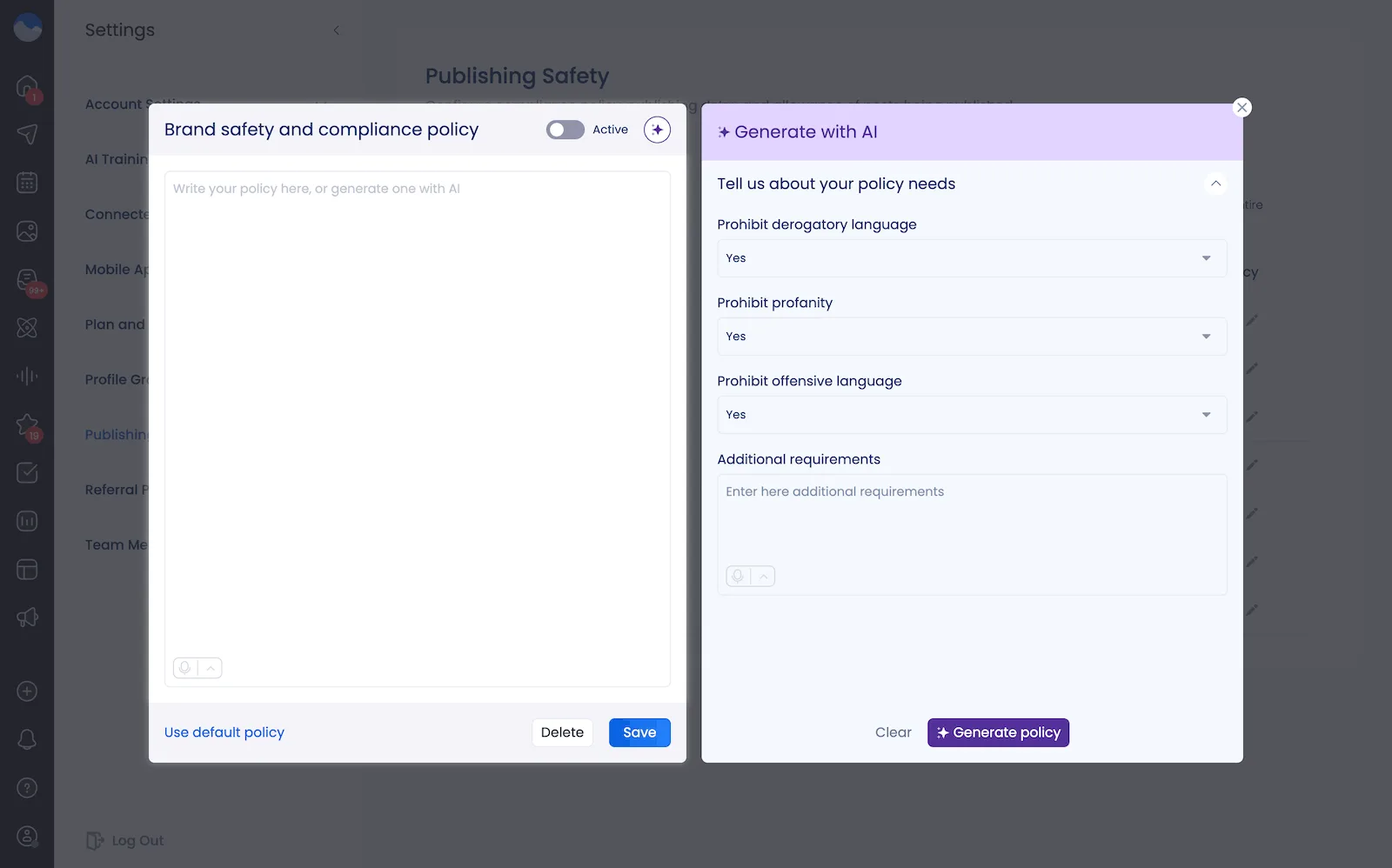
For enterprise teams managing multiple workspaces or external contributors, that kind of upstream control matters considerably.
Brand safety extends to external relationships as well. Creator and influencer partnerships bring their content history and their audience associations directly into contact with a brand, meaning the time to establish clear, documented expectations in those relationships is before content goes live rather than after it becomes a problem.
8. Keep customers happy
This one earns its place precisely because it’s so easy to treat as obvious and then underinvest in. The most sophisticated reputation management setup available can’t compensate for a fundamentally broken customer experience, because reviews, sentiment data, and word-of-mouth are downstream outputs of what the product and service actually deliver on a daily basis.
For social media managers, this creates a specific opportunity that goes beyond the social team’s usual scope. The complaints recurring in your comment sections, the patterns surfacing across your review monitoring, and the questions appearing repeatedly in the inbox are genuine intelligence for the broader business.
Surfacing those patterns clearly to product, operations, or customer service teams is one of the more underrated contributions a social team can make, and it pays back in fewer fires to manage further down the line.
How to measure your brand reputation
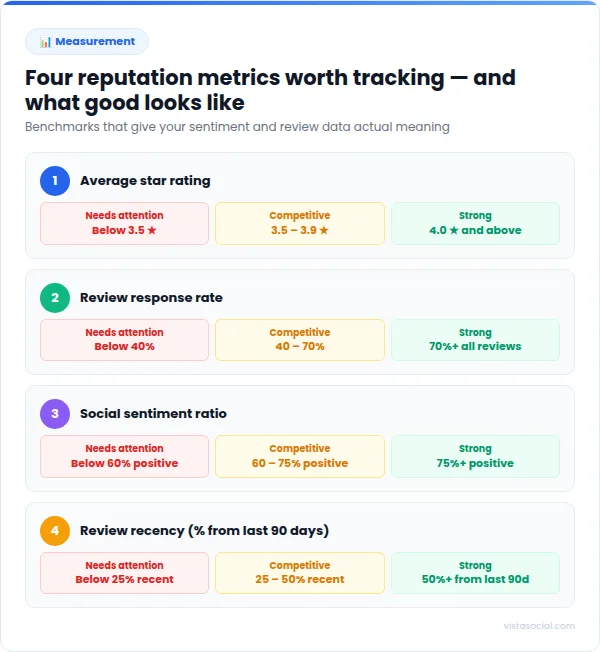
Reputation is considerably more measurable than most teams treat it, provided you’re tracking the right signals consistently enough to spot trends rather than reacting to individual moments.
Monitor brand mentions
Brand mentions are the raw data of reputation. Every time someone references your brand name, products, key people, or campaigns online, whether on social platforms, in Reddit threads, in news articles, or in AI-generated summaries, that’s a data point about how the world is perceiving you, and gaps in monitoring are how minor issues become surprises.
Vista Social’s social listening feature captures brand mentions across platforms in real time, giving the team visibility into conversations that would otherwise go unnoticed. Setting up alerts for the brand name, product names, and key competitors builds a running landscape view that makes early detection of negative trends both possible and practical. The Vista Social guide on reputation management tools goes deeper on how to structure that monitoring setup effectively.
Analyze sentiment
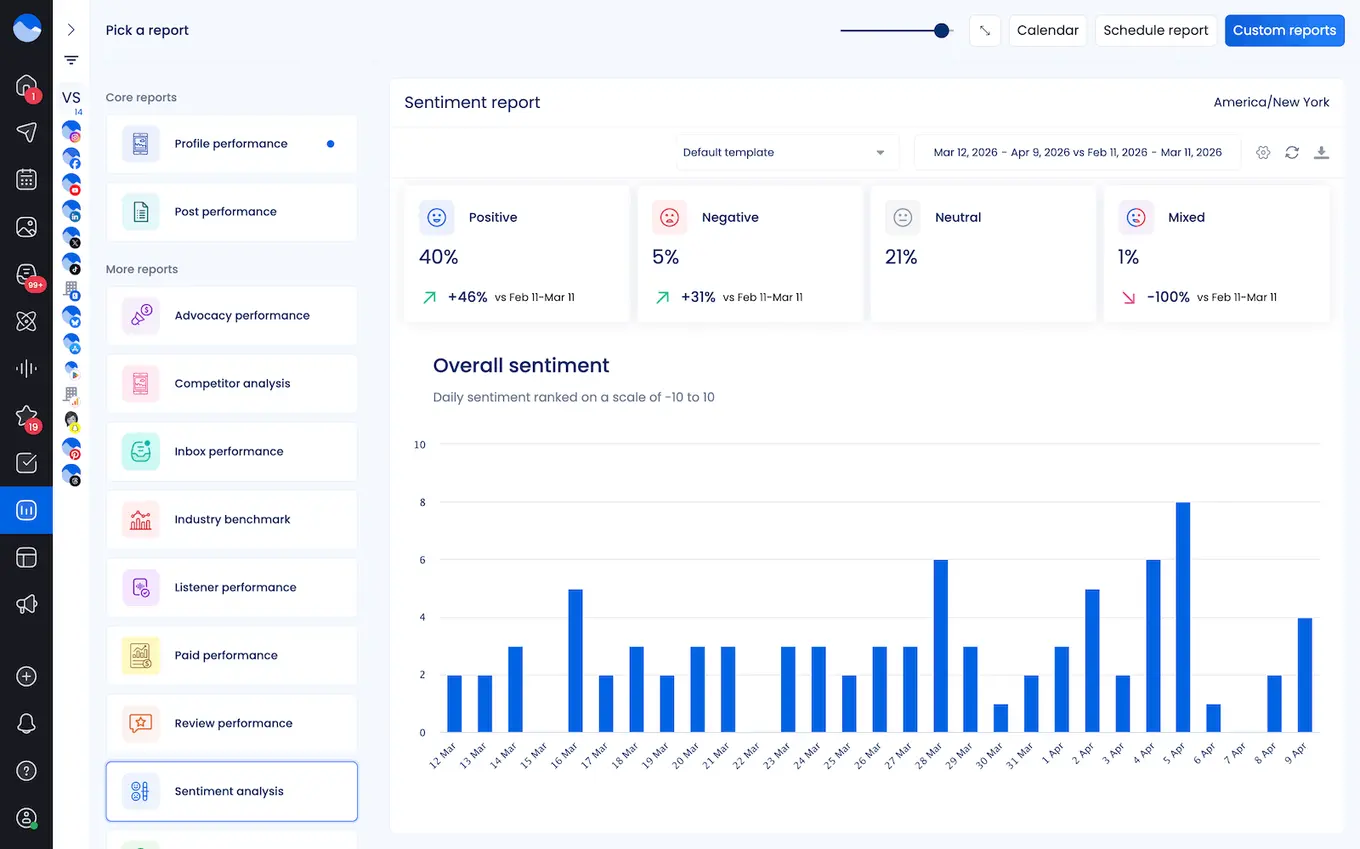
Mention volume tells you how much people are talking about you, and sentiment tells you what they’re feeling while they do it, and the difference matters enormously. A brand generating a lot of attention can be in excellent shape or serious trouble depending entirely on whether the underlying feeling is positive, negative, or neutral.
The most actionable sentiment data is trended over time rather than read as a single snapshot. A sudden spike toward negative sentiment in a specific week is worth investigating immediately, while a gradual drift downward over three months signals a pattern requiring a strategic response.
Vista Social’s sentiment analysis report breaks down the picture across platforms with the ability to filter by time period and content type, making it easier to present a clear, evidence-based view of reputation health when reporting time comes around.
Keep tabs on reviews
Average star rating is one of the first things a prospective customer sees and one of the clearest reputation signals available. Volume, recency, and average score all factor into how both people and search algorithms evaluate a brand, with recency carrying more weight than most teams account for.
Research from BrightLocal’s 2024 survey found that 83% of consumers agree reviews need to be recent and relevant to carry any weight at all, meaning a strong archive of old five-star reviews is a weaker signal than a steady flow of fresh ones, even if those older reviews average near-perfect scores.
Vista Social’s review and inbox performance reports aggregate review data across platforms into one view, tracking volume trends, average ratings, and response rates over time.
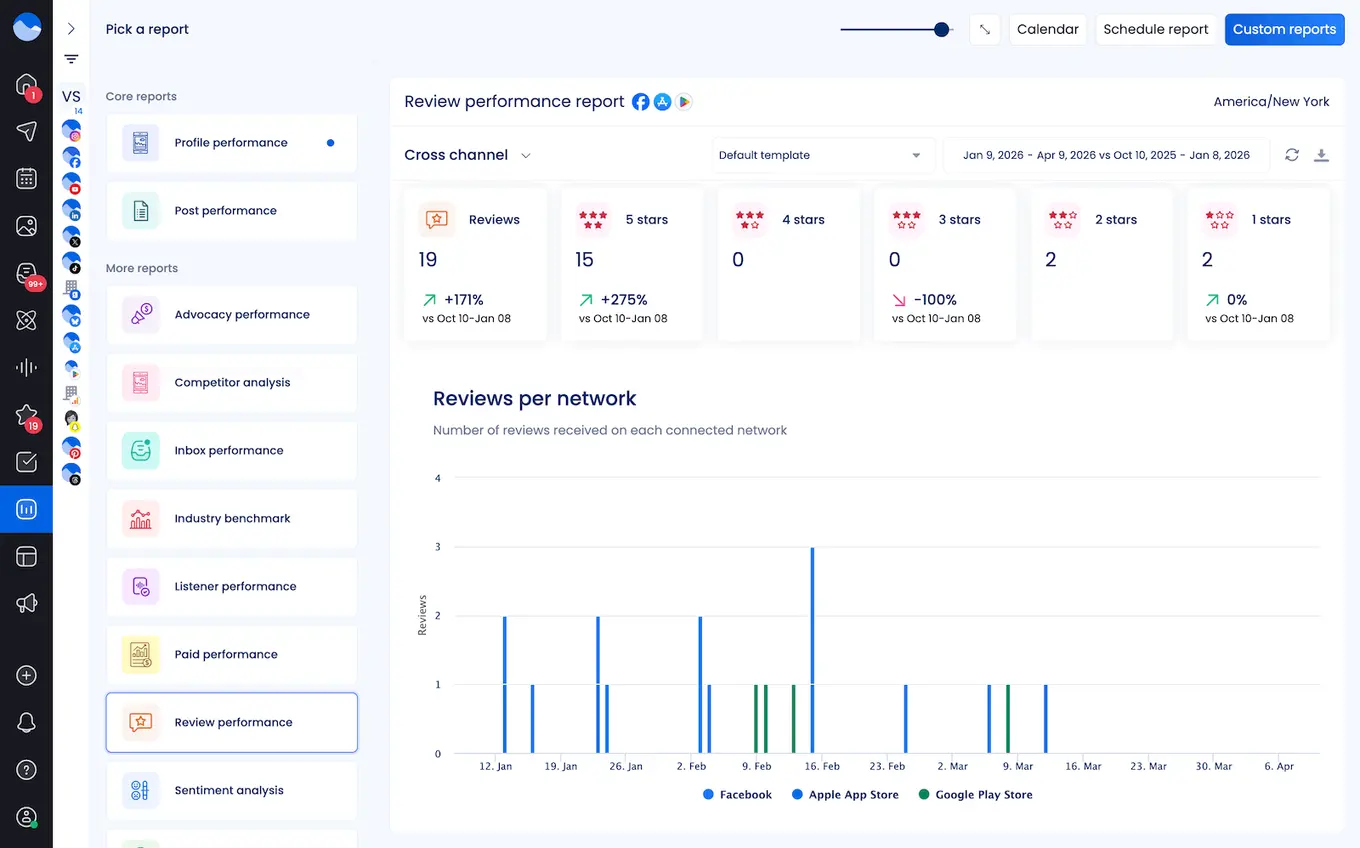
That aggregated data is useful internally for tracking progress and translates cleanly into the kind of quantifiable output that holds up well when demonstrating the value of the team’s work to a client or leadership.
Measure your brand against competitors
Reputation exists in context. Knowing your own numbers in isolation tells you part of the story, while knowing how those numbers compare to the brands your customers are actively evaluating gives you a genuinely actionable picture of where you stand in the category.
A practical starting point for manual competitive benchmarking is auditing competitor review profiles on Google and relevant industry platforms, looking specifically at their average ratings, response rates, and how they handle critical feedback publicly. You’ll usually spot something worth knowing, and occasionally something worth exploiting.
Vista Social’s competitor analysis report provides structured benchmarking on Facebook and Instagram, tracking engagement, posting frequency, and audience growth relative to competitors over time.
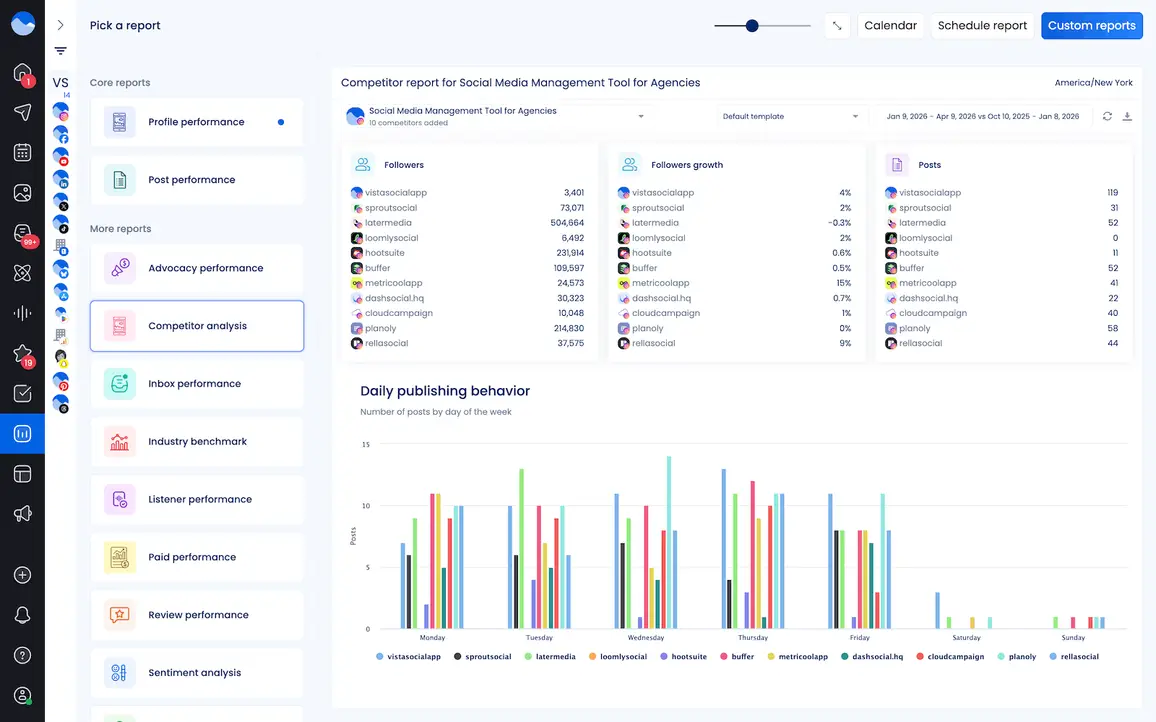
Pairing that report with social listening data gives a more complete picture of how the brand sits in the broader category conversation.
Start improving your brand reputation today
Come back to that podcast episode. The one where somebody said that thing without telling you first. No reputation management setup in the world prevents someone in your organization from going off-script, speaking to the press without preparation, or replying to a customer comment before the coffee has kicked in.
What a well-built setup does is ensure the brand enters those moments with established goodwill, a solid review foundation, and a responsiveness track record that gives you something real to work with.
Reputation in 2026 is built in the quiet periods, accumulating one review response, one consistent post, and one genuine community interaction at a time. The difference between McDonald’s recovering to 8% systemwide sales growth after a serious food safety crisis and Kellogg’s watching a hashtag grow unchecked was, in large part, a function of preparation and existing trust. One brand had systems in place. The other stayed silent and hoped it would pass.
Getting started is more straightforward than most guides make it sound. Vista Social’s tools centralize the monitoring, response workflows, and performance tracking into a single dashboard so the team isn’t managing reputation across a dozen separate tabs. Pair that with social listening and sentiment analysis, and you have the core of a setup that can scale with the work.
Your brand’s reputation is being shaped right now by every unanswered comment, every unaddressed review, and every thoughtful interaction your team gets right. Whether that process is active or passive is the only part fully within your control. Sign up for a 14-day free trial to see how Vista Social can help you elevate brand reputation in the age of AI.
Brand reputation FAQs
What is meant by brand reputation?
Brand reputation is the collective perception of a brand held by customers, employees, partners, and the wider public, built over time through direct experiences, reviews, media coverage, and the conversations happening about that brand across every online and offline channel. It represents how a brand is genuinely perceived rather than how it intends to be perceived, and in many cases those two things are further apart than brands expect.
How long does it take to build a strong brand reputation?
Reputation builds continuously rather than reaching a fixed finish line, with most brands starting to see measurable shifts in sentiment and review patterns within three to six months of consistent, proactive effort. Building the kind of deep, resilient reputation that holds up under genuine pressure, giving the brand goodwill to draw on during a difficult moment, typically takes two or more years of sustained work across customer experience, community management, content, and review response.
What’s the most common mistake brands make with their reputation?
Treating reputation management as reactive rather than proactive. Most brands pay serious attention to their reputation only after something has already gone wrong, which puts the team in permanent damage control mode with no reservoir of goodwill to draw on. Consistent pre-emptive investment in reviews, community engagement, and social listening builds that reservoir over time, and it’s the asset that determines how a brand comes out on the other side of an unavoidable difficult moment.
How do you know if a brand has a good reputation?
Look at four things. The volume and recency of positive reviews across major platforms, how the brand handles critical feedback publicly, the tone of organic social mentions when people aren’t being prompted, and how the brand surfaces when someone asks an AI or a search engine about it. A brand with a genuinely strong reputation shows up consistently and positively across all of those surfaces, not perfectly, but reliably and with a visible pattern of real engagement.
Try Vista Social for free
A social media management platform that actually helps you grow with easy-to-use content planning, scheduling, engagement and analytics tools.
Get Started NowAbout the Author

Content Writer
Orion loves to write content that refuses to be boring. As part of Vista Social, he helps brands, creators, and agencies stop doom scrolling and start winning with social media. When he's not in front of a keyboard, he's watching films in IMAX with his wife, dissecting football tactics (the European kind), and getting lost in a good book.
Loading related tools...

The most complete social media management platform for teams who demand more.






Tools
PublishingAnalyticsEngagementIntegrations
FacebookInstagramLinkedInRedditSnapchatThreadsTikTokX (Twitter)YouTubeMCPVista Page (link-in-bio)All IntegrationsCopyright © 2026 Vista Social LLC. All Rights Reserved.