


Agency Profit Margin: The Cost of Serving Each Client
October 29, 2026
8 min read

Summarize with AI

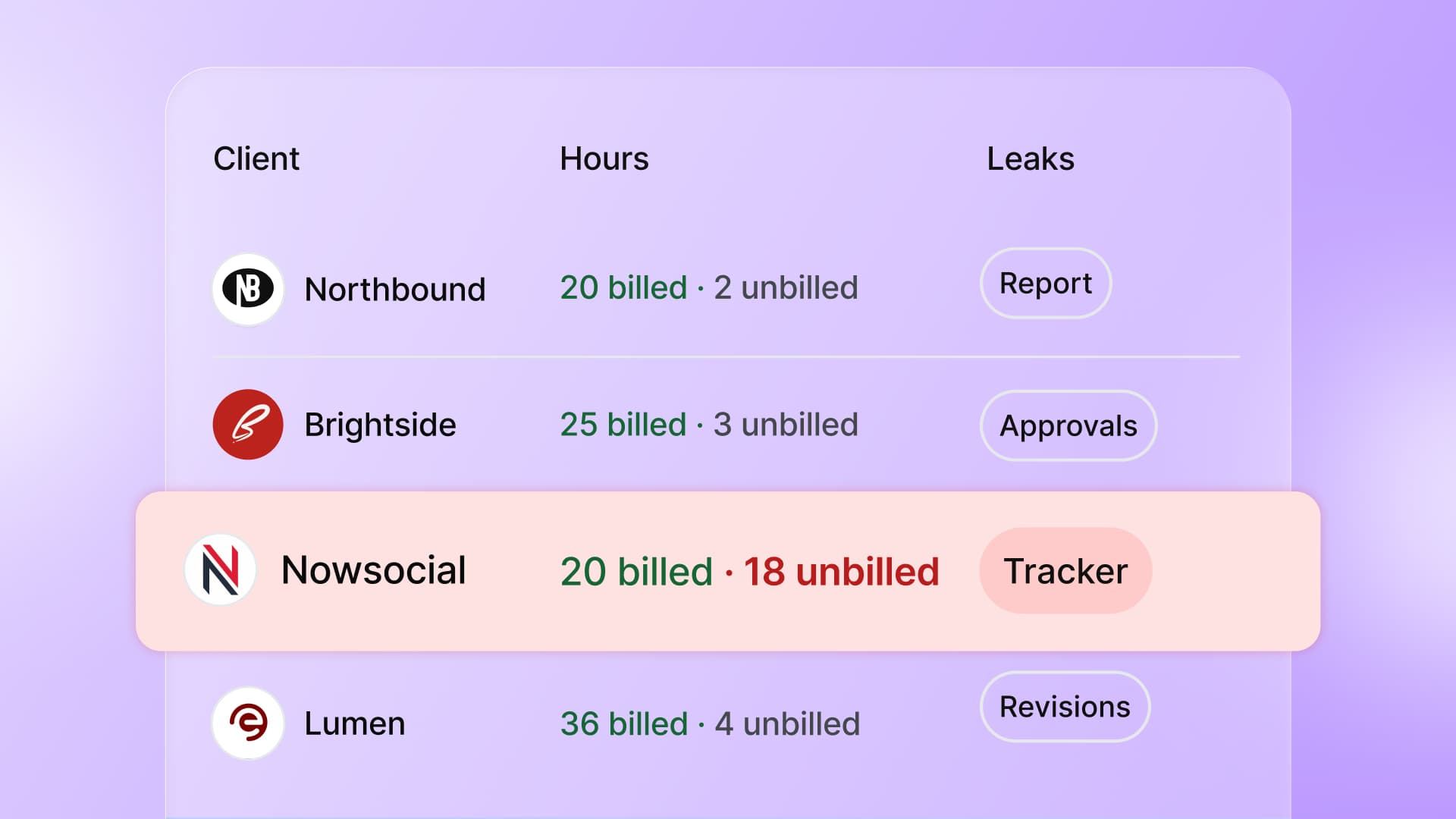
Table of contents
Share

Vista Social

X (Twitter)


Pull up the numbers for a client you’d happily take on again. The retainer lands on time, the relationship is good, and the timesheet looks about right. Then add your account manager’s approval chasing and the captions you checked after dinner.
Your salary bill is already in the P&L. You need to know which client used those hours before you budget for the next hire. A healthy agency profit margin can hide an account that’s much harder to serve than its fee suggests.
Before another client triggers a hire, work out the delivery budget each retainer needs. Include the work between deliverables and the AI-assisted jobs that still need setup, checking, or another run.
The short version
- Cost the account: Include coordination, rework, and owner time alongside production.
- Keep the measures separate: Contribution dollars fund overhead; margin percentages help compare delivery economics.
- Test the whole job: Count AI usage, failed attempts, and human review before claiming extra capacity.
Table of contents
What is a healthy agency profit margin?
Agency profit margin is the percentage of agency revenue retained as profit after expenses. The cost base determines which margin you’re discussing:
| Measure | Costs deducted before calculating the percentage |
|---|---|
| Delivery margin | Direct costs of serving clients |
| Operating margin | Delivery costs plus operating overhead, before interest and tax |
| Net margin | All expenses, including interest and tax |
Parakeeto’s January 2025 guidance discusses targets of 50% to 60% delivery margin and 20% to 30% operating profit. Agency Management Institute’s Drew McLellan recommends a 10% profitability floor per client, reviewed monthly, quarterly, and annually.
These are advisory targets for different measures. Check the treatment of pass-through media spend before spending on them. A margin on agency fees isn’t comparable with one on billings that include the client’s ad budget.
Five delivery costs to assign to each retainer
You already have a publishing platform and an established workflow. The question is what each account costs once you include the coordination your setup leaves to people.
1. Time spent on revisions and client feedback
If your estimate allows half an hour for a revision, check whose half-hour that is. The writer may be done while the account lead is still settling conflicting comments and getting the next version reviewed.
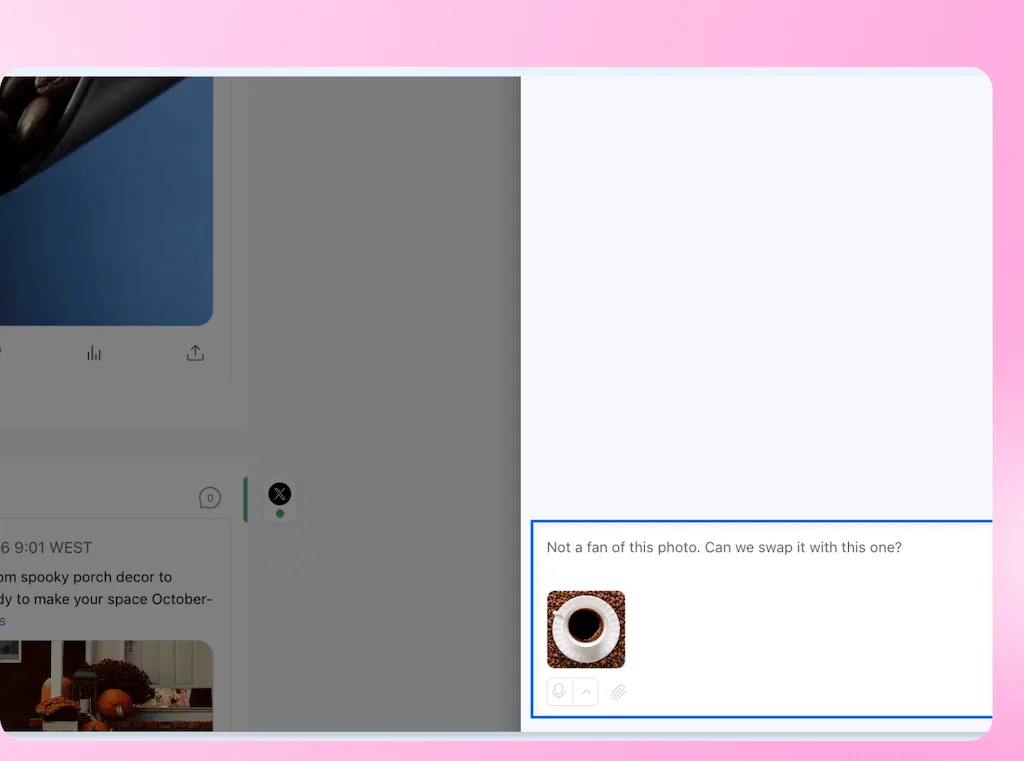
Keep the cause with the time entry. An agency error, a changed client request, and an unclear brief need different fixes, even when each produces another caption.
- Revision labor: Record the people involved, not only the person changing the draft.
- Repeat causes: Identify what returns each month so a one-off launch correction doesn’t become your normal delivery estimate.
2. Approval coordination
A “client comms” entry can bundle approval chasing with routine advice and a useful planning call. Split the tasks before you judge the account, because only some of that time is coordination you can reasonably shrink.
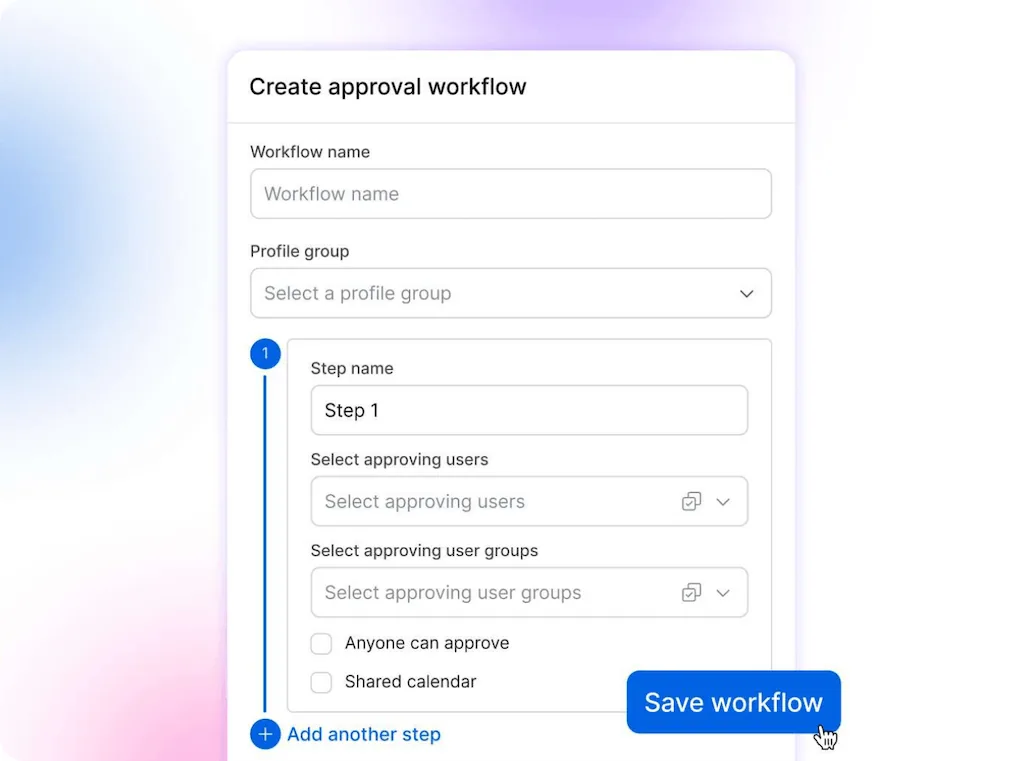
Count reminders, version checks, and scheduled repairs against that client. Keep elapsed waiting time separate from hands-on labor; a three-day delay isn’t three days of staff cost.
3. Updating trackers and finding client files
Before a check-in, someone checks the tracker against the calendar and confirms which assets are ready. If only the meeting gets logged, that preparation disappears from the account.
The spreadsheets, files, and message threads maintained around your social platform form a shadow stack. Its cost includes keeping records current and finding context, even when the tools are free.
The five-tool social stack guide covers consolidation. For this review, assign the upkeep to the client that requires it instead of turning the exercise into another app count.
4. Preparing client reports
Two clients can buy the same reporting package and create different workloads. One uses the agreed template; another needs manual regrouping, a second export, and figures reconciled with their own sheet.
- Production cost: Record gathering, formatting, checking, and sending the report.
- Advisory work: Track interpretation and recommendations separately. A faster export doesn’t reduce the analysis a client needs.
Include both in the account cost, then decide which production requirements are worth standardizing or pricing separately.
5. Time the agency owner spends reviewing client work
You know what a particular client will challenge, so you give their work another look. That can be a sensible quality decision. It still uses capacity the account should carry.
Record owner review alongside everyone else’s time. If you don’t take a salary, use a realistic replacement cost for capacity planning. Keep that estimate separate from booked payroll in your financial accounts.
Not every hour you find is waste. Some work needs reducing, some needs delegating, and some needs a proper allowance in the retainer.
Run a one-week client-cost log
Choose three retainers with your account lead, including the account you assume is most profitable. Start with your existing records and look for work that’s missing or sitting in the wrong category.
- Set the period: Record the monthly fee, budgeted hours, and actual hours captured so far. Don’t replace actual time with the allowance in the proposal.
- Tag the work: For one representative week, capture the five categories above. Include client, person, minutes, cause, and whether the time is already logged. Give each minute one category.
- Estimate the month: Scale recurring work using that month’s working weeks and workload. Add the last report’s production time once. Mark launch weeks and one-off setup so they don’t distort the ongoing estimate.
- Reconcile the hours: Put everything on the same monthly basis. Add only missing time; reclassify hours already logged. Divide the fee by total delivery hours for the effective hourly rate.
- Apply the costs: Multiply each person’s hours by the loaded hourly cost: pay plus employment costs per paid working hour. Add direct software and AI costs once. What’s left contributes toward agency overhead and profit.
Compare those contribution dollars to see which accounts fund the agency. Compare the percentage retained to assess delivery efficiency. Subtract a consistent overhead allocation afterward if you also want a fully allocated client-profit figure.
Example: a $1,500 retainer with 14 missing hours
| Work missing from the timesheet | Monthly hours |
|---|---|
| Revision rounds | 4 |
| Approval coordination | 2.5 |
| Tracker upkeep and file searches | 3.5 |
| Report assembly | 2 |
| Owner review | 2 |
| Total additional hours | 14 |
This monthly illustration combines 20 logged hours with the missing time below, using a simplified internal rate of $40 an hour.
| Calculation | Logged hours only | Including missing hours |
|---|---|---|
| Total hours | 20 | 34 |
| Effective hourly rate | $75 | About $44 |
| Labor cost allocated to the account | $800 | $1,360 |
| Fee left after allocated labor | $700 | $140 |
| Labor-only delivery margin | 46.7% | 9.3% |
At that rate, the missing work uses another $560 of the retainer’s labor budget. The $140 left still has to cover software and overhead. Another 3.5 hours would use even that remainder before those costs are covered.
The next account needs a delivery plan that fits those hours and leaves room for the agency’s other costs. Put your actual rates by person into the model before committing to the same terms again.
Drew McLellan describes the risk in his 2024 client-profitability guidance:
“Sometimes you are paying for the privilege of doing work for a particular client.”
Allocate AI usage across client retainers
If your account lead owns agents serving several clients, their member-level usage total combines those accounts’ work. You need the job behind the usage before you can put its cost against a retainer.
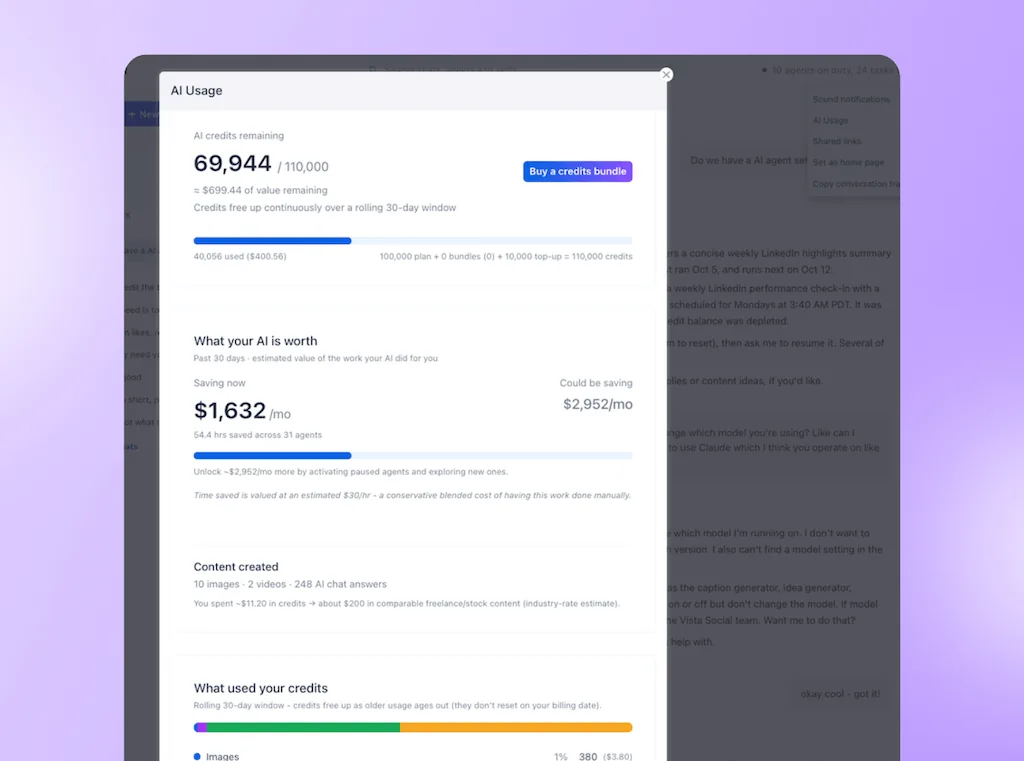
Ask Vista’s AI usage dashboard shows usage by member and estimated agent costs. Individual run costs are available inside the agent. Match that evidence to the delivery job:
- Single-client work: Keep the client, reporting period, and run reference with its usage and review time. A report regenerated three times has three attempts to cost, even if you send only one file.
- Shared runs: Use a documented allocation basis when a job spans clients. If the product evidence doesn’t separate their usage, label your split as an estimate rather than presenting it as measured spend.
- Setup versus repeat delivery: Show the first cycle and the steady-state cycle separately. A reusable method can earn back its setup cost, while a client-specific rebuild remains that account’s work.
Allocate shared subscription costs once, with additional credit purchases recorded separately. Included usage isn’t a second cash expense. The completed-job AI cost check covers frequency and credit economics; this log assigns those costs to the retainers that generated them.
Put every attempt and human check against the deliverable the client can use. One client may need more judgment. Another may need a better-scoped workflow, so you aren’t paying to run it again.
Decide what to change on the account
Use the cause in the log to choose the next move:
- Delivery friction: Change the feedback route or duplicate record, then measure the same workload again.
- Additional client requirements: Agree to the allowance or charge through the scope process, rather than letting it become an uncosted expectation.
- Sound delivery, weak economics: Revisit the service mix or retainer price. Another automation won’t repair every below-cost commitment.
Track the capacity outcome separately from cash savings. Reduced overtime or contractor spending can lower expenses; freeing salaried hours creates room you still have to use. When a teammate takes over, cost their time too before deciding whether the change paid off.
Give the next account a delivery budget
Use the completed month as the starting point for your next proposal. Keep the work the client values, put a realistic allowance against coordination and review, and decide what the current team can absorb. You can make a better hiring decision once that work has a place in the budget.
Use a Vista Social free trial to test one client’s largest recurring delivery cost. Compare a matched batch or reporting cycle, including setup, AI usage and human review. Expand when the complete job improves without weakening quality or approval controls.
Frequently asked questions
What is a good profit margin for a marketing agency?
Parakeeto’s guidance puts operating profit at 20% to 30%, with a separate delivery-margin target of 50% to 60%. Compare your numbers using the same revenue base and costs; neither target measures net profit after all expenses.
How do you calculate profitability for each client?
Subtract the full cost to serve from client revenue, then divide the remainder by revenue and multiply by 100. State whether your figure includes overhead, so a delivery contribution isn’t mistaken for fully allocated profit.
Why can unlogged work matter if salaries are already paid?
It changes the picture of which clients consume paid capacity, not the payroll transaction. Missing hours can make an account look cheaper to serve and lead you to budget too little for the next one.
How should agencies allocate AI credits across clients?
Use a consistent allocation for shared subscription costs and record extra credit purchases separately. Match usage evidence to client jobs, including repeated runs, without treating included credits as a second cash charge.
When should you repeat the client-cost review?
Review after a meaningful delivery change and reconcile estimates with a completed month. Look across quarters too, so onboarding, launches and an unusually quiet week don’t become the basis for a permanent retainer decision.
About the Author

Content Writer
Orion loves to write content that refuses to be boring. As part of Vista Social, he helps brands, creators, and agencies stop doom scrolling and start winning with social media. When he's not in front of a keyboard, he's watching films in IMAX with his wife, dissecting football tactics (the European kind), and getting lost in a good book.