

Published on May 22, 2026
13 min to read
Top 12 Brand Safety Tools to Protect Your Reputation

Summarize with AI

Table of contents
Summarize with AI

ChatGPT

Claude

Perplexity
Share

Vista Social

X (Twitter)


Your brand’s reputation can take years to build and minutes to unravel. 82% of consumers say it matters that the content surrounding online ads is appropriate, and the fallout from a brand safety failure is immediate and public.
In 2026, the stakes are higher than they’ve been in years. Major platforms have scaled back their content moderation efforts, shifting more of the responsibility for brand safety onto brands themselves. The platform safety net your team once relied on has gotten thinner, and that gap has to be filled somewhere.
The problem is that “brand safety tools” is a broad category. The tools that keep your paid ads off objectionable websites are completely different from the tools that catch a brewing crisis in your comment section, which are different again from the tools that stop counterfeiters from impersonating you.
This guide maps the landscape by the job each category does, with the top tools in each, so you can match the right protection to your brand’s actual risk profile.
Table of contents
What are brand safety tools?
The term “brand safety tools” used to mean one thing: keeping your ads off bad websites. A brand running display ads didn’t want its logo showing up next to hate speech or conspiracy content, so ad verification technology stepped in to solve that problem.
Today, brand safety tools cover everything from social listening and sentiment tracking to comment moderation, content compliance workflows, and intellectual property protection.
Brand safety tools are software that protect a brand’s reputation by preventing its content and advertising from appearing alongside harmful, offensive, or off-brand material, and by monitoring online conversations for emerging reputational risks. They span ad verification, social monitoring, comment moderation, content compliance, and IP protection.
Your brand’s reputation now spans far more than ad placements. It’s shaped by your comment sections, your AI-assisted drafts, your team’s real-time replies, and even fake accounts pretending to be you.
And then, it goes even further. It’s also about avoiding content that might be fine for other brands but wrong for yours specifically. An alcohol brand might be comfortable appearing alongside nightlife content, while a children’s toy brand wouldn’t be.
The GARM (Global Alliance for Responsible Media) framework remains the industry standard for categorizing content risk. It organizes 11 categories of content across four risk levels, from low to floor (content no advertiser should touch). Most major ad verification tools align their classifications to the GARM framework, giving brands and agencies a shared vocabulary for setting safety standards.
Why brand safety matters
Three forces have made brand safety more urgent than it was even two years ago. Each one has widened the gap between the brands that take safety seriously and the ones reacting after something goes wrong.
Platforms have pulled back on moderation. In January 2025, Meta ended its third-party fact-checking program in the U.S. and loosened its hate-speech enforcement across Facebook, Instagram, and Threads. X had already gutted its internal moderation teams after Elon Musk’s acquisition.
Both platforms shifted toward community-driven moderation models, where users flag problematic content rather than professional review teams. For brands, this means more risky content in the environments where their ads run and their audiences engage.
AI cuts both ways. It’s improving content monitoring, making it faster to scan for brand risks at scale. But it’s also generating the risks brands need to watch for.
In December 2025, McDonald’s Netherlands pulled an AI-generated Christmas ad titled “It’s the Most Terrible Time of the Year” after widespread backlash over its unsettling visuals and tone-deaf concept. The company had to issue a public apology. AI-assisted content without strong human oversight is itself a brand safety risk.
The cost of getting it wrong is high. Major advertisers have pulled spend from platforms over brand safety concerns, and X’s ad revenue dropped roughly 60% after Elon Musk’s moderation changes drove advertisers away.
On a smaller scale, a single mishandled incident can become a lasting reputation problem. One avoided crisis pays for the tooling many times over.
The two kinds of brand safety risk: external and internal
Most brand safety conversations focus on one type of risk while ignoring the other. Getting both right is what makes a brand safety strategy actually complete.
External risk is everything that happens outside your control, from your ad landing next to extremist content to someone impersonating your brand with a fake social account. Most traditional brand safety tools were built for this kind of risk, because it’s the kind that made headlines first.
Internal risk is everything your own team ships: a tone-deaf post that looked fine in the content calendar but landed badly, a reply sent before anyone thought it through, or an AI-assisted draft that skipped human review. This is the risk social media managers own most directly, and it’s the least protected by traditional tools.
A complete brand safety stack has to cover both, but most tools only cover one. The categories below are organized by which risks they address, so you can spot your coverage gaps and close them.
Top 12 brand safety tools by category
The tools below are grouped by the job they do, not ranked in order, because the “best” brand safety tool depends entirely on which risk you’re trying to solve. There are six categories, and most brands need two or three of them working together.
Native platform brand safety controls (free, built-in)
Every major ad platform offers built-in brand safety controls, and they should be your first line of defense because they’re free and already available. Here’s what each platform provides.
Meta’s Brand Suitability controls let advertisers set content sensitivity filters, exclude specific topics, and use inventory filters to control where ads appear across Facebook, Instagram, and Threads. Meta also supports third-party verification partners (DoubleVerify, IAS, Zefr) for independent brand safety reporting.
X (formerly Twitter) offers adjacency controls and sensitivity settings, though their effectiveness has been questioned since the platform’s moderation changes. Community Notes now serve as X’s primary fact-checking mechanism.

YouTube and Google’s brand safety suite includes content exclusions, sensitive category filters, and placement reporting. Google’s integration with the GARM framework gives advertisers granular control over which content categories their ads can appear alongside.
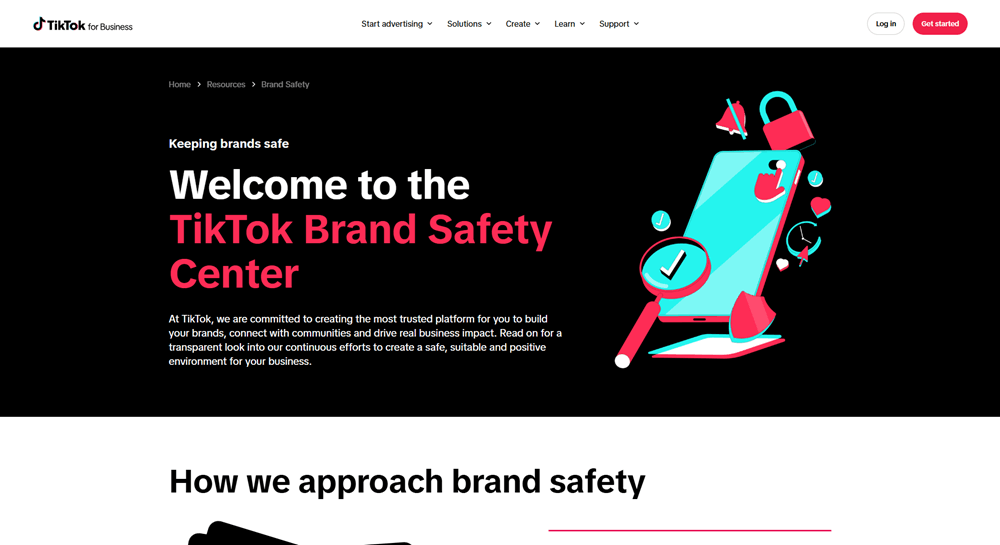
TikTok’s Brand Safety Center provides pre- and post-campaign brand suitability controls, inventory filters, and third-party verification partnerships with IAS and Zefr. TikTok has also expanded its content categorization for more granular advertiser control.
Who needs it: Everyone running paid social. These controls are free and should always be configured before launching any campaign.
Knowing these is necessary but not sufficient. Native controls only cover their own platform and only apply to paid placements, and they rely on moderation standards that are actively shifting. Configure them first, but don’t stop there.
Social monitoring, listening, and crisis detection tools
The job: Know what’s being said about your brand across the internet, and catch a crisis while it’s still small enough to manage.
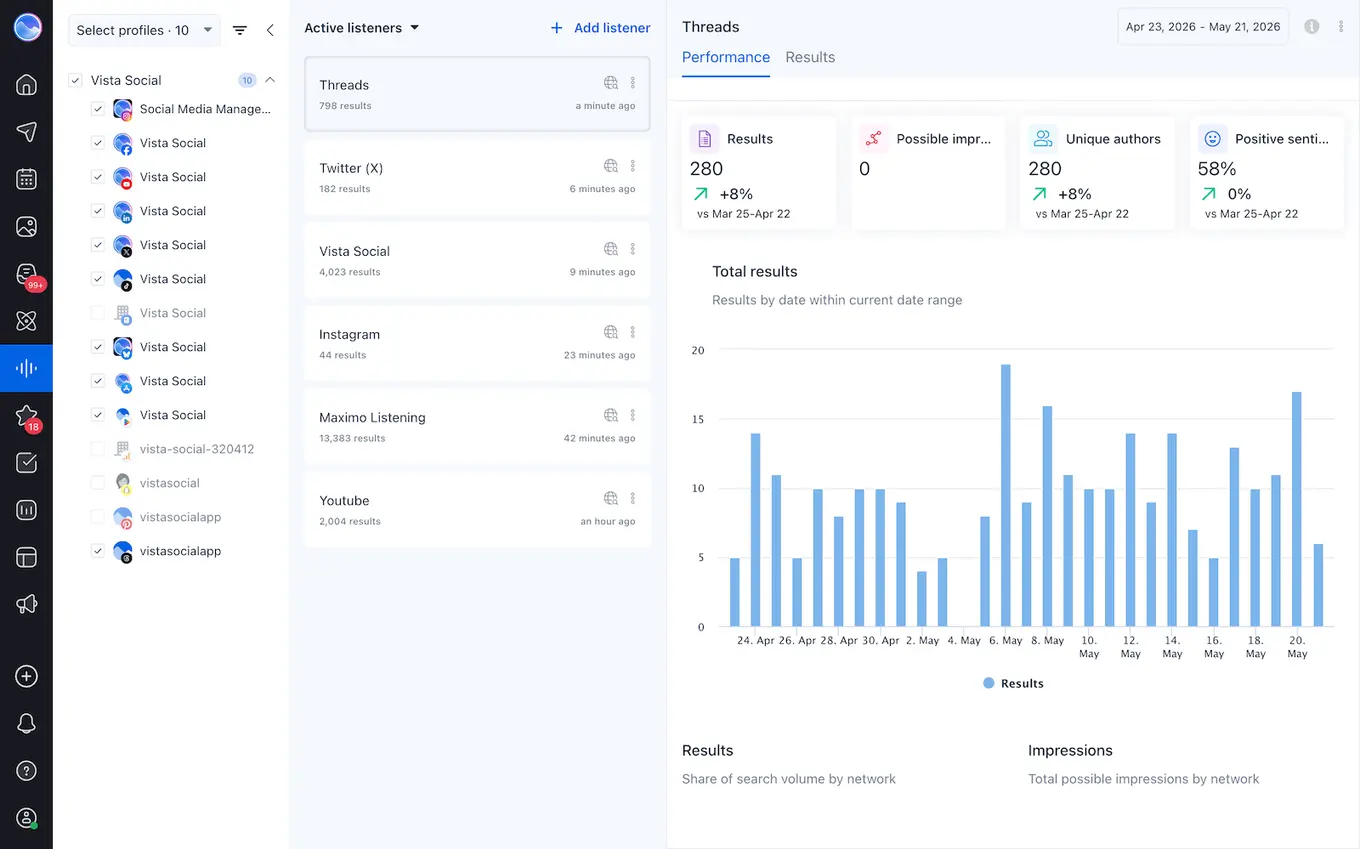
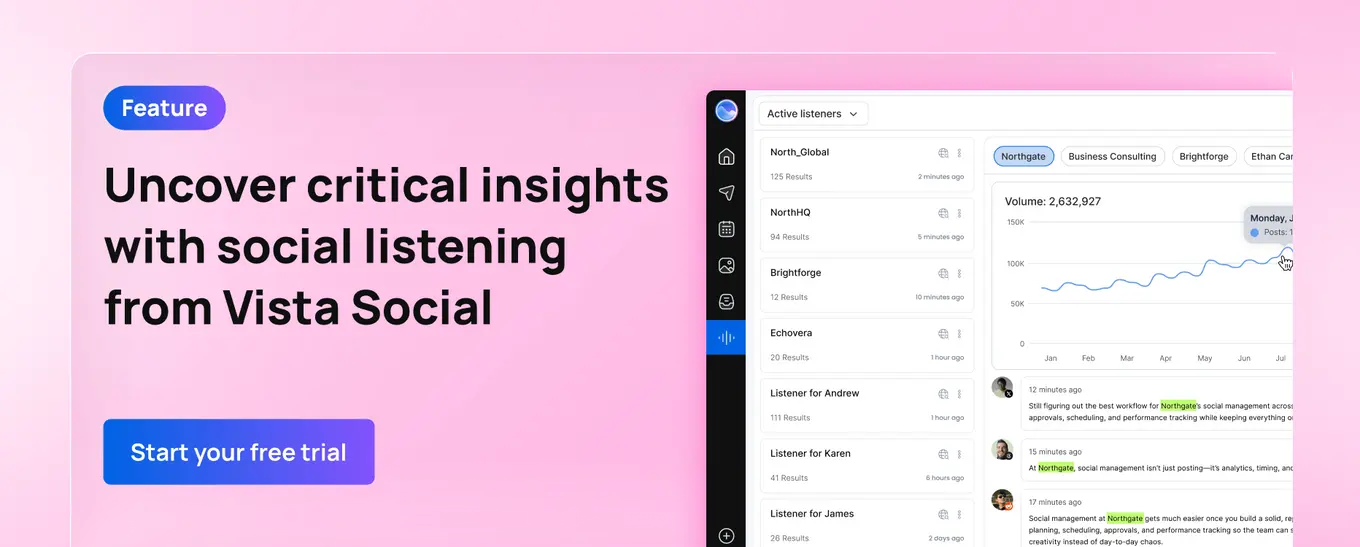
Vista Social provides social listening across major networks and review sites, with sentiment analysis that classifies conversations as positive, negative, or neutral. Its spike detection flags unusual surges in brand mentions or negative sentiment, so teams can catch a problem while it’s still a conversation and not yet a crisis. Listening is integrated with Vista Social’s publishing and engagement tools, so teams can monitor, respond, and adjust content strategy from a single workspace.
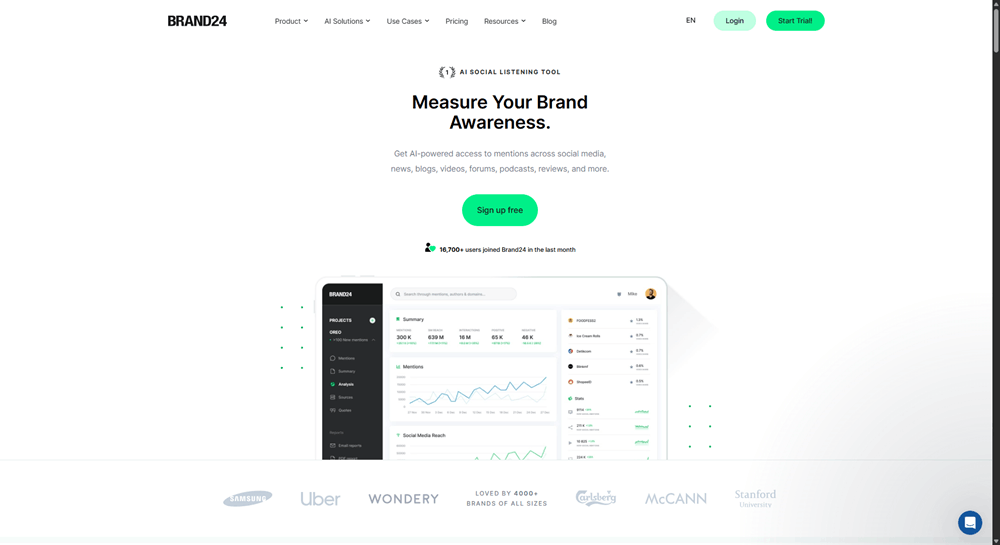
Brand24 monitors mentions across 25+ million sources, including social media, news, blogs, forums, podcasts, and video platforms. Its sentiment analysis, influencer identification, and real-time alerts work well as a standalone listening setup, especially for small to midsize teams. Brand24 has also added LLM monitoring, tracking how AI chatbots like ChatGPT and Gemini mention your brand.
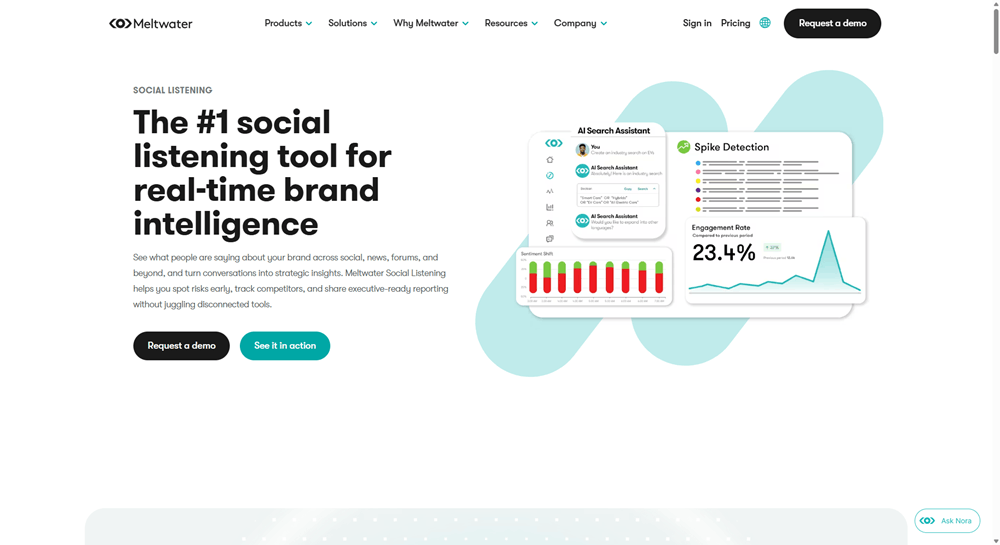
Meltwater is a media intelligence platform built for PR-heavy and enterprise communications teams. It combines social listening with traditional media monitoring (TV, radio, print, online news), which gives it an edge for brands that need to track reputation across both social and earned media. Meltwater’s GenAI Lens also monitors how brands appear across AI-generated content.
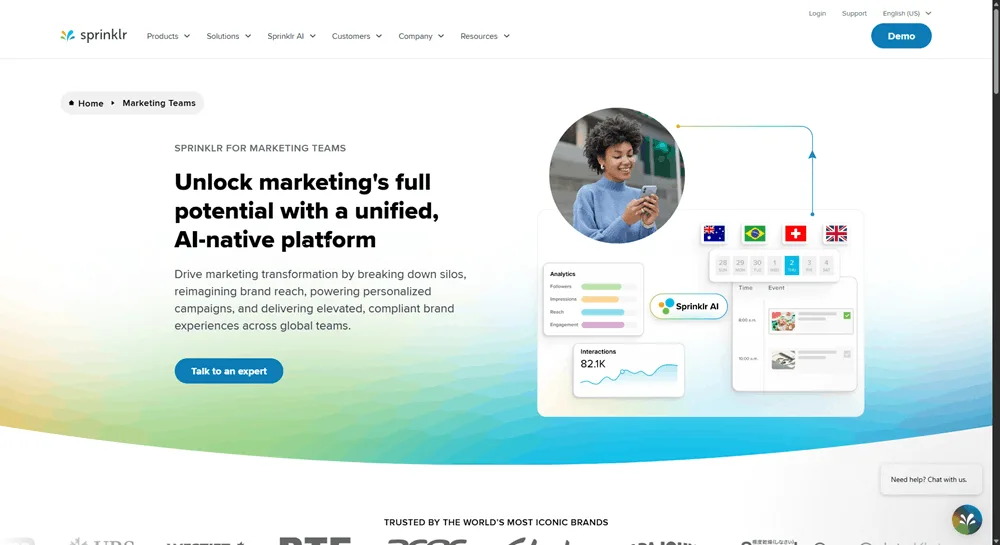
Sprinklr offers enterprise-grade listening across 30+ digital channels with AI-powered sentiment analysis, trend detection, and competitive benchmarking. It’s built for large organizations managing global brand safety, though its complexity and price point reflect that enterprise focus.
Who needs it: Every brand with a social presence. Essential for mid-market and enterprise teams where reputational risk carries real revenue impact.
Comment moderation and owned-channel protection tools
The job: Control the reputational risk that lives in your own comment sections, replies, and ad comments.
Your comment section sits right below your brand name, and it’s open to anyone. When someone leaves something offensive or misleading under your post or ad, your audience sees it in your brand’s context. Ad comment sections are especially fast-moving because paid reach puts your content in front of people who may not already have a relationship with your brand.
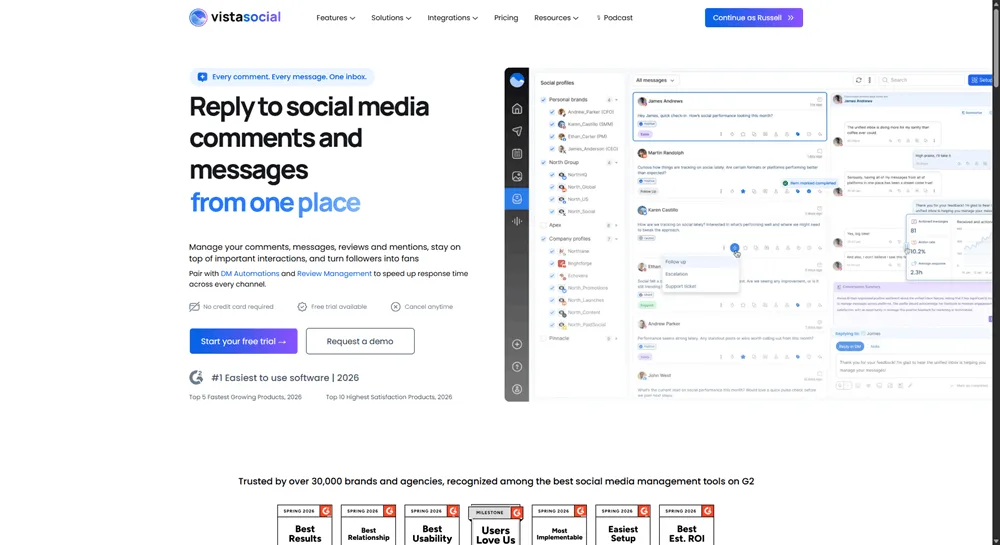
Vista Social offers comment and reply moderation automations that automatically hide or delete risky comments on both organic posts and paid ads. Teams can set keyword-based rules, sentiment-based triggers, and custom filters that work across platforms, and everything flows into Vista Social’s unified inbox so nothing slips through because someone forgot to check a specific platform.
Sprinklr provides AI-powered moderation at enterprise scale, handling high comment volumes across multiple brands and regions as part of its broader customer engagement suite. Its moderation rules can be customized by brand, region, and language, which matters for global teams managing localized social presences.
Native platform moderation (Meta, YouTube, TikTok) offers basic keyword filtering, comment holding, and hiding controls. These are free and useful as a baseline, but they only work within their own platform and don’t scale well for teams managing multiple accounts or high engagement volumes.
Who needs it: Any brand running paid social or dealing with high organic engagement volume. If your team can’t manually review every comment on every post, you need automated moderation.
Content compliance and approval-workflow tools
The job: Stop off-brand or non-compliant content before it goes live. This is the internal-risk category, and most brand safety strategies have a gap here.
When a problem gets caught after publication, you’re in damage-control mode. When it gets caught before publication, there’s nothing to control. That shift toward proactive, pre-publication brand safety has been accelerating through 2025 and 2026.
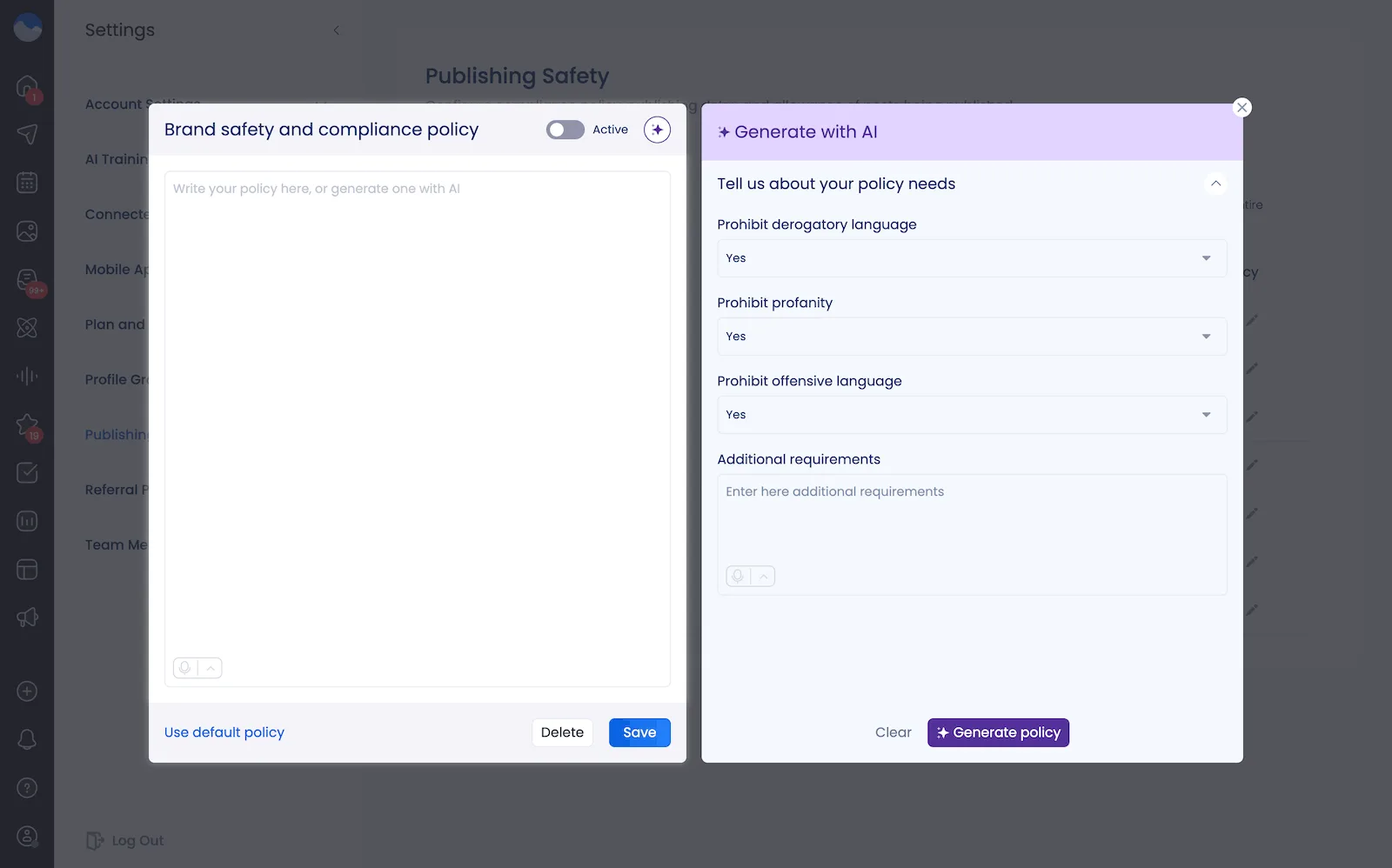
Vista Social addresses internal risk with its Brand Safety and Compliance Policy feature (Enterprise plan or add-on). Admins can upload or use the AI Policy Generator to create a brand safety policy for each profile group, and team members get a warning if a draft violates the policy before it is published.
Combined with multi-step approval workflows and the AI Knowledge feature, which keeps AI-assisted content aligned with your brand’s voice, it creates a system where content goes through human and automated review before reaching your audience.
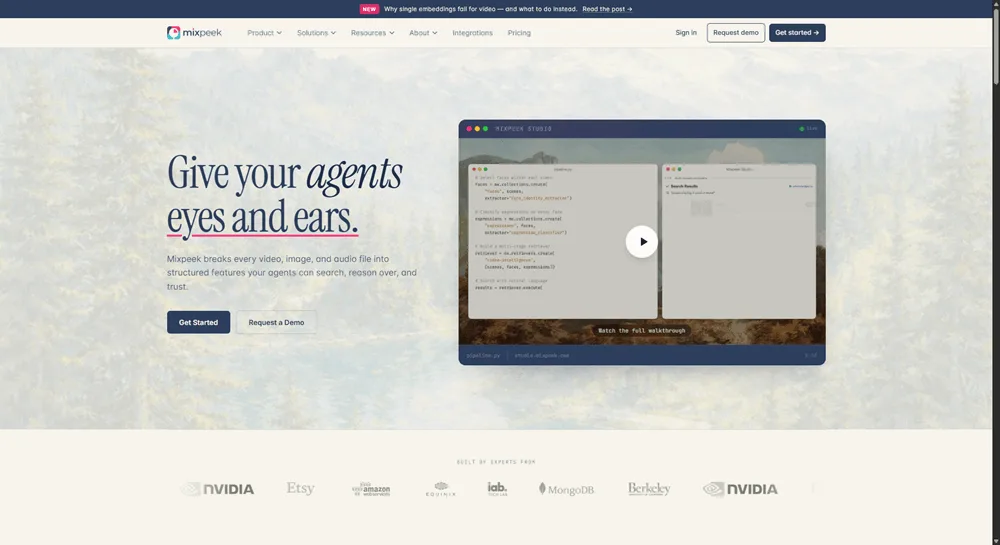
Mixpeek takes a different approach, offering pre-publication content scanning that analyzes video, images, and audio for brand risks before content ships. Its API-based design is built for media companies, agencies, and platforms with high content volumes that need automated screening for unauthorized logos, restricted faces, or copyrighted audio.
Sprinklr offers governance and compliance workflows at enterprise scale, with role-based permissions, approval chains, and audit trails. Its compliance features are built for organizations with complex regulatory requirements across multiple teams and regions.
Who needs it: Teams with multiple content contributors, regulated industries (finance, healthcare, pharma), and any brand using AI-assisted content creation. If more than one person publishes on behalf of your brand, you need approval workflows and policy enforcement.
Ad verification and placement safety tools
The job: Independent, cross-platform verification that your paid ads run in brand-safe environments. Ad verification is where the brand safety industry began, and these tools remain essential for brands with significant ad budgets.
DoubleVerify (DV) provides verification across programmatic, social, and CTV environments. It detects ad fraud, verifies viewability, and classifies content adjacency against the GARM framework. DV is an accredited measurement partner for Meta, TikTok, YouTube, and most major ad platforms.
Integral Ad Science (IAS) uses AI-driven multimedia analysis that scores content at the video, audio, image, and text level, not just by metadata or keywords. IAS reports brand safety and suitability aligned to the GARM framework’s 12 content categories across display, video, social, and CTV.
Zefr specializes in content-level brand suitability, analyzing individual pieces of content rather than just pages or channels. Its approach is particularly strong for video environments like YouTube and TikTok, where frame-by-frame analysis matters.
GumGum (Verity) uses contextual intelligence to analyze web pages, videos, and images, going beyond keyword matching to understand meaning, sentiment, and visual context. This helps brands avoid the over-blocking problem that plagues keyword-based approaches.
Who needs it: Brands and agencies running significant programmatic and paid social budgets across multiple platforms.
These tools are powerful, but keyword blocklists can over-block. In a recent Fast Company article, Mundial Media described how terms like “Latino” and “immigrant” routinely appear on blocklists as accumulated defaults, quietly excluding entire audiences brands actually want to reach. Ad verification tools need human oversight.
It’s important to note that Vista Social doesn’t compete in this category. Ad verification is a specialized discipline focused on programmatic ad placements, which is a different problem from social monitoring, comment moderation, and content compliance.
IP protection and impersonation detection tools
The job: Catch counterfeits, fake accounts, brand impersonators, and trademark infringement before they erode customer trust or divert revenue.
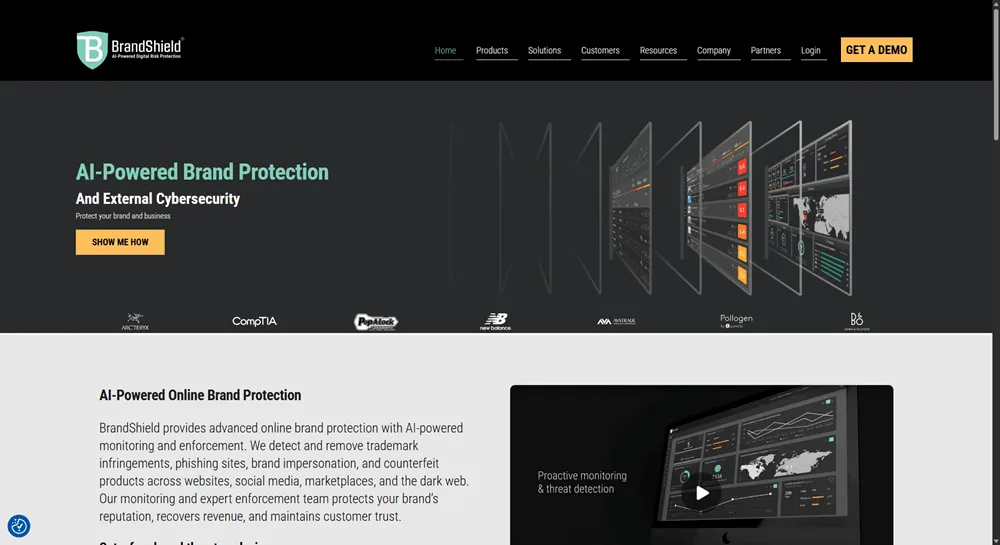
BrandShield provides AI-powered detection and enforcement across phishing sites, counterfeit listings, fake social accounts, rogue apps, and dark web threats. Its AI ClusterX technology identifies networks of threat actors rather than just individual violations, helping brands dismantle organized abuse at scale.
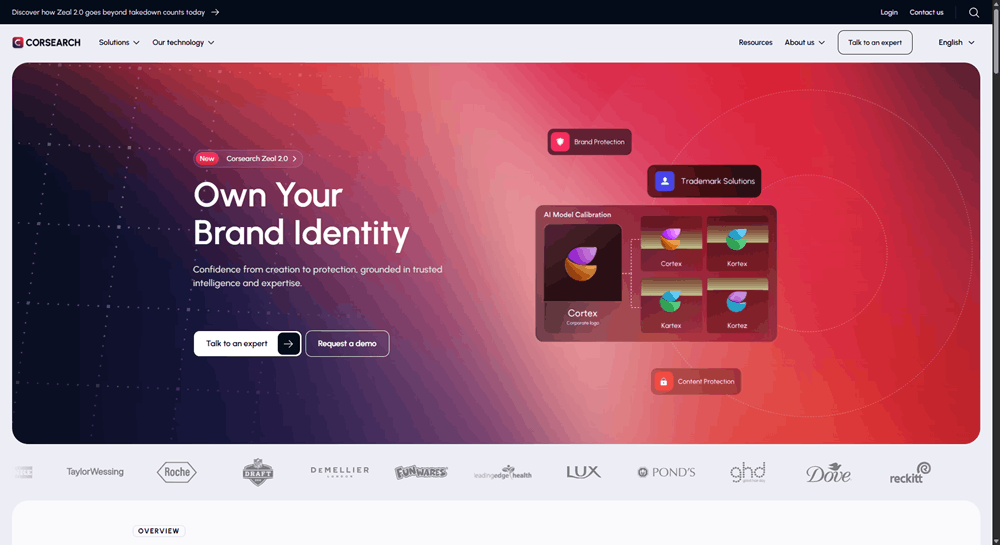
Corsearch combines trademark research and management with AI-powered brand protection. In the trademark space since 1949, it offers detection and enforcement across marketplaces, social media, and the open web, blending legal IP expertise with automated monitoring.
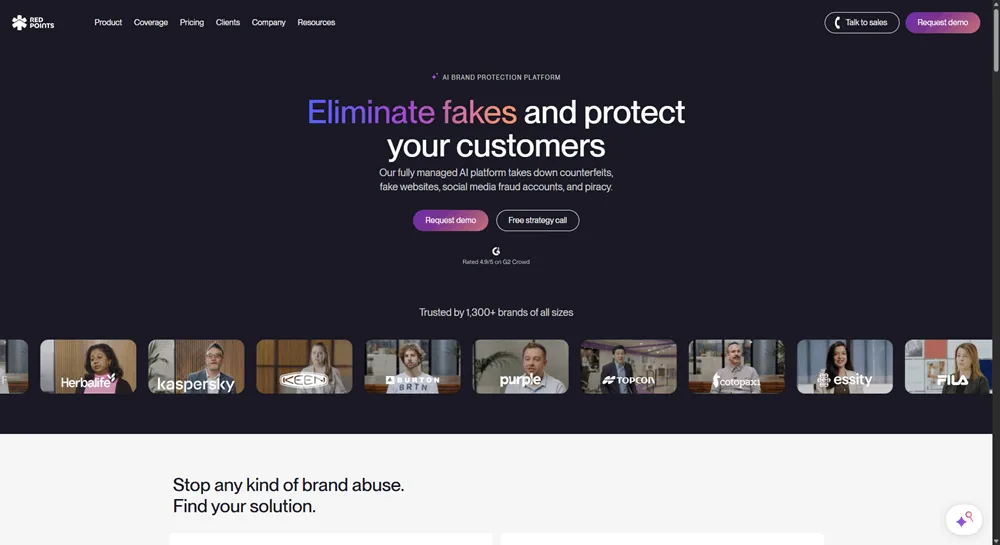
Red Points is optimized for high-volume counterfeit enforcement on marketplaces and social platforms. Its AI scans across 2.7 billion monthly data points and has built a database of over 50 million infringers, making it particularly strong for consumer brands dealing with counterfeit products at scale.
Who needs it: Consumer brands with counterfeit exposure, brands facing impersonation or phishing, and companies with significant trademark portfolios.
How to choose the right brand safety tools for your brand
With six categories of tools on the table, it’s easy to feel like you need all of them. You probably don’t. The goal is to match your tooling to the risks your brand actually faces, and a few questions will get you there.
Locate your biggest risk
The first question is where your exposure is heaviest. If you’re spending a significant budget on paid media, you’ll want maybe a mix of:
- Native platform brand safety controls
- Social monitoring
- Ad verification
High organic engagement points to social monitoring and comment moderation. Teams with multiple contributors or compliance obligations should prioritize content compliance, and brands facing counterfeit or impersonation problems need IP protection.
Native controls is worth configuring regardless since it’s free, and most brands benefit from social monitoring because that is foundational.
Decide whether to build a stack or consolidate
Once you’ve identified which categories matter, decide whether to assemble separate best-in-class tools or consolidate into fewer platforms. Dedicated point tools tend to go deeper in their category, but running four or five of them means more context-switching and a higher total cost.
A consolidated platform like Vista Social covers social monitoring, comment moderation, and content compliance from one workspace, which means your social media crisis management workflow doesn’t require jumping between tools when speed matters most.
Size the tool to your team
It’s also worth sizing the tool to your team. Enterprise ad verification platforms are overkill for a small business with no programmatic spend, and a solo social media manager needs monitoring and moderation, not a six-figure brand safety suite.
Keep a human in the loop
Whatever tools you choose, don’t treat them as set-and-forget. Tools encode judgment calls, and someone on your team has to own those calls. The Mundial Media blocklist example from category 5 is worth remembering: a blocklist built during a different news cycle can quietly exclude the audiences you actually want to reach.
Prioritize the internal risk
If you’re only going to prioritize one gap, make it the internal risk. It’s the most common source of brand safety incidents and the area traditional tools cover least. Most strategies focus on external threats, but the day-to-day reputational risk, the post that shouldn’t have gone live, the reply that escalated, the AI draft nobody reviewed, is where most incidents actually start.
Brand safety tools FAQs
What is the difference between brand safety and brand suitability?
Brand safety is about avoiding content that’s universally harmful: hate speech, violence, or illegal activity. Brand suitability is more specific to your brand, covering content that might be fine for other advertisers but wrong for your particular audience or industry.
A gambling brand might be comfortable alongside sports betting content, while a family-focused brand wouldn’t. Both matter, but they require different levels of customization in your tools.
What tools do brands use for brand safety?
Brands typically use a combination across several categories: native platform controls for basic ad placement safety, social listening tools for mention and sentiment monitoring, comment moderation tools for owned-channel protection, content compliance platforms for pre-publication review, ad verification tools for programmatic placement safety, and IP protection platforms for counterfeit and impersonation defense. Most brands need two or three of these categories working together.
Are native platform brand safety controls enough?
No. Native controls are a necessary starting point, but they only cover their own platform, only apply to paid content, and rely on moderation standards that have loosened in 2025 and 2026. They also don’t address internal risks like off-brand content, unapproved posts, or comment-section reputation. You need them configured, but you need more than them.
How much do brand safety tools cost?
Costs vary widely by category. Native platform controls are free, and social listening tools range from roughly $79/month to custom enterprise pricing.
Ad verification tools like DoubleVerify and IAS are typically enterprise-priced based on ad spend volume, and IP protection platforms use custom pricing based on monitoring scope. Content compliance features are often built into social media management platforms like Vista Social, where the Brand Safety and Compliance Policy is available on the Enterprise plan or as an add-on.
Do small businesses need brand safety tools?
Yes, though the specific tools look different. A small business doesn’t need enterprise ad verification, but it does need to monitor what people are saying online, moderate comment sections (especially on paid posts), and have a basic approval process before content goes live.
Reputational risk is actually higher for smaller teams because there are fewer people watching. Starting with native platform controls and a social management tool with built-in monitoring and moderation covers the most important ground.
Try Vista Social for free
A social media management platform that actually helps you grow with easy-to-use content planning, scheduling, engagement and analytics tools.
Get Started NowAbout the Author

Content Writer
Russell Tan is a content marketing specialist with over 7 years of experience creating content across gaming, healthcare, outdoor hospitality, and travel—because sticking to just one industry would’ve been boring. Outside of her current role as marketing specialist for Vista Social, Russell is busy plotting epic action-fantasy worlds, chasing adrenaline rushes (skydiving is next, maybe?), or racking up way too many hours in her favorite games.
Loading related tools...

The most complete social media management platform for teams who demand more.





Tools
PublishingAnalyticsEngagementIntegrations
FacebookInstagramLinkedInRedditSnapchatThreadsTikTokX (Twitter)YouTubeMCPVista Page (link-in-bio)All IntegrationsCopyright © 2026 Vista Social LLC. All Rights Reserved.