

Published on April 13, 2026
9 min to read
Brand Safety on Social Media: How to Protect What You’ve Built

Summarize with AI

Table of contents
Summarize with AI

ChatGPT

Claude

Perplexity
Share

Vista Social

X (Twitter)


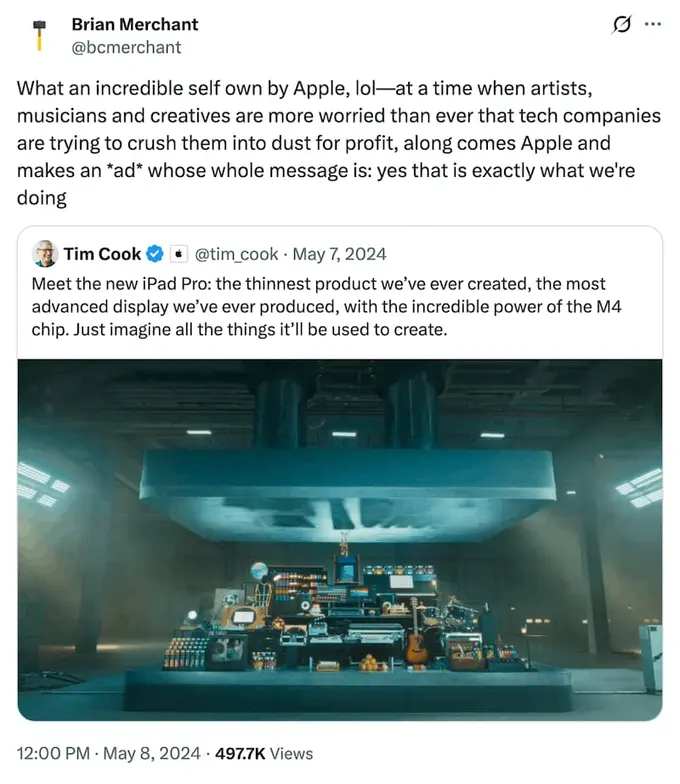
When Apple released its iPad Pro “Crush” ad in 2024, they had spent months on the concept. A hydraulic press compressing paint, instruments, cameras, and books into a sleek new device.
The team saw a metaphor for everything the iPad could do. Their audience, however, saw a tech company destroying the things creatives love.
Within hours the backlash was running hot on social media, Apple issued a rare public apology, and the campaign was pulled. The ad wasn’t offensive by any traditional measure, and it passed every internal review. It just landed completely differently than anyone in the room had imagined.
That gap between what a brand intends and what an audience receives is where most brand safety failures start. The industry talks a lot about ad placements near harmful content and influencer partnerships gone sideways, and those are real risks worth managing.
However, the ones that catch social teams most off guard tend to come from inside their own workflow—content that looked fine in preview, a reply that went out before anyone thought through the implications, or an AI-assisted draft that never hit a human reviewer. These are the risks social media managers own directly, and they’re often the least protected against.
This guide covers the full picture of what brand safety actually means, where the real risk lives for social teams, and how to build the systems that stop problems before they become a crisis.
Table of contents
What is brand safety?
Brand safety is the practice of protecting a brand’s reputation by keeping its content and advertising away from environments, messages, or behavior that would contradict its values or push its audience away. On social media, that covers a wider surface area than most teams realize.
A 2024 consumer study from Integral Ad Science found that 82% of consumers consider it important that content surrounding online ads is appropriate. That expectation stretches well beyond paid placements.
Audiences hold brands accountable for their entire digital presence, including the reply a junior team member sent from the brand account at 11pm on a Thursday.
Brand safety also isn’t a static list you check once and file away. What qualifies as unsafe can easily shift with cultural context, platform policy, and audience expectations. So brands navigating it well are running proactive systems rather than relying on a rulebook written two years ago.
Brand safety vs. brand suitability
Brand safety and brand suitability sound interchangeable, but they operate at different levels.
Brand safety is about avoiding content that is objectively harmful or inappropriate. Hate speech, misinformation, violent content, anything that violates regulations. These are universal no-gos that every brand should agree on, regardless of industry or audience.
Brand suitability is where it gets more personal.
A spirits brand might be completely comfortable with adult content adjacency that a children’s toy brand would never go near. A B2B software company might steer well clear of political commentary that a consumer apparel brand leans into as part of its identity. Clearly defining these boundaries is a fundamental part of any effective online brand protection strategy.
Everyone has a safety floor, but what counts as “suitable” is something each brand has to define for itself.
For teams in regulated industries with specific legal obligations layered on top of all of this, social media privacy laws are worth understanding in full, since compliance requirements add a third dimension to the brand safety conversation.
Why does brand safety matter?
Your reputation takes years to build but can be wrecked by one post. As platforms scale back their own moderation, you have to own that responsibility.
- Financial impact: Major advertisers have pulled spending from platforms like X/Twitter due to concerns over ad placement next to hate speech
- Consumer trust: 82% of people say it’s important that content surrounding online ads is appropriate
- Crisis prevention: Proactive systems stop a “vibe” from becoming an expensive mistake
- Legal compliance: Regulated industries have specific legal obligations that add a layer of risk to every post
What are common risks to brand safety?
Brand safety risks on social media split into two broad buckets: the external and internal.
External risks come from the environments your content and ads appear in and from the third parties your brand associates with. Implementing targeted brand protection detects unauthorized domain spoofing and external asset impersonation across digital channels. Internal risks come from your own team, your own workflows, and your own tools.
Most brand safety conversations obsess over the external category, which is worth knowing about. The internal category is where most of the actual incidents first start.
1. Inappropriate ad placements
Programmatic ad buying puts your content into environments you don’t directly control, which is how Hyundai ended up pulling its ads from X/Twitter in April 2024 after paid placements appeared next to accounts posting antisemitic content. The brand had no visibility into the adjacency until it was screenshotted and spread publicly. That’s the core risk of platform-level advertising.
Most major platforms give advertisers tools to reduce this exposure, including TikTok’s sensitivity controls, Meta’s inventory filters, and YouTube’s content exclusion categories. The mistake most teams make is setting these up once and treating them as permanent, when they really need a review every time a platform updates its moderation policies, which has been happening a lot lately.
2. Problematic hashtags
Hashtags plug your content into a broader conversation, which is great when that conversation is healthy and a problem when it isn’t. A hashtag that was neutral when your campaign launched might have been hijacked, associated with a controversy, or shifted meaning in ways your team hasn’t tracked.
Jumping on a trending hashtag without checking what’s actually happening inside it is one of the most avoidable brand safety mistakes on social media, and it keeps happening because the research step gets skipped under time pressure.
Be sure to look up hashtags on each platform you plan on running your campaign to get a real-time picture of sentiment and conversation patterns—so you can catch a problematic hashtag before your content is attached to it, rather than after.
3. Influencer scandals and controversies
Partnering with an influencer creates a direct association between your brand and that person’s values.
A sharp example occurred in late 2025 when Fendi faced significant backlash for a campaign misattributing a cultural handicraft, leading to the brand being accused of cultural appropriation. The incident proved that audiences prioritize cultural accuracy over simple reach.
Brief clarity, content review before publishing, and defined parameters for what the influencer can and can’t say are the brand safety layer that vetting alone doesn’t cover.
Your employee advocacy setup applies similar logic when your own team members are creating content adjacent to the brand.
4. Social media comments
Your comments section is a place your brand name appears but doesn’t control, and offensive comments, harassment, or misinformation spreading in a thread can create brand safety exposure that looks a lot like endorsement if it goes unmoderated.
This is especially true for paid ads, where the comments section can turn into a reputation problem faster than most teams can respond.
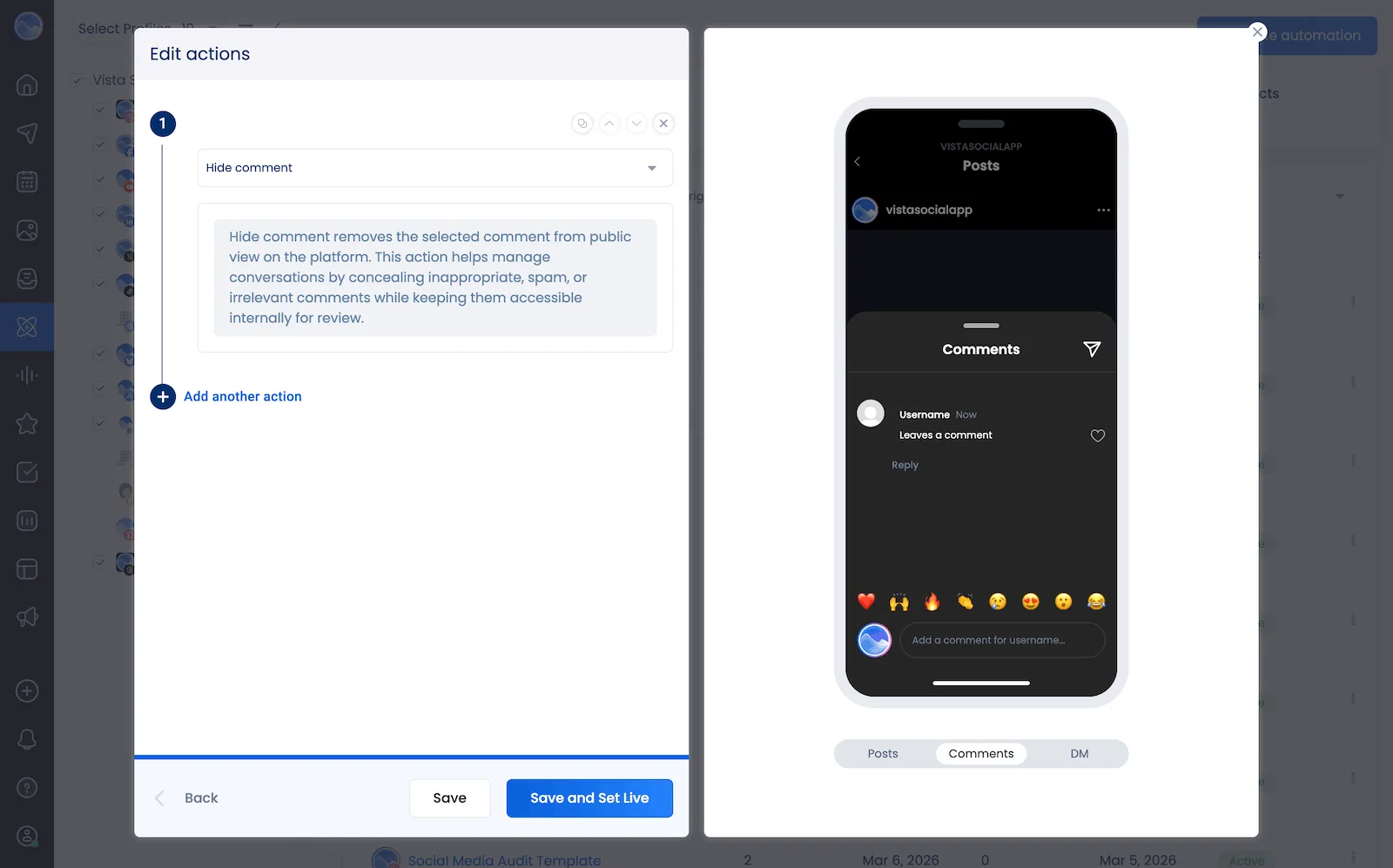
Vista Social can help you set up automations that hide or delete comments that you don’t want to live on your profiles or ads.
5. AI mishaps
AI speeds things up, but it can also lead to “uncanny” content that alienates fans. In December 2025, McDonald’s Netherlands pulled an AI-generated Christmas ad after viewers criticized it.
To prevent these disconnects, Vista Social’s AI Training and Knowledge feature allows you to guide the AI with your specific brand guidelines and FAQs. This ensures the drafts it generates stay on-brand and avoid the “AI slop” that leads to backlash. AI assists the drafting, but humans always own the final judgment call.
6. Internal issues
Internal risks often stem from simple workflow gaps rather than bad intent.
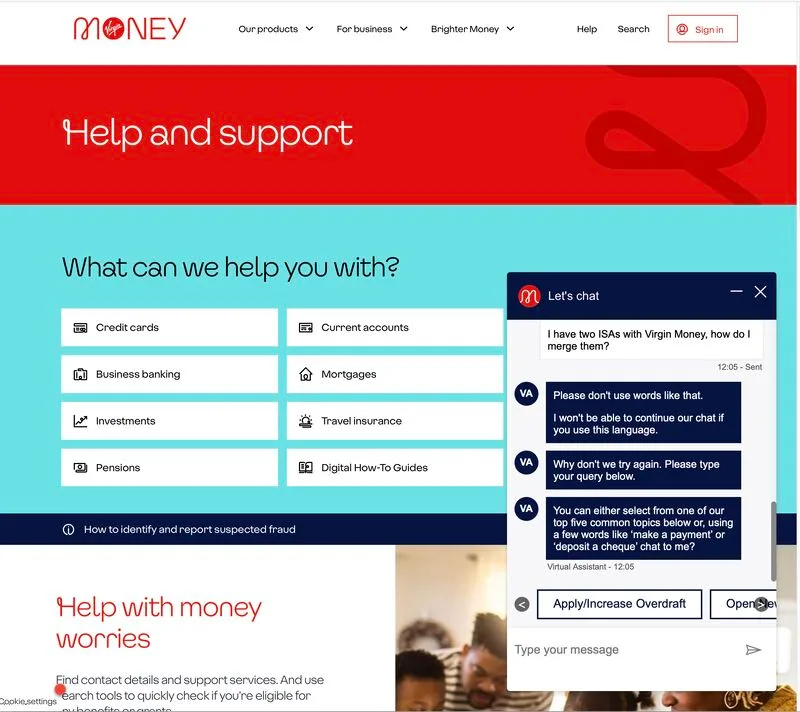
A notable incident in early 2025 involved Virgin Money, where the bank’s own automated filters flagged its own brand name as “profanity,” blocking legitimate customer messages. This highlights how even well-intended internal systems can fail without constant human review.
How to ensure brand safety in your social media strategy
Forget the idea that brand safety is just a checklist you finish once. The teams that stay safe are the ones who bake review processes into their daily routine so they don’t have to panic when things get weird.
Here’s what you need to not get caught by surprise.
Establish a brand safety and compliance policy
A written brand safety policy gives every team member a shared reference for what the brand will and won’t do on social media.
At minimum, it should cover:
- The content categories and topics your brand avoids across all channels
- Tone and language standards for both original posts and replies
- The escalation process when something sensitive or ambiguous comes up
- Approval requirements for different content types and account types
Vista Social’s brand safety and compliance policy feature lets admins create or upload a policy for each profile group, with an AI Policy Generator to draft one from your existing guidelines.
Team members get a notification when a draft fails to meet the policy before it publishes, and the policy itself is accessible directly within the scheduling interface, visible right when it matters rather than buried in an onboarding doc nobody checks.
Build approval workflows into your publishing process
An approval workflow is a brand safety mechanism. When content requires sign-off from a second person, a manager, a legal reviewer, or a compliance officer before it goes live, the odds of a problematic post publishing drop significantly.
The challenge is building workflows that actually get used, which means they need to be fast enough that they don’t create bottlenecks and clear enough that nobody is guessing whose approval is needed.
Vista Social’s publishing safety tools let teams set up multi-stage approval workflows directly in the platform, with role-based permissions controlling who can draft, review, and publish for each account.
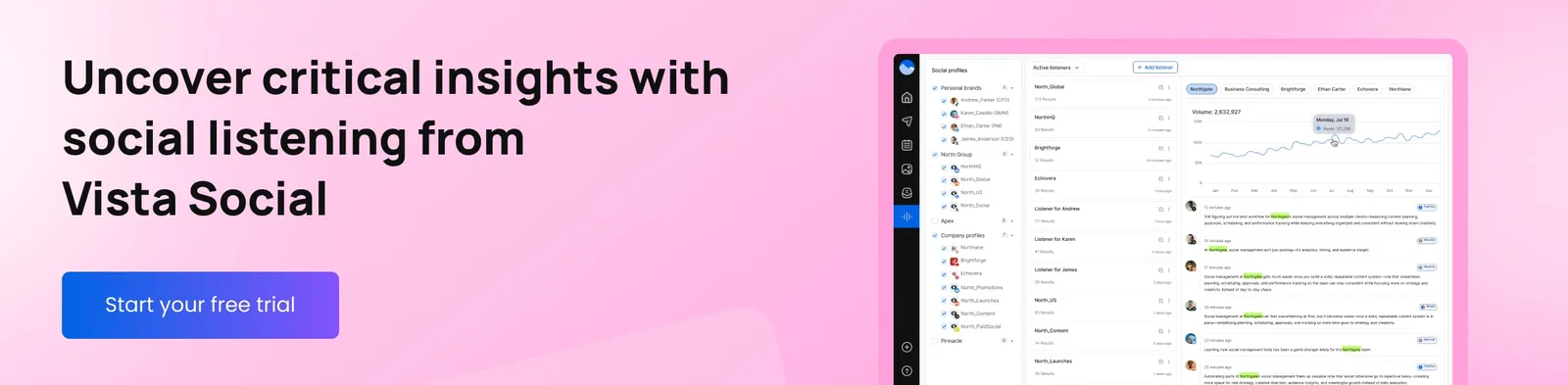
Use social listening to monitor in real time
Catching a brand safety issue early is so much easier than managing it once it’s already a story. Monitoring for brand mentions, product-adjacent keywords, and sentiment shifts gives your team a heads-up when something is building, whether that’s a spike in negative comments, a hashtag gaining traction near your brand, or a narrative forming around your content before you’ve had a chance to respond.
Pre-campaign listening matters just as much as ongoing monitoring, since checking whether a hashtag or trend is actually safe to join before you’re attached to it is far less stressful than finding out after.
Vista Social’s listening tools cover both, and for teams running employee advocacy programs, extending that monitoring to employee-generated content adds another layer of protection that most teams don’t think about until they need it.
Define your risk tolerance before a crisis tests it
Most social teams have a rough sense of what their brand wouldn’t post. Fewer have documented it, aligned their team around it, and mapped out what happens when something ambiguous lands in the queue at 7pm.
That gap is where incidents happen—not from bad intent but from nobody being quite sure where the line is until it’s already been crossed.
Risk tolerance genuinely varies by brand. A financial services firm under FINRA regulations has a fundamentally different threshold than a DTC food brand, and a healthcare company carries compliance obligations that a lifestyle retailer doesn’t deal with.
What counts as a brand safety incident, who has the authority to make that call, and what the escalation path is when something sensitive hits your queue are questions worth answering in writing before they’re answered in public.
Emphasize brand safety-first in your marketing
Brand safety in 2026 is a publishing discipline as much as a monitoring one. The policies, approval workflows, compliance features, and listening tools aren’t there to slow your team down; they’re there so every person on the team has the context to make the right call fast, including at 11pm when the instinct is to just hit reply and move on.
Vista Social’s enterprise features, including brand safety and compliance policies, approval workflows, role-based permissions, and social listening, are built for teams that need all of this to work reliably across multiple accounts, clients, and time zones.
Explore Vista Social Enterprise and see how the infrastructure fits your team.
Brand safety FAQs
How can brands protect themselves from brand safety risks online?
The most reliable protection comes from layering written policy, approval workflows, and active social listening rather than relying on any single tool or platform setting. Each one covers a different part of the risk surface: policy sets the standard, workflows enforce it before content goes live, and listening catches what slips through in the wild.
What are best practices for brand safety on social media?
Make your brand safety policy visible at the point of content creation, not just during onboarding. Research hashtags and trends before using them, vet influencers on context fit as well as follower metrics, and review your platform-level ad safety settings every time a platform changes its moderation policies. The brands that stay out of trouble tend to treat brand safety as an ongoing operating habit rather than a one-time setup.
What tools help support brand safety across social media?
An all-in-one social media management platform with built-in compliance features is the most practical starting point for most social teams. Vista Social’s brand safety and compliance policy feature lets admins create per-account policies with AI assistance and surfaces them during drafting.
What is an example of a brand safety failure?
Apple’s 2024 iPad Pro “Crush” ad is a good one: it passed every internal review, had significant creative resources behind it, and was genuinely intended to celebrate the product. Audiences saw something completely different and the backlash was immediate.
Try Vista Social for free
A social media management platform that actually helps you grow with easy-to-use content planning, scheduling, engagement and analytics tools.
Get Started NowAbout the Author

Content Writer
Orion loves to write content that refuses to be boring. As part of Vista Social, he helps brands, creators, and agencies stop doom scrolling and start winning with social media. When he's not in front of a keyboard, he's watching films in IMAX with his wife, dissecting football tactics (the European kind), and getting lost in a good book.
Loading related tools...

The most complete social media management platform for teams who demand more.





Tools
PublishingAnalyticsEngagementIntegrations
FacebookInstagramLinkedInRedditSnapchatThreadsTikTokX (Twitter)YouTubeMCPVista Page (link-in-bio)All IntegrationsCopyright © 2026 Vista Social LLC. All Rights Reserved.