


From Doer to Conductor: What the AI Social Media Manager Becomes When Agents Handle the Busywork
July 17, 2026
9 min read

Summarize with AI

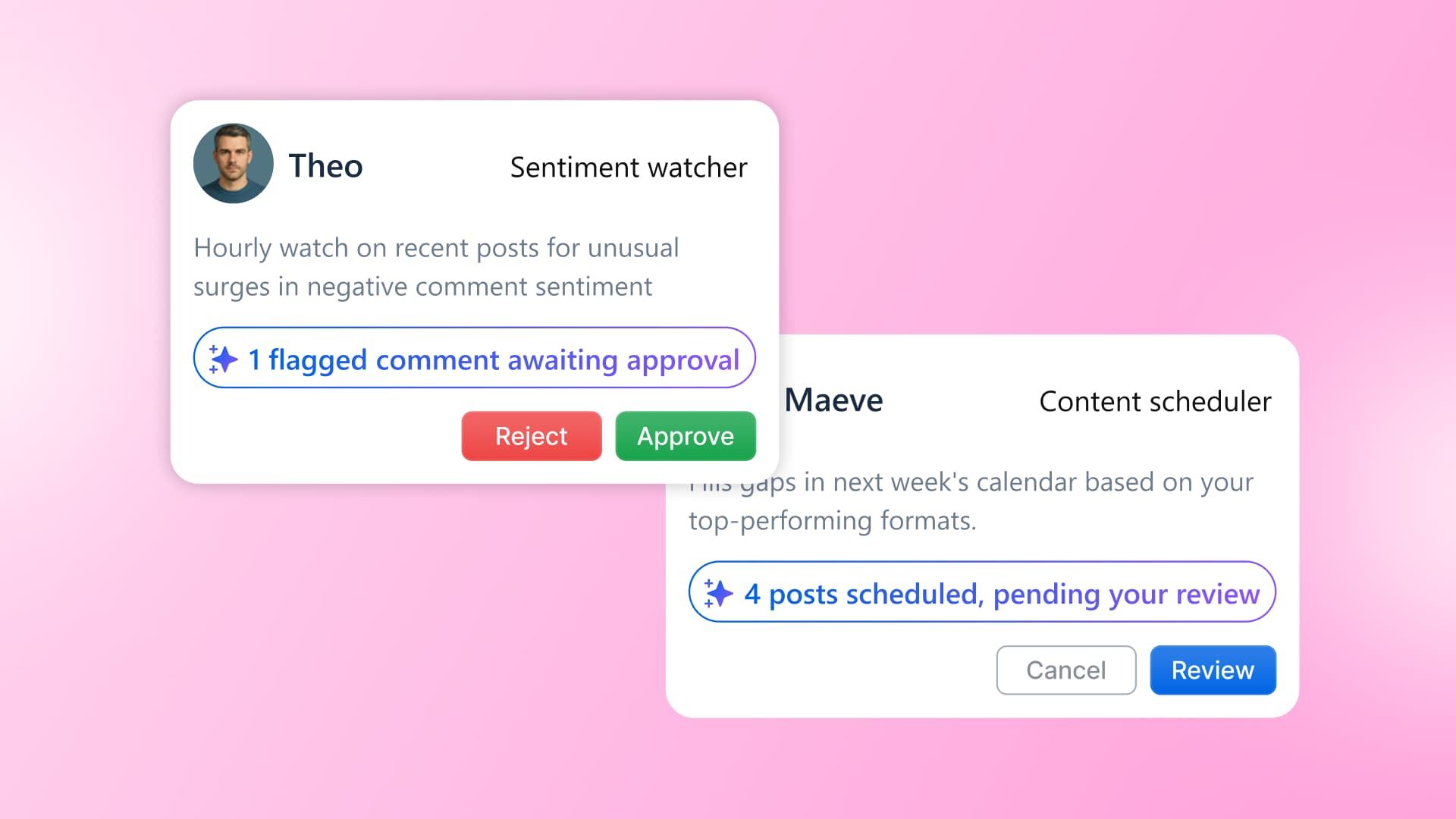
Table of contents
Share

Vista Social

X (Twitter)


Your week opens with six browser tabs playing at once, each demanding a different version of the same post. The LinkedIn crop works, the Instagram version doesn’t, and the caption that sounded sharp five minutes ago now feels flat on X. By the time every channel sounds right, you’ve spent another evening playing every instrument yourself.
The strategy document is still sitting behind the content calendar, even though strategy is the work you were hired to lead.
Those hours used to go into rewriting, resizing, and scheduling. AI agents can now carry those steps alongside approval chasing and routine reports, which lets you step back far enough to hear the whole arrangement.
Your role moves toward setting direction and reviewing the work. You make the judgment calls, including when the machine needs to sit one out. The busywork was the price you paid. AI agents are starting to cover the bill, and the conductor’s position is now part of the role.
Table of contents
Key takeaways
- Tactical work is moving first: Caption variants, media resizing, scheduling, first-pass triage, and routine reporting are strong delegation candidates.
- Human judgment becomes more visible: Strategy, taste, accountability, crisis calls, and relationships stay with the manager.
- Approval is part of the workflow: Useful agents prepare and organize the work while a person reviews sensitive or public actions.
- Start with one recurring task: A small supervised handoff gives you evidence before you expand the system.
What you get to stop doing
A conductor stays close to every part without playing every note. For a social media manager, the first parts to hand off are recurring jobs with clear inputs and repeatable rules. Each one should end in an output you can review.
The first handoffs usually look like this:
- Caption adaptation: Turn one approved idea into platform-specific drafts for LinkedIn, Instagram, Facebook, X, and Threads.
- Media preparation: Generate first-pass assets and resize approved creative for each network’s format.
- Calendar upkeep: Schedule approved posts, flag empty slots, and surface conflicts before the week gets messy.
- Inbox triage: Sort comments and messages by intent, urgency, and the person who needs to answer.
- Routine reporting: Pull performance data, assemble the recurring report, and point out changes worth reviewing.
- Trend monitoring: Watch defined topics and accounts, then bring promising signals to you with the context attached.
This relief matters because the volume of the role can become unreasonable in a small team. One manager may own the strategy, production, community, and results. Our guide to manager burnout goes deeper on what that workload costs.
The handoff still needs boundaries. A caption agent can produce a useful first draft, but it shouldn’t decide that your brand has an opinion on a breaking story. A reporting agent can find a spike, but it won’t know that a product recall or creator mention changed the context unless you teach it.
You can try Ask Vista free with no credit card required, then hand it one recurring task from this list.
What only you can still own
Moving to the conductor’s position makes your responsibility more visible. AI can produce options at a speed no person should compete with, but speed can’t tell you whether a joke fits the brand or a trend is already tired. It also can’t decide whether a frustrated customer needs care instead of a prepared reply.
Five responsibilities become more valuable:
- Strategy: Choose the audience, the position, the channel mix, and the business outcome social should move toward.
- Taste: Recognize the idea with life in it, then cut the competent drafts that would disappear in the feed.
- Accountability: Own the result, explain what changed, and decide what the team will test next.
- Sensitive judgment: Handle crises, legal concerns, executive posts, and replies where tone can alter the outcome.
- Relationships: Build trust with customers, creators, partners, and colleagues who know when a person is paying attention.
The same research found that 71.1% of respondents named time savings as AI’s biggest workflow improvement.
That time only becomes valuable when you reinvest it in work the software can’t carry, including a stronger brief, a better creative bet, or a conversation that changes what the brand does next.
Use the time AI returns to sharpen the work your audience can feel.
The conductor model in practice
The conductor model is a supervised way of working where AI agents draft, schedule, triage, and report while the human sets direction, defines the brand voice, and approves public actions. Each agent gets a part, a tempo, and a clear point where it waits for your cue.
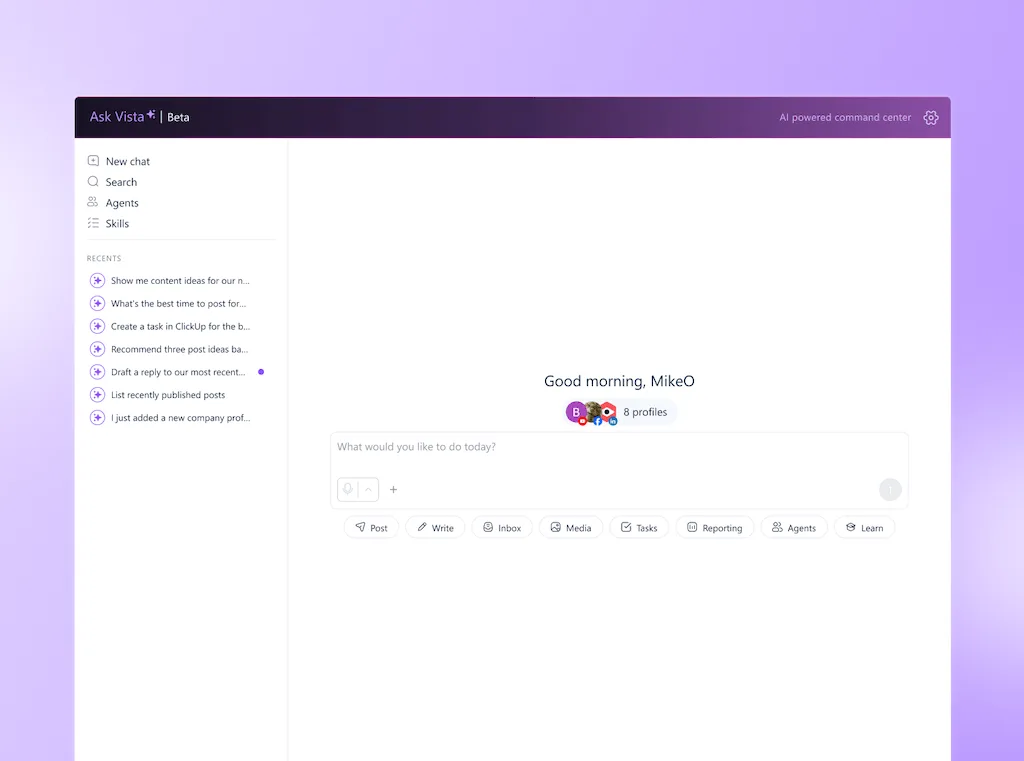
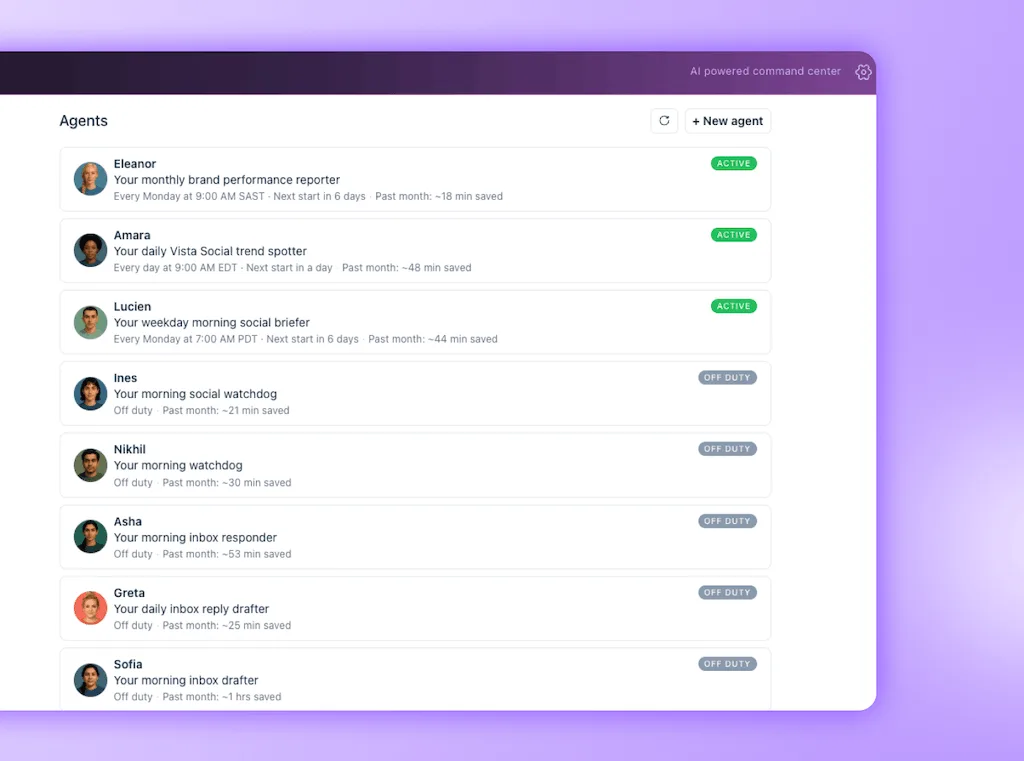
In Vista Social, Ask Vista connects the AI layer to your profiles, inbox, and analytics. It also works with the calendar, media, and tasks that already hold the work. Its agents can run recurring jobs on a schedule, while Skills give those agents an editable playbook for each job.
| Part of the day | Ask Vista prepares | The manager decides |
|---|---|---|
| Morning inbox check | Sorts comments and DMs, drafts routine replies, and flags sensitive messages | Which replies need a personal response and what the brand should say |
| Content production | Adapts an approved idea by network and prepares media variants | Whether the idea deserves to ship and how far the concept should stretch |
| Approval queue | Checks the post against instructions and brand rules | Whether it is accurate, timely, and ready to represent the brand |
| Weekly reporting | Pulls performance, finds changes, and assembles the first summary | Why the change happened and what the team should do about it |
| Trend watch | Monitors defined topics and brings back signals | Whether the moment fits the audience, the brand, and the calendar |
Vista Social’s semantic analysis adds another useful review layer. It examines uploaded media for estimated completion rate, scroll-stopping power, content type, platform fit, and creative strengths before you publish. You still decide whether the asset fits the campaign and what the audience needs from it.
Strong conducting also depends on giving each part the right context:
- Brand voice: Set the writing style by profile group so captions and inbox drafts begin in the right tone.
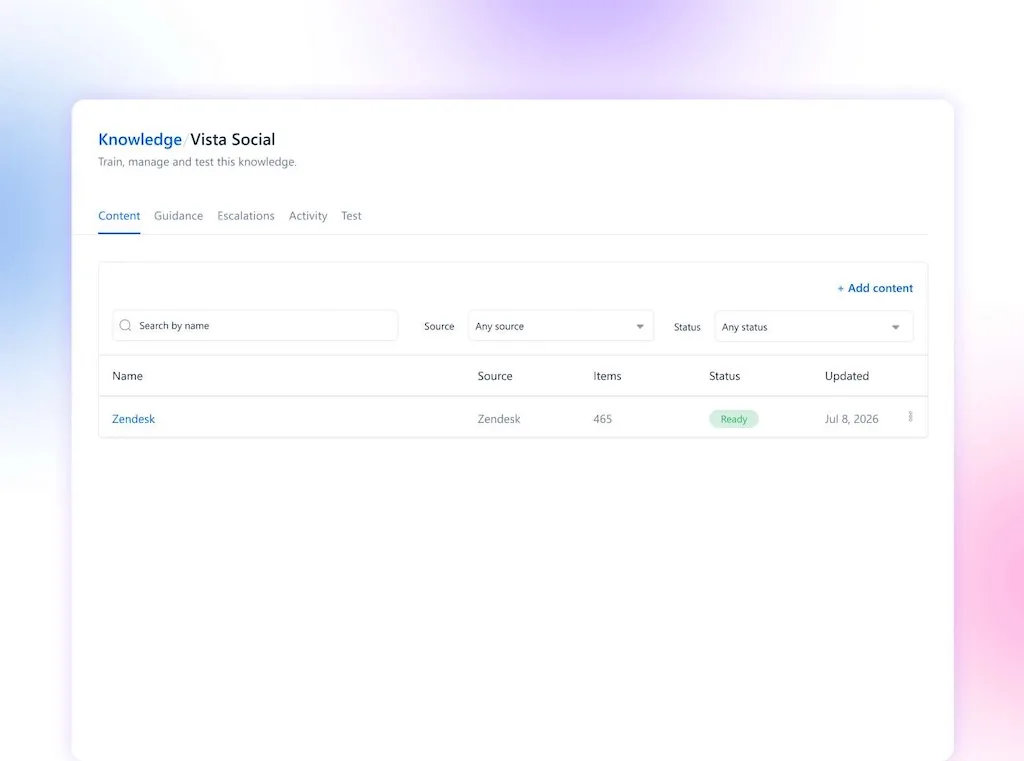
- AI Knowledge: Ground the work in selected documents, web pages, sitemaps, or Zendesk articles.
- Escalation rules: Tell the AI when to hand legal complaints, billing disputes, or distressed customers to a person.
Approval remains the load-bearing part. Ask Vista confirms before it publishes, sends, or changes something on a connected account. You can also use inbox intent to sort routine messages while complaints, sales conversations, and sensitive replies stay visible to the right person.
If this setup fits your week, try it free with no credit card required and bring the first result to your next review.
But can’t AI just run it without me?
AI agents generate responses using the context and guidance available to them. Even a strong draft can benefit from a second review, especially when the work depends on subtle signals such as mood, sarcasm, current information, or recently updated instructions.
The 78.4% editing figure is useful here. Frequent AI use and frequent human editing can sit in the same workflow because review is how a professional protects quality, context, and trust.
Keep the work fully hands-on when it involves:
- A crisis or fast-moving event: Context changes too quickly, and the cost of a tone error is high.
- A brand-defining launch: The central idea and creative direction deserve direct human ownership.
- Regulated or legal-sensitive content: Every factual claim and approval path needs a named person behind it.
- Executive communication: The post carries someone’s reputation and often needs their lived perspective.
- A vulnerable customer: Empathy, discretion, and the freedom to depart from a script matter more than response speed.
A conductor also knows when the score no longer fits the room. Pausing an agent is good management when the context has changed, the risk has climbed, or a person needs to take the conversation from the first word.
You can test the workflow free with no credit card required and keep approval on while you learn how it behaves.
The new skill set
Conducting well takes a different set of muscles from playing every part yourself. The best social media manager skills now combine domain expertise with the ability to direct and inspect AI work.
Prompting helps, but tool fluency won’t protect a career on its own because every team will gain access to capable tools.
Robert Rose’s 2026 analysis of marketing careers gives social teams a useful warning:
“Once tools get democratized, the tools provide zero competitive advantage.”
Robert Rose, The Skills Trap (2026)
Learning where to click matters for a season; knowing what deserves to be made stays valuable.
Build these six skills deliberately:
- Direction: Write a clear job description for an agent. Name the source, scope, schedule, output, and approval point.
- Review: Check accuracy, brand fit, platform context, and risk without rewriting every line from habit.
- Brand systems: Turn taste into examples, rules, and exclusions that another person or agent can follow.
- Measurement literacy: Move from reporting numbers to explaining causes, trade-offs, and the next test.
- Strategic judgment: Decide which audience problem matters and which content opportunity deserves resources.
- Override judgment: Recognize when the data is incomplete, the context changed, or the work needs a human from the start.
This is real professional development, and it takes practice. Start with one bounded workflow and review the misses without defensiveness.
Improve the instructions, then widen the scope once the output earns it. Our guide to manager skills can help you plan the human side of that progression.
What to do this week
Use last week’s calendar to run a small delegation audit:
- Label the work: Mark each block as execution, judgment, or relationship work.
- Choose one part: Pick a recurring execution task with stable rules and an output you can review.
- Write the assignment: Name the source and scope. Add the schedule, result, and approval point.
- Review one week: Record where the agent saved time and where your instructions were too thin.
Use your existing management stack as part of the audit. If the AI sits outside your accounts and every result has to be copied across several tabs, the handoff may create another layer of coordination.
The goal is a reliable handoff that returns an hour for strategy, creative direction, or community work. One working part gives you evidence to improve the arrangement before you add another.
When you’re ready, start free with no credit card required and delegate one recurring task from your audit.
Next week, those six browser tabs may still be open, but they won’t all be waiting for you to play. The AI social media manager role gets stronger when agents carry the repeatable parts and you conduct the work that reaches the audience.
Your judgment shapes what ships, why it matters, and when the smartest call is to keep the work human.
Frequently asked questions
Will AI replace social media managers?
AI will absorb more tactical execution, including first drafts, scheduling, triage, and routine reporting. Social media managers still set strategy, protect the brand, own outcomes, and build relationships, so the role shifts toward directing and approving the work.
What tasks can AI agents do for social media?
AI agents can adapt captions by network, prepare media variants, schedule approved content, triage inbox messages, assemble reports, and monitor trends. A responsible workflow sets a clear scope and keeps a person involved before sensitive or public actions.
What can’t AI do in social media management?
AI can’t carry accountability for a campaign, understand every cultural cue, or build trust with a community over time. Strategy, creative taste, crisis decisions, and sensitive conversations still need a professional who understands the brand and the people around it.
Can AI run a social media account by itself?
An AI system can complete many recurring tasks, but unsupervised control creates avoidable brand and accuracy risks. Keep approval in place for publishing, sending replies, changing account data, and any situation where context can change the right answer.
What skills do social media managers need in the AI era?
Social media managers need to direct and review AI output, define brand systems, interpret performance, set strategy, and know when to override the workflow. The strongest managers use AI to extend their capacity while continuing to develop judgment, creativity, and relationships.
About the Author

Content Writer
Orion loves to write content that refuses to be boring. As part of Vista Social, he helps brands, creators, and agencies stop doom scrolling and start winning with social media. When he's not in front of a keyboard, he's watching films in IMAX with his wife, dissecting football tactics (the European kind), and getting lost in a good book.