


How to Write a Social Media Proposal That Wins Clients
October 6, 2026
11 min read

Summarize with AI

Table of contents
Share

Vista Social

X (Twitter)


An enterprise social media proposal is rarely approved by the person who requested it. Your champion forwards it to procurement, legal, security, finance, brand, and regional leads. Each reader also looks for a different reason to say yes or slow the deal down.
The weakness usually appears in the operating details. An agency promises 60 profiles, five markets, four-hour community coverage, and three-stage approval.
Then legal asks who approves a 10 p.m. reply. Security asks about access controls, while finance cannot connect the monthly fee to a countable scope.
A winning proposal survives that handoff. It turns discovery into a clear sales plan. The buying group can then understand it, approve it, and hold both sides to it.
The short version
- Win clarity on the call. The proposal should contain no new problem, budget, approver, or deadline.
- Write the scope until it can be counted. Name quantities, channels, response times, revisions, meetings, and exclusions.
- Give the buyer three scoped options. Make the middle option the engagement you recommend, without hiding the full monthly price.
- Remove the final friction. Include one next action, an electronic signature, and the date of your follow-up.
Table of contents
Use AI to shorten the build
AI should reduce the time spent moving call notes into a template. Give the model approved inputs and a narrow job, while a person reviews the work. Keep pricing, proof, legal terms, and sales judgment with their owners.
| Workflow stage | Useful AI task | Human control |
|---|---|---|
| Discovery intake | Extract pains, stakeholders, deadlines, requirements, and unanswered questions from the transcript and CRM notes. | The account lead then checks every point against the call. |
| Evidence collection | Pull approved performance, publishing, approval, and inbox data from connected systems. | The strategist also verifies the date range, definition, and source before using a claim. |
| Scope QA | Flag missing quantities, channels, owners, review stages, service levels, exclusions, and dependencies. | Delivery leads decide what the agency can promise, while AI only identifies gaps. |
| Proposal assembly | Populate the approved structure and adapt language to the client’s terminology. | The commercial owner sets price, margin, terms, and recommendation because those are business decisions. |
| Risk review | Find contradictions between the scope, staffing, timeline, price, and procurement requirements. | Named owners resolve each flag before the proposal leaves the agency. |
Vista Social’s current MCP tools can retrieve profile metrics, post results, and inbox response data. They can also find scheduled content and approval workflows. Access still follows the user’s rights.
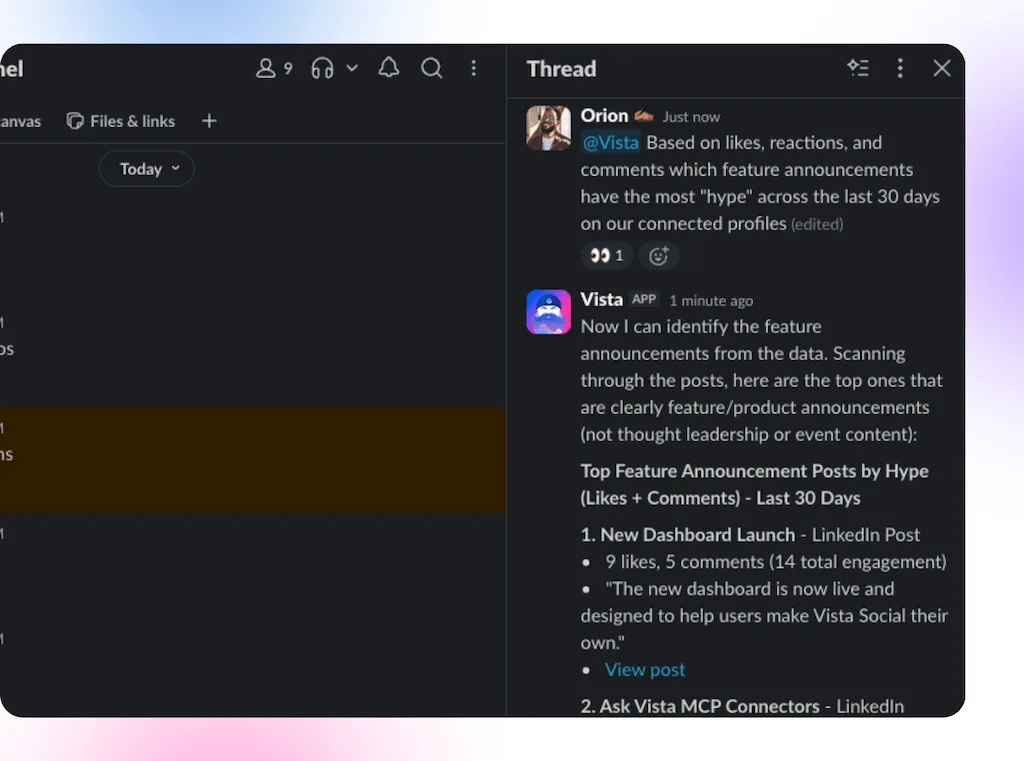
Ask Vista in Slack can answer performance and schedule questions in a client channel. Use it to collect verified inputs, but do not let it invent a case study or promise a result.
Step 1. Win clarity on the discovery call
Do not draft until the call has answered six questions:
- What changes if this works? Get beyond “better social” to the business or operating result.
- Who approves the purchase? Map the executive sponsor, day-to-day owner, and final signer. Also name the contacts in procurement, legal, and security.
- What have they tried already? Find the failed process, internal constraint, or vendor experience you must account for.
- What budget range is available? A range tells you whether a responsible scope exists before you spend time writing.
- When do they want to start? Work backward from a real launch, renewal, event, or planning date.
- Which enterprise requirements apply? Ask about vendor setup, security review, an MSA, and an SLA. Also cover data handling, SSO, purchase orders, and required insurance.
Ask one final question: “What would stop this from being approved?” The answer exposes the concern the document must address.
If the buyer will not discuss budget, approval, or timing, send a short recap. Then book the next talk because a proposal would rest on guesses.
Expected result: You know the likely concern, the approver, and the scope that fits before opening the template.
Step 2. Open with the client’s problem in their words
The first page should sound familiar to the prospect. Use the language from the call. Then state the outcome and constraint in one short paragraph.
Avoid opening with your founding story, services list, or awards because they delay the client’s problem. Those details can support the decision later. Instead, show every reader that this document belongs to the account.
The paragraph does not promise a result you cannot control. Instead, it proves you listened while giving the buying committee a plain account of the offer.
Expected result: A reader who missed the call can explain the problem and desired outcome after one page.
Step 3. Make the scope specific enough to count
Write the scope so both sides can identify completed work, late client input, and extra requests.
“Ongoing content creation and community management” sounds flexible. But it leaves channels, volume, response time, edits, reports, and meetings open.
Content creation and community management across the client’s social channels, with regular reporting and support as needed.
Each month: 24 feed posts and 12 short videos for four business units on LinkedIn, Instagram, and TikTok. Each batch gets two edit rounds and three-stage brand, legal, and regional approval. The service also includes business-day moderation within four working hours, one executive report, and one governance call.
Build every line from six fields:
- Quantity: How many posts, stories, videos, reports, or campaigns?
- Channels: Which profiles and networks are included?
- Cadence: When are drafts, approvals, publishing, and reports due?
- Service level: Which messages or comments are covered, during which hours, and with what response target?
- Revision limit: How many rounds are included, and what counts as a new request?
- Owner: What must the agency, regional team, brand lead, legal reviewer, and executive sponsor supply or approve?
Then add one exclusion sentence directly below the scope:
- Paid-media spend, on-site production, creator fees, translation, weekend crisis response, and legal review are excluded. Work beyond the listed brands, regions, channels, and quantities needs written approval. That approval must cover the new scope, fee, owner, and timeline.
The exclusions should match the engagement because generic legal padding offers little protection. Vista Social’s guide to preventing scope creep goes deeper into change control once the client relationship begins.
Expected result: Neither party can reach month three with a different definition of what the retainer includes.
Step 4. Prove the result with one relevant number
Choose one example that matches the prospect’s problem. Name the client or client type, starting point, time window, work, and measured change.
Bee Seen Social Media & Marketing offers a clean model. Diane Freeman had been rebuilding content across several disconnected tools.
After consolidating the workflow, a nearly inactive client account saw a 200% increase in engagement. That change occurred in the first 30 days.
Freeman also estimated that content creation took half the time after six months. The short window and clear baseline make the engagement figure useful. The time saving then explains the agency benefit.
For example, the useful shape is simple:
| Proof element | Bee Seen example |
|---|---|
| Who | A named social media agency and one client account |
| Starting condition | The client’s social presence was nearly inactive |
| Window | The first 30 days |
| Result | Engagement increased 200% |
Freeman described the agency benefit plainly: “This has allowed me to take on more clients and raise my rates.”
Use the same structure with your own client data. Also define the metric and retain the report behind it. Get permission before naming the client.
If no defensible number exists, offer a paid pilot with a baseline and measurement plan. Because the prospect can verify the result later, an honest pilot is stronger.
Expected result: The prospect sees one comparable, checkable outcome instead of a wall of logos and adjectives.
Step 5. Present three scoped pricing options
A single price asks the buyer to accept or reject one plan. Three options let them choose a service level and see the tradeoffs.
Build the recommended engagement first and place it in the middle. Create the lower option by reducing brands, regions, channels, or service levels.
Do not discount the same work. The upper option could add markets, moderation, local-language work, or leadership reports.
Three options work as a buying aid rather than a guarantee. Since some clients will choose the lowest tier, it must remain profitable, useful, and deliverable. A prospect asking for middle-tier output at the entry price is requesting a scope change.
The example leaves the numbers blank because it presents rates rather than setting them. Use Vista Social’s agency pricing guide to calculate fees from your costs, capacity, positioning, and margin.
Expected result: The buyer can compare meaningful levels of service without negotiating against one unexplained total.
Step 6. Make acceptance one clear action
End with one instruction, one decision date, one available start date, and an electronic signature. A closing page may instead ask for an email, another call, a download, and a separate signature. That creates needless work.
Use language like this:
- Select one option and sign below by October 16. The November 2 start remains subject to contract, procurement, and security review. We will confirm the kickoff when those workstreams are complete and the purchase order is issued.
Since delivery capacity changes, the start-date note creates honest urgency. It does not invent a discount or deadline.
Proposify’s 2026 proposal analysis covered 742,137 proposals across 30 industries. In its data, proposals with electronic signatures had a 15% higher close rate.
They also closed 60% faster than those without them. Although the link does not prove cause, removing printing and scanning is sound process design.
Expected result: Once the buyer decides, no unnecessary administrative step delays the start.
Step 7. Send promptly and follow up on a stated schedule
Send the proposal while the conversation is current, ideally the same day or next business day. Although quality still comes first, a reusable core should make a four-day rebuild unnecessary.
Put the follow-up date in the email and proposal. The buyer then experiences the message as the next agreed step, not an awkward chase.Three messages for the full follow-up sequence
When you send it:
Your proposal is ready, including the three service options and proposed November 2 start. I’ll follow up on Thursday after you have had time to review it. If another stakeholder should receive it now, send me their details and I will include them.
First follow-up:
As promised, I’m following up on the proposal. Which service level is closest to what the team needs? What would the buying committee need clarified before moving it forward?
Close the file:
I have not heard back, so I’m going to release the proposed start date. I will also close this opportunity for now. If the timing changes, reply here and we can reopen the conversation with an updated scope.
Silence does not reveal why the process slowed down. In the 2026 SurveyMonkey and Reddit study, 65% of buyers finished research within a week.
Yet 31% spent several weeks or longer. Follow the stated sequence, answer real questions, and then close the file.
Expected result: Every live proposal has a next date, and every inactive proposal eventually leaves the pipeline.
Make enterprise promises operational after signature
The scope becomes an operating commitment on day one. The agency must publish the agreed volume and collect approvals. It must also meet the response window, protect brand standards, and deliver the report on time.
For example, a company with 500 or 1,000 employees may involve many teams. Marketing, regional leads, legal, customer care, and agencies may all take part. So the proposal should name how that workflow will run.
In practice, use the proposal as the starting point for the workspace:
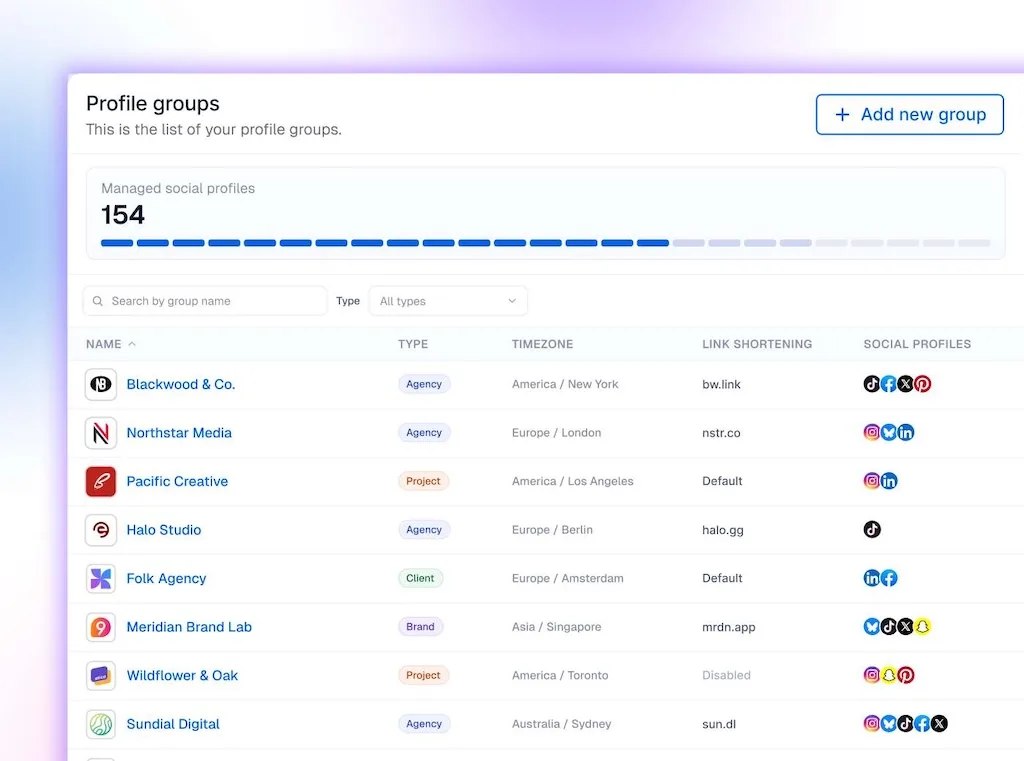
- Separate brands and regions: Profile Groups sort content, access, analytics, and reports by client or brand. They can also reflect a campaign or project.
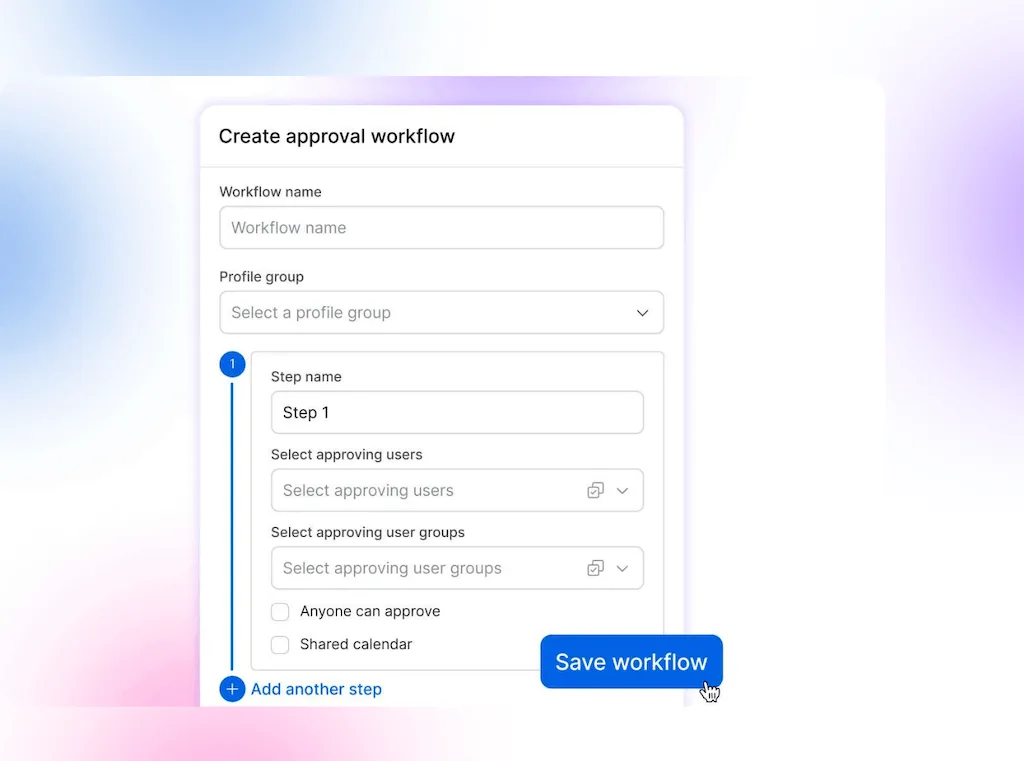
- Route governed approvals: Multi-stage workflows start on Advanced. Shared calendars let external reviewers approve, reject, and leave a note without logging in.
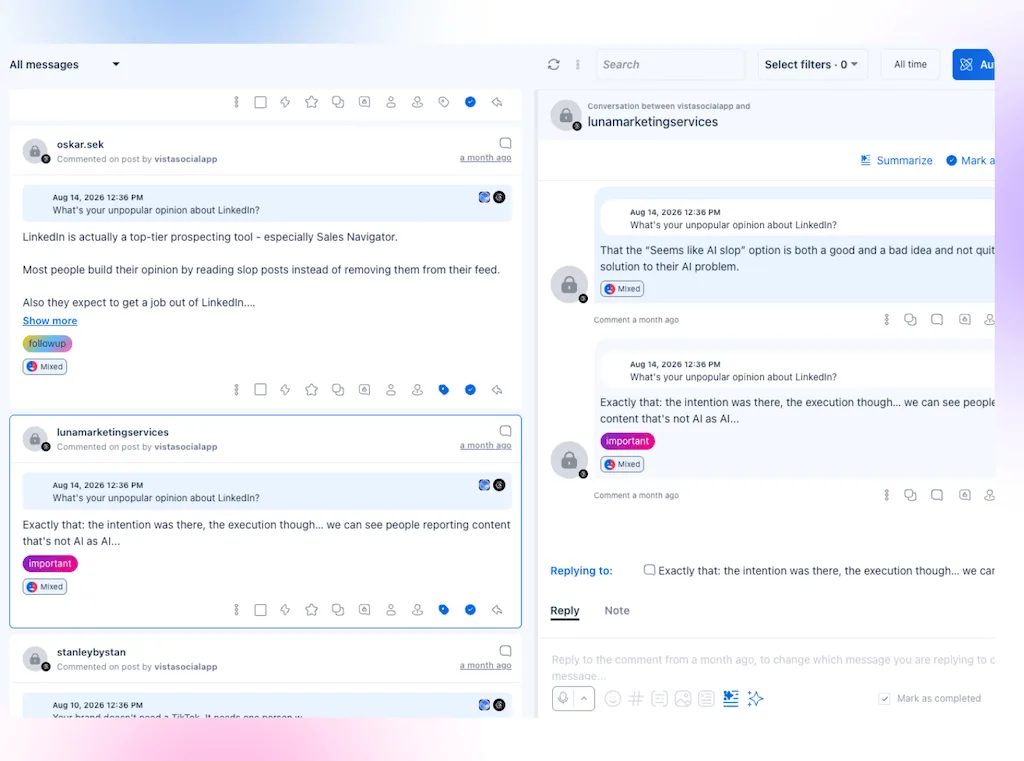
- Control community work: The Vista Social Inbox brings supported comments, messages, mentions, reviews, and shares into one place. Coverage and refresh times vary by network, so base each service level on tested channels.
- Build leadership reporting: Standard reports can be exported or scheduled. Advanced plans and above can also combine sections, add branding, and create a cover page.
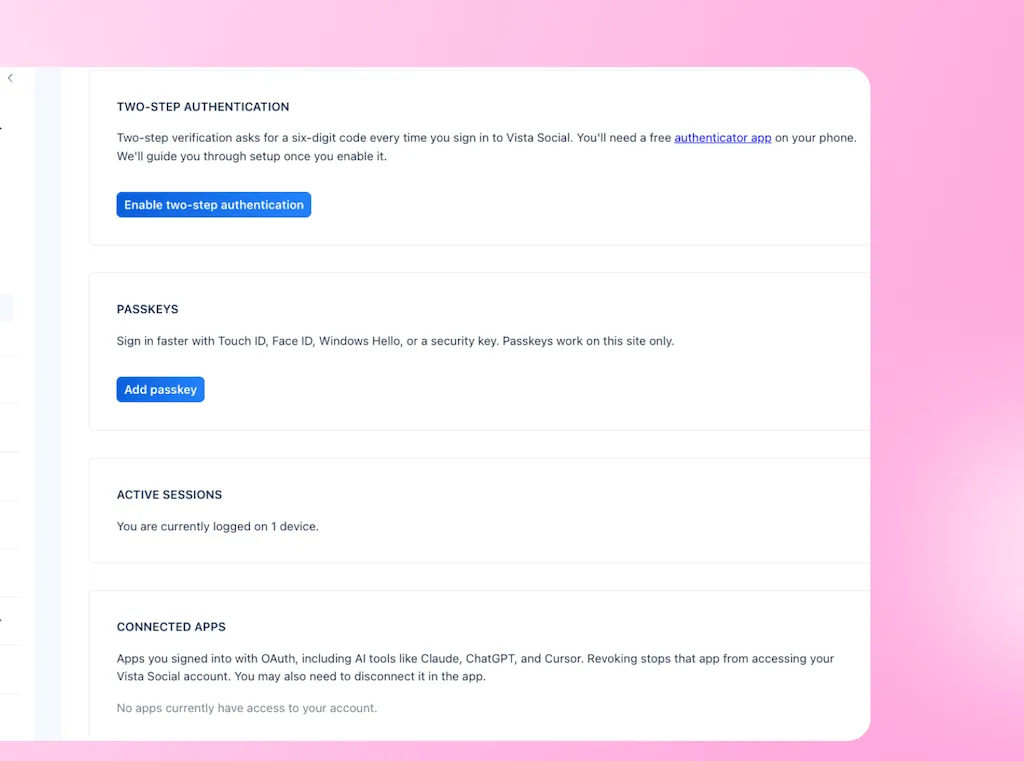
- Meet enterprise controls: Vista Social Enterprise supports SAML 2.0 SSO, role-based access, brand safety policies, and audit logs.
- Plan procurement early: Custom MSAs, security reviews, vendor portals, and purchase orders need the Enterprise path. So identify them before kickoff.
A platform helps the team deliver the promise. It does not choose the scope, qualify the buyer, or approve commercial terms.
Once the proposal is accepted, move the owners, access, and milestones into a client onboarding process. Add the approval route too. Then check those details at kickoff so sales language does not become delivery guesswork.
Know when to walk away
A proposal cannot turn a poor fit into a healthy account because the mismatch remains after signature.
Decline when the budget cannot support a sound scope or the buyer will not identify the approver. Also decline when the timeline requires an outcome you cannot promise. A short no with a useful referral protects both parties better than a bad-fit discount.
Keep strategy paid. The proposal may show your diagnosis and approach, but it should not include a complete calendar or channel plan. A buyer asking for an executable campaign is asking for a separate paid engagement.
Make the proposal survive the handoff
Before redesigning the deck, search for “as needed,” “ongoing support,” “regular content,” and “community management.” Replace each phrase with a count, channel, or cadence. Also add the service level, owner, or exclusion.
Then ask someone who missed the sales call to explain the recommended option. They should also understand the approval route, price, and next action.
That is the test. The proposal must remain clear after your champion forwards it, while its promises must still work after signature.
If your agency needs multi-brand publishing, governed approvals, role-based access, and executive reporting, book a Vista Social demo or start a free trial. Map the platform to the client workflow before you promise it in the next proposal.
Frequently asked questions
How long should a social media proposal be?
Use the shortest document that gives the buyer the problem, scope, proof, options, process, and acceptance step. Proposify’s 2026 data found winning proposals averaged 11 pages, while losing proposals averaged 13. Treat those figures as context because deal complexity changes the length.
What should an agency charge in a social media proposal?
Calculate rates from delivery cost, capacity, positioning, and required margin. The article’s pricing table is a presentation model, not a rate card.
Should an agency use a social media proposal template?
Yes. Reuse the agency overview, process, team, terms, and signature framework. Personalize the client problem, scope, proof, and options from approved discovery inputs.
How soon should you send a proposal after the meeting?
Send it the same day when possible or by the next business day. Confirm the scope, proof, and numbers before sending.
What should you do when a prospect goes quiet?
Follow the schedule stated in the proposal. Ask what the buying group still needs, then close the file after the final planned message.
Is a social media proposal the same as a contract?
No, because the proposal helps the buyer choose the work and price. The contract handles payment, ownership, termination, liability, and other legal terms. An accepted proposal should not replace the agency’s proper agreement.
About the Author

Content Writer
Orion loves to write content that refuses to be boring. As part of Vista Social, he helps brands, creators, and agencies stop doom scrolling and start winning with social media. When he's not in front of a keyboard, he's watching films in IMAX with his wife, dissecting football tactics (the European kind), and getting lost in a good book.