

Published on April 9, 2026
11 min to read
Social Media Marketing for Restaurants: Your Must-Have Strategy

Summarize with AI

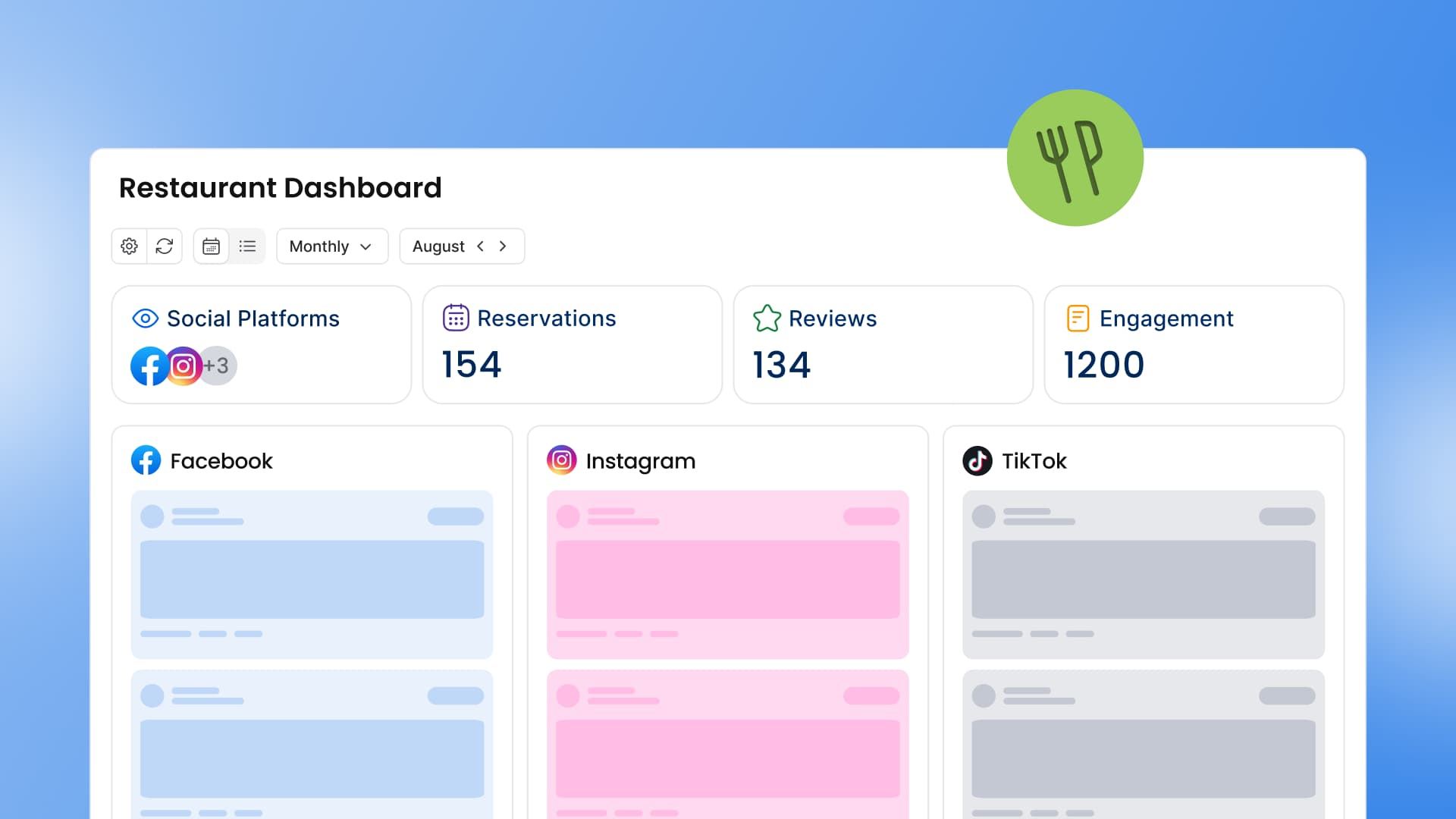
Table of contents
Summarize with AI

ChatGPT

Claude

Perplexity
Share

Vista Social

X (Twitter)


You spent months perfecting your menu. Your team nails every dinner service. But when the Friday night rush doesn’t come, the problem probably isn’t your food. The problem is that no one knows you exist, because your restaurant isn’t showing up where diners are actually looking.
And where are they looking? Their phones.
A Toast survey of 850 weekly social media users found that 62% of diners check a restaurant’s social media before deciding to visit. Deloitte Digital’s 2025 State of Social research found that restaurants with active social strategies saw a 9.9% increase in revenue in 2024.
Social media is no longer just a nice extra for restaurants. It’s one of the most direct paths from “I’m hungry” to a full dining room.
This guide walks you through a social media marketing strategy built for restaurants. You’ll learn how to pick the right platforms, create content that drives cravings, work with local influencers, manage online reviews, and put 10 best practices to work right away.
Table of contents
Should restaurants be using social media, and why?
Picture this: a couple is debating where to eat tonight. One person pulls up Instagram, searches your neighborhood, and starts scrolling through tagged photos of nearby restaurants. They see a competitor’s feed full of close-up shots of sizzling fajitas, cozy booth lighting, and happy customers clinking glasses. Then they tap over to your profile and find three posts from six months ago. Obviously, the choice is already made.
That scenario plays out thousands of times a day, and the data backs it up. The TouchBistro 2025 Diner Trends Report surveyed 1,500 American diners with The Harris Poll and here’s what they found:
- 67% of Gen Z and 57% of Millennials rely on social media to choose where to eat
- Across all age groups, 41% of diners use social platforms to research restaurants before visiting
- Your social media profile has become your first impression, often before a guest ever sees your menu or walks through your door
People eat with their eyes first. A close-up of cheese stretching off a fresh slice of pizza or a slow-motion pour of a craft cocktail triggers a craving that no text-based ad can match.
That same Toast survey found that 84% of diners want to see photos of food and drinks on a restaurant’s social pages. Your dishes are your best marketing asset, and social media is the place to show them off.
But strong restaurant social media goes deeper than food shots. It builds personality, tells a story, and creates a sense of belonging. Sweetgreen (@sweetgreen) is a great example of this in action.
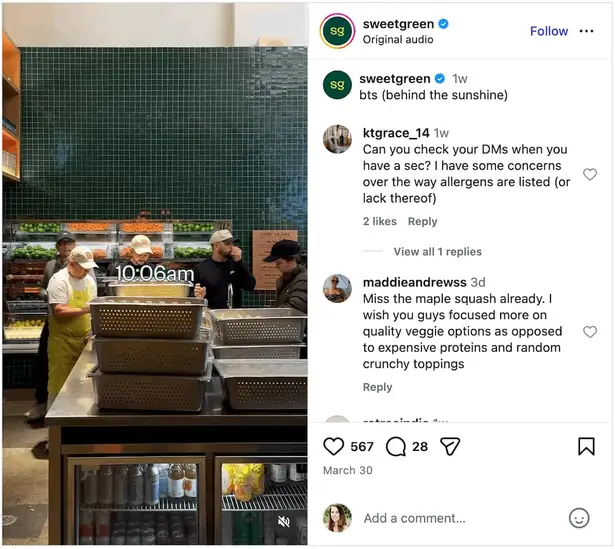
Their Instagram feed weaves in content about local sourcing, sustainability, and healthy living, which turns a fast-casual chain into a brand their audience feels personally connected to. That emotional connection is what drives repeat visits and word-of-mouth recommendations.
First Watch (@firstwatch) takes a different approach that’s just as effective. They lean into user-generated content by reposting guest photos and videos regularly!
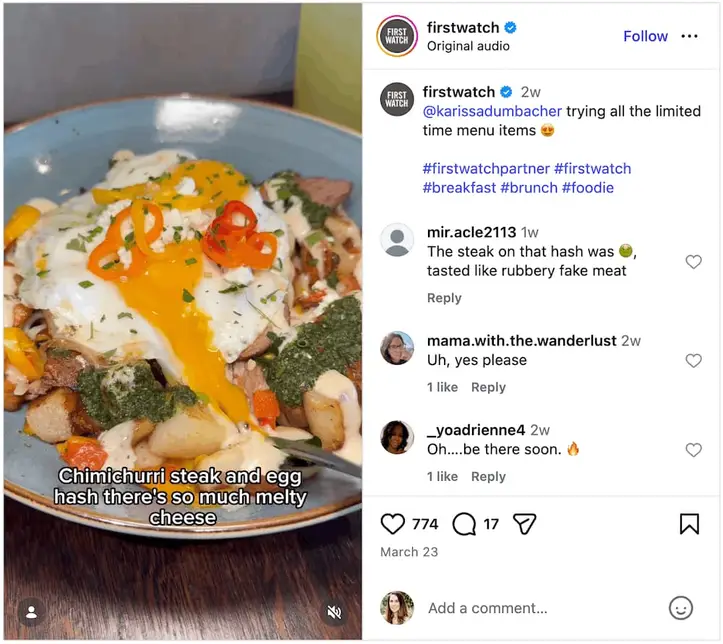
For example, when enough guests raved about their seasonal Purple Haze lavender lemonade on social, the restaurant made it a permanent menu item. That kind of feedback loop turns followers into loyal regulars, and social media is the only channel that makes it possible at that speed.
Your go-to restaurant social media marketing strategy
Most restaurant owners already know social media matters. The real challenge is finding time to do it well between running a kitchen, managing staff, and keeping guests happy. A clear strategy helps you focus your limited time on what actually moves the needle.
Use the right platforms
One of the biggest traps restaurants fall into is trying to post on every platform at once. The result is thin, inconsistent content everywhere instead of a strong presence where your diners actually spend time. Here’s where restaurants get the most value:
- Instagram is the natural starting point. It’s built around visuals, and food is one of the most popular content categories on the platform. Between feed posts, Stories, and Reels, you have several ways to show off dishes, your space, and the people behind it all. A clear Instagram content strategy will help you stay focused and consistent.
- TikTok has quickly become a discovery engine for younger diners. Toast’s 2024 data found that 41% of diners aged 18 to 24 use TikTok more than any other platform to find new restaurants. Casual clips of dishes being plated, chefs cracking jokes, or a time-lapse of a busy Friday night can reach thousands of potential guests. A video marketing strategy will help you get started.
- Facebook still plays a role, especially with older diners and local community groups. Many guests use it to check hours, browse menus, read reviews, and find upcoming events.
- Google Business Profile and review sites like Yelp round out the picture. A diner might discover you on Instagram, then check your Google reviews before booking. Keeping those profiles active is part of a well-rounded social strategy.
Focus on one or two platforms where your audience is most active, create strong content there, and treat the rest as supporting channels.
Grow your following
You might be posting solid content, but if your follower count isn’t growing, your posts are only reaching the same small group of people. For restaurants, that’s a problem because you need a steady flow of new eyes to turn into first-time guests.
Consistency is the first piece of the puzzle. For example, three to five posts per week gives the algorithm enough activity to keep showing your content. A broader social media marketing strategy that includes a content calendar will keep you on track even during your busiest weeks.
The next step is making sure social media doesn’t eat up hours you should be spending on your restaurant. Vista Social lets you schedule posts in advance across all your channels, so your content goes live even during the dinner rush.
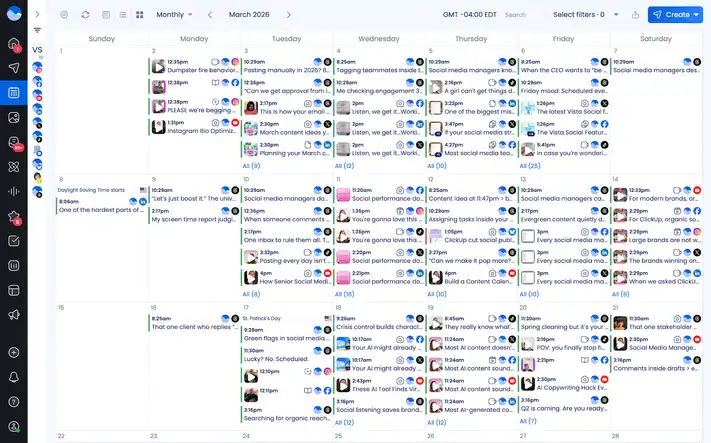
For restaurants with multiple locations, profile groups let you organize each location’s accounts in one place and tailor content to local audiences.
Engagement is just as important as posting. The Toast survey found that 43% of diners say it’s very important for restaurants to respond to comments and messages. When you reply to comments, answer DMs, or thank someone for tagging you, it builds loyalty and tells the algorithm your content is worth showing to more people.
You can see how this restaurant responds to each of its Reel comments as a way to keep the conversation going and make its patrons feel seen:
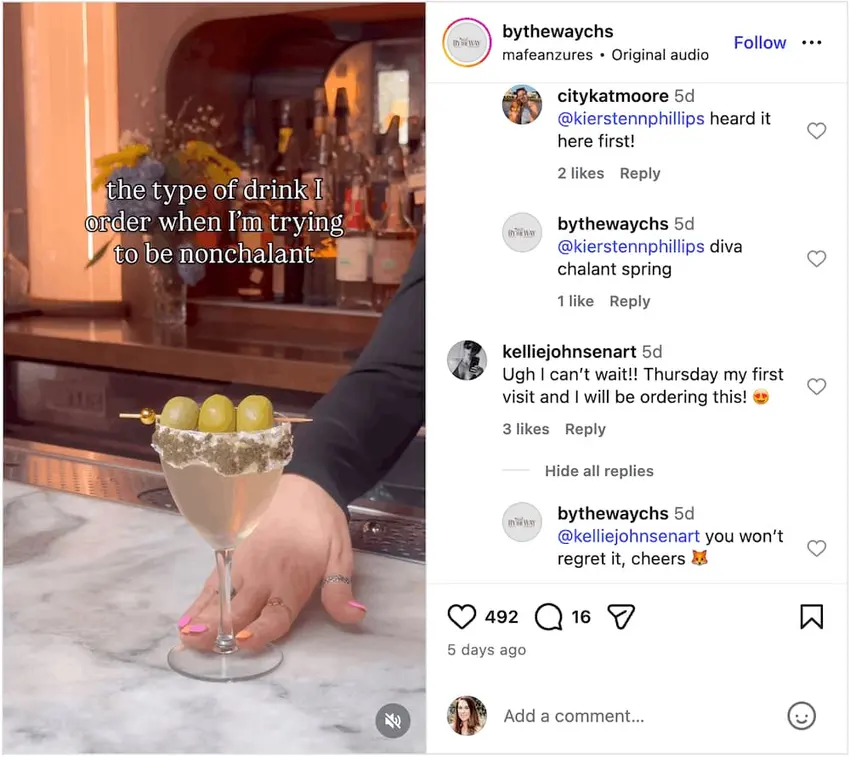
These social media engagement strategies can help you boost interaction even further.
A few more tactical moves can also speed up growth:
- Use location-based hashtags and geotags in every post and story so local diners can discover you organically
- Cross-promote your social channels in your restaurant by putting handles on menus, table tents, and receipts
- Run giveaways that ask followers to tag a friend they’d want to bring to dinner, which pushes your content beyond your current audience
Create engaging content
This is where most restaurants either grab attention or get scrolled past. The restaurants winning on social media give people a reason to stop, watch, and come back for more.
Let’s cover some of the content types that work best.
Food pics
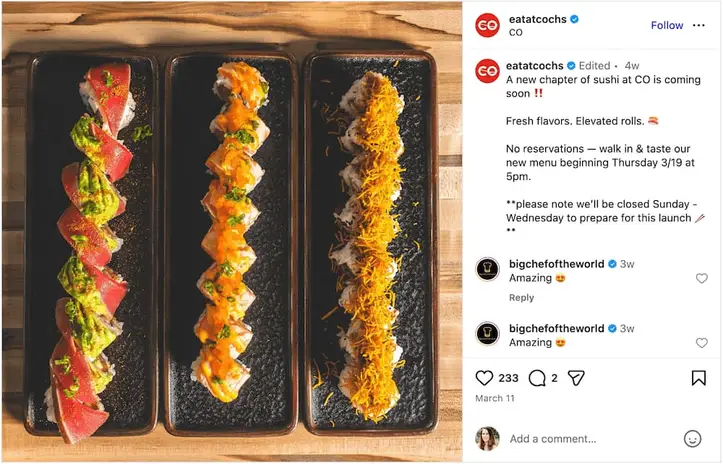
I’m sure this comes as no surprise, but food photos and videos should be the core of your feed. Think about the difference between a flat photo of a burger versus a close-up Reel of that same burger being assembled. Motion and detail turn a picture of food into a craving. A smartphone with good natural light and a steady hand will do the job.
Behind-the-scenes
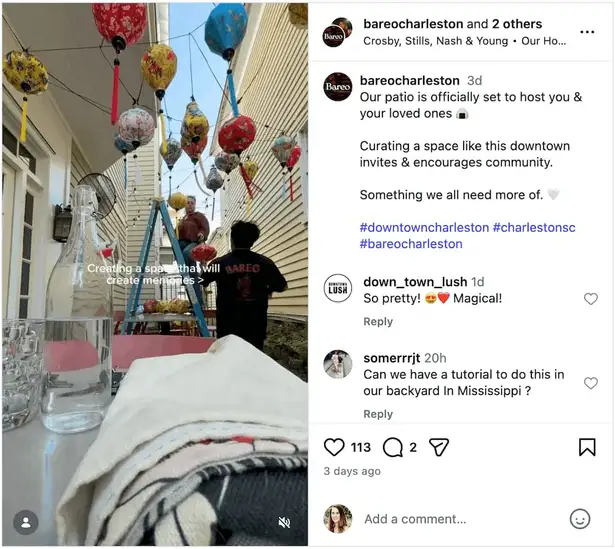
Behind-the-scenes content lets diners see what happens on the other side of the kitchen door. The above post shows a great example of this as the Bareo team films themselves getting their patio ready for guests. It makes the brand feel personal and real, and gives followers a reason to care about the people behind the plates.
Seasonal posts
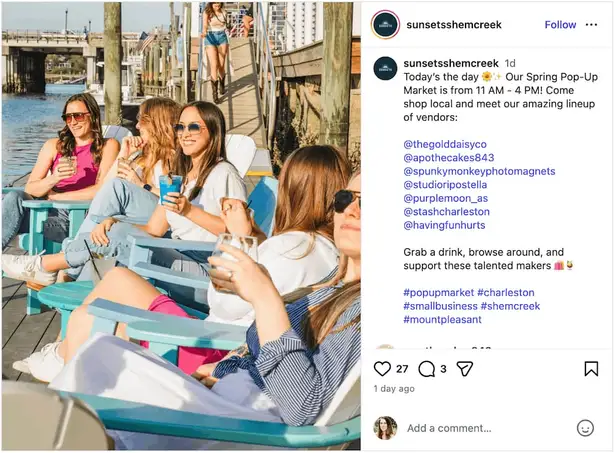
Seasonal reveals and limited-time offers create buzz that drives foot traffic. The above post is a great example of how restaurants can promote seasonal events or menus by making customers feel like they want to be a part of the fun.
Another example comes from Crumbl Cookies (@crumblcookies), who built a massive following partly by dropping their rotating weekly flavors every Sunday night on social media.
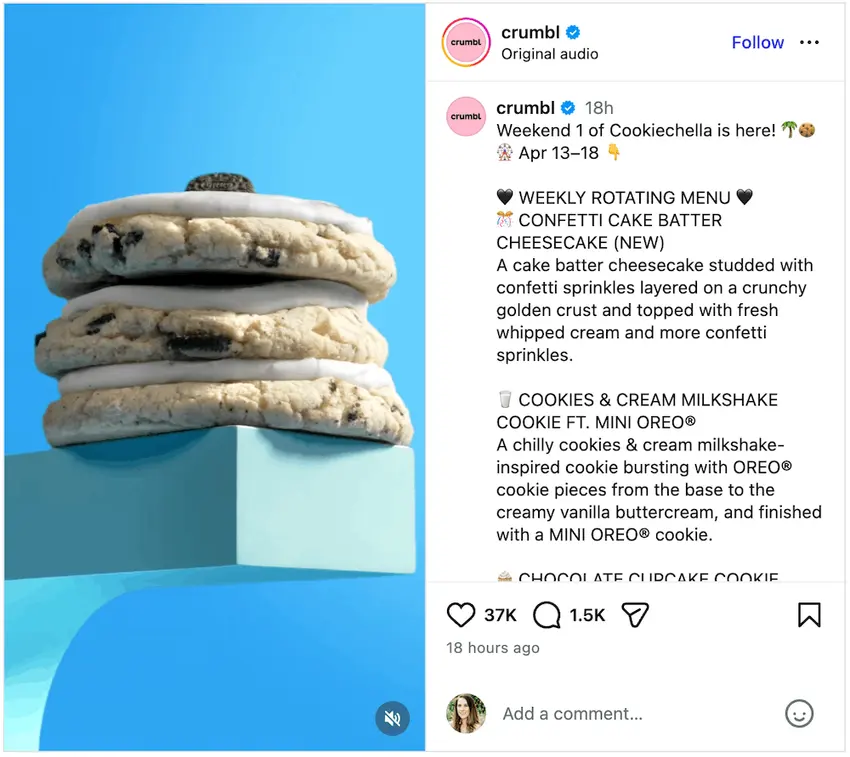
Restaurants can borrow this playbook for weekly specials or seasonal cocktail menus.
User-generated content
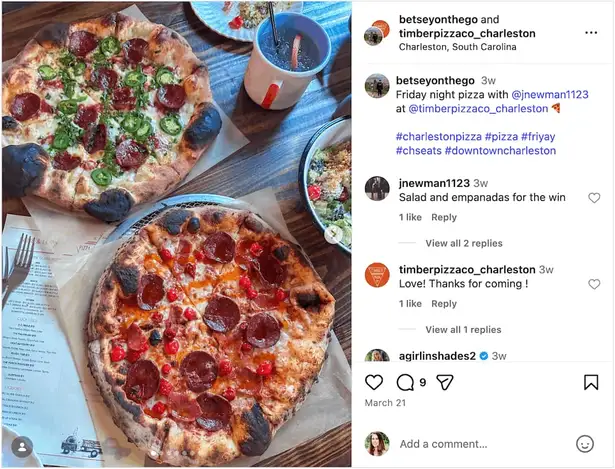
User-generated content (UGC) is one of your most powerful (and free) tools. When a guest tags your restaurant in a photo, repost it with credit. Potential diners trust real photos from real people more than polished brand content. Encourage more UGC by creating a branded hashtag and placing it on menus and table tents.
Interactive content
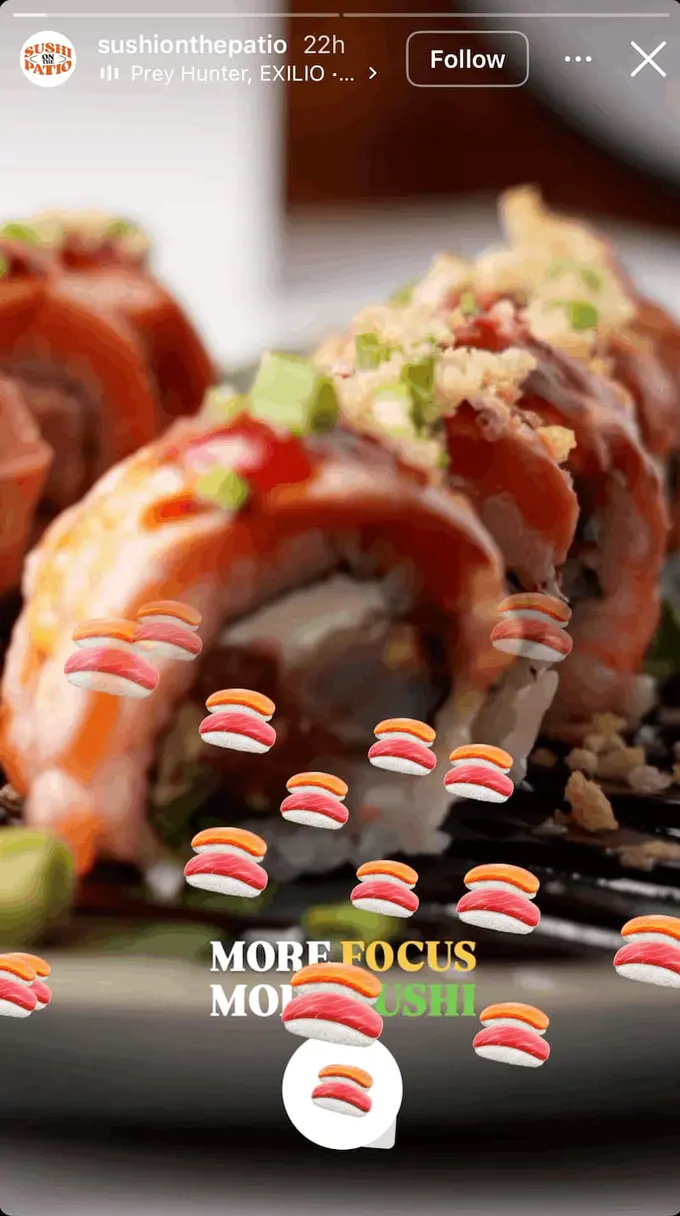
Interactive elements like emoji stickers, countdowns, polls, and quizzes in your Stories give customers the chance to engage further with your content. For example, a poll could let followers vote on the next weekly special or caption a funny kitchen moment. These small moments of participation keep your audience actively involved.
Partner with local influencers
Finding new customers is one of the hardest ongoing challenges for any restaurant. The Toast 2024 survey found that 40% of diners say an influencer’s review directly affects their decision to visit a restaurant. Among 25- to 34-year-olds, that number jumps to 49%.
You don’t need a celebrity with millions of followers. A food blogger or content creator with a loyal following in your city will often deliver better results.
Here’s a great example of what this kind of content can look like:
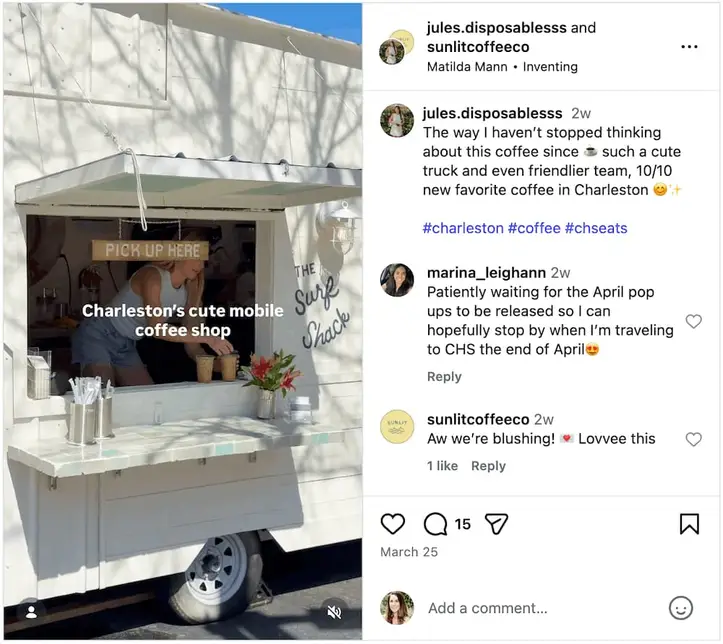
These micro-influencers tend to have higher engagement rates, and their audience trusts their picks because they feel personal and genuine.
In practice, these partnerships can take several forms:
- Invite a local food creator for a complimentary tasting and have them share the experience through Reels, Stories, or feed posts
- Collaborate on a limited-time dish or co-host a tasting night that both sides promote to create exclusivity and drive foot traffic
- Offer a simple exchange where a creator makes content in return for a meal for two, with clear expectations about the format you’d like
To find the right partners, search local food hashtags in your area or browse tagged photos on restaurants similar to yours. On TikTok, searching your city name along with “food” will surface creators already covering your area.
Monitor online reviews
A single unanswered negative review can turn away dozens of potential guests. Deloitte Digital’s 2025 research found that 83% of consumers view the creators and voices they follow online as trusted sources. That same level of trust applies to reviews, which means the feedback on Google, Yelp, and Facebook shapes first impressions before your food ever gets a chance to speak for itself.
The challenge is that reviews come in across multiple platforms at all hours. For a busy restaurant, keeping up can feel impossible. Vista Social’s review management tools let you monitor and respond to reviews across all platforms from a single dashboard.
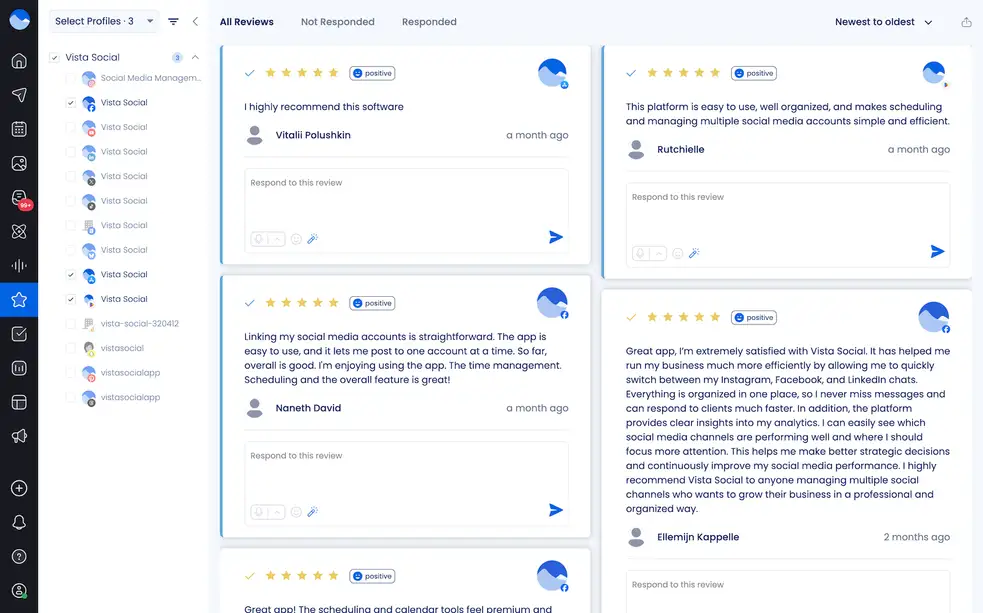
For restaurants with multiple locations, you can track reviews from every branch without anything falling through the cracks.
Vista Social also lets you set up inbox automations for common scenarios:
- A five-star review triggers an automated “thank you” while your team follows up with a personal note later
- A negative review gets flagged by intent detection and routed to a manager for a quick, personal response
- Reviews mentioning specific topics like food quality or wait times get tagged for your team to review during weekly check-ins
10 social media marketing best practices for restaurants
With your core strategy in place, these best practices will help you fine-tune the details. Each one addresses a common gap that separates restaurants with average social media from ones that actually fill seats.
1. Establish a consistent visual style
When a potential guest lands on your profile, your feed is their first impression of your restaurant’s look and feel. Pick a color palette and editing style that matches your brand. Via Carota (@viacarota) in New York is a great example.
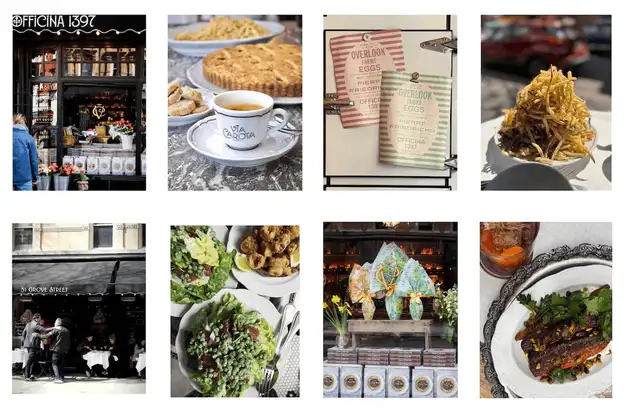
Their feed has a warm, rustic look that matches their Italian dining experience, making their profile instantly recognizable. The lesson is that consistency builds trust. When every post feels like it belongs to the same brand, people feel more confident about what they’ll get when they visit.
2. Solidify your brand voice
Your captions and replies should sound like your restaurant feels. Chili’s (@chilis) has leaned hard into humor and pop culture on Instagram, turning memes and trending moments into posts that feel fun and authentic.
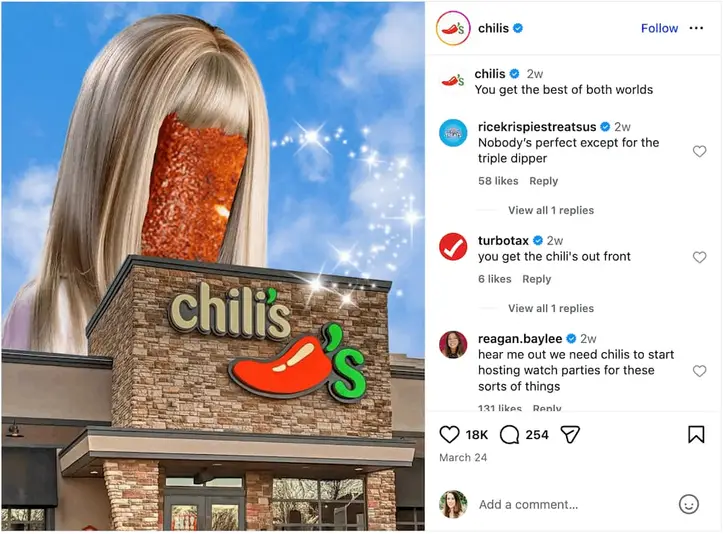
The takeaway for any restaurant is to find a voice that fits your personality and keep it consistent across every post and reply.
3. Organize your Instagram highlights
When someone lands on your profile for the first time, story highlights are one of the first things they see. Use them to answer the questions new visitors care about most: your menu, location and hours, reservations, and any current specials.
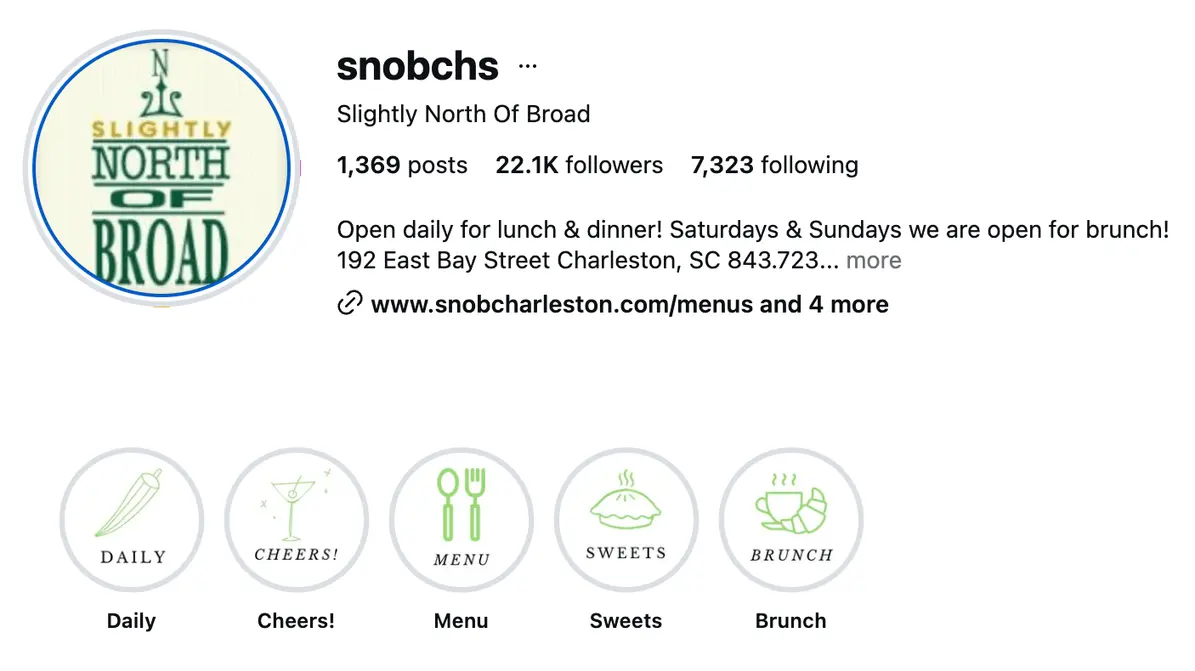
This turns your profile into a mini homepage that gives potential guests everything they need to decide on a visit.
4. Share user-generated content regularly
When a guest tags your restaurant in a photo, repost it with credit. UGC builds trust with potential diners and makes your existing guests feel valued. Create a branded hashtag and display it on menus and table tents to keep a steady stream of guest content flowing in.
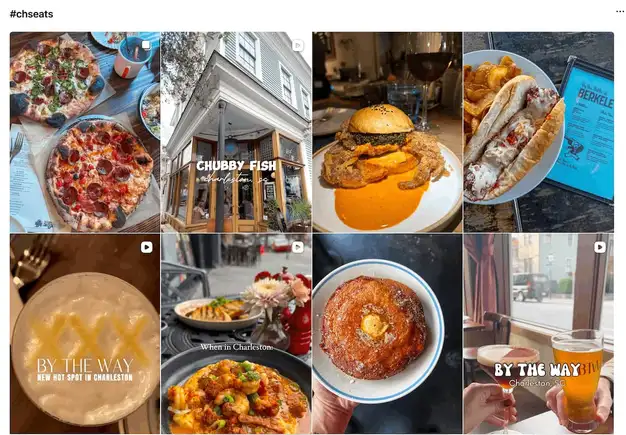
Or pay attention to local hashtags. For example, Charleston, South Carolina uses the hashtag #chseats for its extensive food scene, helping restaurants reach more people and patrons figure out where to head for dinner.
5. Never let a review go unanswered
Thanking happy guests encourages return visits. Responding to a negative review professionally shows potential diners you care about the experience. If keeping up with reviews across multiple platforms feels like too much, Vista Social’s review management dashboard brings everything into one place so nothing gets missed.
6. Lead with video content
Short-form video consistently reaches more people than static photos on every major platform right now. A 10-second Reel of pasta being tossed in a pan will outperform a flat photo of the same dish almost every time.
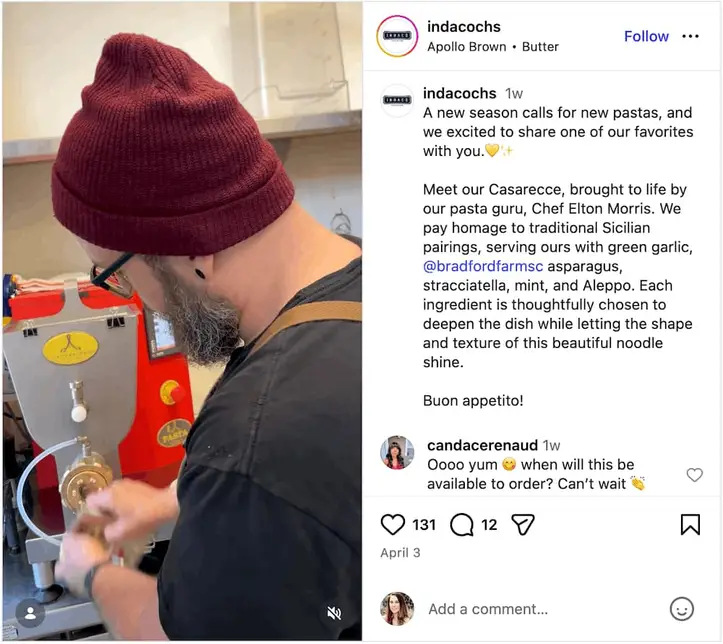
You don’t need fancy equipment. A phone with good natural light and an interesting kitchen moment is enough.
7. Respond quickly to comments and messages
Social media rewards speed. When someone tags your restaurant, asks about hours, or drops a comment, a fast reply makes a strong impression. Vista Social’s unified inbox lets you manage comments, DMs, and mentions across all platforms in one place. For restaurants with more than one location, user groups let you give each branch’s manager the right level of access to handle their own community.
8. Put your team in the spotlight
Your staff is a huge part of what makes your restaurant special. Spotlight your head chef’s background, your barista’s latte art process, or a longtime server’s favorite dish.
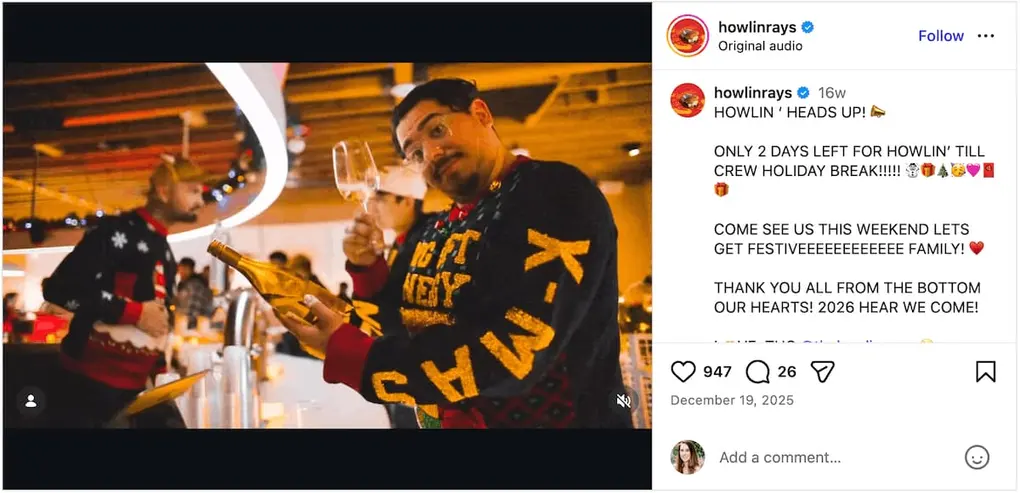
People connect with people, and showing the faces behind the food gives your brand a warmth that stock photos never will.
9. Jump on trends and challenges
Trending audio, seasonal formats, and viral challenges can give your content a huge reach boost when you put a restaurant spin on them. A kitchen team doing a trending dance, a “day in the life” at your restaurant, or a creative take on a popular TikTok challenge can introduce your brand to entirely new audiences. The key is moving quickly while a trend is still fresh.
10. Track what works and adjust your approach
Posting without measuring results is like cooking without tasting. Pay attention to which posts get the most saves, shares, and profile visits, because those signals tell you what your audience wants to see more of. Vista Social’s analytics make it easy to spot trends across all your locations, so you can double down on what resonates and move away from what falls flat.
Try Vista Social for free
A social media management platform that actually helps you grow with easy-to-use content planning, scheduling, engagement and analytics tools.
Get Started NowAbout the Author

Content Writer
Russell Tan is a content marketing specialist with over 7 years of experience creating content across gaming, healthcare, outdoor hospitality, and travel—because sticking to just one industry would’ve been boring. Outside of her current role as marketing specialist for Vista Social, Russell is busy plotting epic action-fantasy worlds, chasing adrenaline rushes (skydiving is next, maybe?), or racking up way too many hours in her favorite games.
Loading related tools...

The most complete social media management platform for teams who demand more.






Tools
PublishingAnalyticsEngagementIntegrations
FacebookInstagramLinkedInRedditSnapchatThreadsTikTokX (Twitter)YouTubeMCPVista Page (link-in-bio)All IntegrationsCopyright © 2026 Vista Social LLC. All Rights Reserved.