

Published on December 2, 2025
11 min to read
Social Media Compliance: How to Keep Your Brand Compliant

Summarize with AI

Table of contents
Summarize with AI

ChatGPT

Claude

Perplexity
Share

Vista Social

X (Twitter)


Social media gives brands amazing ways to connect with people. With marketers spending nearly $277 billion in 2025 on social media ads, these platforms represent massive business opportunities. However, using these platforms comes with rules you must follow. Breaking these rules can cost your business money and hurt your reputation.
Social media compliance means following all laws and rules when you post content online. These rules protect your customers and your business from legal problems.
This guide will help you understand what social media compliance means. Additionally, you’ll learn about the risks to watch for and how to keep your brand safe online.
Table of contents
Social media compliance best practices
Following these practices will help keep your brand safe while using social media effectively.
Learn the laws and regulations relevant to your industry
The first step is understanding which rules apply to your business. Every industry has different requirements.
To begin, start by identifying the regulatory bodies that oversee your industry. For financial services, that’s FINRA and the SEC. For healthcare, it’s HIPAA and the FTC. For general advertising, focus on FTC guidelines.
Next, work with your legal team to understand these rules. Stay updated on changes by following regulatory announcements. Consider joining industry groups that share compliance updates.
Don’t try to handle this alone. Compliance is complex and changes often. Having expert help protects your business and saves time.
Create a social media policy for your team
A clear social media policy tells everyone what they can and can’t do online. This protects your business and helps employees avoid mistakes.
Your policy should cover:
- What employees can post about work
- How to handle customer complaints online
- Rules for sharing company information
- Guidelines for personal social media use
- What to do if something goes wrong
Make sure everyone reads and signs the policy. Update it regularly as rules change. Train new employees on social media guidelines during onboarding.
Vista Social helps you implement brand policies across your team. Our platform lets you create content approval workflows and ensure all posts meet your standards before they go live.
Use the right disclosures
When you promote products or work with influencers, you must tell people about these relationships. This builds trust and follows the law.
The FTC requires clear disclosure of paid partnerships. Use simple language like “Ad,” “Sponsored,” or “Paid partnership with [Brand Name].” Put disclosures where people can easily see them.
For healthcare and finance companies, you may need additional disclosures about risks or limitations. Work with your legal team to create standard disclosure language.
Don’t hide disclosures in hashtags or fine print. People should immediately understand when content is sponsored or when you have a business relationship with someone you’re promoting.
Train your team
Regular training helps your team stay current on compliance rules and best practices. Everyone who posts for your company needs to understand the basics.
Cover these topics in your training:
- Your industry’s specific compliance rules
- Platform policies and guidelines
- How to handle customer complaints
- When to escalate issues to management
- Examples of compliant and non-compliant posts
Make training ongoing, not just a one-time event. Rules change, new platforms emerge, and teams grow. Regular refreshers keep everyone sharp.
Consider bringing in outside experts for specialized training. HIPAA compliance training for healthcare teams or FINRA training for financial advisors can provide deep expertise your team needs.
Employ secure social media management software
The right social media management platform can make compliance much easier. Instead of juggling multiple tools and manual processes, you need a comprehensive solution built for regulated industries.
Vista Social provides comprehensive compliance features designed specifically for regulated industries:
Content approval workflows
Vista Social’s approval system lets you create review processes for your compliance needs. Set up content review where posts must pass through legal review, then compliance officers, then senior management before publishing.
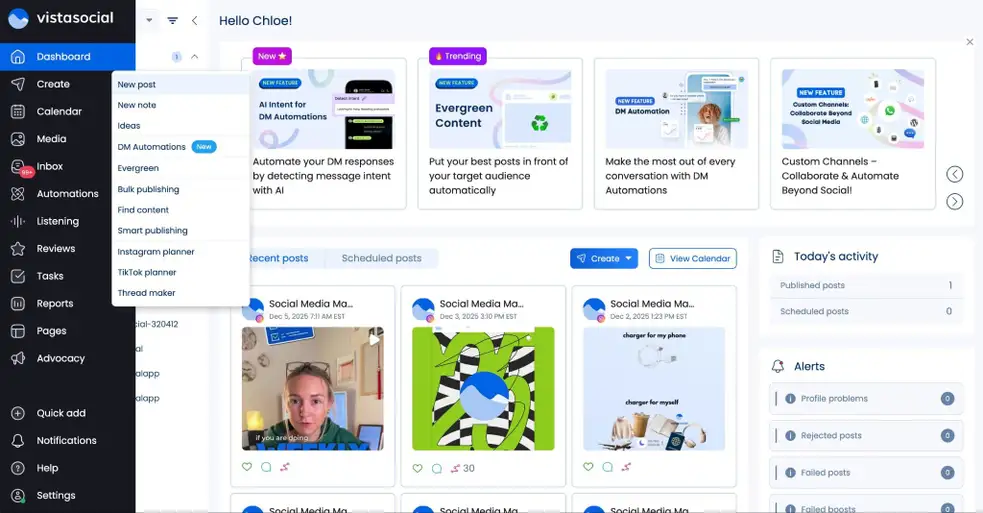
To set this up, go to Settings > Publishing Settings > Approval Workflows. Then click on + Add approval workflow.
You should be able to create your own workflow in this window.
User permissions and access controls
Vista Social’s user system gives you control over who can access accounts and perform actions. Create role-based permissions that match your compliance requirements.
Junior staff might only draft posts for approval. Senior managers can publish directly to certain accounts. You can also set management to be able to monitor all activity without being able to post content themselves.
Content calendar for compliance review
Vista Social’s shared content calendar allows users to review planned content weeks in advance. Other teams and clients that are not on Vista Social are even able to take a look and spot potential issues before content goes live.
Click this icon on the top right corner of your dashboard and click on Share. A window will open letting you know if you’ve previously created any shared links. Or you can click Create to grab a link to share with your team or clients.
Profile groups for multi-account management
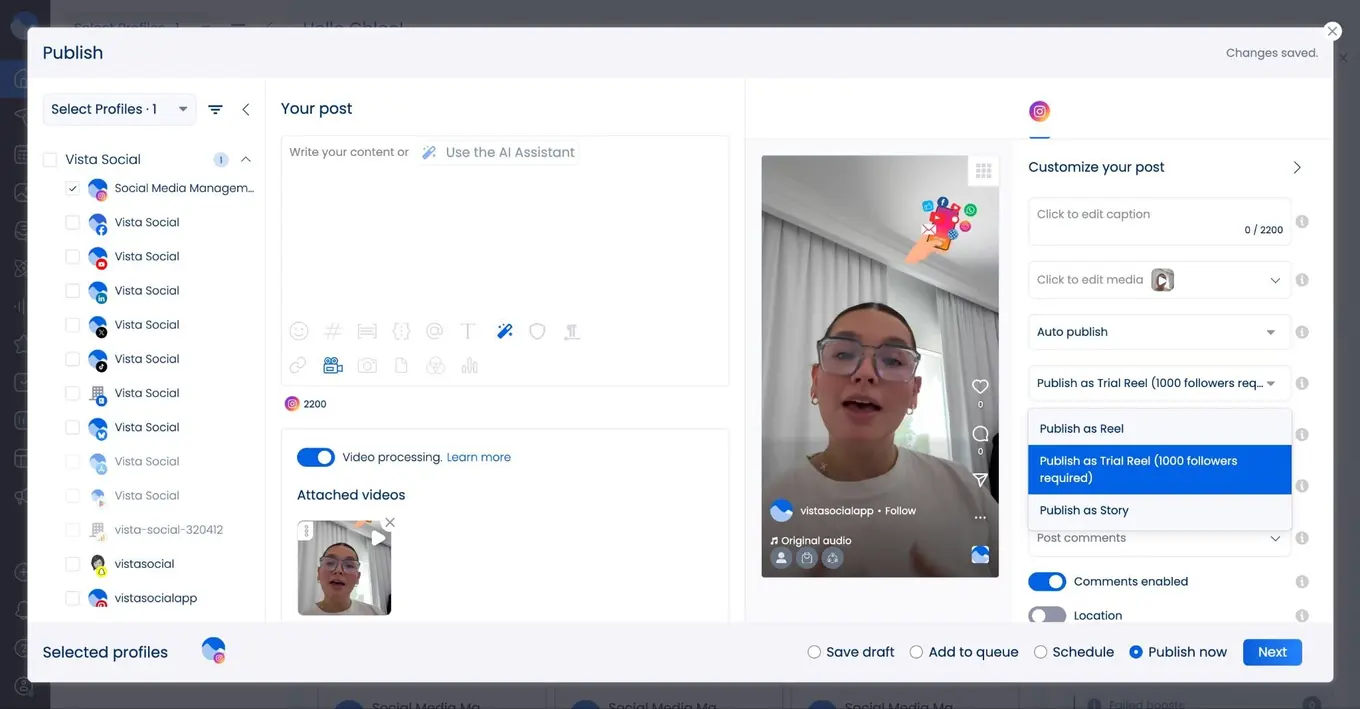
Vista Social’s profile groups let you organize accounts by compliance requirements. Healthcare organizations can group patient-facing accounts separately from employee accounts. Each group can have different approval workflows and user permissions.
Try Vista Social for free
A social media management platform that actually helps you grow with easy-to-use content planning, scheduling, engagement and analytics tools.
Get Started NowAbout the Author

Content Writer
Russell Tan is a content marketing specialist with over 7 years of experience creating content across gaming, healthcare, outdoor hospitality, and travel—because sticking to just one industry would’ve been boring. Outside of her current role as marketing specialist for Vista Social, Russell is busy plotting epic action-fantasy worlds, chasing adrenaline rushes (skydiving is next, maybe?), or racking up way too many hours in her favorite games.
Loading related tools...




Tools
PublishingAnalyticsEngagementIntegrations
FacebookInstagramLinkedInRedditSnapchatThreadsTikTokX (Twitter)YouTubeBlueskyVista Page (link-in-bio)All IntegrationsCopyright © 2026 Vista Social LLC. All Rights Reserved.
Social media compliance risks to be aware of
Understanding the main risks helps you avoid problems before they happen. Below are the key areas where businesses often face compliance issues.
Data privacy
Social media platforms collect lots of personal information from users. When you use this data for marketing, you must follow privacy laws.
For example, this becomes a problem when businesses collect email addresses without permission, use customer data for ads without consent, or fail to protect personal information from hackers. To avoid these issues, always get clear permission before collecting data and tell people exactly how you’ll use their information.
Furthermore, use secure systems to store and protect customer data. Key data protection laws include the California Consumer Privacy Act (CCPA), Children’s Online Privacy Protection Act (COPPA), and General Data Protection Regulation (GDPR). Learn more about social media privacy laws that affect your business.
Regulatory compliance
Different industries have specific rules about what you can say on social media. For instance, finance companies, healthcare providers, and government agencies face strict guidelines.
Typically, problems arise when a financial advisor posts investment advice without proper disclaimers, or when healthcare workers share patient information without permission. To stay compliant, learn your industry’s specific rules and work with your legal team to create clear guidelines.
Most importantly, always review content before posting. For healthcare organizations, consider using privacy-first social media marketing strategies.
Copyright and intellectual property
Using someone else’s content without permission can lead to legal trouble. This includes photos, videos, music, and written content.
Common violations include sharing a photographer’s image without credit, using copyrighted music in videos, or copying another brand’s posts word-for-word. Only use content you own or have permission to use.
Give proper credit when sharing others’ work. Consider creating original content or using royalty-free materials. When in doubt, ask for permission first.
Misinformation
Sharing false or misleading information can damage your reputation and break platform rules. It can also violate truth-in-advertising laws.
This happens when brands make health claims without scientific proof, share fake news stories, or post misleading statistics about their products. Fact-check all information before sharing and use reliable sources for statistics and claims.
Be careful when sharing content from other accounts. Have a process to quickly correct mistakes.
Advertising regulations
In the United States, organizations like the Food and Drug Administration (FDA) and Federal Trade Commission (FTC) regulate social media posts. You must follow truth-in-advertising rules and disclose sponsored content.
Violations occur when brands fail to mark sponsored posts as ads, make exaggerated claims about products, or hide important information in hard-to-find places. Clearly mark all sponsored content as ads and make sure all claims about your products are true and can be proven.
Put important information where people can easily see it. Follow FTC guidelines for endorsements and testimonials. Note that violations can result in fines of up to $53,088 per incident as of 2025.
Employee social media use
Your employees’ social media posts can create compliance risks for your company. This includes both personal and work-related posts.
Issues arise when employees post company information they shouldn’t share, make negative comments about competitors, or share confidential customer information. Create clear social media policies for employees and train your team on what they can and can’t share.
Monitor company-related posts. Consider using social media approval processes to review content before it goes live. For automated interactions, ensure you follow DM automation compliance guidelines.
User-generated content collection
When customers share content about your brand, you need permission before using it in your marketing. Using someone’s content without permission can violate their rights.
Common problems include sharing customer photos without asking, using reviews in ads without permission, or reposting customer videos on your business accounts. Using user-generated content without permission can lead to copyright problems or violation of privacy laws.
Always ask for permission before sharing customer content. Create clear terms for contests and campaigns. Give credit when sharing customer posts.