


Published on June 22, 2026
8 min to read
Automated Social Media Posting Doesn’t Have to Be Boring

Summarize with AI

Table of contents
Summarize with AI

ChatGPT

Claude

Perplexity
Share

Vista Social

X (Twitter)


A new client signs on Monday. The brand workshop is two weeks out, the content plan is weeks behind that, and the client is already refreshing a feed with nothing new on it. An empty calendar in week one is how good relationships start badly, and automated social media posting is built to close that gap.
Now multiply that by every client, every week. Keeping feeds full used to mean a choice: automate and go boring, or hand-make everything and burn out. Most teams picked a lane and lived with the cost.
That choice is gone. Modern tools pull from live trends, write in your brand voice, and stay grounded in what your brand knows, so the stream is fresh instead of filler. Done right, automated social media posting is how you keep great content flowing on autopilot, and this guide shows what that looks like in 2026.
Table of contents
Why consistency is non-negotiable, and why “just post more” is a trap
Showing up consistently is one of the most reliable ways to grow. It’s also the first thing to slip when a week gets busy. The audience is huge, with DataReportal counting 5.79 billion social media users as of April 2026.
The problem is what happens when you go quiet. Algorithms reward steady posting and punish silence. When an account goes dark, its reach drops, and winning that momentum back takes longer than keeping it.
So the obvious answer seems to be “just post more.” It isn’t. The bar has moved, and in HubSpot’s 2026 report, 41% of marketers said it’s harder than ever to stand out. A run of weak posts can even drag down the reach of your next one.
That leaves teams stuck between two bad options. Burn people out making everything by hand, which doesn’t scale, or automate and go boring, which hurts the brand. The trade-off was never about automation itself, just about automation being dumb.
Why automation used to be boring, and why that changed
Old automation earned its bad name honestly. It was built to fill the calendar, and it did so in the laziest way possible. Recycled graphics went out on a timer, feeds dumped raw headlines, and the same tips cycled through on repeat.
It kept feeds active, but it made the kind of low-engagement content algorithms now suppress. Worse, it made brands forgettable. Audiences could smell the autopilot and scrolled right past.
A few capabilities flipped that. Live news and trend sources now feed the stream with what’s actually happening. Pairing automation with social media trends keeps it tied to real conversations, and AI can write in your brand’s voice from a knowledge base of your facts and offers.
This is the moment the old belief breaks. Automation isn’t the boring fallback anymore. Done well, it’s how you stay interesting and consistent at the same time.
How smart publishing works
A recurring content engine sounds complex, but the setup is a short wizard you run once. In Vista Social, the Smart Publisher walks you through five steps, then runs on its own. This kind of content automation turns that one-time setup into an ongoing stream.
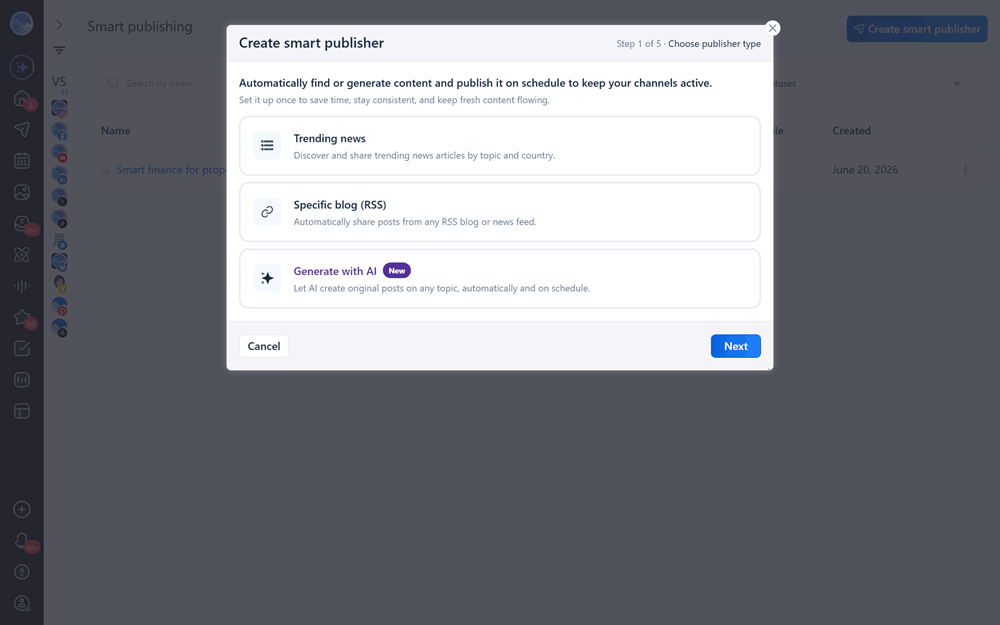
1. Choose a publisher type. Trending news surfaces articles by topic and country, Specific blog (RSS) turns any feed into posts, and Generate with AI writes original posts on a topic you set.
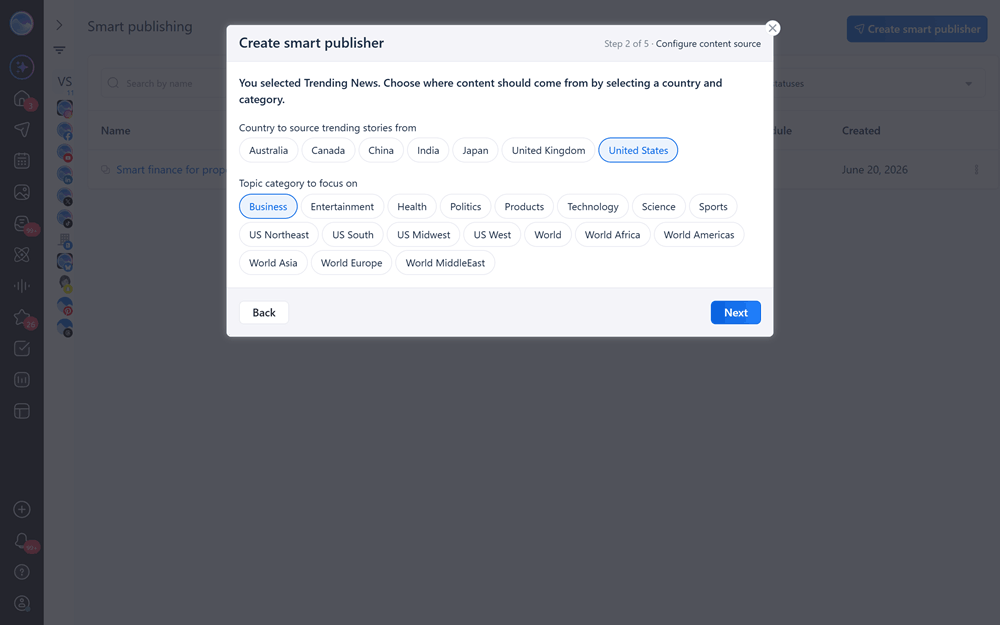
2. Configure the source. For trending news, you choose a country and a topic category like business or technology, so the stream stays relevant to each client.
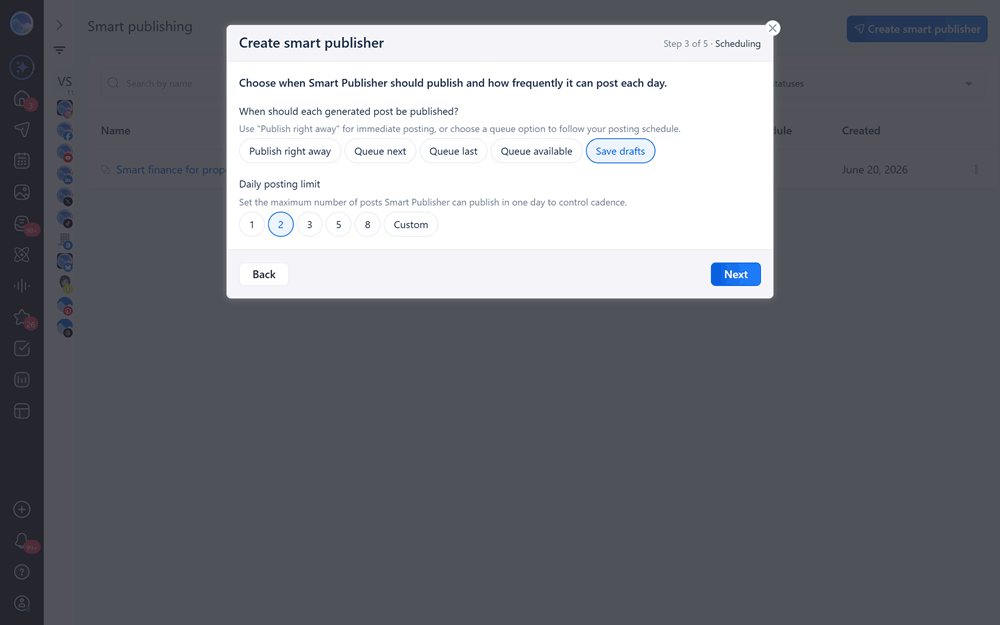
3. Next, decide when posts go out and how often. You can publish right away, drop posts into your queue, or save them as drafts, then cap the daily posting limit to control cadence.
4. Flip on “Review posts before publishing” and every post saves as a draft for approval first. Drafts route to your review workflow, which is the safety net agencies need for client content.
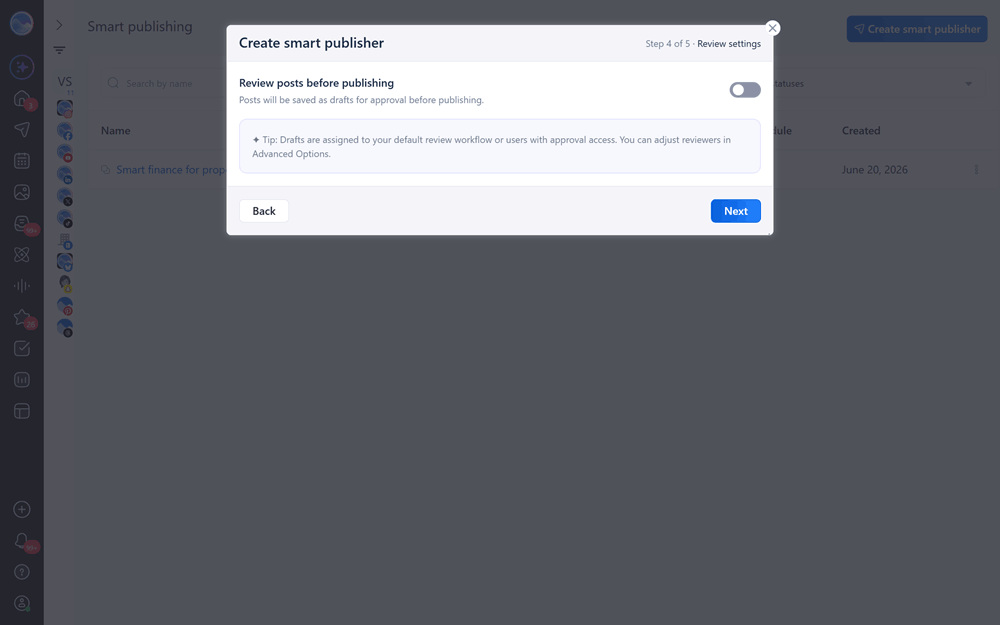
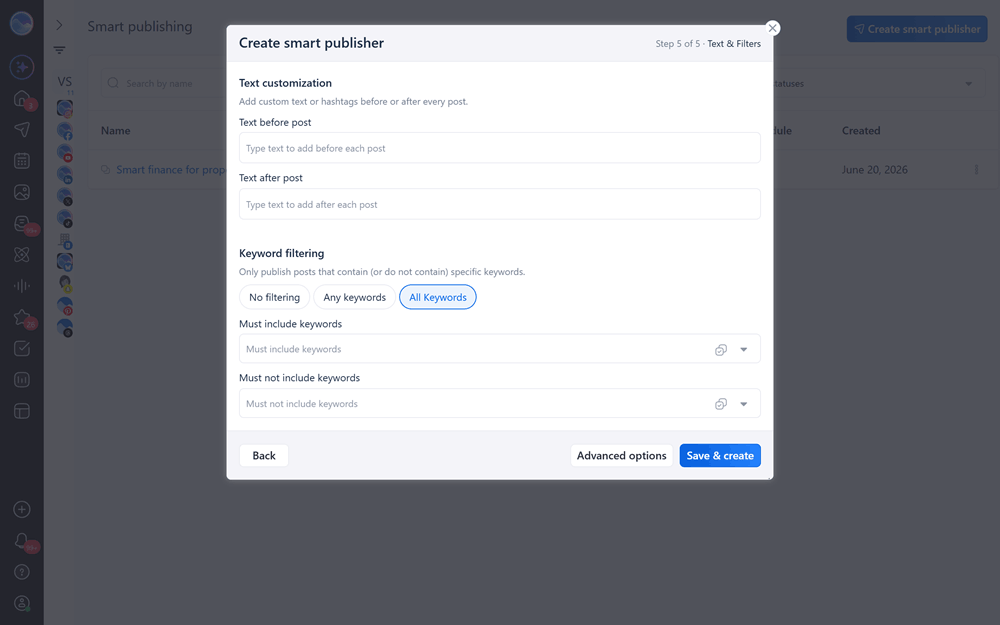
5. Add custom text or hashtags before or after each post, and use keyword filtering to publish only posts that include, or exclude, the words you choose.
The real skill: building a smart queue with time slots
Turning automation on is easy. The actual craft is designing a queue, which is what separates a system you babysit from one that runs itself. A queue is a set of repeating time slots, and new content drops into the next open one automatically.
Set your slots once and you stop picking dates forever. Maybe it’s Monday, Wednesday, and Friday at 3:00pm, or every other morning. When a post is ready, it fills the next open slot on your social media calendar on its own.
Label your slots by content type so the feed stays varied. Assign categories like tip, trend, promo, or blog to set slots, and the right post lands on the right day. Tuesday at 9:00am can be your education slot, and it stays that way without a second thought.
One queue holds both kinds of content. The engine and your evergreen library keep the baseline full, while your team drops hero posts into the same flow. Back it with evergreen recycling so the queue never empties, and let Vista Social’s optimal times feature read each audience’s activity and tell you the windows when they’re most active.
Two ways agencies should use this right now
The first play is winning the onboarding gap. On day one, before the full strategy exists, turn on a smart, on-brand stream built from trends, AI, and the client’s knowledge base. The feed comes alive right away while you build the real plan, which buys you goodwill and time.
The second play is an always-on content augmenter. Set a baseline cadence through the queue, like automatic content every other day at 3:00pm, so the feed never goes dark between campaigns. Then layer your big creative swings on top, and explore how this fits a wider social media for agencies workflow.
What the automated stream should carry, and what it shouldn’t
A posting engine works best when it carries the baseline and leaves the human moments to people. Drawing that line protects both your credibility and the quality the whole approach depends on. Let the engine handle the steady stream of sourced, drafted, and recycled posts, since that’s the repetitive volume that drains a team.
Keep people on the posts that need a human read. Flagship campaigns deserve your best creative thinking, and sensitive or timely moments shouldn’t go out on a preset slot. The point isn’t to fill a feed with anything, it’s to keep the automated baseline genuinely good while your team owns the standout work.
Community management sits outside the posting stream entirely, and it should stay there. Real conversation in replies and DMs drives engagement, so keep an operator on it rather than a canned response. Route automated posts through approval before they ship, especially for clients, so the engine never publishes something a person should have caught.
Frequently asked questions
What is automated social media posting?
Automated social media posting is using software to source, create, schedule, and publish posts on a recurring basis. Instead of building every post by hand, you set up a system that keeps on-brand content going out. It’s one part of broader social media automation, and it ranges from scheduling a single post to running a full engine that sources and writes content for you.
Isn’t automated content low quality or spammy?
It used to be, and that reputation was earned. Old automation recycled graphics and dumped headlines with no context, which made brands boring. Modern automation pulls from live trends, writes in your brand voice, and grounds posts in your brand knowledge, so the output stays fresh.
What should the posting engine handle vs. a person?
Let the engine handle the baseline stream: sourcing, drafting, scheduling, and recycling posts. Keep a person on flagship campaigns, sensitive or timely posts, and community replies, where a human read matters. The goal is to free your team for the creative work only people can do, not to fill a feed for its own sake.
How does a posting queue or time-slot schedule work?
A queue is a set of repeating time slots you define once, like Monday, Wednesday, and Friday at 3:00pm. New content fills the next open slot automatically, so you never pick a date again. You can label slots by content type so the right post lands on the right day.
How often should you post on social media?
There’s no single magic number, since it varies by platform and audience. What matters more is consistency, because going quiet tends to hurt your reach. A queue with a set cadence helps you hold a steady rhythm, and you can adjust as you learn what works.
Can automated posts use my brand voice?
Yes. When you generate posts with AI in Vista Social’s Smart Publisher, your brand voice and brand safety policy apply automatically from your selected profile group. You can also add context from your AI knowledge base, so the content reflects your facts, offers, and positioning.
How do agencies use automation for new clients?
Automation is a strong way to win the onboarding gap. On day one, before the full strategy is built, turn on a smart, on-brand stream from trends, AI, and the client’s knowledge base. The feed comes alive right away, which buys goodwill and time.
How does Vista Social’s Smart Publisher work?
The Smart Publisher is a recurring content engine. You pick a source, either Trending News, a Specific Blog via RSS, or AI generation, then set the cadence and review rules. It posts on your schedule, applies your brand voice when generating with AI, and can route everything through approval first.
Try Vista Social for free
A social media management platform that actually helps you grow with easy-to-use content planning, scheduling, engagement and analytics tools.
Get Started NowAbout the Author

Content Writer
Russell Tan is a content marketing specialist with over 7 years of experience creating content across gaming, healthcare, outdoor hospitality, and travel—because sticking to just one industry would’ve been boring. Outside of her current role as marketing specialist for Vista Social, Russell is busy plotting epic action-fantasy worlds, chasing adrenaline rushes (skydiving is next, maybe?), or racking up way too many hours in her favorite games.