

Published on January 6, 2026
10 min to read
Social Listening: The Ultimate Guide for Social Media Marketers

Summarize with AI

Table of contents
Summarize with AI

ChatGPT

Claude

Perplexity
Share

Vista Social

X (Twitter)


Social media moves fast. One minute, your industry is quiet. Then next, everyone’s talking about a new trend or competitor move. How do you keep up?
That’s where social listening comes in. It’s your way to stay on top of conversations before they explode across the internet. This guide will show you everything you need to know about social listening and how to use it to grow your brand.
Most businesses make the mistake of only watching their own social media accounts. But your customers talk about your industry everywhere—in places you might never see. Social listening helps you find these hidden conversations and turn them into business opportunities.
Table of contents
What is social listening?
Social listening is the process of tracking mentions of your brand, competitors, and industry keywords across social media and online platforms. It goes beyond just monitoring your own accounts. You’re watching what people say about your space everywhere they’re talking.
Think of it like having a radar for your industry. You pick up signals from all directions—not just the obvious ones.
Here’s a simple example: Let’s say you run a coffee shop.
With social listening, you can track mentions of your shop’s name, local coffee competitors, and terms like “best coffee [city]” or “coffee shops downtown [city].” You’d see data like reviews, recommendations, complaints, as well as conversations happening about coffee in your area.
Social listening also captures indirect conversations like hashtag discussions (#coffeelover), location-based posts near your shop, competitor reviews, industry trends (cold brew, oat milk, and the like), and overall brand sentiment.
Vista Social’s social listening feature lets you monitor multiple social networks from one dashboard, track brand mentions across platforms, and set up real-time alerts for important conversations.
Social listening vs. social monitoring
People often mix up social listening and social monitoring. They’re related but different.
| Social monitoring | Social listening |
| Tracks mentions and metrics | Analyzes conversation context and sentiment |
| Reactive (responds to what happened) | Proactive (spots trends before they grow) |
| Focuses on your brand | Covers your entire industry |
| Measures volume of mentions | Understands the meaning behind mentions |
| Answers “What are people saying?” | Answers “Why are they saying it?” |
Social monitoring tells you someone mentioned your brand. Social listening tells you what that mention means for your business strategy.
For more details on this difference, check out our guide on social monitoring vs. social listening.
How to get started with social listening
Ready to start listening? Follow these steps to set up your social listening strategy.
Step 1: Set your goals
Before you start tracking everything, decide what you want to achieve. Clear goals help you focus on the right conversations.
Common social listening goals include:
- Brand monitoring: Track mentions of your company name and products
- Competitive analysis: See what people say about your competitors
- Customer support: Find and respond to customer questions or complaints
- Lead generation: Discover potential customers asking for solutions you provide
- Trend spotting: Identify emerging topics in your industry
- Crisis management: Catch negative sentiment before it spreads
Pick 1-3 main goals to start. You can always expand later.
Step 2: Choose your social listening tool
You need a tool to track conversations across multiple platforms. Manual monitoring doesn’t work at scale.
Here’s where Vista Social’s social listening capabilities shine. Our platform lets you:
- Monitor conversations across Facebook, Twitter, Instagram, LinkedIn, and YouTube from one unified dashboard
- Set up real-time alerts for brand mentions, competitor activity, or crisis situations
- Analyze sentiment to understand if mentions are positive, negative, or neutral
- Track conversation volume and identify trending topics in your industry
- Create custom reports with visual charts and insights for stakeholders
- Export data for deeper analysis or integration with other business tools
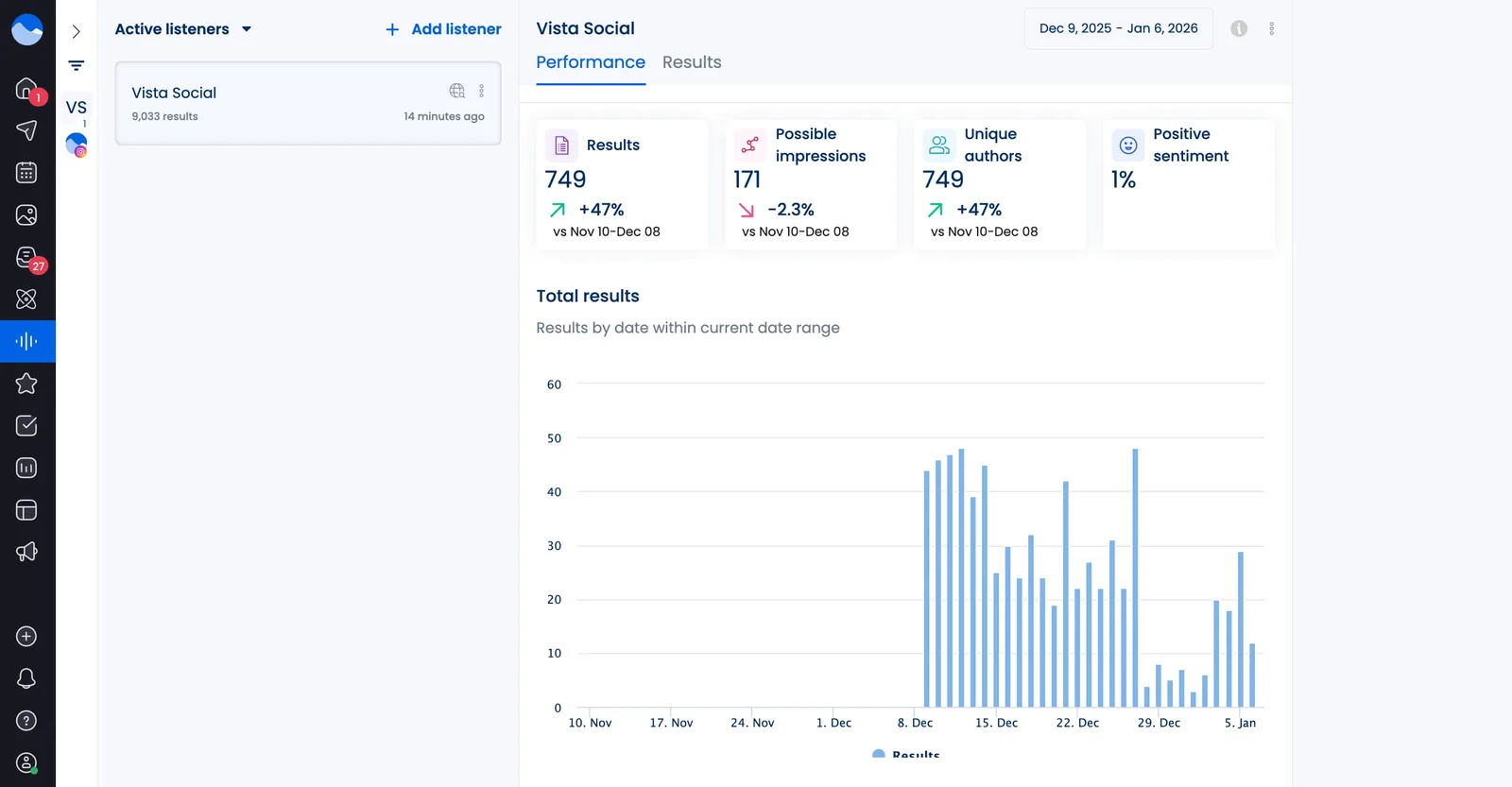
If you’ve decided on Vista Social, here’s how to set it up:
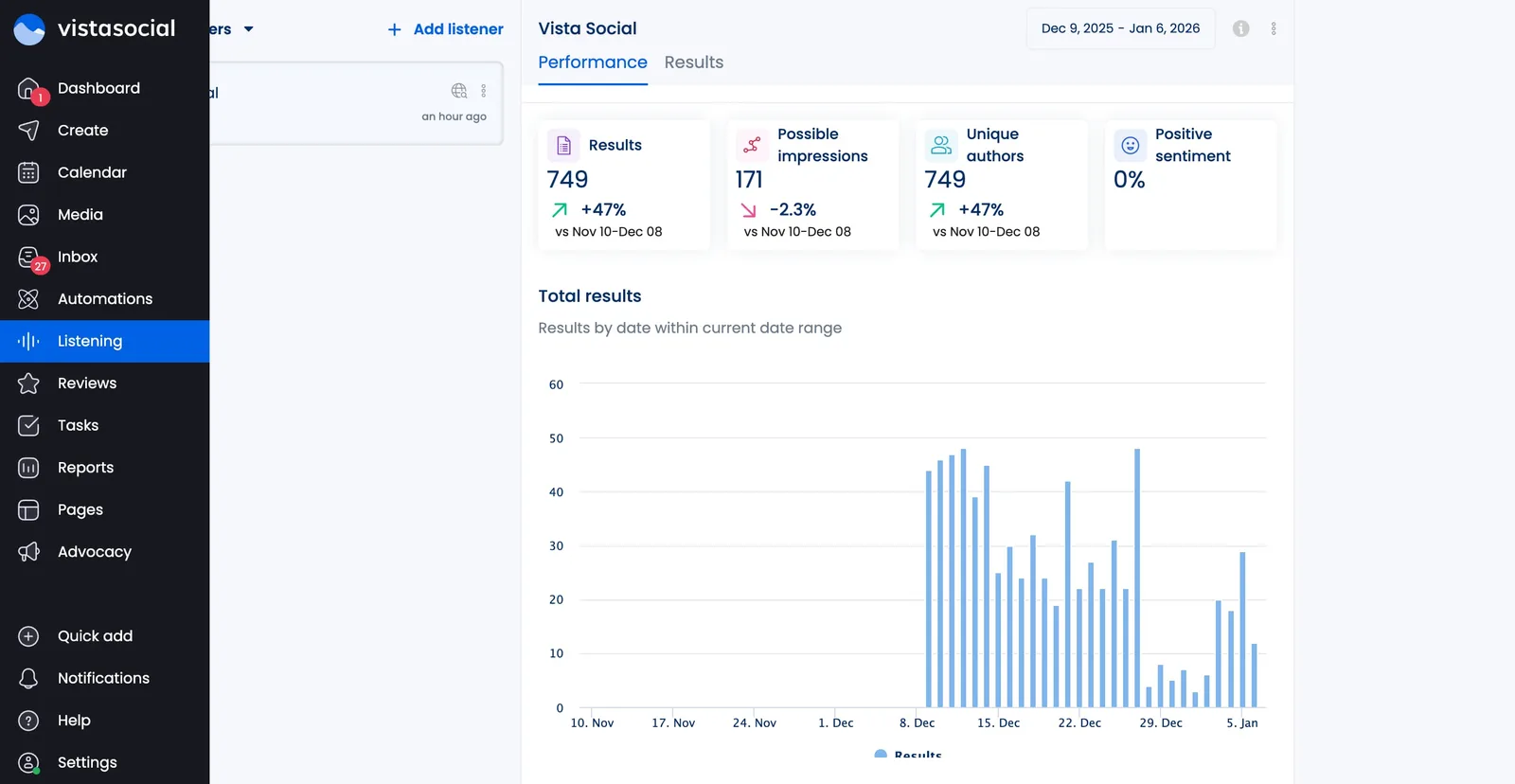
1. Head over to the Listening option in your Vista Social dashboard.
2. Click on + Add listener, then choose between monitoring comments and messages within your own profile or monitoring posts across specific social media channels.
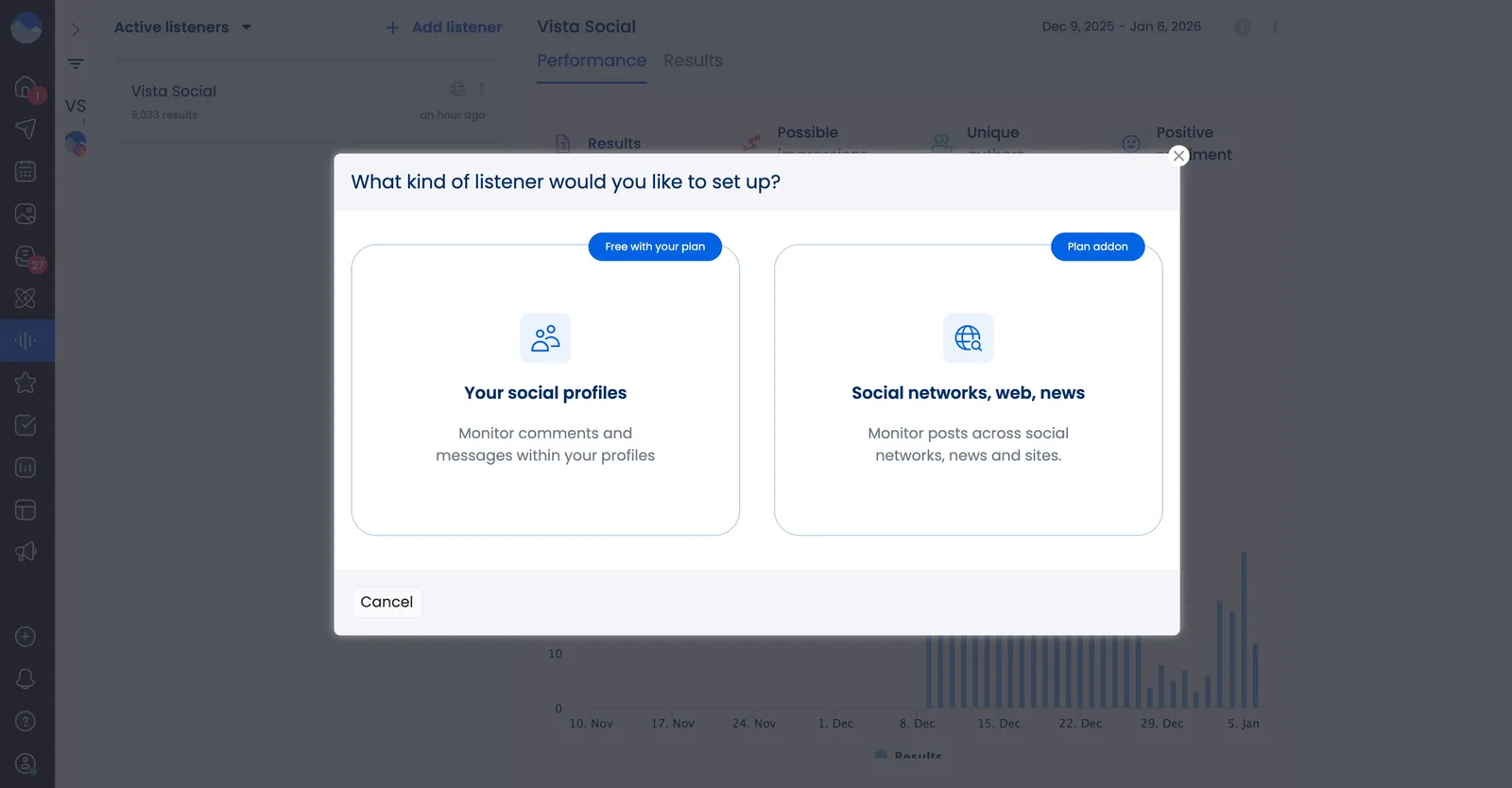
3. Once you’ve chosen, you’ll be redirected to a new pop-up where you can customize your listener profile.
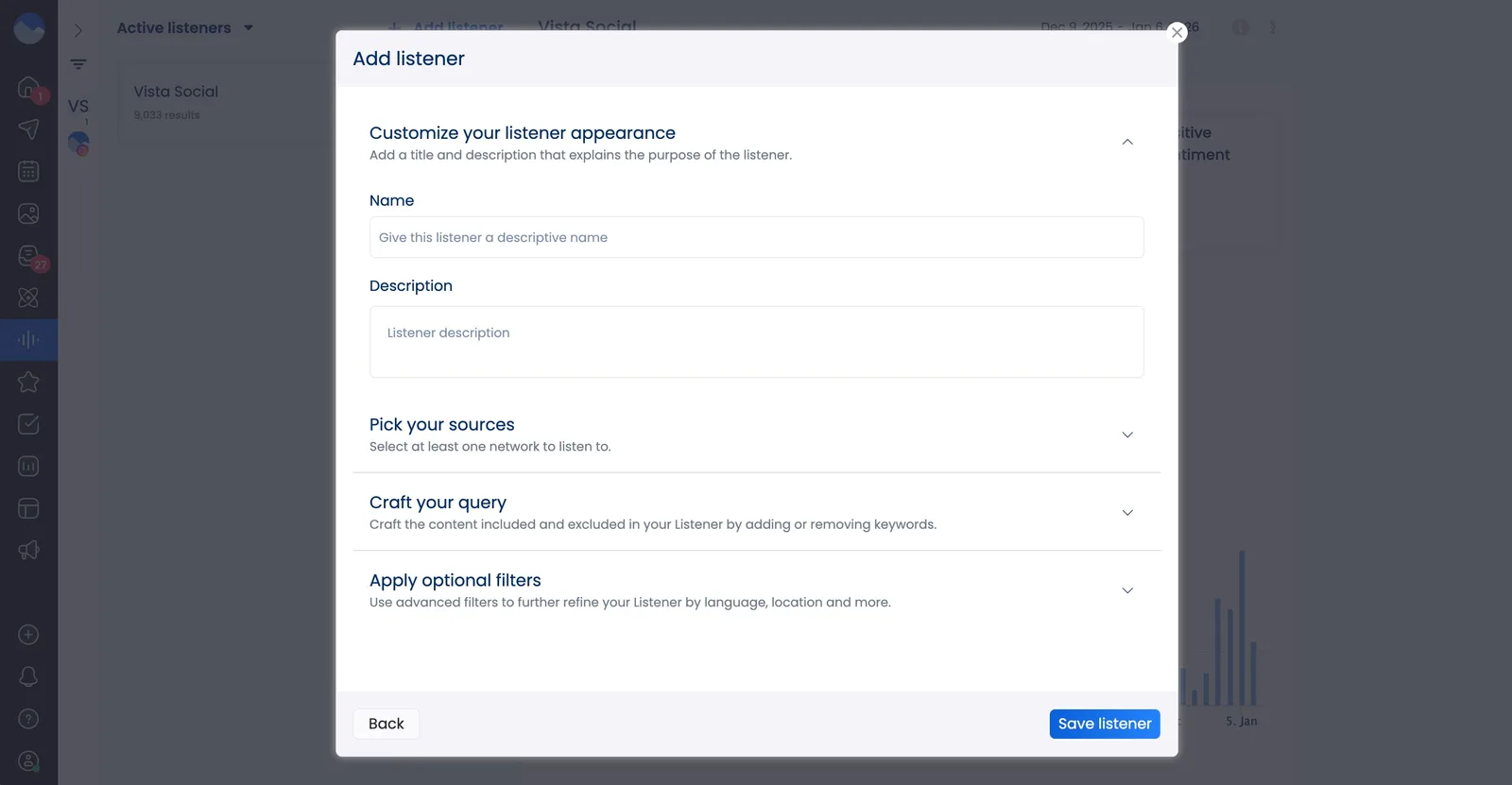
Step 3: Determine your channels to monitor
Don’t try to monitor every platform at once. Start with the ones where your audience is most active.
Popular platforms for social listening include:
- Facebook: Good for customer service and community discussions
- X/Twitter: Great for real-time news and trending topics
- Instagram: Perfect for lifestyle brands and visual content feedback
- LinkedIn: Essential for B2B companies and professional discussions
- Reddit: Excellent for in-depth community conversations
- YouTube: Important for video content and longer-form feedback
In Vista Social, you can easily select which platforms to monitor based on your audience and goals. We also offer social listening to networks like the App Store, Google Play, Bluesky, OpenTable, Tumblr, and Yelp.
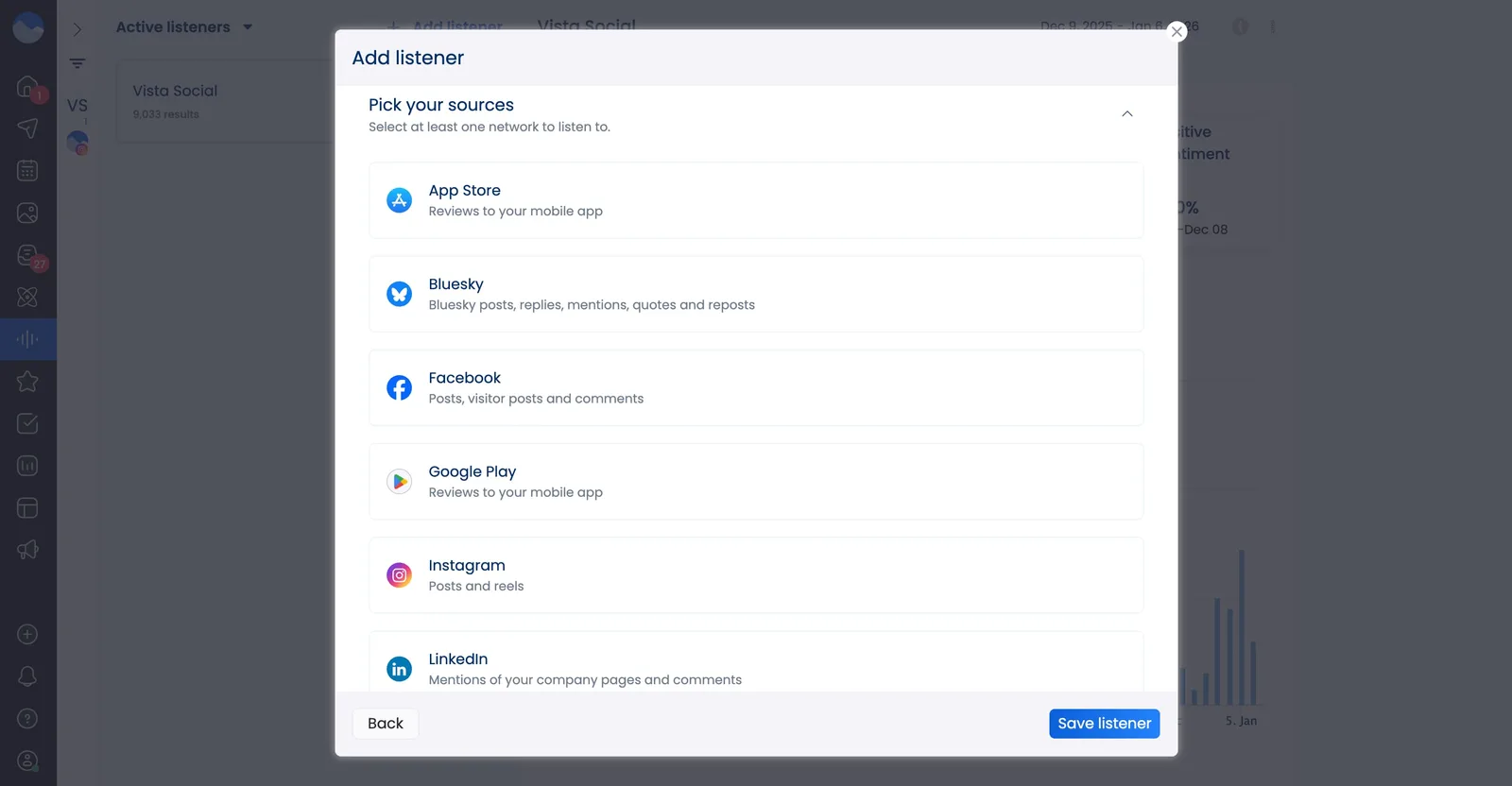
Step 4: Put together a list of keywords to monitor
This is where you decide what conversations to track. Your keyword list should cover different types of terms:
Brand terms:
- Your company name (including common misspellings and abbreviations)
- Product names and service offerings
- Executive names (if they’re public figures)
- Branded hashtags and campaign names
Competitor terms:
- Direct competitor company names and products
- Their branded hashtags and executive names
- Don’t forget indirect competitors in related categories
Industry terms:
- General category keywords (“email marketing,” “project management”)
- Industry jargon and acronyms (“CRM,” “ROI,” “B2B”)
- Common pain points customers discuss
- Solution-focused terms (“best project management tool”)
- Trending industry hashtags
Think about how your customers actually talk. They might say “keeping track of customers” instead of “customer relationship management.”
Location-based terms (if relevant):
- Your city or region names
- Local landmarks and event names
Sentiment indicators: Include terms that show positive (“love,” “recommend”) or negative (“hate,” “avoid”) feelings, plus problem indicators like “help” or “issues.”
Here’s how Vista Social makes sure your keywords are properly organized. You can set up separate tracking for brand terms, competitor mentions, and industry keywords, plus get instant alerts when important conversations happen.
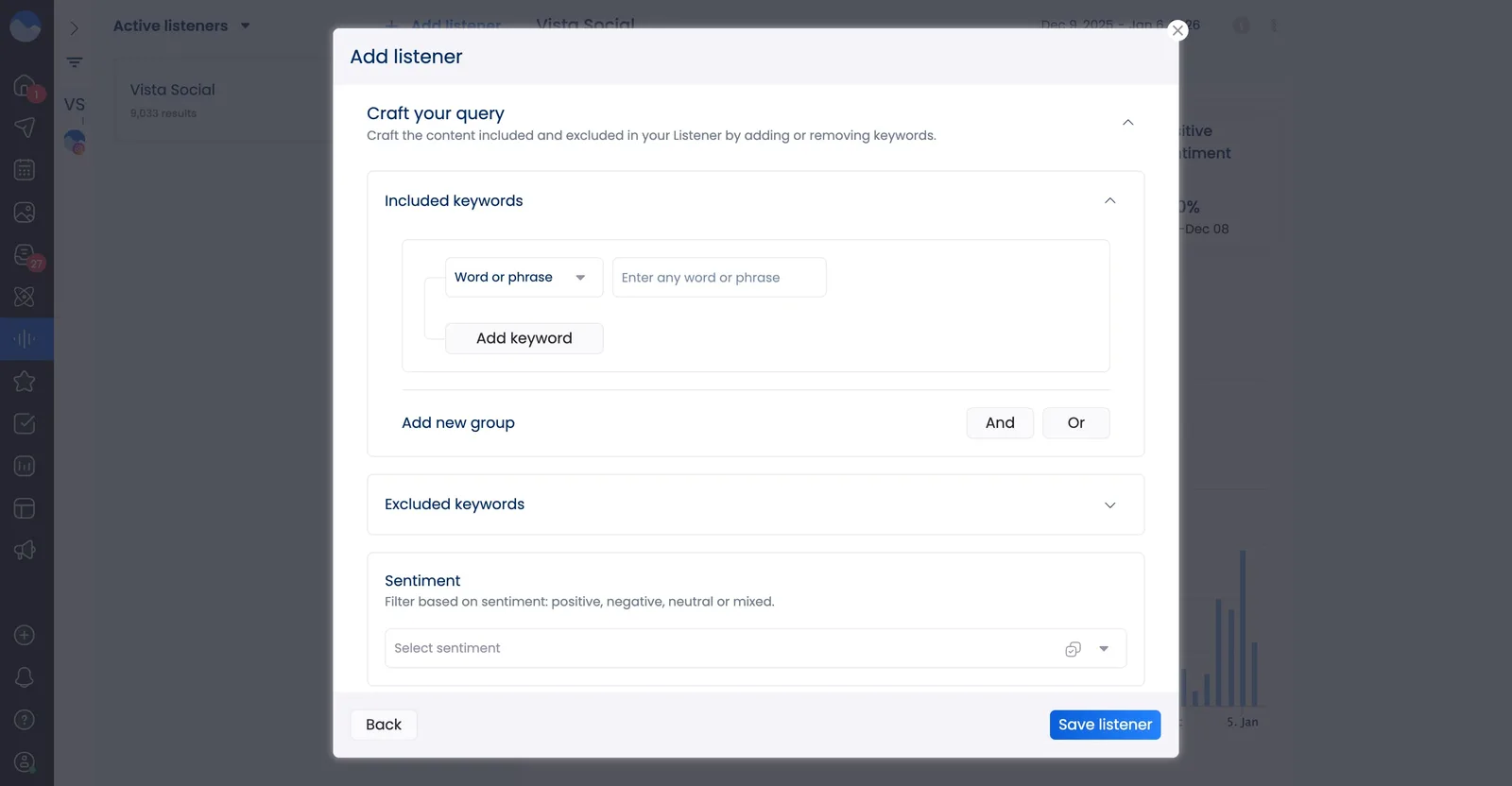
Setting up exclusions:
Exclusions help filter out irrelevant mentions. Common exclusions include unrelated meanings of your brand name, spam accounts, job postings, and automated news feeds.
Start with 10-15 core keywords and expand from there. It’s better to start focused and add terms as you learn what conversations matter most.
Step 5: Monitor your results
Once your setup is complete, start monitoring the conversations. Check your Vista Social dashboard regularly to see:
- New mentions and conversations
- Sentiment trends (are mentions becoming more positive or negative?)
- Volume changes (are people talking about you more or less?)
- Top conversation topics
- Most influential posts and users
Vista Social’s monitoring dashboard gives you real-time insights into mention volume, sentiment trends, and conversation topics. You can track competitor performance, identify influential users mentioning your brand, and monitor hashtag performance across multiple platforms.
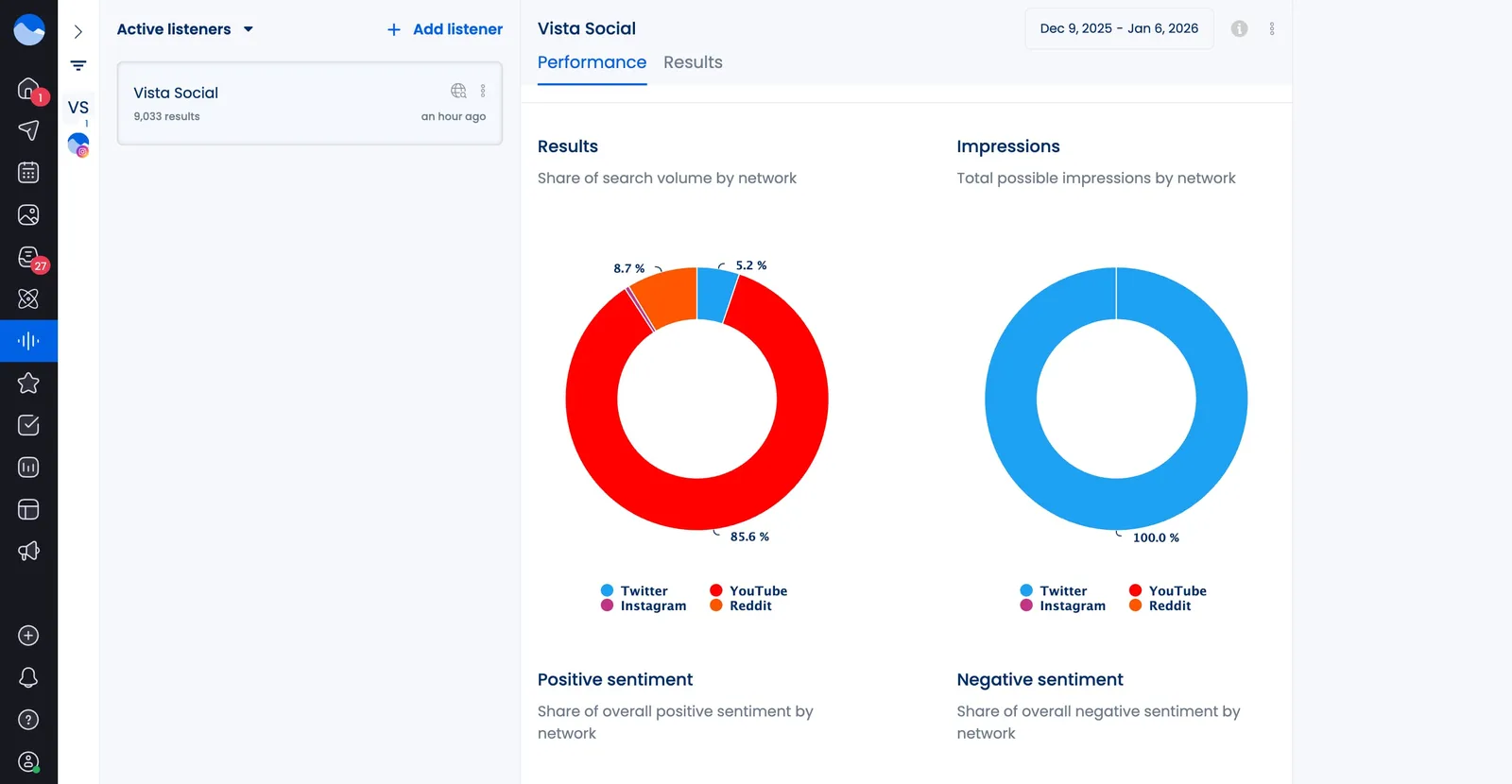
Step 6: Measure your social listening data
Raw data isn’t useful without analysis. Look for patterns and insights in your social listening data.
Key metrics to track include:
- Share of voice: How much of the industry conversation mentions your brand vs competitors
- Sentiment trends: Whether opinion about your brand is improving or declining
- Reach and impressions: How many people saw mentions of your brand
- Engagement: How people interact with posts about your brand
- Response time: How quickly you respond to customer mentions
Vista Social’s Listener Performance Report makes it easy to track these metrics and show ROI from your social listening efforts. You can create custom dashboards that connect social listening insights to business outcomes.
For comprehensive measurement of your social media performance beyond listening, check out our social media analytics capabilities to track engagement, reach, and campaign effectiveness.
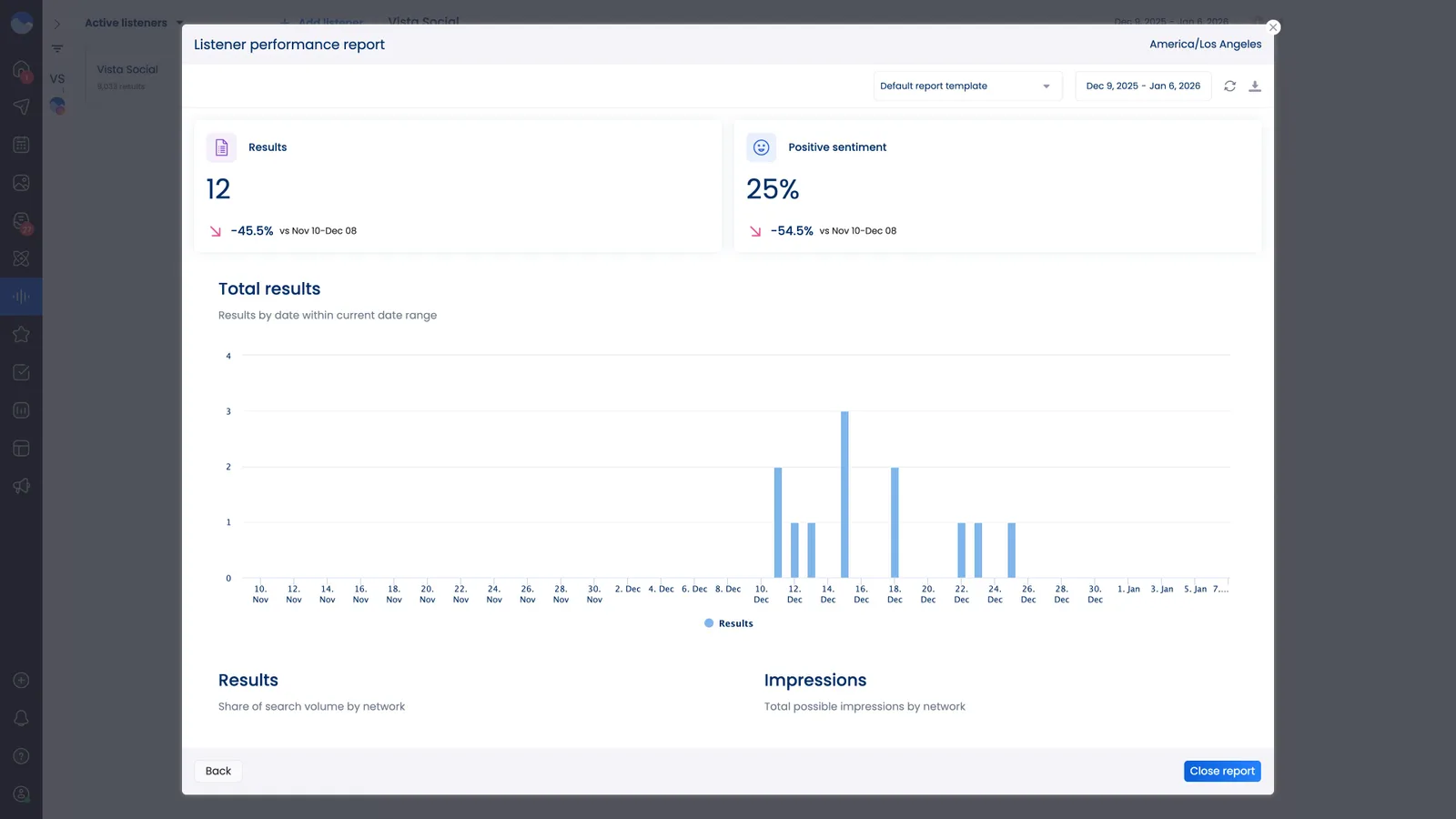
You can also create comprehensive social listening reports to share insights with stakeholders.
Try Vista Social for free
A social media management platform that actually helps you grow with easy-to-use content planning, scheduling, engagement and analytics tools.
Get Started NowAbout the Author

Content Writer
Russell Tan is a content marketing specialist with over 7 years of experience creating content across gaming, healthcare, outdoor hospitality, and travel—because sticking to just one industry would’ve been boring. Outside of her current role as marketing specialist for Vista Social, Russell is busy plotting epic action-fantasy worlds, chasing adrenaline rushes (skydiving is next, maybe?), or racking up way too many hours in her favorite games.
Loading related tools...




Tools
PublishingAnalyticsEngagementIntegrations
FacebookInstagramLinkedInRedditSnapchatThreadsTikTokX (Twitter)YouTubeBlueskyVista Page (link-in-bio)All IntegrationsCopyright © 2026 Vista Social LLC. All Rights Reserved.
Social listening best practices
Getting value from social listening requires more than just setting up keyword tracking. Follow these best practices to get the most out of your listener.
Start with clear objectives
Write down specific goals like “reduce customer complaints by 20%” or “find 10 new product feature ideas” instead of vague goals like “understand our audience better.”
Focus on quality over quantity
Monitor 10 relevant terms closely rather than 100 terms loosely. Start small and add keywords as you understand which conversations matter most.
Create response workflows
Decide how you’ll handle different mentions before they happen:
Monitor consistently
Set aside time daily to review mentions and weekly (or bi-weekly) to analyze trends. Even 15 minutes daily is better than two hours once per week.
Track sentiment over time
Don’t just count mentions. Monitor whether people feel positive, negative, or neutral about your brand. Sentiment trends are often more important than volume trends.
Engage authentically
Focus on being helpful rather than promotional. Answer questions and provide resources before mentioning your products.
Integrate with other teams
Share insights with product development (feature requests), customer service (common issues), marketing (trending topics), and sales (competitor intelligence).