

Published on May 18, 2026
16 min to read
How to Create a Successful SaaS Social Media Marketing Strategy

Summarize with AI

Table of contents
Summarize with AI

ChatGPT

Claude

Perplexity
Share

Vista Social

X (Twitter)


Selling software isn’t like selling shoes. Nobody scrolls through a LinkedIn feed and impulse-buys a project management platform.
Instead, the sales cycle stretches across weeks or even months, the buying decision typically involves four or five stakeholders who each care about completely different things, and the moment a customer signs up is only the beginning of the revenue relationship, not the end of it.
This is why a social media strategy built for a consumer brand will underperform when applied to a SaaS company, no matter how well it’s executed. SaaS social media marketing operates on different mechanics, serves different goals at different stages, and requires a different framework for measuring whether it’s actually working.
This guide gives you that framework, mapped to the SaaS customer lifecycle. From the awareness stage where you’re building category presence, through consideration, conversion, and onboarding, and into the retention and expansion stages, where social media is doing work that most SaaS teams don’t even realize it can do.
Table of contents
Why SaaS social media marketing needs a different approach
Understanding what makes SaaS social different from generic social media marketing is what separates a strategy that produces pipeline from one that produces engagement metrics your CMO doesn’t care about.
Long sales cycles shift social’s role
A SaaS buyer who sees your LinkedIn post today is unlikely to sign a contract this week. For most B2B SaaS products, social media is a trust-and-discovery channel that plants seeds over months, not a direct-conversion channel that closes deals on first contact.
According to SurveyMonkey and Reddit’s Hidden B2B Journey study, 83% of B2B decision-makers complete independent research before ever speaking to a sales team, and 31% of software buyers spend several weeks or more evaluating options.
Your social presence needs to be there and building credibility across all of that research window, not just at the moment someone is ready to request a demo.
You’re marketing to a buying committee, not a single person
Enterprise and mid-market SaaS purchases rarely involve one decision-maker.
A champion discovers the product and advocates internally. An economic buyer controls the budget and needs ROI evidence. End users care about workflow fit. IT cares about security and integration.
Each of these stakeholders uses social media differently and needs different content to move them forward. A social strategy that speaks only to one persona is leaving the rest of the committee unaddressed.
Subscription revenue makes retention a core social media goal
In a subscription model, acquisition is only the first chapter. Churn is expensive, expansion revenue is efficient, and the customers who stay longest and spend the most are often the ones who feel most connected to the product and the community around it.
Social media is one of the very few channels that touches both acquisition and retention, which means a well-built SaaS social strategy is doing double duty that most marketing channels can’t.
Product-led growth creates a direct trial signup pathway
For SaaS products with a self-serve motion, social media can drive direct trial signups in a way that non-SaaS playbooks ignore entirely. A compelling LinkedIn post with a clear call to action can move someone from discovering the product to starting a free trial the same day.
That pathway doesn’t exist for most other business models, and building content that captures it is a specific and underused SaaS social media tactic.
Founder-led content outperforms brand content in SaaS
The same SurveyMonkey and Reddit research found that 73% of B2B buyers trust peer and personal recommendations above vendor websites, search engines, and review sites.
In SaaS, this plays out in a specific way: Content posted by a founder or executive consistently outperforms identical content posted from a brand page.
Buyers trust people more than logos. A founder posting authentically about the problem their product solves reaches and converts audiences that a brand account posting about features simply cannot.
Best platforms for SaaS social media marketing
Not every platform deserves equal attention. The right mix depends on your product, your buyer, and your stage, but some patterns hold across most B2B SaaS companies.
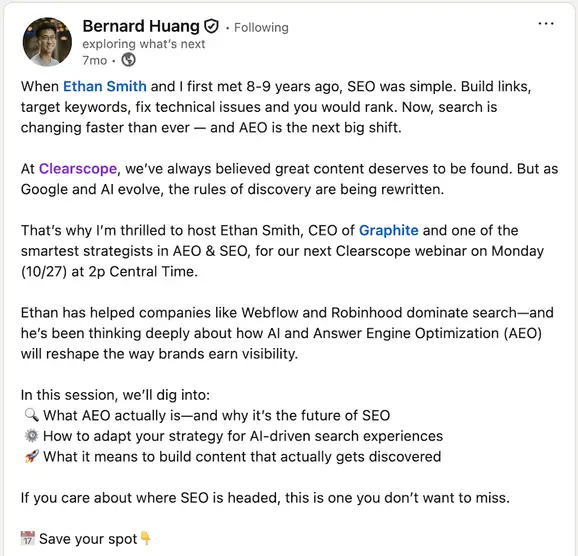
LinkedIn is the default platform for B2B SaaS and the starting point for almost every company in this space. It’s where buying conversations happen, where champions share content with their teams, and where founder-led content generates the kind of reach and trust that brand pages can’t replicate. For B2B SaaS, LinkedIn is rarely optional.
Here’s a perfect example of a founder-led post on LinkedIn:
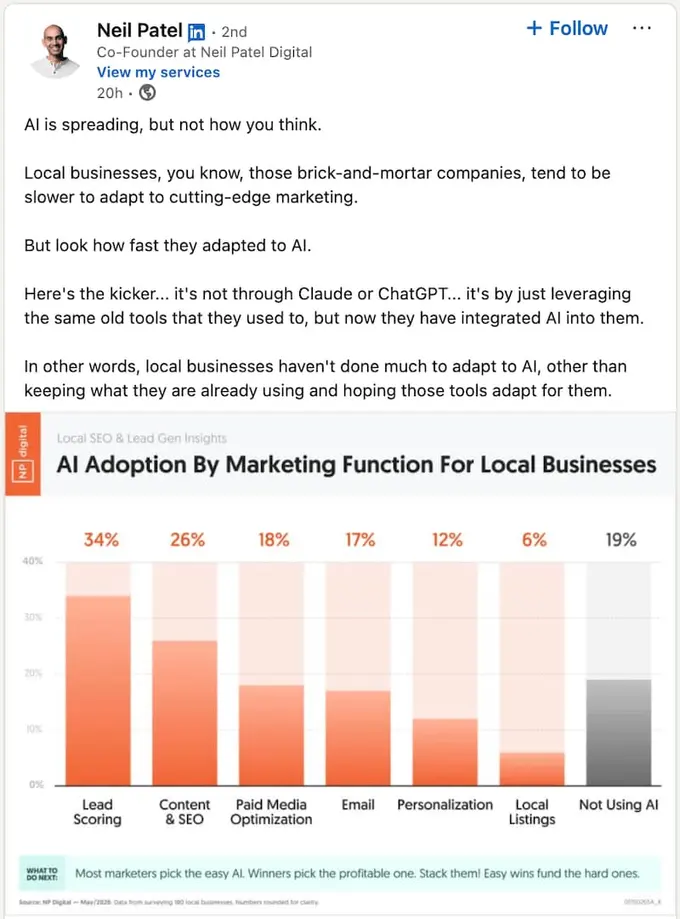
The content that performs best on LinkedIn for SaaS is educational and opinion-driven. Frameworks, point-of-view pieces, honest takes on category trends, and customer success content that shows real outcomes rather than feature lists.
LinkedIn’s algorithm in 2026 rewards content that generates meaningful comments and saves, which means posts that provoke genuine professional discussion outperform promotional announcements.
X/Twitter
X/Twitter is still relevant for developer-focused and technical SaaS, where engineering communities, developer advocates, and technical founders have built genuine audiences. For non-technical B2B SaaS targeting business buyers, its value has declined significantly as the audience has fragmented.
If your product is developer tooling, infrastructure, API-first, or technical in nature, maintaining a presence on X/Twitter and engaging with the developer community there still makes sense. For most other B2B SaaS products, the time investment is difficult to justify against LinkedIn’s returns.
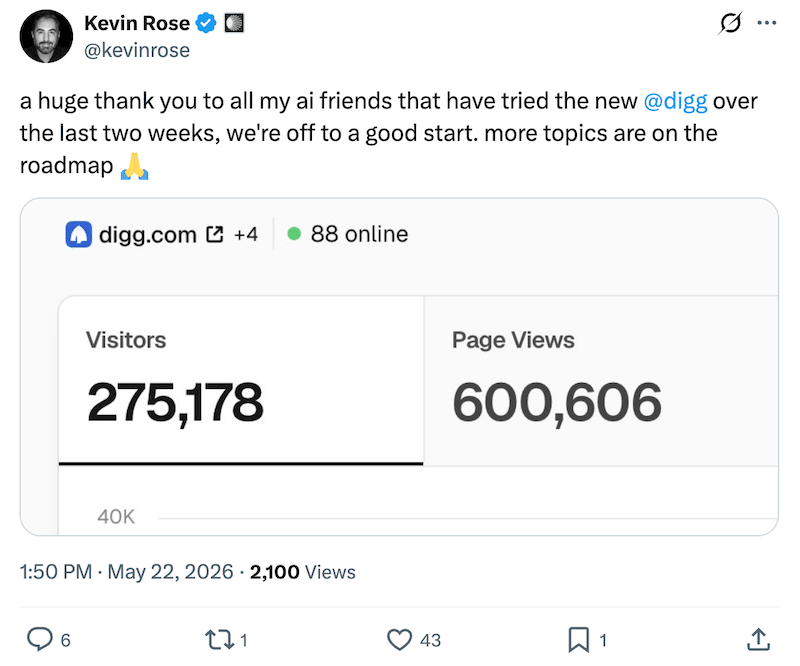
For example, this developer is “building in public,” using his X/Twitter presence to highlight the wins for his software:
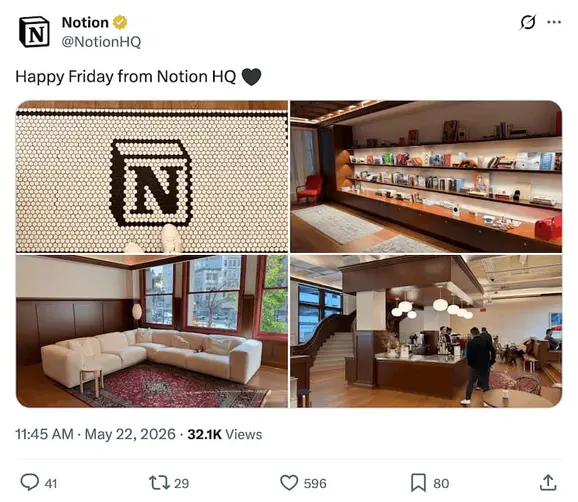
But some SaaS brands themselves can still get a lot out of X/Twitter. Project management tool Notion, for example, uses X/Twitter as a major part of the brand’s strategy. In fact, Notion’s social media team even hired for a specific X/Twitter marketing role to help with that.
And as you can see, the brand has a pretty engaged audience on the platform because of their dedication:
Bluesky and Threads
Bluesky has emerged as the destination for tech-adjacent audiences who left X/Twitter, with particular density in developer, media, and early-adopter communities. Threads has grown its active user base significantly and skews toward B2C and creator categories, making it more relevant for SMB-targeted SaaS or design and content tools than for enterprise B2B.
Both platforms are early enough that the cost of establishing a presence is low and the upside of being an early mover is real. For SaaS teams with limited resources, setting up accounts and posting a fraction of your LinkedIn content is a low-effort way to build a presence before your competitors do.
The fun thing about these platforms being so new is that your social media team really gets to play around with the strategy. There’s nothing set in stone quite yet, so you get to experiment.
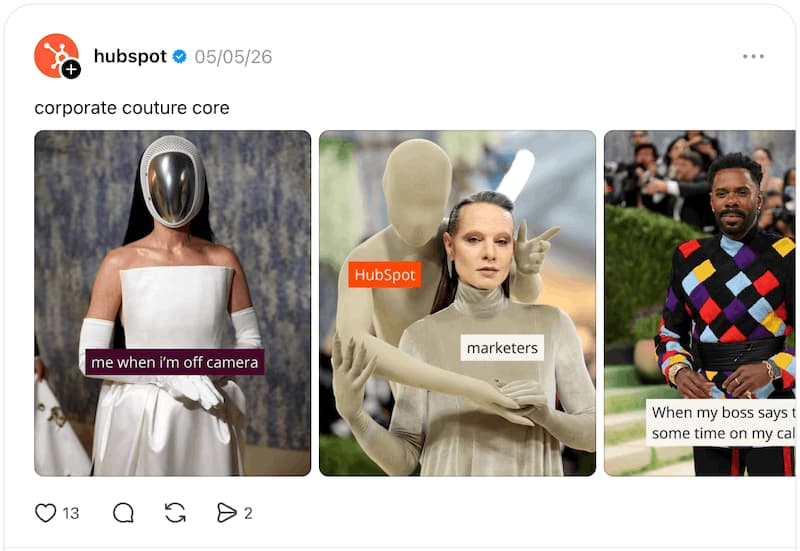
Here’s an example of how CRM HubSpot is using Threads by jumping on pop culture and memes:
Reddit is disproportionately important for SaaS, and most SaaS marketing teams underestimate it. According to Reddit’s own research, 55% of B2B decision-makers struggle to trust vendor-provided information, and 31% have used social media to research a business purchase.
Reddit is where those buyers go to get unfiltered peer perspectives, and subreddit conversations about tools in your category directly influence purchase decisions before your sales team is ever in the picture.
The right approach on Reddit is participation, not promotion. Showing up in relevant subreddits as a genuine contributor to the conversation, answering questions, sharing honest perspectives, and occasionally mentioning your product when it’s genuinely relevant builds far more credibility than promotional posts that get flagged by moderators.
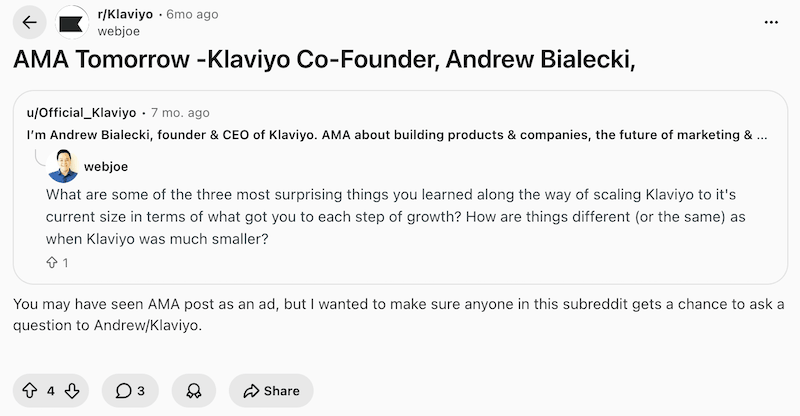
Another strategy that many SaaS brands are seeing success with is AMAs. You can see an example of promo for a Reddit AMA from email marketing software Klaviyo below:
YouTube
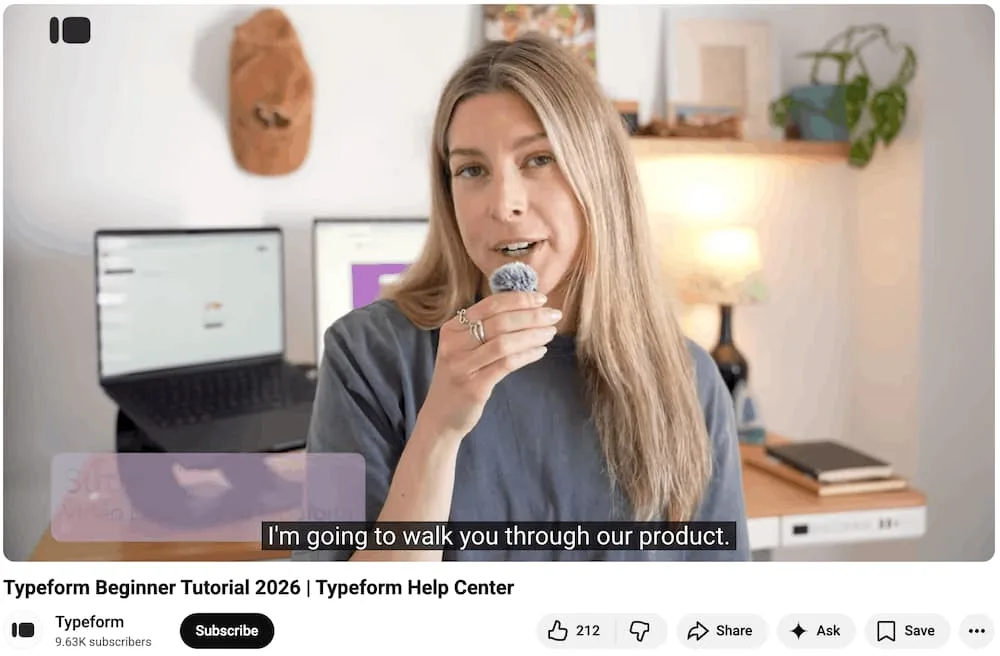
YouTube is one of the most underused platforms in SaaS social media, which creates a real opportunity for companies willing to invest in it. Long-form product demos, founder talks, customer interviews, and tutorial content all perform well and have a significantly longer shelf life than any other social format.
The compounding nature of YouTube’s algorithm means a well-produced demo or tutorial posted today continues driving signups months and years later. For SaaS companies with a complex product or a long evaluation process, YouTube content that helps buyers understand and evaluate the product is one of the highest-ROI social investments available.
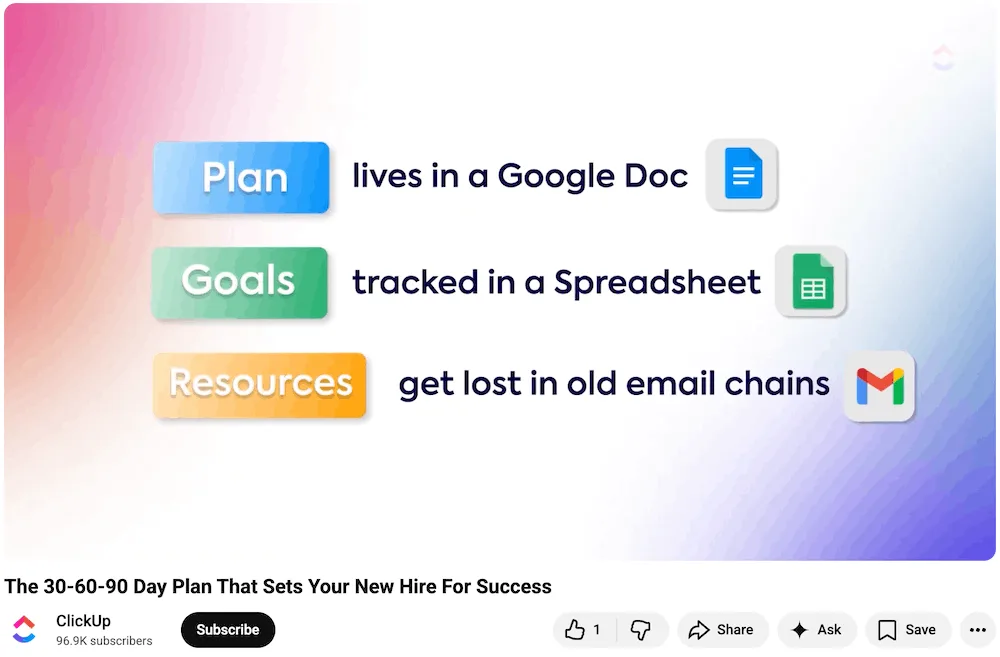
Here’s a great example of how SaaS brands can incorporate YouTube into their marketing strategy:
TikTok and Instagram
TikTok and Instagram are situational for SaaS. For SMB-targeted products, design tools, creator platforms, and any SaaS with a visual or consumer-adjacent use case, both platforms can be genuinely effective. For enterprise B2B SaaS selling to IT, finance, or operations buyers, the time investment rarely justifies the returns.
The exception is brand awareness at the top of funnel for products targeting younger buyers or teams. A SaaS company targeting marketing teams, creative agencies, or small business owners will find more relevant audiences on TikTok and Instagram than a company selling enterprise infrastructure software.
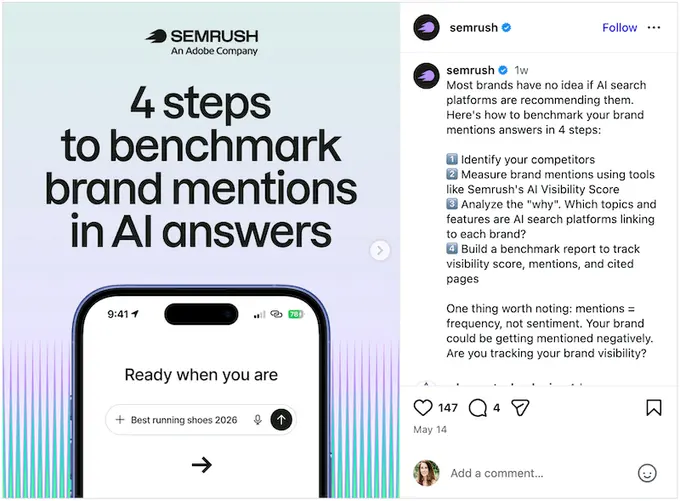
Look how Semrush uses Instagram to share educational content with its audience:
How to create a SaaS social media strategy that fits the customer lifecycle
The most important shift in thinking about SaaS social media strategy is moving from “what should we post?” to “what does our audience need at each stage of their journey with us?”
The six stages below map to every phase of the SaaS customer relationship.
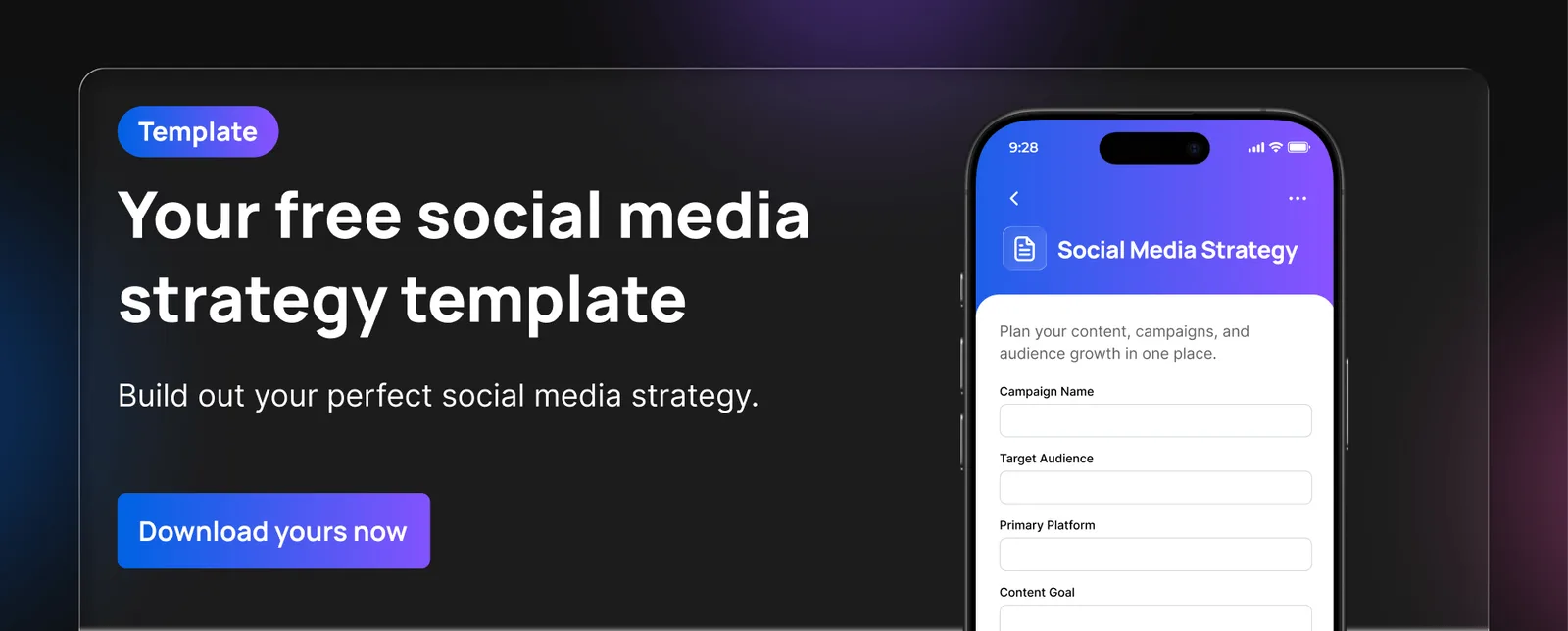
You can also take advantage of a template like the one below to help document your strategy.
Stage 1: Awareness
Goal: Make the right people aware your category exists and that you’re a credible player in it.
The awareness stage is not about the product. It’s about the problem. Buyers who don’t yet know your product exists are reachable through content that addresses the pain they’re already feeling, not through content that describes your solution.
Tactics that work at this stage:
- Founder-led LinkedIn content: The CEO or founder posting authentically about the problem space, without leading with the product, is one of the most reliably effective SaaS awareness tactics. People follow people, not logos, and a founder’s authentic perspective on a problem reaches audiences that a brand page never will.
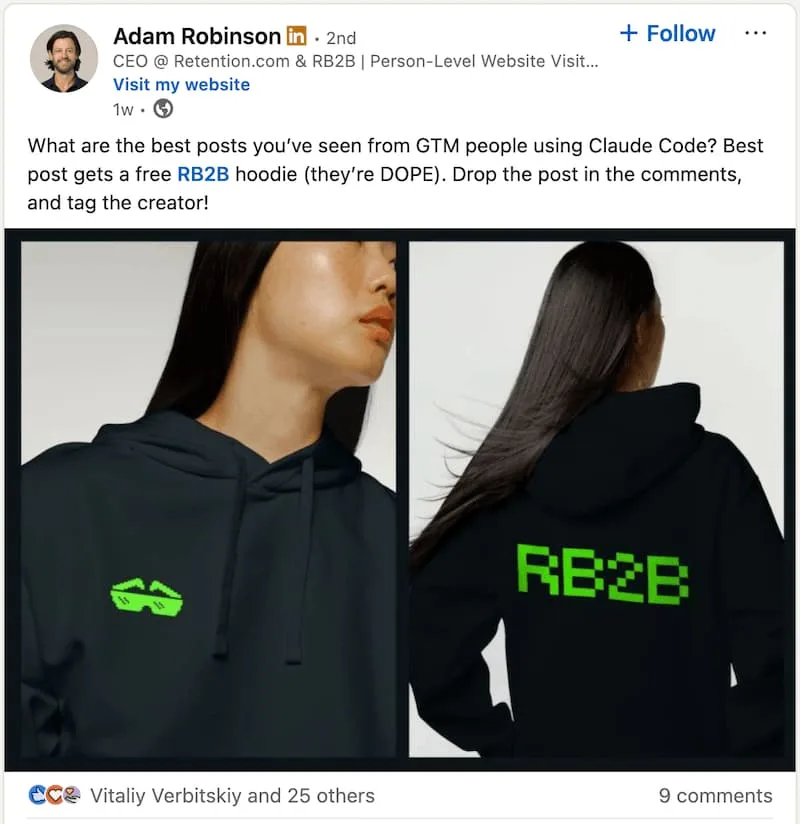
- Educational thought leadership: Frameworks, data interpretations, and “here’s how I think about X” posts that practitioners find worth resharing to their own networks.
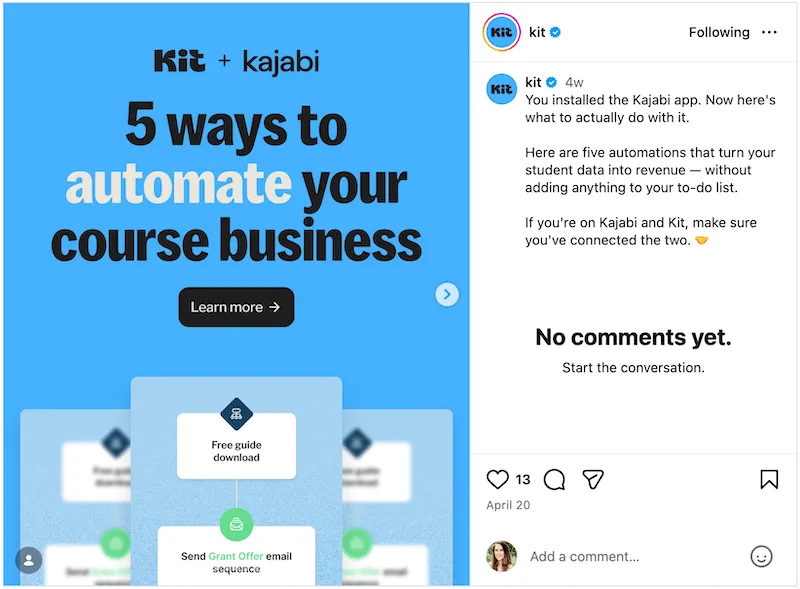
- Category news commentary: Fast, opinionated takes on industry news or research generate disproportionate reach because they arrive when the topic is already trending in your audience’s feed.
- Platform presence where buyers actually are: LinkedIn for most B2B SaaS, X for technical audiences, Reddit for self-directed research, and increasingly Bluesky for tech-adjacent communities
Vista Social’s employee advocacy capabilities makes the founder-led and team-led content approach operationally viable, giving employees a simple way to share approved content from their personal profiles without requiring them to create posts from scratch.
For a SaaS team of two where the founder needs to be consistently visible on LinkedIn, that infrastructure changes what’s actually achievable in a week.
Stage 2: Consideration
Goal: When buyers are actively evaluating options, make sure you’re one of them.
At the consideration stage, buyers know their problem and are looking for solutions. They’re comparing tools, reading reviews, and looking for evidence that what you claim to deliver is real. The content that works here is evidence-based rather than educational.
Content for this stage includes:
- Comparison content: Honest “X vs. Y” posts and “where we fit best” content. Buyers are going to compare you to alternatives regardless; being the one who facilitates that comparison honestly builds more trust than avoiding it.
- Customer story content: Short testimonial clips, before-and-after metric posts, and case study highlights that show real outcomes from real customers.
- Behind-the-scenes product credibility: How the team thinks about building the product, security posture, and engineering culture.
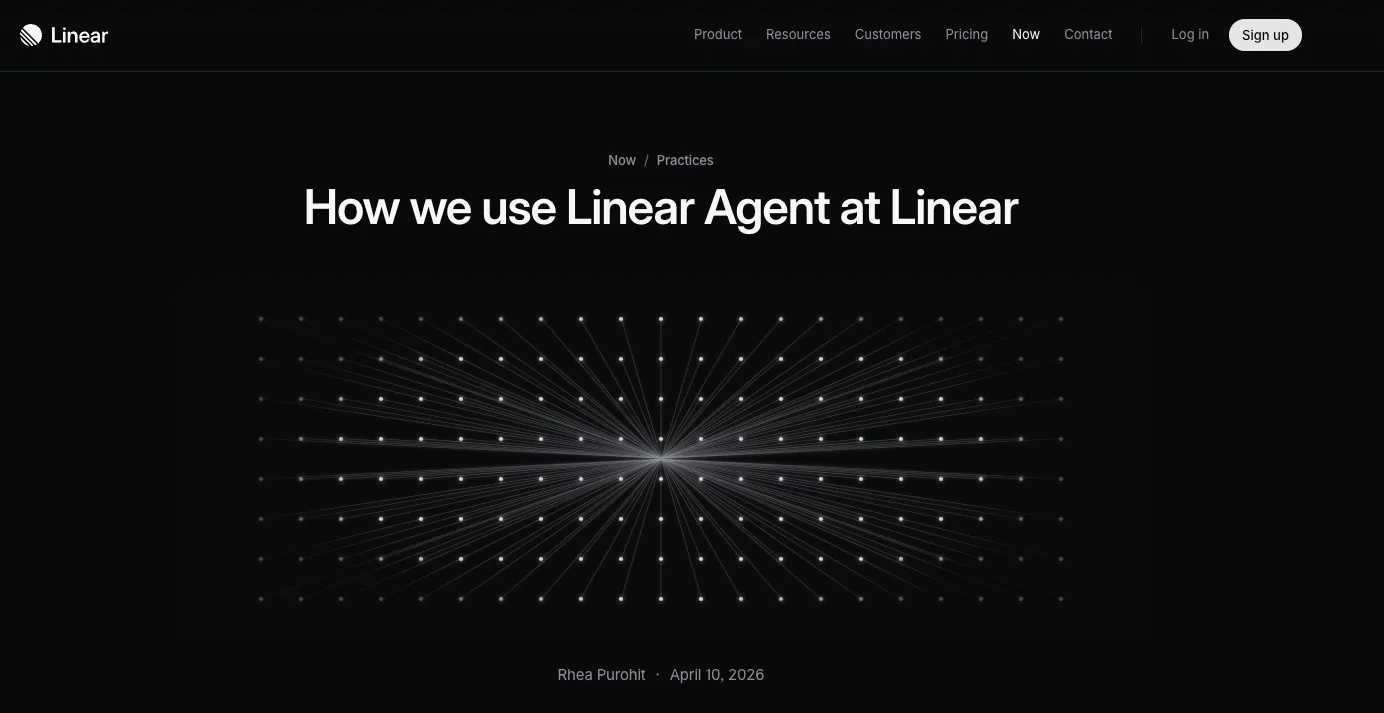
- Repurposed long-form content: Turn a webinar into five LinkedIn posts. Turn a blog post into a carousel and a short video. For a SaaS social team of one, repurposing is the only sustainable way to maintain presence across multiple platforms and formats simultaneously.
Vista Social’s AI Assistant and AI Knowledge features help maintain consistent brand voice across this kind of multi-format, multi-platform repurposing, ensuring that a case study excerpt adapted for LinkedIn, a short clip for YouTube, and a post for Threads all sound like they came from the same brand.
Stage 3: Conversion
Goal: Drive measurable trial signups, demo requests, or sales conversations.
The conversion stage is where social becomes directly accountable to revenue. The tactics here are more direct than awareness or consideration content, and they should be used sparingly enough that they land with impact rather than blending into the background noise of constant promotion.
Tactics to help drive conversions include:
- Direct response posts: Clear, specific CTAs used intentionally rather than on every post. “Start your free trial” or “Request a demo” works when it’s a signal, not the default mode.
- Trial offer announcements: Limited-time programs and free trial promotions generate urgency that evergreen content can’t replicate.
- Webinar registration drives: Webinars remain one of the highest-converting B2B SaaS formats, and social promotion of registration is where the audience comes from.
- DM automations for demo requests: High-intent comments and DMs asking about pricing, demos, or comparisons are warm leads that go cold quickly without a fast response. Vista Social’s DM Automations capture those inbound signals and respond immediately, routing serious inquiries to the right person before the moment passes.
- Link-in-bio as a conversion asset: Vista Social’s Vista Page gives SaaS teams a single, branded destination that hosts trial signup links, demo booking, pricing, and any other conversion-oriented destinations in one place, across every platform simultaneously.
Stage 4: Onboarding
Goal: Help new users reach their first value moment quickly, using social-first education.
This is the stage where almost every SaaS company stops using social media, and it’s where some of the most differentiated opportunities exist. Content that helps new users get set up and succeed has double value: it serves existing customers, and it’s visible to prospects who are still evaluating.
Some ideas include:
- Onboarding content series: “How to set up X in three minutes” short-form video, posted publicly on YouTube, LinkedIn, and TikTok, helps new users and functions as product education for prospects at the same time.
- Customer success-led content: What new users consistently struggle with, made visible and addressed publicly, positions the team as responsive and the product as supported.
- Community building: A Slack or Discord community, a LinkedIn group, or a user forum promoted through social channels builds a peer support network that reduces churn and creates retention signals no dashboard metric fully captures.
- In-app social proof loops: Encouraging users to share their first wins with a branded hashtag creates a stream of authentic customer content that supports acquisition without the brand having to produce it.
Stage 5: Retention
Goal: Reduce churn through continuous education, community, and product engagement.
Retention-focused social content keeps customers engaged with the product and connected to the community around it. Customers who feel like they’re getting ongoing value from both the product and the brand’s content are significantly less likely to churn than customers who signed up and never heard from you again.
Test out these content ideas:
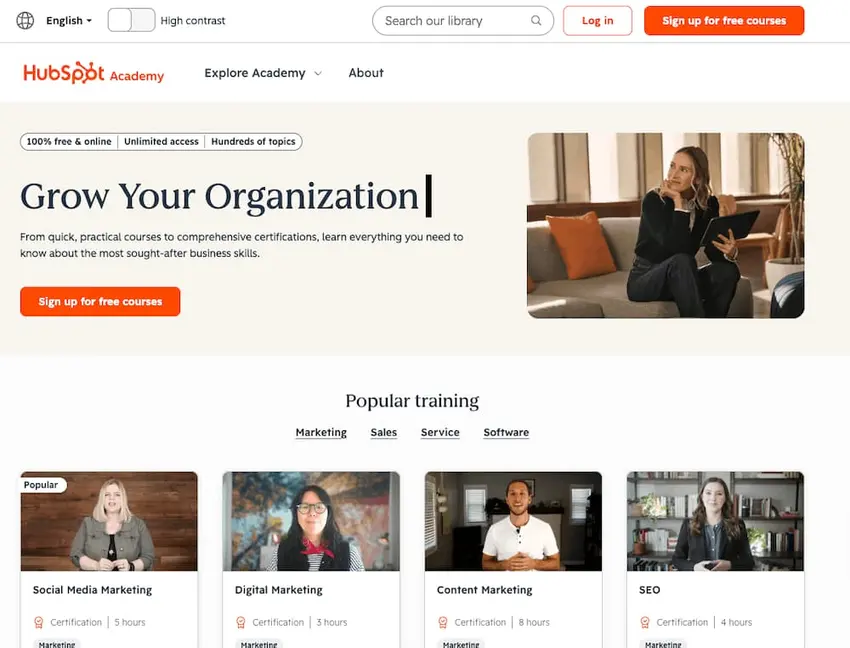
- Continuous education content: Feature deep-dives, advanced use cases, and “how our customers use X” interviews that help customers expand their use of the product over time
- Product update announcements framed as responses: “We built this because you asked” framing for feature releases makes customers feel heard and generates anticipation for what comes next
- Community celebration: Customer anniversary posts, milestone recognition, and user spotlights create loyalty in the people featured and social proof for everyone who sees it
- Public roadmap signaling: Sharing what the team is working on next builds anticipation that buffers against churn during periods when competitors are announcing new features
Vista Social’s social listening tools surface the conversations customers are having about the product across platforms, including unbranded mentions, giving the team the input needed to make retention content genuinely responsive rather than broadcast-only.
Stage 6: Expansion
Goal: Drive expansion revenue through upsells, cross-sells, and multi-seat growth via social.
Expansion is where social media pays its highest return in SaaS and where most teams leave the most money on the table. Existing customers are already sold on the product. Content that helps them discover features they’re not using, use cases they haven’t explored, or outcomes that justify a higher tier is expansion revenue that social can drive without a sales call.
Here are a few tactics to try:
- Customer success story content: Making heroes of customers who are using the product in ways that other customers haven’t considered yet inspires expansion by showing what’s possible
- Feature spotlight series: Highlighting under-utilized features in higher-tier plans gives customers a reason to upgrade that comes from demonstrated value, not from a sales pitch
- Power user content: Interview your most sophisticated customers about their workflows. Their use cases inspire others to expand their own usage and signal what’s achievable at higher investment levels
- Account-based social: For enterprise SaaS, targeting specific named accounts on LinkedIn with content tailored to their industry and use case is a precision instrument for expansion that generalist social content can’t replicate
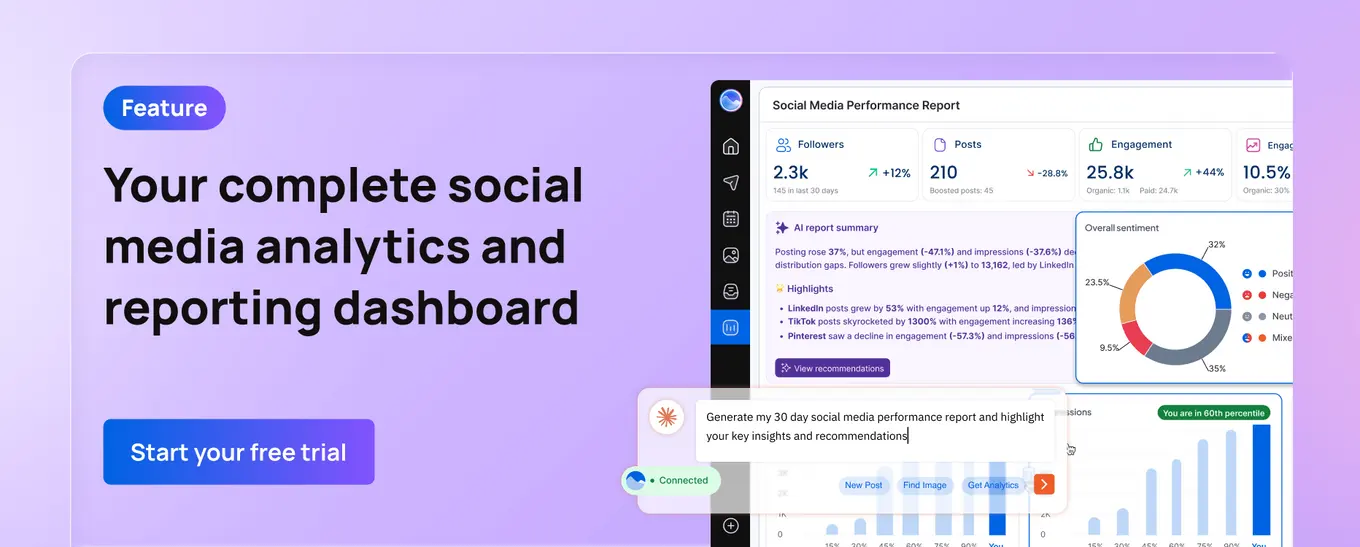
Vista Social’s analytics and reporting tools and profile groups let SaaS teams track engagement and sentiment across different customer segments, giving the data needed to demonstrate that community engagement and retention content are actually correlating with lower churn and higher expansion rates, a connection most SaaS teams can feel but rarely have the reporting to prove.
Try Vista Social for free
A social media management platform that actually helps you grow with easy-to-use content planning, scheduling, engagement and analytics tools.
Get Started NowAbout the Author

Content Writer
Orion loves to write content that refuses to be boring. As part of Vista Social, he helps brands, creators, and agencies stop doom scrolling and start winning with social media. When he's not in front of a keyboard, he's watching films in IMAX with his wife, dissecting football tactics (the European kind), and getting lost in a good book.
Loading related tools...

The most complete social media management platform for teams who demand more.






Tools
PublishingAnalyticsEngagementIntegrations
FacebookInstagramLinkedInRedditSnapchatThreadsTikTokX (Twitter)YouTubeMCPVista Page (link-in-bio)All IntegrationsCopyright © 2026 Vista Social LLC. All Rights Reserved.