

Published on April 30, 2026
8 min to read
Facebook Groups for Business: How to Grow Your Community

Summarize with AI

Table of contents
Summarize with AI

ChatGPT

Claude

Perplexity
Share

Vista Social

X (Twitter)


Most brands are fighting for scraps of organic reach on Facebook right now, spending more on ads just to stay visible to their own followers. But quietly, some of the smartest marketers are building something that doesn’t depend on the algorithm at all.
Facebook groups let brands create their own community space where they can share industry knowledge, help members solve real problems, and build genuine relationships with the people most likely to become customers. The promotion is secondary and subtle. The value comes first, and brand affinity follows naturally.
If you’re looking to start and grow your own Facebook group, this guide covers everything: what groups are, why they’re worth building, how to set one up, proven growth strategies, and five real brands showing exactly how it’s done.
Table of contents
What are Facebook groups?
Facebook groups are dedicated community spaces where members post, comment, share, and connect around a shared interest or identity. Unlike a Facebook Page, where a brand broadcasts to passive followers, a Group creates a two-way environment where members talk to each other as much as they talk to the brand.
Groups come in three privacy settings:
| Privacy type | Who can find it | Who can see content |
| Public | Anyone | Anyone |
| Private | Anyone can find it | Members only |
| Hidden | Invite only | Members only |
For most brands, private with visible membership hits the sweet spot. The group is discoverable to new people searching Facebook, but content stays exclusive to members, which encourages more honest, higher-quality conversations.
The key distinction for marketers: Groups are community infrastructure, not content distribution channels. The brands that get the most out of theirs show up to facilitate conversations, not just push announcements.
Why should a brand start a Facebook group?
There are some things a group gives you that a Facebook Page simply can’t. Here are a few reasons why you might want to consider creating your community as a Facebook group.
Community building that actually compounds
A Facebook Page is a megaphone. A Facebook group is a room where people talk to each other, and over time, those members start doing your marketing for you.
They answer each other’s questions, share product experiences, and recruit new members organically. That kind of peer-to-peer advocacy is difficult to manufacture and impossible to buy.
A channel algorithms can’t take away
Facebook’s algorithm consistently prioritizes group content over Page content in the feed. For brands that have watched their Page reach shrink year after year, having a way to boost reach is important.
A well-run private group compounds that advantage further. The exclusivity creates a sense of trust and belonging that public Pages simply can’t replicate, and members who opted into a private space tend to post, comment, and interact far more than passive Page followers ever do.
The engagement loop in a healthy group is self-reinforcing, and unlike paid reach, it doesn’t come with a monthly invoice.
Direct access to your most engaged audience
The people who join and actively participate in your group have opted into a deeper relationship with your brand. That makes them your most valuable audience segment for feedback, testimonials, and getting clients on Facebook.
Authentic self-promotion that doesn’t feel like advertising
Done right, a Facebook group lets your brand stay top of mind without ever feeling pushy. Share industry knowledge, facilitate member conversations, and mention your product only when it’s genuinely relevant.
The community itself becomes the proof point, which is far more persuasive than any ad you could run.
A direct line to product insights
What are members struggling with? What features do they wish you had? A well-moderated group surfaces this intelligence constantly, functioning like an informal focus group that never closes.
How to create a Facebook group
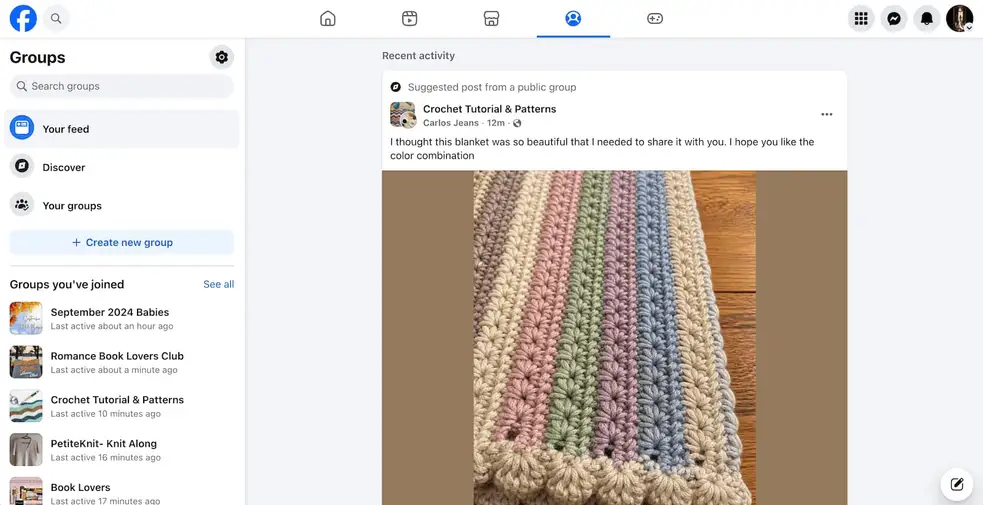
Creating a Facebook group is easy. Start by going to facebook.com/groups/create or to the Groups tab on Facebook and clicking the Create new group button in the left sidebar.
Add your group name, keeping it specific and searchable (“Canva Design Community” beats “Canva Users”). Set privacy to Private for most brand use cases. Then click Create.
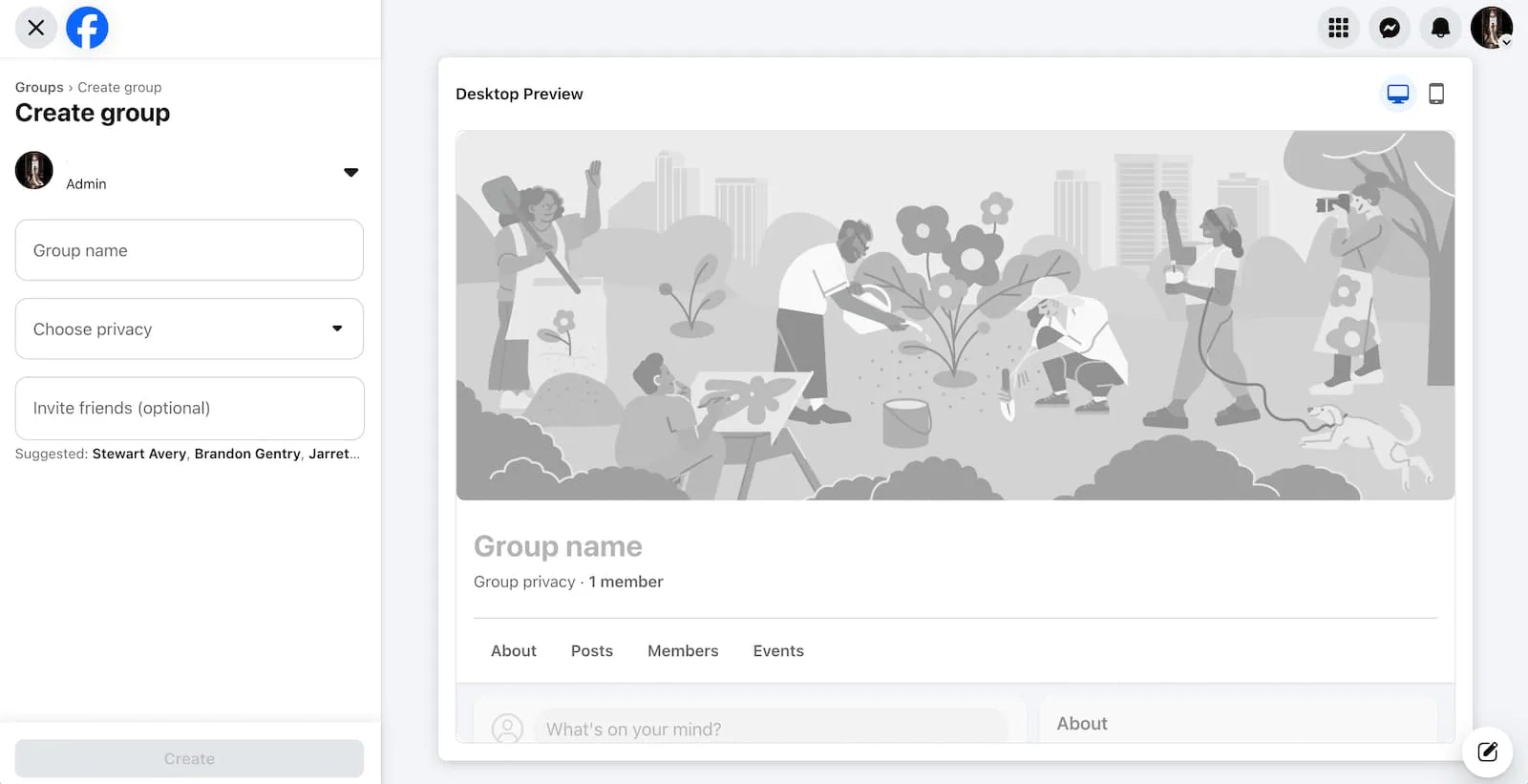
Once the shell is live, complete these before inviting anyone:
- Cover photo: Use a branded image that communicates the group’s purpose, not just your logo
- Description: A clear, welcoming paragraph explaining who the group is for and what conversations happen here
- Rules: Four to six community guidelines covering spam, respectful discussion, and member self-promotion
- Pinned welcome post: Greet new members, explain how to get value from the group, and give them an easy first action, like introducing themselves
- Membership questions: Two to three screening questions to filter bots and give you useful context on who’s joining
For more on managing your Facebook presence from one place, our guide to Meta Business Suite covers how to handle your Pages and groups centrally.
How to grow your Facebook group
Now you’ve got your Facebook group ready to go, it’s time for the next step—getting members! Use these tactics to help grow your Facebook group into a thriving community.
Cross-promote on your existing channels
Your email list, Instagram bio, LinkedIn profile, and website are all places your audience already follows you. Add a direct link to your group with a clear reason to join.
“Connect with 5,000 other [category] professionals and get early product updates” always beats a plain “Join our Facebook group” call-to-action.
Keep the group consistently active
A quiet group is a dead group. The algorithm buries inactive communities, and new visitors who find nothing happening leave immediately.
Vista Social lets you schedule reminder notifications so you can plan your group content calendar in advance and receive a push alert when it’s time to publish, keeping your posting rhythm consistent without a manual login every day.
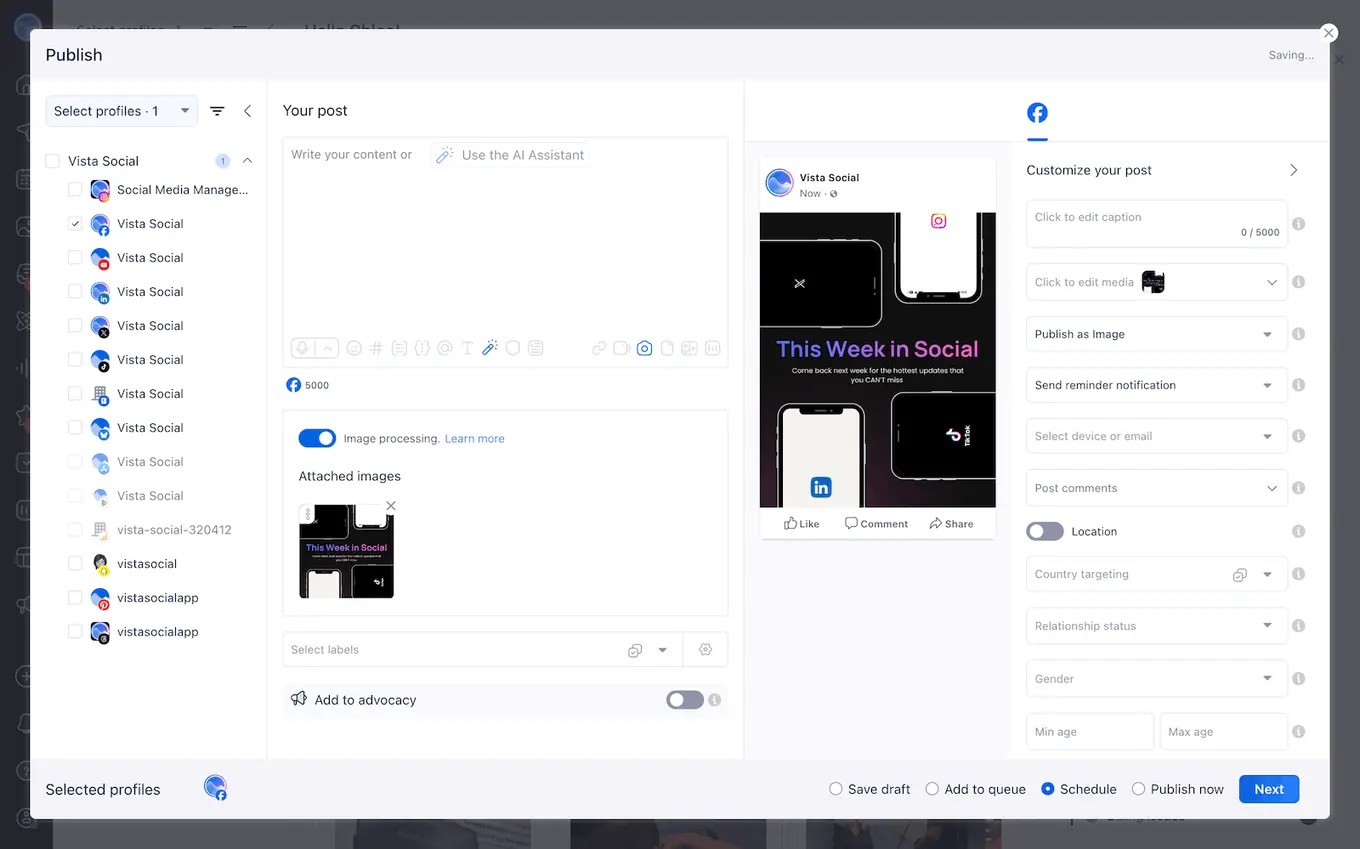
Our guide to Facebook best practices covers content consistency across the platform more broadly.
Post content that sparks conversation
The types of posts that drive the most Group engagement tend to follow a pattern.
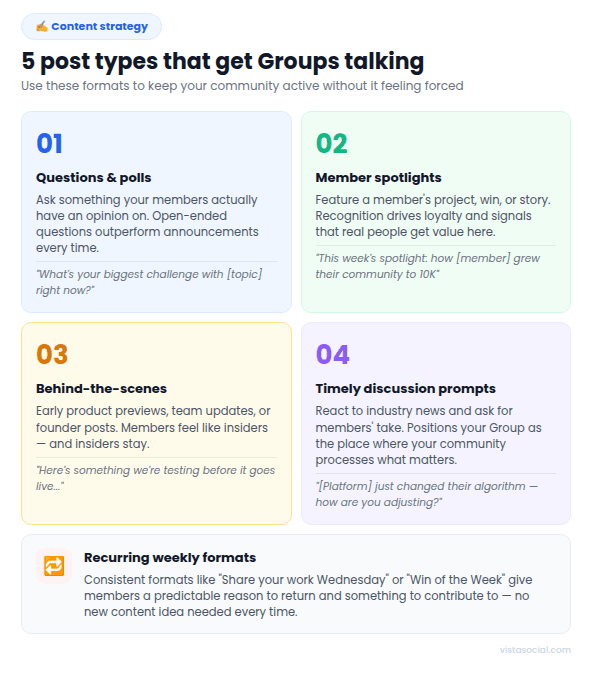
- Questions and polls: “What’s your biggest [industry] challenge right now?”
- Member spotlights: Feature a member’s project, business, or success story
- Behind-the-scenes content: Early product previews, team updates, or founder posts
- Timely discussion prompts: React to industry news and ask members for their take
- Recurring weekly formats: Something like “Share your work Wednesday” that members start looking forward to
Run referral campaigns
Ask active members to invite peers who’d find value. A simple post like “Know someone who should be in here? Tag them below” can generate a meaningful wave of new members with zero ad spend.
A personal referral carries social proof that any paid acquisition lacks.
Use Facebook ads to accelerate early growth
Facebook allows ads specifically targeting group membership growth. These work particularly well when you target people who follow relevant Pages or share interests with your existing members.
Even a modest budget can meaningfully accelerate early-stage growth when organic discovery is still low.
5 examples of brand-run Facebook groups
Get some inspiration for your own Facebook group from these five who have been around for awhile.
HubSpot Academy Content Marketing Pros
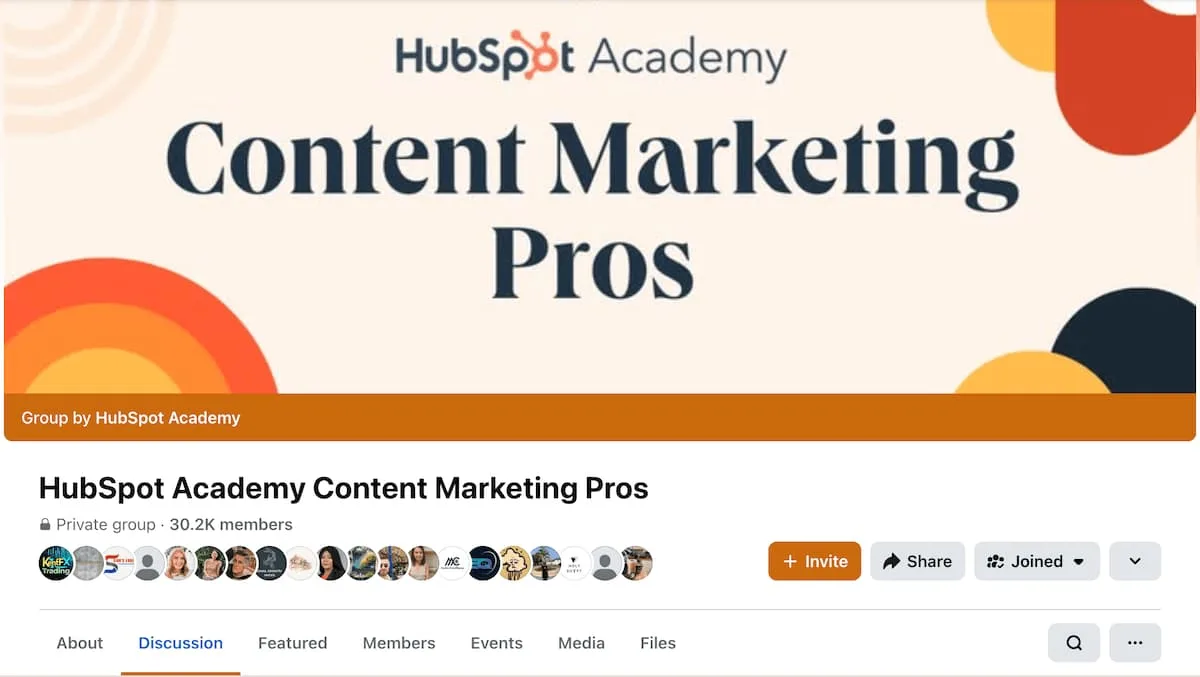
HubSpot’s private group for content marketers functions as both a learning community and an informal product feedback channel. Members discuss challenges they’re working through, share how they’re applying HubSpot tools, and suggest future course topics.
What makes it work is that HubSpot resists using the group as a promotions channel. The value is entirely in peer connections, and HubSpot earns brand trust simply by facilitating them.
What they do well:
- Keep product mentions minimal and contextual
- Let members drive most discussions
- Use the group to surface course ideas before building them
Canva Design Community
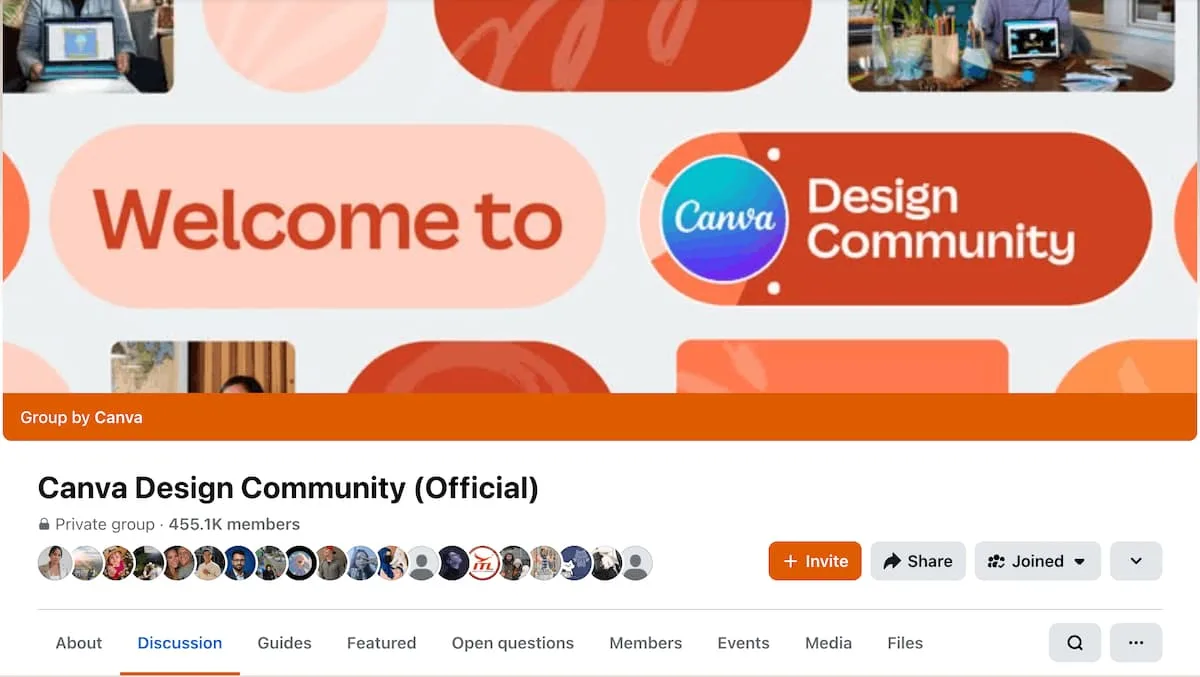
One of the most active brand-run groups on Facebook, with hundreds of thousands of members sharing designs, asking for feedback, and requesting features. Canva uses the group as a UGC engine: standout member designs surface on their social channels, giving the brand a steady stream of authentic creative content without a separate production process.
New members are personally welcomed and tagged, which drives immediate first interactions and sets the community tone from day one.
What they do well:
- Personal welcome posts tagging new members by name
- Encourage design sharing that doubles as organic UGC
- Position the group as a place to learn and grow, not just receive updates
Global Elementor Community
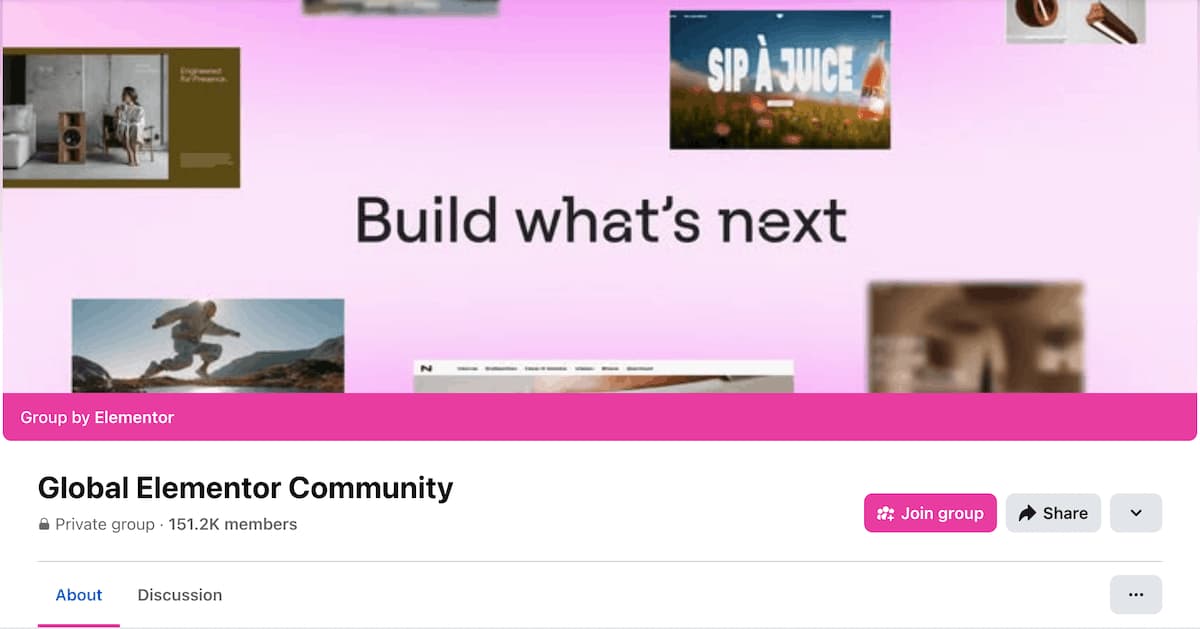
Elementor’s group for WordPress creators is built around peer-to-peer support rather than brand broadcasting. Monthly “best website” spotlights celebrate member work, giveaways mark community milestones, and much of the technical help comes from members themselves.
The group is largely volunteer-moderated, which signals to members that Elementor values genuine community over controlled messaging. That trust translates directly into loyalty among a highly technical and opinionated user base.
What they do well:
- Monthly member spotlights that reward active participation
- Volunteer moderation that keeps the atmosphere authentic
- Giveaways tied to community milestones, not product launches
Official Peloton Member Page
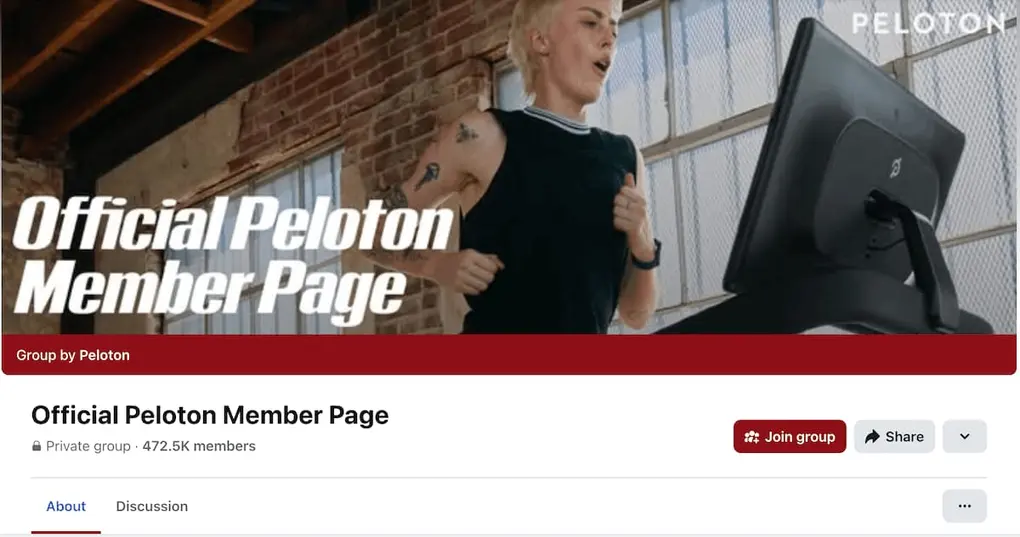
Peloton’s group, with hundreds of thousands of members, is one of the most cited examples of community-led growth in consumer brands. Members share workout milestones, transformation stories, and mutual encouragement.
The recurring “Feature Friday” post crowdsources product ideas directly from their most passionate users. More than any Instagram post, the group makes owning a Peloton feel like belonging to something, and that sense of belonging is a significant part of what justifies the premium purchase price.
What they do well:
- “Feature Friday” generates product insight and engagement simultaneously
- Member milestone celebrations reinforce community identity
- Balance product updates with member-generated fitness content
Clean Beauty Crew by Saie
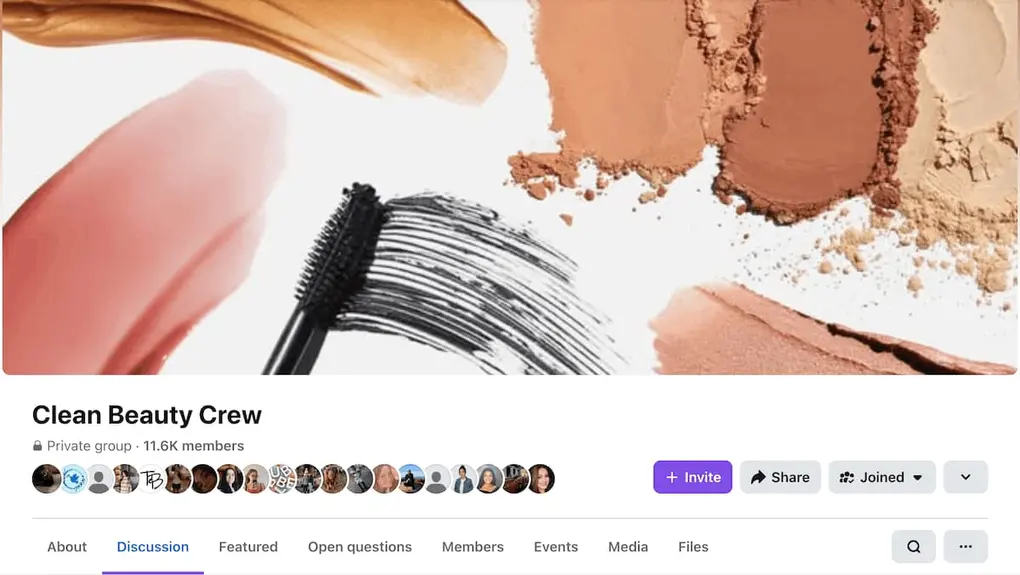
When Saie founder Laney Crowell started the Clean Beauty Crew, she used it as the literal foundation of her brand. The private group helped Saie develop and test product formulas, shade ranges, and positioning before major launches.
Crowell posts directly in the group asking members about their skincare routines and preferences.
What they do well:
- CEO and leadership post directly, creating rare executive-to-customer connection
- Product development is genuinely informed by Group feedback
- Discussions extend beyond Saie products, making the Group about beauty broadly
Add Facebook groups to your Facebook marketing strategy
The brands that build the most from their groups share the same habits. They show up consistently, not just when they have something to announce. They make the community about members’ interests, not just their products. And they treat the group as a long-term investment rather than a quick acquisition play.
That shift from broadcast to community changes what Facebook is for your brand entirely. Instead of fighting the algorithm for scraps of reach, you own a space where your most valuable audience gathers on their own terms, comes back regularly, and brings others along with them.
Connect your Facebook group to Vista Social to schedule reminder notifications, organize your content calendar, and keep the Group consistently active. Start your Vista Social free trial to get started.
Facebook groups FAQs
How many people use Facebook groups in 2026?
More than 1.8 billion people use Facebook groups every month, according to Meta. Over half of those users belong to five or more groups, which shows how central community spaces have become to how people actually use the platform.
Are Facebook groups helpful for brands?
Yes, especially for brands focused on building loyalty and staying top of mind without relying entirely on paid reach. Groups give you direct access to your most engaged audience, generate higher engagement than standard Pages, and create a space where members advocate for your brand organically. The key is showing up consistently and making the community valuable enough that people want to stay.
What metrics can you track to prove success with your Facebook group?
The most useful ones to watch are member growth rate, monthly active members, posts per member, and engagement per post. Member-generated posts are particularly telling since a healthy group should have members starting conversations, not just reacting to admin content. You can also track how group activity correlates with website traffic, lead generation, or direct product mentions over time.
What’s the best community-building platform for brands?
It depends entirely on where your audience already spends time. Facebook groups work well for most brands because the audience is already there and the barrier to joining is low. Discord suits younger or more tech-savvy communities. Slack works better for professional or B2B audiences. The platform matters less than the consistency and quality of what you build inside it.
Try Vista Social for free
A social media management platform that actually helps you grow with easy-to-use content planning, scheduling, engagement and analytics tools.
Get Started NowAbout the Author

Content Writer
Orion loves to write content that refuses to be boring. As part of Vista Social, he helps brands, creators, and agencies stop doom scrolling and start winning with social media. When he's not in front of a keyboard, he's watching films in IMAX with his wife, dissecting football tactics (the European kind), and getting lost in a good book.
Loading related tools...

The most complete social media management platform for teams who demand more.





Tools
PublishingAnalyticsEngagementIntegrations
FacebookInstagramLinkedInRedditSnapchatThreadsTikTokX (Twitter)YouTubeMCPVista Page (link-in-bio)All IntegrationsCopyright © 2026 Vista Social LLC. All Rights Reserved.