

Published on July 3, 2026
8 min to read
Why You Don’t Need to Be on Every Social Platform

Summarize with AI


Table of contents
Summarize with AI

ChatGPT

Claude

Perplexity
Share

Vista Social

X (Twitter)


It’s 4:40 on a Tuesday and the message from your manager is five words long: “Should we be on Bluesky?” Attached is a competitor’s brand-new account. It has 200 followers, six posts, and total silence in the comments. In a moment like that, social media platform strategy feels like a luxury you don’t have time for.
You already run Instagram, TikTok, LinkedIn, Facebook, and a YouTube channel you haven’t touched in three weeks. You’re doing it alone, with a content budget that would make a freelancer laugh. But “no” feels like a career-limiting word, so you spend Wednesday setting up account number six. You cross-post the same three graphics you already ran everywhere else.
By the following Tuesday, the new account has eleven followers. You didn’t gain a platform. You lost a little more of the ones that were actually working. Being on a platform and being seen on it are different jobs, and only one of them moves the needle.
None of this means you should never try anything new. It means the reflex yes deserves a quick check against your own data first. The platforms you keep should get chosen on purpose, not by default.
Table of contents
Should you actually be on every social media platform?
No. If your team is fixed, adding another platform doesn’t add capacity. It just splits the same amount of time across more places. Every account ends up with thinner attention than it had before.
The pressure to be everywhere feels constant, and it’s easy to forget the math behind it. The average person now uses 6.75 different social media platforms every month. That explains why your boss assumes your audience is scattered across every app they’ve heard of. Some of that is true. But your audience being somewhere and your team having the time to show up well there are two separate questions. Only one of them is in your control.
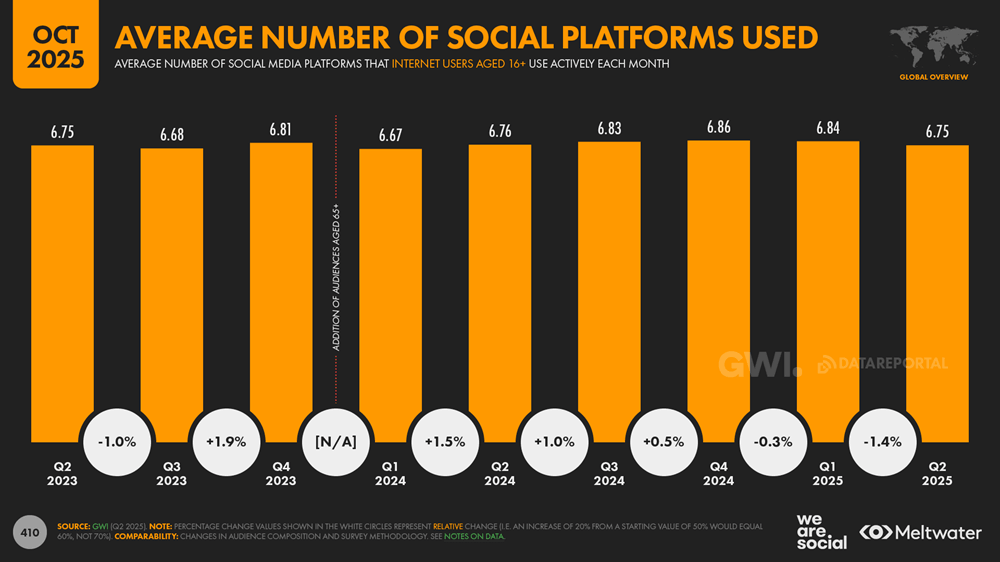
A social media platform strategy is the decision about which networks a brand commits to, and how deeply. It’s based on where your audience is and what your team can sustain, not on covering every platform that exists.
The mechanism matters more than the instinct behind it. Your boss isn’t wrong to care about visibility. They’re wrong about how you get it.
Why spreading thin makes you invisible, not visible
Posting into a platform where you have no rhythm barely gets seen at all. Instagram’s average engagement rate fell to just 0.48% by followers in the first quarter of 2026, down 24% year over year. That’s the platform where most brands already spend the bulk of their time and budget.
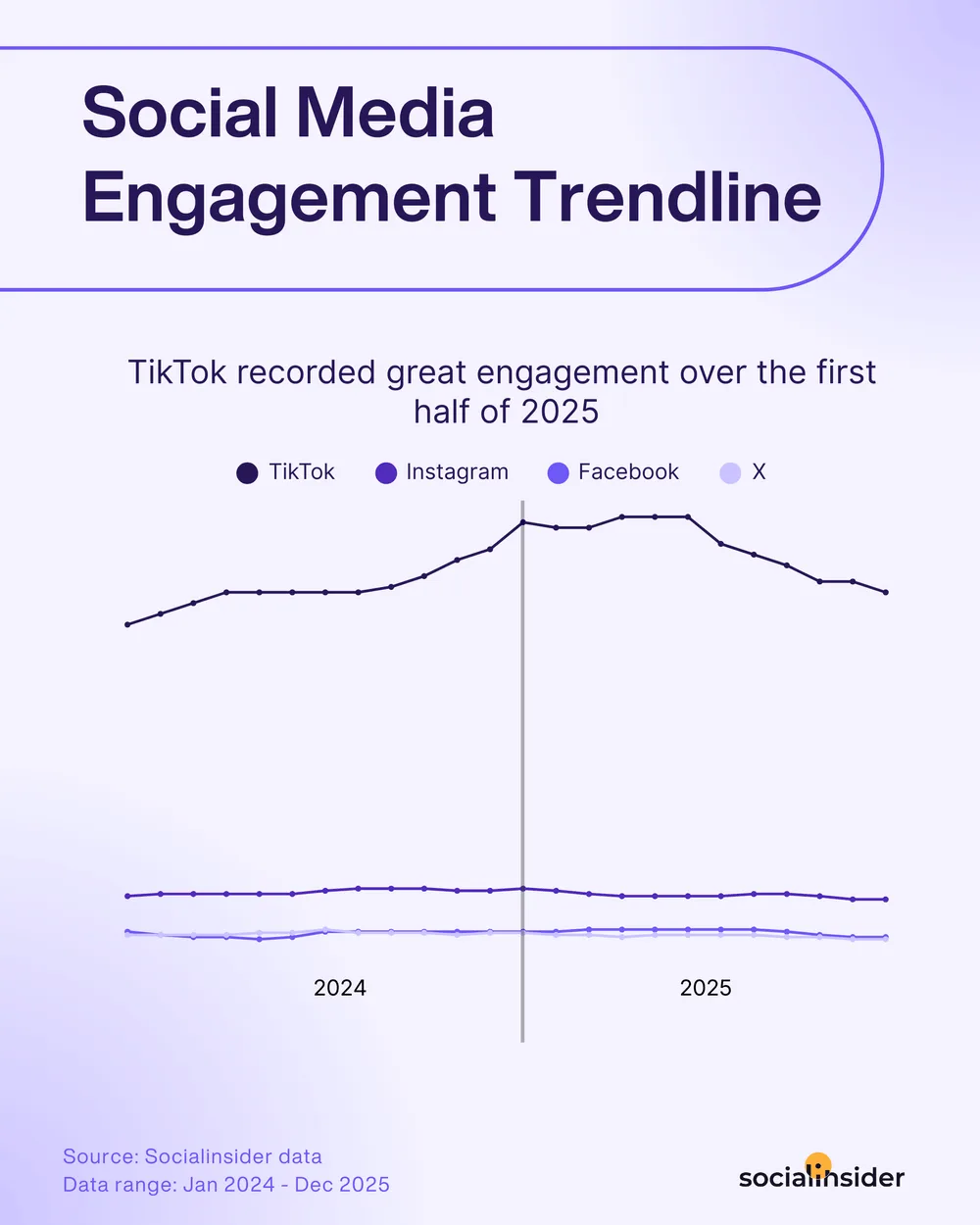
Adding a sixth account doesn’t raise that number. It lowers it everywhere, because algorithms reward consistency and content that feels native to the platform. A stretched team can’t fake either one. Justin Welsh, who built his business by going all-in on one platform instead of chasing every one, puts it simply: you don’t need to do everything, everywhere, all of the time.
The recycling habit makes it worse. Nearly half of marketing teams, or about 49.4%, reuse the same content across every platform they’re on. Only 39.5% take the time to tailor it. When you add a sixth platform under deadline pressure, guess which version it gets. The recycled one, built to look like it belongs somewhere else because it does.
You don’t need more headcount to fix this. You can tailor a post to each platform instead of recycling it in a few minutes once you have a system for it. That habit alone will do more for your reach than a sixth account ever could.
The one time being everywhere is a myth worth ignoring
Somewhere on your feed, a creator is bragging about posting hundreds of times a day across ten platforms and eighty handles. It’s easy to feel like you’re falling behind them.
That person has a team, a production system, and a personal brand engine built for that pace. You have one and a half people and a calendar that’s already full. Holding your two-person function to a ten-platform, high-volume standard isn’t ambition. It’s the quiet reason you feel behind on work nobody with your resources could keep up with anyway.
As Hiten Shah puts it, trying to do too much with your marketing strategy makes it difficult to keep the clarity and conviction you need to simplify, focus, and drive results. That holds whether you’re a solo creator or a five-person team split across six accounts.
How to decide where to focus, a 20-minute method
You don’t need a branded framework for this. You need a quick, honest scoring pass on each platform, built from data you already have.
Score each platform on three things:
- Audience fit: Whether your people are actually there, not just the platform in general
- Current results: What your own analytics already show about engagement, reach, and conversions
- Sustainable effort: Whether you can post there natively and consistently, without borrowing time from the platforms already working
Keep the top two or three platforms that score well across all three. Move everything else to “monitor,” meaning you’re aware of it without spending resources on it yet.
The audience fit question is where most of these arguments start and end, so it’s worth answering properly. Our guide on how to match each network to your audience covers the mechanics of picking a platform in the first place. Our breakdown of which audiences actually live on each platform will save you the guesswork on the newer platforms your boss keeps asking about.
The current results column is the one most teams skip. Pulling it together from five different native dashboards is a pain, not a strategy failure. It’s fixable without spending more time on platforms that aren’t working.
Answering the “why aren’t we on X?” ask without torching your credibility
The next time a screenshot lands in your inbox with “why not us?” attached, you don’t need a defensive no. You need a two-question test and the data to back it up.
Start by acknowledging the instinct instead of dismissing it. Your boss saw a competitor doing something new and got nervous about being left behind. That’s a reasonable thing to feel, even if the response isn’t the right one. Then walk through two questions out loud:
- Is our audience actually there in meaningful numbers
- Can we sustain a real presence without pulling attention from what’s already working
If the answer to either question is no, bring the current-results data from your top platforms. Propose monitoring the new one instead of committing to it. “Monitor now, commit if it clears the bar” gives your boss a plan instead of a refusal. It also gives you a paper trail for the next time the same request comes around.
Most advice on this topic stops at “say no.” Almost none of it tells you how to say it in a way that builds trust instead of spending it.
When a new platform is worth the bet
None of this means never try anything new. Sometimes the new platform is the right call, and pretending otherwise would be its own kind of dishonesty.
That’s true when three things line up:
- Audience fit: Your audience has genuinely moved somewhere new, not just a competitor getting there first
- Format fit: The platform actually suits what your brand does well, instead of forcing content into a shape it was never built for
- Team capacity: You have the time to post there natively and consistently, not just squeeze in a cross-post between everything else
Well-resourced teams, or teams that spot a real and lasting audience shift, can and should expand. The point was never that spreading out is wrong. It should be a deliberate bet backed by evidence, not a reaction to a nervous Slack message on a Tuesday afternoon.
Focus doesn’t guarantee growth. It just puts the odds back in your favor, which is more than a reflexive yes ever does.
Prove where to focus, and defend it, with your analytics
Once you know which platforms deserve your attention, the harder part is proving it to someone else. Most social media managers get stuck here. The argument isn’t wrong, the evidence just takes an entire afternoon to pull from five separate dashboards.
Vista Social’s cross-platform analytics show which networks are actually driving results, all in one view. Your social media platform strategy ends up backed by evidence instead of a gut feeling nobody can argue with either way. When you’re ready to make the case to leadership, you can pull a cross-platform performance report. It turns your raw numbers into something you can hand a boss, no extra formatting required.
Head on over to your Vista Social dashboard, click on Reporting, and select any or all social media accounts that you need reporting on. Here’s what it looks like:
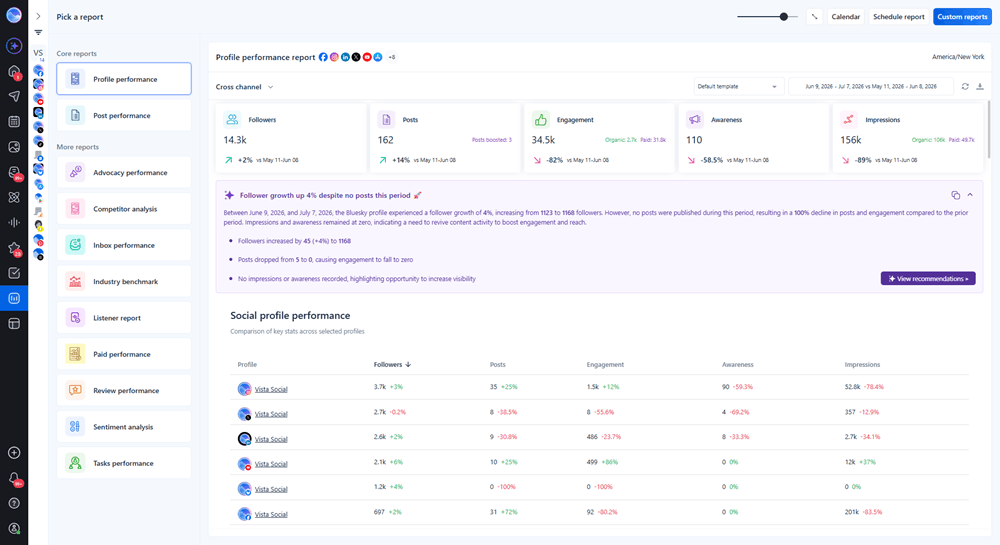
For teams that don’t want to build the report themselves, Ask Vista can help. It pulls a cross-account performance report and summarizes where you’re winning in minutes, only taking action on your accounts with your approval. Once you’ve settled on your top two or three platforms, publish natively to just those accounts. That keeps the depth sustainable, instead of quietly sliding back into six half-tended ones.
Frequently asked questions
Do you need to be on every social media platform?
No. For a fixed team, adding platforms lowers results everywhere instead of raising them. Pick the two or three where your audience is active and you can post consistently. Monitor the rest without committing resources to them yet.
Is it better to focus on one social media platform or be on all of them?
Focus wins for almost every small team. Depth drives both the algorithm and the audience, while presence without consistency barely reaches anyone. Being on every platform only works when you have the resources to be genuinely good on each one.
How many social media platforms should a business use?
As many as your team can post to natively and consistently. For most small teams, that’s two or three. Capacity should set the number, not ambition or fear of missing out.
How do I decide which social media platform to use for my business?
Score each platform on audience fit, current results, and sustainable effort, then keep the top two or three. The 20-minute method above walks through exactly how to run that scoring pass.
Should we join a new platform just because a competitor did?
Not automatically. Check whether your audience is actually there and whether your team can sustain a real presence before committing anything. A competitor showing up somewhere isn’t proof it’s working for them, and plenty of those accounts are quieter than they look.
Try Vista Social for free
A social media management platform that actually helps you grow with easy-to-use content planning, scheduling, engagement and analytics tools.
Get Started NowAbout the Author

Content Writer
Russell Tan is a content marketing specialist with over 7 years of experience creating content across gaming, healthcare, outdoor hospitality, and travel—because sticking to just one industry would’ve been boring. Outside of her current role as marketing specialist for Vista Social, Russell is busy plotting epic action-fantasy worlds, chasing adrenaline rushes (skydiving is next, maybe?), or racking up way too many hours in her favorite games.
Loading related tools...

The most complete social media management platform for teams who demand more.






Tools
PublishingAnalyticsEngagementIntegrations
FacebookInstagramLinkedInRedditSnapchatThreadsTikTokX (Twitter)YouTubeMCPVista Page (link-in-bio)All IntegrationsCopyright © 2026 Vista Social LLC. All Rights Reserved.