

Published on March 1, 2025
8 min to read
Integration of Virtual Reality (VR) in Social Media Campaigns

Summarize with AI

Table of contents
Summarize with AI

ChatGPT

Claude

Perplexity
Share

Vista Social

X (Twitter)


What if you could step into a whole new world without ever leaving your home? Thanks to Virtual Reality (VR), the future of immersive experiences is here!
With a global population surpassing 8.2 billion, a vast number of consumers are looking for engaging ways to interact with brands. Innovative marketing strategies are key to expanding reach and driving sales—and VR is leading the way.
VR is revolutionizing customer engagement by creating interactive, lifelike experiences that captivate audiences like never before. This cutting-edge technology transports users into computer-generated environments, allowing them to explore, connect, and shop—all from the comfort of their homes.
Join us to explore how integrating Virtual Reality (VR) into your social media campaigns can boost engagement, expand your reach, and drive higher sales!
Table of contents
Evolution of VR in Marketing
Virtual Reality or VR, for short, was first introduced to the gaming and entertainment industries. But over the years, branding and advertising has adapted to using virtual reality for showcasing their products and services.
Different social media platforms already integrated virtual reality feature, such as Instagrams and Snapchats AR/VR filters and virtual try-ons. Youtube’s and TikTok’s 360-degree videos, offering it more interactive and more accessible to brands.
Big companies have shifted to using VR for their marketing from passive to ads to more interactive experiences.
[Must Read: The Future of Social Media Integration with Augmented Reality (AR)]
Why Virtual Reality is Becoming Essential in Marketing Strategies
Virtual reality is the future of marketing, and adapting to it offers a competitive strategy to competitors:
- Personalized and Interactive Brand Engagement: VR offers a personalized experience as they interact with the product, improving customer engagement in a much deeper level and building a stronger connection to customers.
- Immersive Storytelling for Stronger Brand Recall: It provides a memorable experience, improving brand recall and customer retention through engaging techniques.
- Competitive Advantage in an Evolving Digital Landscape: As digital marketing evolves through the year, brands adapting to the evolving technologies gains a competitive edge by differentiating themselves with cutting-edge, interactive content.
- Higher Engagement and Conversion Potential: Immersive VR experiences encourage deeper consumer interaction, leading to increased engagement, higher conversion rates, and improved customer satisfaction.
The Challenges of Using VR in Marketing
Virtual Reality (VR) is changing the way brands connect with customers, offering immersive and interactive experiences. But while it sounds exciting, VR marketing comes with its own set of challenges. From high costs to accessibility issues, here’s a look at the biggest hurdles and how brands can work around them.
The High Costs of VR Development
While VR content is unique and very useful for marketing, it isn’t cheap to create. Brands need special software, skilled developers, and high-quality graphics to make an engaging experience. On top of that, hardware like VR headsets adds to the cost. For many companies, this price tag is a major barrier. But there are still ways to cut costs without losing the magic of VR:
- Use 360-degree videos: These are more affordable than fully interactive VR experiences but still feel immersive.
- Leverage existing VR platforms: Instead of building a custom VR app, brands can use platforms like YouTube VR or Meta Horizon.
- Partner with VR experts: Working with experienced VR developers can be more cost-effective than hiring an in-house team.
Technical Barriers and Accessibility Issues
For VR marketing to work, people need to have the right hardware like a Meta Quest, HTC Vive, or PlayStation VR. But not everyone owns a headset, and even if they do, compatibility issues can make things tricky.
To reach a wider audience, brands can:
- Create mobile-friendly VR experiences: Simple VR experiences that work on smartphones (like Google Cardboard) make it easier for more people to join in.
- Use WebVR: Web-based VR means users don’t need to download special apps or have expensive headsets.
- Offer in-store or event-based VR experiences:Setting up VR stations in retail stores or events lets customers try VR without needing their own gear.
The Learning Curve for Brands and Consumers
VR isn’t like traditional marketing. Brands need to understand how to design experiences that are engaging and easy to use. At the same time, many consumers aren’t familiar with VR, which can make adoption slower.
To help both marketing teams and consumers get comfortable with VR:
- Provide simple tutorials: Quick walkthroughs help users understand how to navigate VR content.
- Make the interface user-friendly: The easier it is to interact with, the more likely people are to engage.
- Offer both VR and non-VR options: Giving users a choice makes it more accessible for those who aren’t ready for full VR.
Best Practices for Leveraging VR in Marketing
Virtual Reality (VR) has the power to create unforgettable brand experiences, but using it effectively takes more than just cool tech. To get the most out of VR marketing, brands need to focus on storytelling, accessibility, feedback, and tracking results. Here are some best practices to help you make the most of VR:
Make VR Campaigns Shine with Strong Brand Storytelling
At its core, great marketing is about storytelling—and VR takes that to the next level. Instead of just showing your audience something, VR lets them step inside the story and experience it face to face.
- Focus on emotions: Think about how your audience should feel, whether it’s excitement, curiosity, or nostalgia.
- Keep it immersive but simple: A clear storyline and easy navigation will make the experience more engaging.
- Stay true to your brand: Make sure your VR content aligns with your brand’s message and values.
Reach More People by Making VR Accessible
Not everyone owns a high-end VR headset, so it’s important to create experiences that are easy to access. With their own smartphones as it is more accessible to the majority of the people.
- Offer mobile-friendly VR: Many smartphones can support basic VR experiences, making them more widely available.
- Use WebVR: Browser-based VR means no downloads or special equipment needed.
- Host in-store or event-based activations: Let people try VR at your store or event so they don’t have to own a headset to experience it.
Improve VR Results with User Feedback
The best way to refine your VR campaigns is to listen to your audience. Pay attention to how people interact with your VR experiences and adjust accordingly.
- Collect direct feedback: Ask users what they liked, what confused them, and what could be better.
- Watch for engagement signals: Are users dropping off early? Are they interacting the way you expected? These clues can help you improve.
- Test and tweak: VR is still new for many brands, so experimenting and iterating will help you find what works best.
Start with AR and Gradually Scale to VR
Augmented Reality (AR) is often more accessible than VR, and it can be a great stepping stone for brands just getting started. AR experiences—like Snapchat filters or interactive mobile ads—can help introduce audiences to immersive content before diving into full VR.
If you’re unsure about VR, consider starting with AR and scaling up as your audience becomes more familiar with interactive experiences.
Track Success with Key VR Metrics
Just like any marketing campaign, VR needs to be measured to understand what’s working. Here are some key metrics to track:
- Engagement time: How long are users staying in the experience.
- Interaction rates. People engaging with the content or just looking around.
- Completion rates: If your VR experience has a storyline, how many people make it to the end?
- Social shares: Users talking about and sharing their personal experience.
Platforms like VistaSocial help brands track VR engagement, analyze performance, and optimize campaigns. With the right insights, you can make data-driven decisions to improve your VR marketing strategy over time.
Brands Leading the VR Marketing Revolution
Virtual Reality (VR) is transforming the way brands connect with consumers, creating immersive experiences that go beyond traditional advertising. Some brands are leading the charge, using VR to enhance shopping, engagement, and customer decision-making. Let’s take a look at two standout examples:
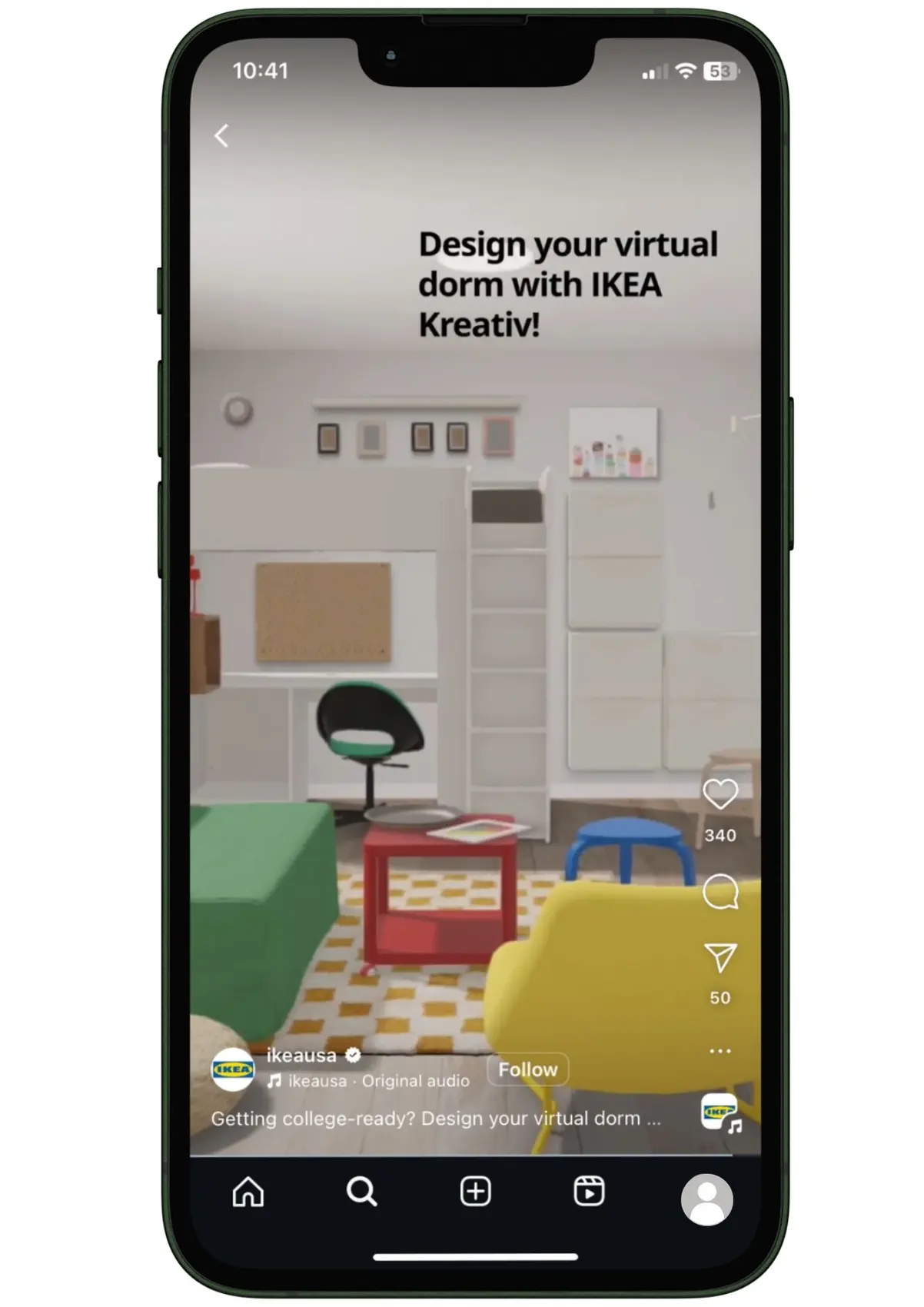
IKEA Place: Bringing Furniture Shopping to Life
IKEA has always been about making home design accessible, and their IKEA Place app takes that to a whole new level. The app uses Augmented Reality (AR) to let customers see how furniture will look and fit in their homes before making a purchase. Why it works:
- Eliminates guesswork: No more wondering if that couch will fit in your living room!
- Boosts confidence: Shoppers can see exactly how an item looks in their space, making them more likely to buy.
- Easy to use: Just point your phone’s camera, and the app places virtual furniture in your room.
The result? A more interactive, personalized shopping experience that has helped IKEA strengthen its connection with customers while reducing product returns.
Sephora’s Virtual Artist: Redefining Beauty Shopping
Sephora took beauty shopping to the next level with its Virtual Artist feature, which lets customers try on makeup virtually before they buy. Using AR technology, the app scans a user’s face and applies different makeup products in real time. Why it’s a game-changer:
- Try before you buy: No need to visit a store or test products on your skin.
- Personalized recommendations: The app suggests shades and styles that match your skin tone and preferences.
- Convenience: Shoppers can experiment with looks anytime, anywhere.
By making beauty shopping more interactive and accessible, Sephora has built stronger customer engagement and increased online sales.
[Must Read: 20 Social Media Predictions in 2025: Key Trends for Marketing]
Try Vista Social for free
A social media management platform that actually helps you grow with easy-to-use content planning, scheduling, engagement and analytics tools.
Get Started NowAbout the Author

Content Writer
Content writer and copywriter with over 2 years of experience, specializing in VSL scriptwriting. I’ve worked with various brands to create compelling content. Passionate about storytelling that connects and converts. Loves cats, poetry, and skincare
Loading related tools...

The most complete social media management platform for teams who demand more.






Tools
PublishingAnalyticsEngagementIntegrations
FacebookInstagramLinkedInRedditSnapchatThreadsTikTokX (Twitter)YouTubeMCPVista Page (link-in-bio)All IntegrationsCopyright © 2026 Vista Social LLC. All Rights Reserved.