


Published on July 13, 2026
10 min to read
Going Viral Is the Worst Goal Your Boss Ever Gave You

Summarize with AI

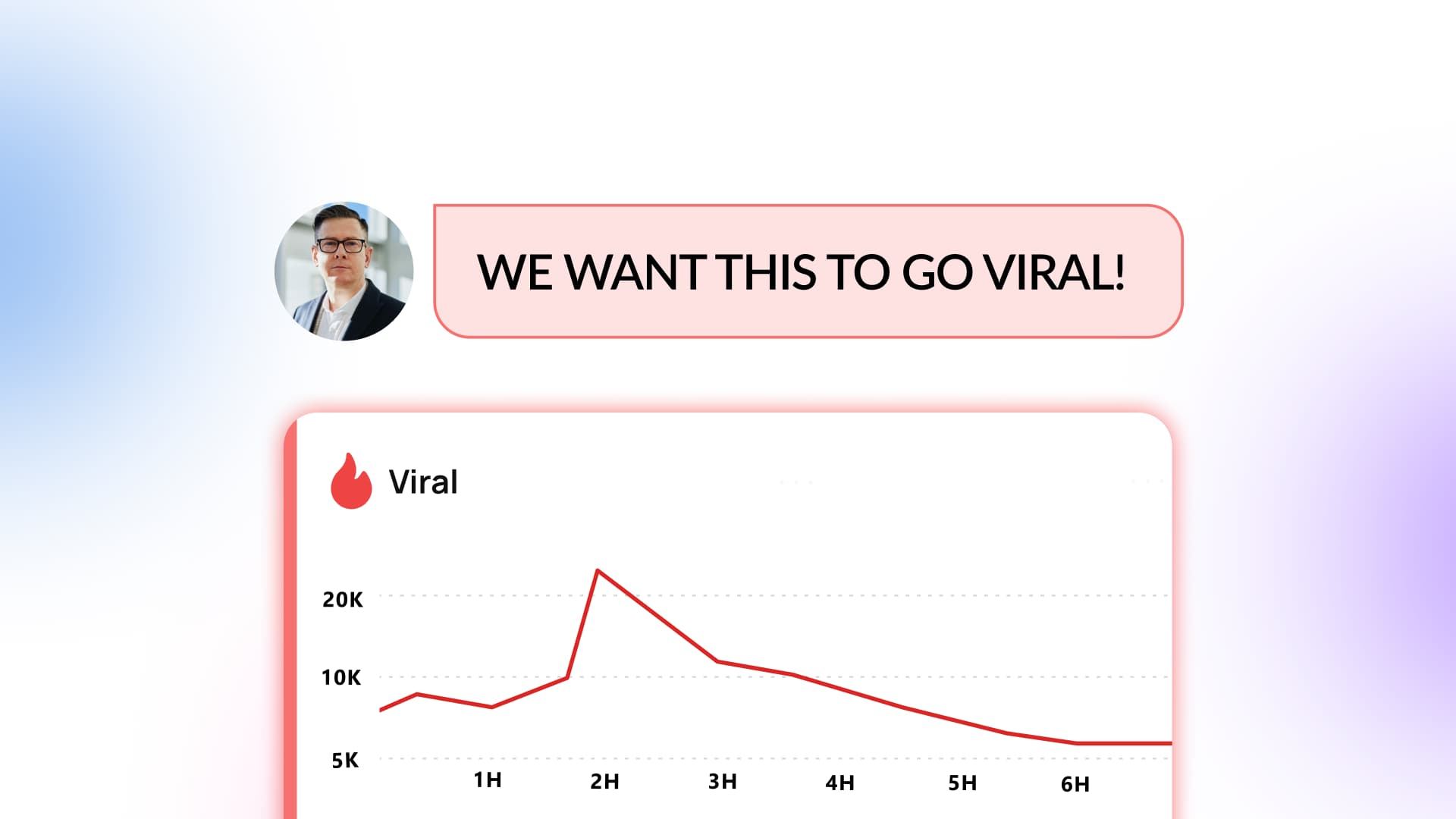
Table of contents
Summarize with AI

ChatGPT

Claude

Perplexity
Share

Vista Social

X (Twitter)


You have probably watched a video rack up ten million views and thought, honestly, good for them. Maybe it was a founder dancing next to a whiteboard, or a tiny brand whose one weird clip got shared into every group chat you are in. Your boss saw one like it too, and now you have a message that just says, “Make us go viral.”
Here is the part that message skips. Reach on its own does not pay anyone. The brands that turned a viral moment into real money already had a real audience, a product ready to buy, and a team ready to sell the second the wave hit. The views were the easy part they got lucky with, not the reason it worked.
So when “make it go viral” lands in your inbox, the knot in your stomach makes sense. You are handed a number you have never hit, with no plan for what happens if you somehow do and no way to explain it if you don’t. Going viral and growing a business are two different jobs, and the first rarely buys you the second.
Here is a cleaner way to think about it. Going viral means being seen by a million people who will never buy from you. Growth means being seen by the few hundred who will, again and again, until they do. The rest of this piece is the social media growth strategy you bring back to that meeting, plus the exact words to use when the message shows up again.
The short version:
- Virality is closer to a lottery than a technique: Organic performance has collapsed so far that being seen at all is the hard part, which makes a million views a statistical outlier you cannot plan for.
- A viral spike mostly pulls the wrong crowd: It rarely converts, and it can drag your engagement down for months after the graph falls off a cliff.
- Qualified reach is the goal: The right people, reached consistently, tied to leads instead of view counts.
- You do not refuse the boss: Bring back a controllable, reportable target instead of a promise you cannot keep.
Table of contents
What are the actual odds of going viral?
Very low, and getting lower every year. When a post you worked hard on lands flat, it is tempting to treat it as a skill you never picked up. It usually isn’t. A genuine viral hit is closer to a lottery ticket than a technique, and the platforms keep making those odds worse.
You already saw the base rate: with average engagement under half a percent on Instagram and lower on Facebook, being seen at all is the hard part now. A few forces stacked against you keep it that way, and none of them are about your effort:
- The feed is pay-to-play: Platforms favor content that keeps people watching or spending, so organic posts fight for a shrinking slice of attention.
- Every niche is crowded: Far more brands post today than a few years ago, so the same view is split across many more hopefuls.
- The algorithm changes without warning: What reached people last month can stop working this month, and you never get told why.
So building a strategy on a viral hit is building it on a freak event. That is how you burn out, chasing a number the platform makes rarer every quarter and treating every miss as a personal failure.
If you still want to nudge your odds, which is fair, our guide to viral marketing has the tactics, as long as you go in knowing you are improving a coin flip, not scheduling an outcome.
The report you can’t write
Now it is Friday again, and your boss wants the number that proves social is working. You have a screenshot of the spike and a follower count padded with ghosts, and you cannot connect any of it to a lead or a dollar.
That is not a reporting skills problem. Raw reach was never wired to those outcomes, so no dashboard polish will turn a view count into a business case. This is the real cost of going viral: not just a wasted week, but a whole quarter of work you cannot defend when it matters.
The fix is to pick a goal that ties social back to revenue from the start, so the report writes itself. The problem was never that you could not go viral. You were given the wrong finish line, and a finish line is something you can move.
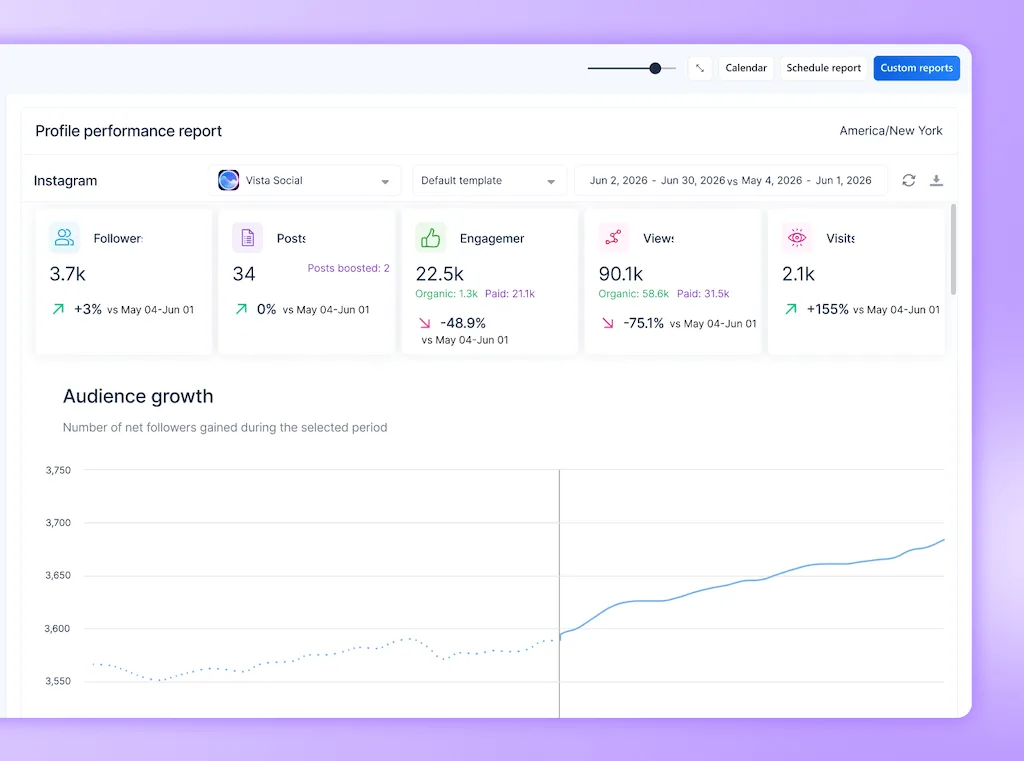
The first step is seeing who is behind your reach, not just how big the number is. See who you’re really reaching with Vista Social.
The better goal is qualified reach
Qualified reach is the number of people in your actual target audience who see your content, as opposed to raw reach, which counts anyone at all. It is the metric that predicts leads and sales because being seen by the right people moves a business forward.
Aim for the right people reached consistently, not the most people reached once. That single swap turns an uncontrollable wish into a target you can engineer, and the two behave nothing alike once you get past the view count:
| Going viral | Qualified reach | |
|---|---|---|
| Who you reach | Mostly strangers outside your market | People who fit your actual buyer |
| Can you plan it? | No, it’s a statistical outlier | Yes, you choose the audience and rhythm |
| What it predicts | More views, and not much else | Leads, signups, and repeat buyers |
| After effect | Can drag engagement down for months | Compounds as the right people return |
| Can you report it? | Hard to tie to revenue | Maps cleanly to business results |
Here is what the difference looks like on a normal week. One marketer stops chasing view count and posts steadily to a niche audience of a few thousand of the right buyers. A single post pulls 2,500 views and books real pipeline.
A peer down the hall lands a 50,000-view post the same week and gets nothing from it because those fifty thousand were the wrong people. The number that mattered was never how many watched, but who did.
Marketing strategist Amanda Russell draws the line more sharply than anyone:
“You can have 100K followers and zero influence. You can have 1K followers and move markets.”
— Amanda Russell, marketing strategist and author, How to Build Real Influence
Reach and influence pull in different directions, and the goal was never raw volume. What moves a business is the right people, reached often enough to act, and those wins compound. Every right viewer is someone you can reach again next week and the week after.
How to build a growth strategy around qualified reach
The plan comes down to three moves. Pick a metric you control, feed the right audience consistently, and measure what predicts business results. Here is how each one works in practice.
Choose metrics you control over metrics you don’t
View count is an outcome you can only hope for. Trade it for signals that track the right people paying attention, the ones you can nudge on purpose:
- Saves: Someone kept your post for later, a far stronger buying signal than a passive view.
- Profile visits: A viewer got curious enough to check who you are, the first step from stranger toward follower.
- Qualified follows: New followers who match your actual buyer, not the drive-by crowd a viral moment leaves behind.
- Downstream leads: The clicks, signups, and conversations that connect a post to real pipeline.
These are the metrics that predict results. Unlike a viral spike, you can influence every one of them on purpose.
Commit to a rhythm you can keep
Qualified reach only compounds if you show up repeatedly, so a rhythm you can sustain beats a burst you can’t. A few things keep consistency realistic:
- Pick a cadence you can hold on a bad week: Three good posts you ship beat seven you plan and abandon.
- Batch and schedule ahead: Plan the week in one sitting so a busy Tuesday never becomes a silent one.
- Repeat what the right people respond to: When a topic pulls your real buyers in, do more of it instead of always reinventing.
Posting this consistently is brutal when you are a one-person team. That is a scheduling and planning problem, not a willpower problem, and it is a solvable one.
Use analytics to see who you’re reaching
You cannot optimize for qualified reach if you cannot see it. Audience analytics let you separate the right followers from the noise and spot the content that pulls in real buyers. Analytics will not manufacture an audience for you, though. The work is still real; it is just aimed at the right people now.
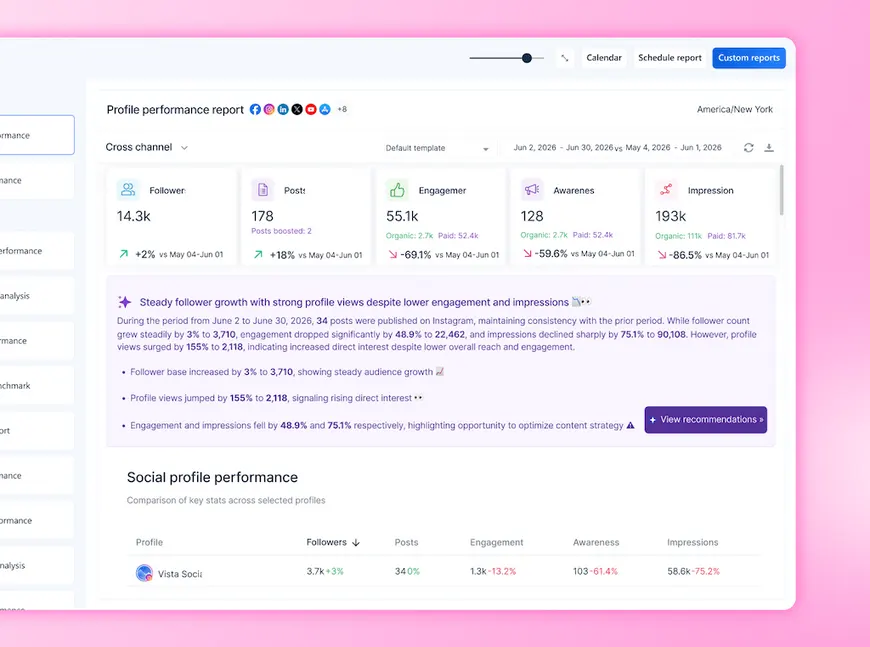
See who you’re actually reaching, keep the rhythm that compounds, and prove it in business terms, all from one place. Build your growth strategy in Vista Social.
Move the finish line
So the next time that message lands, the knot in your stomach does not have to. Instead of losing the weekend reverse engineering a fluke, you reply with a better goal. Viral is a lottery ticket, and you would rather hand your boss a plan than a wish.
You propose a qualified-reach target you can hit, run, and report. Just like that, you have moved the finish line from a number you could never control to one you can. You have the argument, the goal, and the words to make the case, which beats answering from dread.
Stop chasing a number you can’t control and start growing the audience that actually buys. See who you’re really reaching. Free trial, no credit card required.
Frequently asked questions
Is going viral worth it for a business?
Usually not. Viral reach is mostly people outside your target market who rarely return or buy, and a spike can even lower your engagement afterward. For most businesses, consistent qualified reach is worth more than one viral moment.
What percentage of posts go viral?
Very few. Organic performance has collapsed. Average engagement on Instagram is around 0.48% and Facebook near 0.15%, so reaching a million people is a statistical outlier you cannot reliably plan for.
What should I aim for instead of going viral?
Qualified reach. The right people in your target audience, reached consistently and measured by saves, profile visits, qualified follows, and downstream leads rather than raw views.
Do viral posts increase followers?
Sometimes, briefly, but many of those followers came for the moment, not the brand. They pad your count without engaging or converting, which can drag future performance down.
How do I respond when my boss says “make it go viral”?
Reframe rather than refuse. Explain that viral is a coin flip you can’t schedule. Propose a target you can hit and report: reach a set share of your actual buyers each week and grow qualified followers.
Isn’t reach the whole point of social media?
Reach is the point, as long as it is the right reach. Being seen by people who will never buy is motion without progress; being seen repeatedly by your actual audience is what grows the business.
Try Vista Social for free
A social media management platform that actually helps you grow with easy-to-use content planning, scheduling, engagement and analytics tools.
Get Started NowAbout the Author

Content Writer
Orion loves to write content that refuses to be boring. As part of Vista Social, he helps brands, creators, and agencies stop doom scrolling and start winning with social media. When he's not in front of a keyboard, he's watching films in IMAX with his wife, dissecting football tactics (the European kind), and getting lost in a good book.