

Published on April 14, 2026
15 min to read
Influencer Marketing: How to Build a Strategy for Your Brand

Summarize with AI

Table of contents
Summarize with AI

ChatGPT

Claude

Perplexity
Share

Vista Social

X (Twitter)


Nobody scrolls Instagram hoping to get advertised at. They’re there for the food pics, the workout videos, the creators they’ve been loyally following for years, and the drama—which is exactly why the smartest brands stopped interrupting the scroll and started showing up inside it through influencers their audience already trusts.
Influencer marketing has grown from a $1.7 billion industry in 2016 to an estimated $40.51 billion in 2026 (an absolutely insane hike), and that number isn’t slowing down.
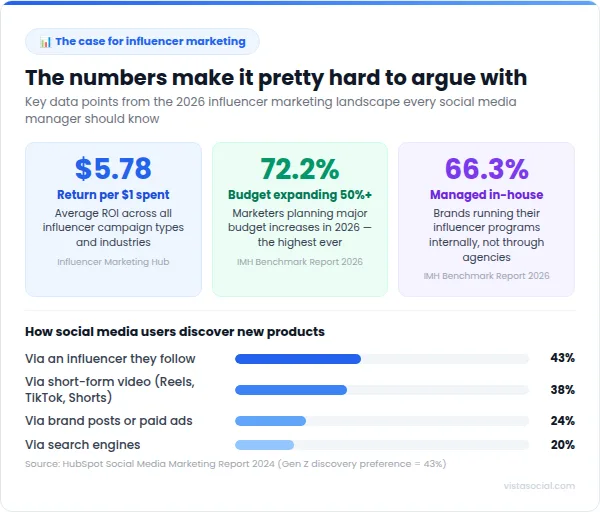
The numbers behind that shift are hard to dismiss. 72.2% of marketers expect their influencer budgets to increase by 50% or more in 2026, and 66.3% now run their influencer programs entirely in-house because marketing teams have stopped treating this as an experiment and started treating it as a serious revenue channel.
Most brand influencer programs, though, are still held together with a simple spreadsheet, a few unanswered DMs, and a quiet hope that something goes viral.
From picking the right influencer for your brand to building influencer marketing campaigns that actually trace to revenue, here’s everything you need to run a program worth reporting on.
Table of contents
What is influencer marketing?
Influencer marketing is a social media marketing strategy built around partnering with individuals who have built genuine credibility and an engaged following in a specific niche, then using those relationships to reach, inform, and convert a target audience.
The word that does the heavy lifting there is credibility, because a creator’s recommendation carries weight specifically because it comes from someone their audience already trusts, watches voluntarily, and often feels a personal connection to.
As a type of marketing, it runs across virtually every category:
- Fitness
- Gaming
- Beauty
- Finance
- Food
- Parenting
- Travel
Plus dozens of others that all have thriving creator ecosystems where audiences are warm before a brand ever enters the picture.
The social media platform shapes the mechanics, but the underlying trade stays the same regardless of whether you’re working on Instagram, TikTok, YouTube, or podcasts. Creators promote products or services to an audience that trusts their recommendations, and brands get access to that trust in ways that traditional advertising channels rarely replicate.
One illustration of this marketing strategy was when MrBeast’s chocolate brand Feastables became the first creator-backed company to land an official NBA partnership, securing a jersey patch sponsorship with the Charlotte Hornets in October 2023, it signaled something bigger than a brand deal.
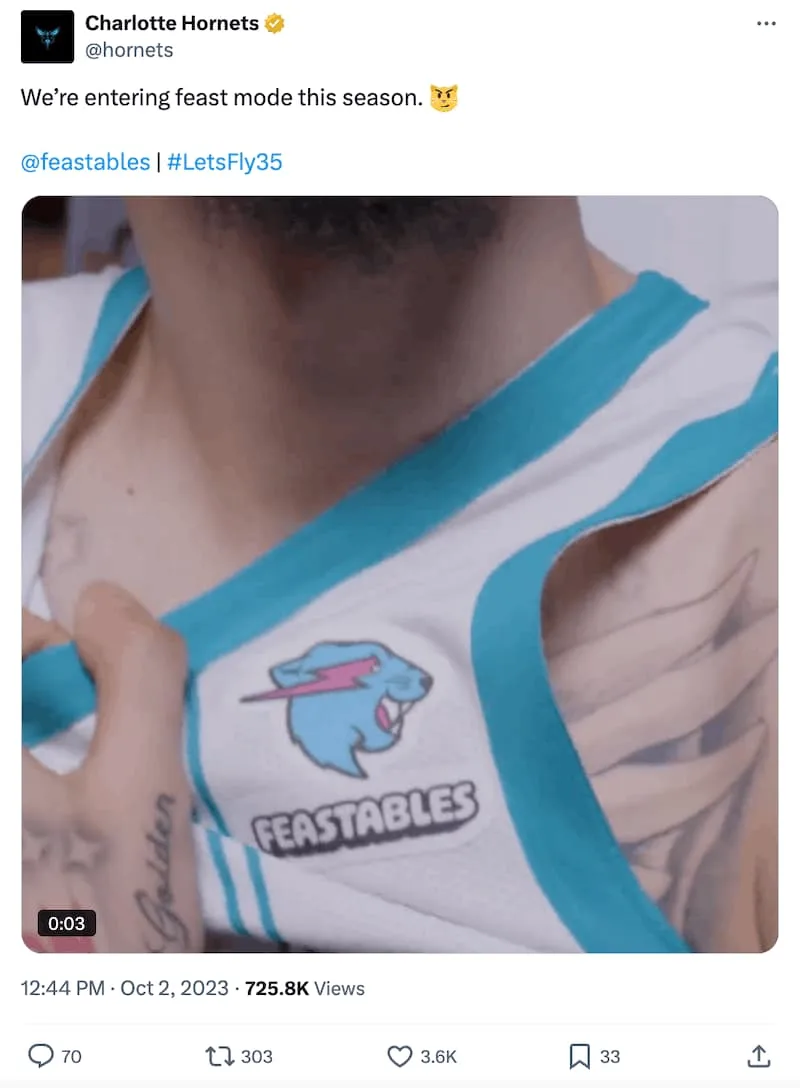
It confirmed that creator-built brands had graduated from merch drops to commercial infrastructure that legacy companies take seriously. Feastables followed that milestone by generating $250 million in annual sales in 2024 per investor documents reported by Bloomberg, outearning MrBeast’s own YouTube channel for the first time.
It’s important to note that influencer marketing doesn’t necessarily need to happen on that scale. But this goes to show just how powerful these self-made creators are becoming in the marketing world.
Why influencer marketing works
Understanding why influencer marketing works starts with trust, and the data behind it is remarkably consistent.
31% of social media users prefer finding out about new products through a creator they follow rather than through any other format, and among Gen Z that figure climbs to 43%, making influencer content their single preferred product discovery channel.
These audiences actively chose to follow someone whose judgment or personality they respect, which puts them in a completely different state of receptiveness than someone who encountered a banner ad while doing something else entirely.
The benefits of influencer marketing extend well beyond direct conversions.
Creator partnerships generate content that keeps working after the campaign ends. This means a well-run activation with eight micro-influencers produces content like:
- Video
- Photography
- Testimonials
- Social proof
These are high-quality creative assets that teams can repurpose across paid and organic channels for months. That makes the per-asset cost far more attractive than it looks in the initial marketing budget line.
What separates successful influencer marketing programs from the ones that spike and go quiet is the depth of fit between creator and brand.
Audiences are genuinely good at sensing the difference between a creator who chose a product and one who was handed a script, and that instinct has only sharpened as the influencer marketing industry has matured and the volume of sponsored content has grown.
This is also why it’s so important to let your influencers have some creative liberties with their content, rather than requiring them to stick to specific talking points. You chose these influencers for a reason—let them cook.
Types of influencers
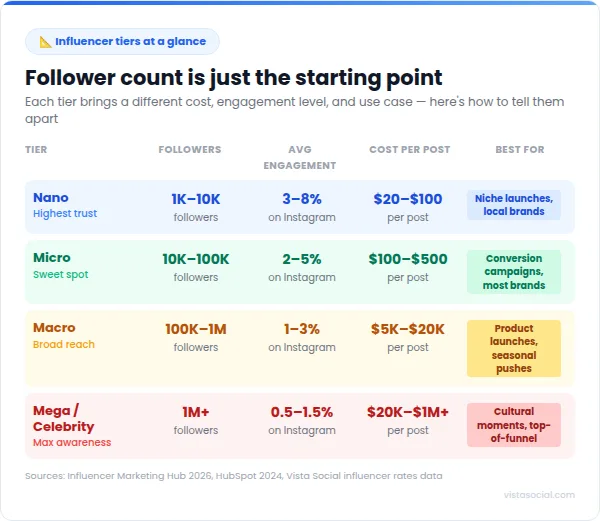
There are four main types of influencers, each defined by follower count, and understanding the different types matters strategically for far more than just reach.
The type of influencer you choose affects engagement quality, content authenticity, audience loyalty, and cost in ways that compound across a full campaign, so knowing where each influencer type fits your goals is worth nailing down before you start outreaching.
Nano-influencers
Nano-influencers deliver the highest engagement rates of any tier across every major platform, their audiences are tight-knit by nature, and their recommendations tend to carry serious weight within the communities they’ve built.
51.43% of brands are actively expanding their nano-influencer usage in 2026, the highest net growth intent of any creator tier, which reflects a broader shift toward smaller, more targeted partnerships over high-reach celebrity plays.
For hyper-local campaigns, niche product launches, or brands entering a new category for the first time, this tier is often the most efficient starting point and the easiest to test with a modest marketing budget.
- Follower count: 1,000-10,000 followers
- Engagement rate: 3-8%
- Cost per post: $20-100
Micro-influencers
Micro-influencers hit the sweet spot that most brand programs are chasing: big enough to drive meaningful volume, personal enough that their audience still trusts them the way they would a knowledgeable friend rather than a media channel.
- Follower count: 10,000-100,000 followers
- Engagement rate: 2-5%
- Cost per post: $100-500
Macro-influencers
Macro-influencers bring the reach of a mid-size media channel with the credibility of a creator who built that audience themselves, which makes them well-suited to product launches, brand awareness campaigns, or moments where covering a large relevant audience quickly is the priority.
The trade-offs are straightforward: higher fees, a lower engagement rate per follower, and less flexibility in the relationship. Fit and relevance matter even more at this tier because the investment is significant enough that a misaligned partnership is an expensive lesson.
- Follower count: 100,000 to 1 million followers
- Engagement rate: 1-3%
- Cost per post: $5k-20k
Mega-influencers and celebrities
Mega-influencers and celebrities with millions of followers can drive massive awareness and cultural relevance when the partnership is genuinely right, but their engagement rates tend to be the lowest of any tier and their fees can reach seven figures per post.
The celebrity endorsement model works best as an amplifier at the top of a larger, well-structured campaign rather than as the entire influencer strategy, and the brands that get the most from this tier understand that celebrity reach is a starting line, not a guaranteed outcome.
- Follower count: 1 million+ followers
- Engagement rate: 0.5-1.5%
- Cost per post: $20k-1m+
How to create an influencer marketing strategy
Every campaign that looks effortless from the outside has real infrastructure behind it, and building that infrastructure is where most programs either set themselves up for consistent results or doom themselves to a cycle of one-off experiments. Here’s how to build it from the ground up.
1. Set your goals for partnering with influencers
A solid influencer strategy starts with a single clear objective per campaign. Influencer marketing can:
- Build awareness with new audiences
- Drive conversions
- Generate content
- Grow a social following
- Establish credibility in a category where a brand is new
But trying to accomplish all of these at once tends to produce a murky report and a disappointed team. Pick one primary goal and design every decision around it.
Awareness campaigns call for reach, so you’re working with macro or mega creators and tracking impressions, brand lift, and new audience exposure. Conversion campaigns call for trust and specificity, meaning you’re working with influencers whose target audience already has the problem your product solves and tracking code usage, affiliate conversions, and actual revenue.
The metrics at the end of a campaign should trace cleanly back to the objective you set before it launched.
2. Determine your budget
The price tag on influencer posts varies considerably by tier, platform, and content format, with nano-influencers typically ranging from $20 to $100 per post, micro-influencers from $100 to $500, and macro-influencers from $5,000 upward depending on niche and track record. Plus, as you can imagine, video commands a premium over static posts across every tier.
Beyond creator fees, it’s worth setting aside 15 to 20% of your marketing budget for content usage rights, licenses if you plan to run influencer content in paid placements, and the time overhead of briefing, reviewing, and coordinating deliverables.
For a first campaign, starting with five to ten micro-influencers on a fixed fee per deliverable gives you much better control and learning than a single large macro deal.
3. Start searching for influencers
Finding the right influencer comes down to three criteria that actually predict campaign performance:
- Audience alignment: Are their followers the same as your target audience?
- Engagement quality: How many of their followers actually see and interact with their content?
- Genuine content fit: Does their content and voice align with how you want your brand to be perceived?
Follower count matters, but it sits much further down the priority list than most brand teams instinctively place it.
A creator with 70,000 engaged followers in the home organization space is a far more valuable partner for a storage brand than someone with 700,000 followers in a broad lifestyle category who posts about everything from travel to tech.
Useful approaches when working with influencers for the first time include:
- Hashtag research on Instagram and TikTok to surface creators already producing content in your category
- Competitive research to see who well-regarded brands in your space are collaborating with
- Social listening to identify who’s already talking about your brand or similar products
- Direct community observation to see who really stands out in the feed. If you would rather not source creators manually, the influencer marketing agencies can handle discovery, vetting, and outreach for you, then hand back a shortlist that already fits your audience and budget.
When you have candidates, read the comment sections on their last 20 posts. Substantive comments and genuine creator engagement tell you more about audience relationship quality than any follower metric will.
Ask shortlisted creators for their media kits to review audience demographics, recent content performance, and previous partnerships. These media kit examples show what information you can expect to find.
4. Reach out to influencers
The opening message matters more than most brands expect. Creators receive a lot of outreach, and generic “we love your content, let’s collaborate” pitches read exactly like the form messages they are.
Leading with a specific and genuine observation about their work, explaining precisely why their audience fits your brand values, and making the ask clear in the first message is what actually moves the influencer collaboration forward.
DMs on the relevant platform are usually the most effective first contact for smaller creators, while email tends to work better for macro-influencers and celebrities who have management teams handling their inboxes.
For anyone in the micro tier or below, engaging authentically with their content for a few weeks before your pitch lands often makes a meaningful difference to whether you get a response at all.
5. Discuss rates and content ideas
Come to this conversation with a brief, not just a budget figure, because creators respond better to brands that have clearly thought about what the influencer partnership should look like.
This includes details like:
- Which platform
- What format(s)
- How many deliverables
- What the core message is
- How much creative latitude they’re being given
Creative latitude is worth being explicit about in the brief. Content creation goes best when the creator has enough room to make it genuinely theirs, grounded in brand values without being so scripted that the personality disappears entirely.
The combination that consistently produces content audiences trust is clear direction on the brand message plus real creative freedom to execute it in their own voice.
6. Put together a publication plan and timeline
Once content is approved, staggering publication from multiple creators across one to two weeks creates sustained momentum rather than a single-day spike that disappears before your audience has processed it.
Aligning the campaign window with product launches, seasonal moments, or paid media activity running in parallel means creator content is amplifying something rather than sitting in isolation.
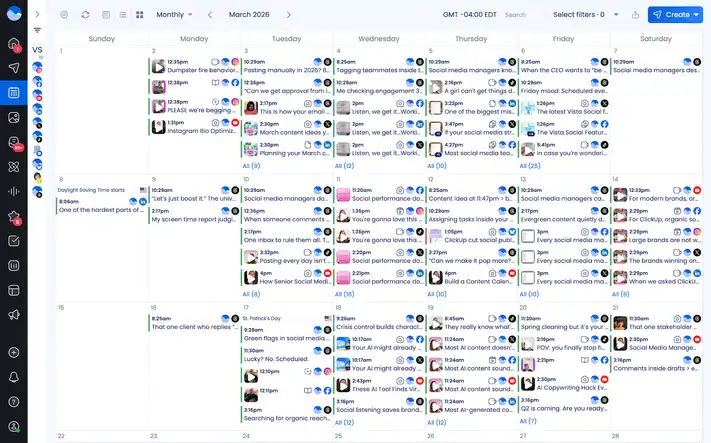
Vista Social’s publishing tools let you manage your own social calendar alongside coordinated influencer campaign windows from one dashboard, which is particularly useful when you’re scheduling content across multiple platforms and multiple client accounts with different posting schedules.
7. Monitor your results
The metrics worth tracking depend entirely on the objective you set at the start.
For awareness campaigns, track metrics like:
- Reach
- Impressions
- Video views
- Brand mention volume
Conversion campaigns call for:
- Click-through rate
- Discount code redemptions
- Affiliate link conversions
- Cost per acquisition.
Content-focused campaigns should track:
- Asset volume
- Usage rights secured
- Performance of repurposed content in other placements
UTM parameters on every link and unique discount codes per creator are non-negotiable for proper attribution.
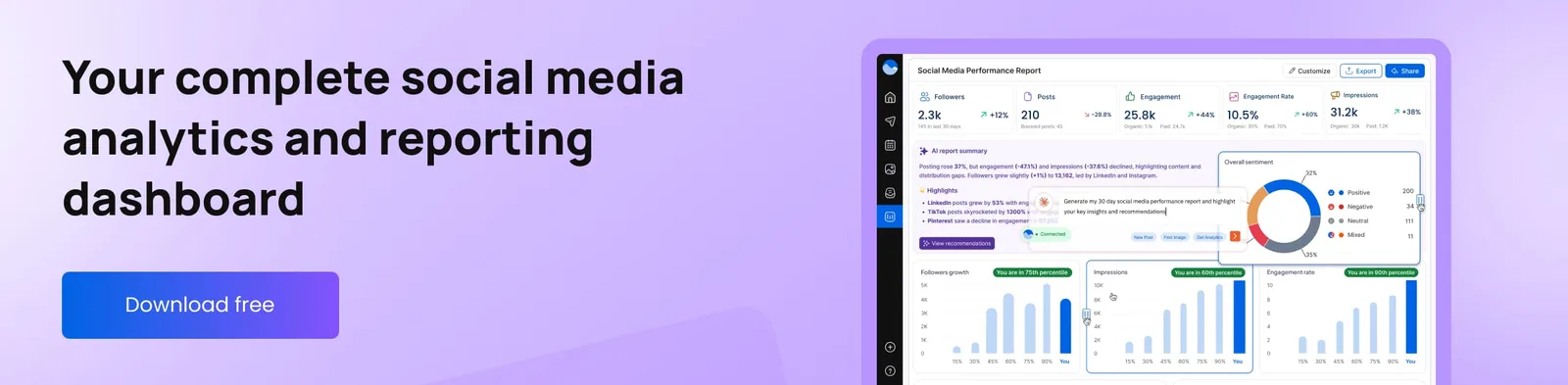
Vista Social’s built-in URL tracking automatically appends UTM parameters to any link you share when publishing, so you’re not manually building tracking URLs for every creator post, and every click traces cleanly back to the specific content that drove it in Google Analytics.
8. Make notes for your next influencer campaign
The debrief is the step that most programs skip and then wonder why they’re repeating the same mistakes six months later. Before moving on, document data like:
- Which creators outperformed
- Which formats landed best
- Which CTAs converted
- Where the workflow had friction
The programs that compound results over time are doing this consistently, using campaign performance data to refine the same playbook rather than treating every activation as a fresh start.
5 influencer marketing examples worth studying
These five campaigns are different in size, category, and approach, but they share a common thread: the creator-brand fit was genuinely right, and the results reflected that alignment in ways that broader, less targeted campaigns rarely produce.
Bogg Bags
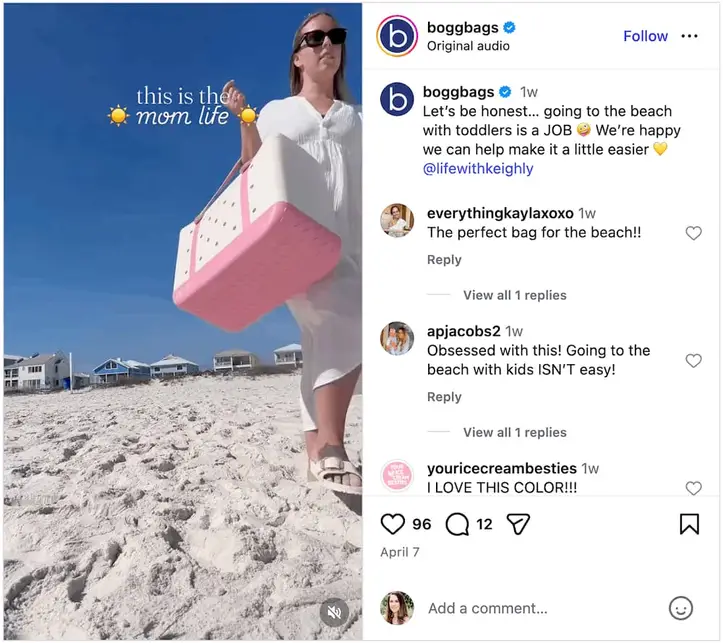
Bogg Bags partners with various lifestyle influencers to showcase different use cases for their bags. From a skating bag to a beach bag to a picnic in the park bag, Bogg Bags makes sure every potential use case (as well as its smaller, complementary products) is highlighted through engaging influencer videos.
Brick
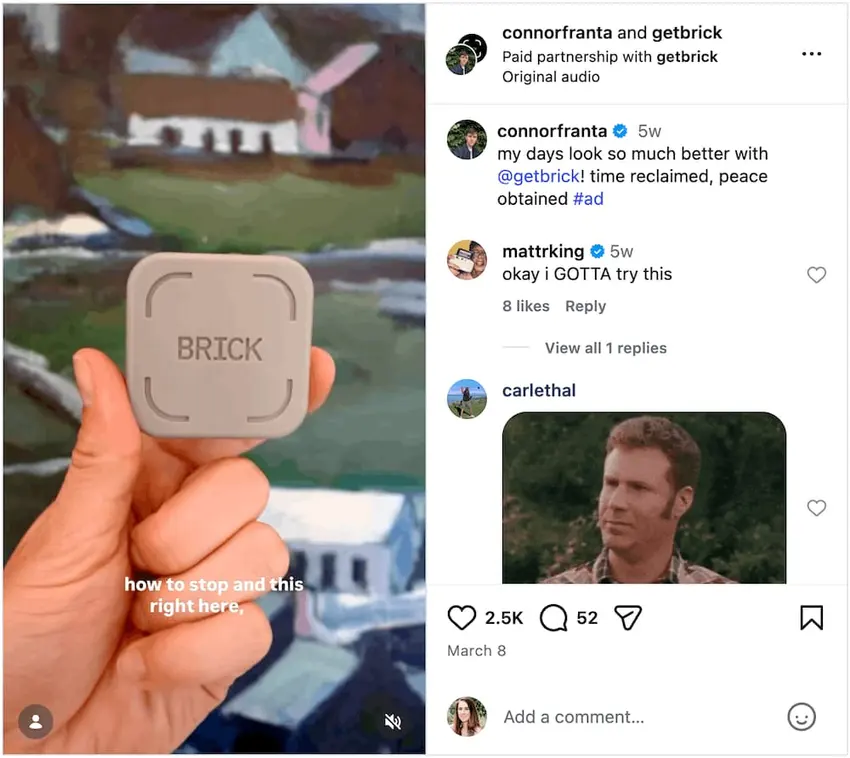
Brick uses influencers to help promote its screentime-blocking device. The brand then runs these influencer videos as ads, helping the content to feel more authentic in the feed rather than promotional.
Deel
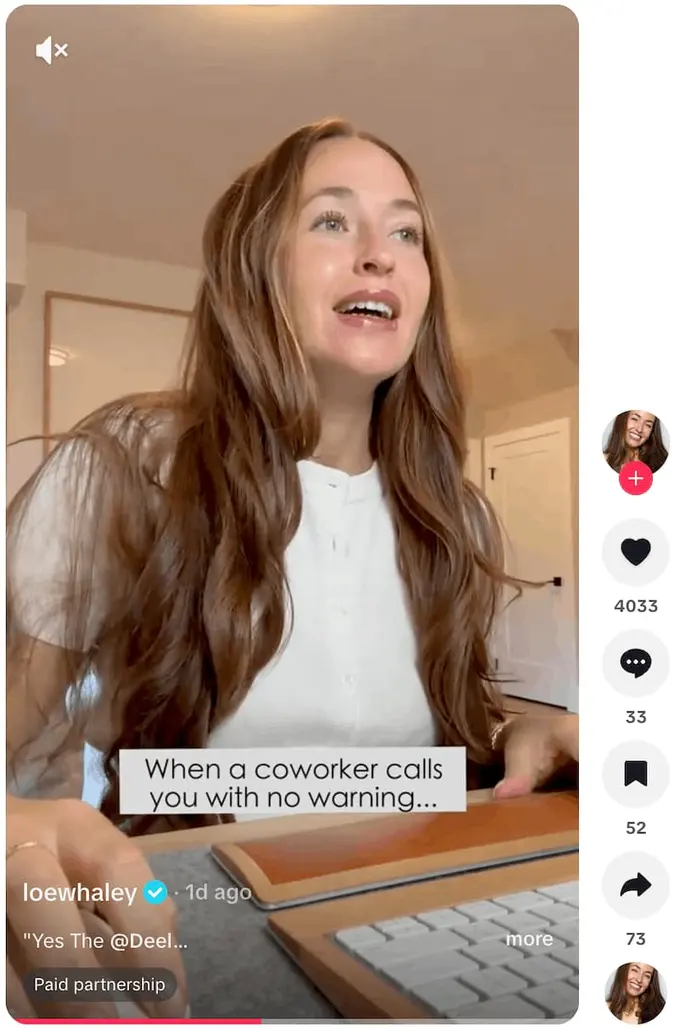
Deel is smart about choosing its influencer partners. Loe Whaley is well known for her skits about corporate life, and work management platform Deel did a great job working with her for a paid promotion.
Cherrypick
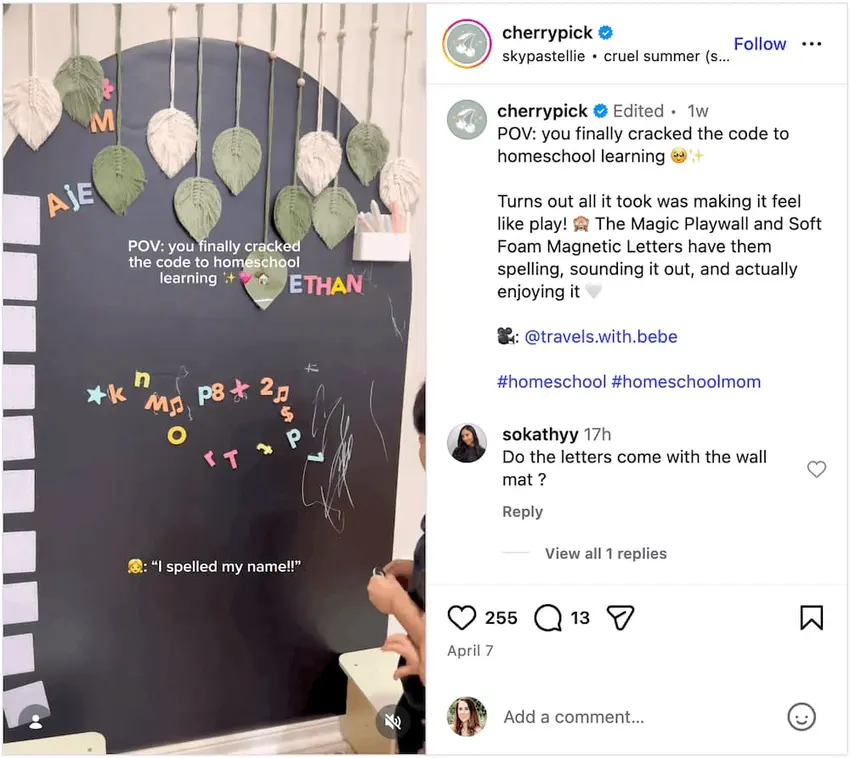
Cherrypick is a brand that sells toys and activities for young kids, so partnering with parents and homeschoolers makes perfect sense for reaching its intended audience. This is a great example of how the brand can then share influencer-made content on its own feed to engage its own audience.
Vista Social
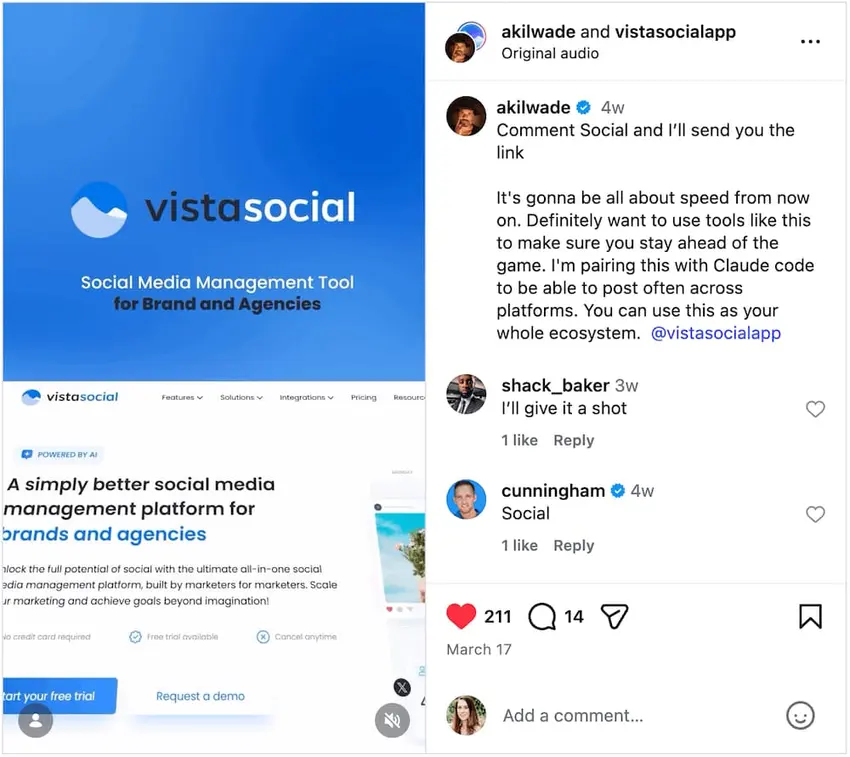
And of course we’ve got to share one of our own influencer partner videos. This video highlights our tool to a tech-adjacent audience and is a great example of how B2B brands and software tools can also take advantage of influencer marketing.
Influencer marketing best practices
Effective influencer marketing is less about how much you spend and more about how deliberately you manage the relationship between brand, creator, and audience. As a marketing tactic, it compounds when you do the fundamentals well and consistently, and most influencer marketing mistakes come down to skipping one of the same handful of steps.
These practices show up across categories, platform types, and creator tiers in campaigns that actually deliver.
Fit outperforms follower count
Finding the right influencer means finding someone whose target audience already overlaps with your ideal customer and whose content aligns with your brand values in a way that feels natural rather than forced.
A creator whose audience already has the problem your product solves will outperform someone with five times the following who covers unrelated territory, and this principle holds across every tier. Audience alignment is the single variable that moves conversion numbers most reliably.
Brief well, then trust the creator to execute
An effective influencer marketing strategy brief gives creators the key message, required disclosures, the CTA, and any hard restrictions, then leaves genuine creative room for them to produce influencer content that feels native to their channel.
Before you brief, it’s worth checking whether they’ve worked with your competitors, since that’s both a conflict to flag and a signal of their category experience. Authentic enthusiasm for a product is the asset the partnership is built on, and a brief that over-scripts the delivery undermines the whole thing.
Long-term relationships outperform one-off campaigns
Working with influencers on an ongoing basis rather than as a series of one-off transactions is one of the most consistently underused advantages in influencer marketing.
A creator who has mentioned your brand repeatedly over months with genuine enthusiasm becomes an advocate, and their audience registers the difference in ways that compound into real brand association over time.
Strong influencer relationships also tend to produce progressively better content as the creator’s familiarity with the product deepens, making them more cost-effective per impression than constant rotation.
Track everything with proper attribution from day one
Unique discount codes and UTM-tagged links per creator are the baseline attribution setup for any influencer campaign worth measuring properly. Without them, you can report total campaign performance but not individual creator contribution, which means you can’t make intelligent decisions about where to reinvest or where to renegotiate.
Every creator who outperforms should be clearly visible in your data, and every one who underdelivered should be equally obvious, so use discount codes that are unique per creator and check them consistently.
Build a content review step into every campaign
Creators should submit drafts before publishing, and the brand team should review for factual accuracy, required disclosures, and anything that could create a reputational problem once it’s live.
A 24-hour review window is the standard expectation in most creator agreements, and it’s worth including explicitly in every brief rather than assuming it’s understood. This step protects both parties and catches the kind of small errors that are far easier to fix before publishing than after.
FTC disclosures are mandatory, not optional
Paid partnerships in the US require clear, prominent disclosure under FTC guidelines, with the standard being #ad or #sponsored placed at the start of a caption, or the native “Paid partnership” label where the platform provides it.
Disclosures that are buried, ambiguous, or absent create legal exposure for both the creator and the brand, and the FTC has been consistent in enforcing this standard. Build the requirement into every brief as a non-negotiable, and confirm it’s visible during content review.
Repurpose creator content into your broader marketing mix
High-performing influencer content frequently outperforms brand-produced assets in paid placements because it carries the authentic feel that audiences are more receptive to in a feed environment.
Securing usage rights as part of your creator agreements gives you the ability to repurpose the best posts into paid social, email, and your own organic calendar without negotiating separately after the campaign ends.
Using an all-in-one social media management tool like Vista Social means you can schedule repurposed influencer posts across social media platforms from the same dashboard where you’re already running your organic content, and the social media amplification guide covers how to extend that reach systematically.
Create your influencer marketing strategy
Effective influencer marketing is less about a single brilliant campaign and more about building a system that runs consistently, whether you’re working with five micro-influencers on a niche product launch or running a B2B influencer marketing program through thought leaders in your industry. The infrastructure is what makes it compound: clear objectives, the right influencer for each goal, proper tracking, and ongoing relationships that get stronger over time.
Having the right tools in place makes the execution side dramatically easier. Vista Social functions as a practical influencer marketing platform and all-in-one social media marketing tool that handles scheduling, UTM tracking, and performance reporting across all your accounts from one place. Head to Vista Social’s publishing suite and start building the infrastructure your next influencer marketing campaign actually deserves.
Influencer marketing FAQs
What does influencer marketing do?
Influencer marketing drives brand awareness, purchase consideration, conversions, content generation, and audience growth by tapping into the trust that creators have built with specific audiences over time. As one of the most versatile marketing strategies available to social teams, it can promote products or services at almost any stage of the funnel depending on which influencer tier you work with and how you structure the campaign. The outcome any given campaign delivers depends on how clearly the brand defined its objective beforehand and how well the creator’s audience aligned with the target customer.
What do influencers do?
Social media influencers create content on platforms like TikTok, Instagram, YouTube, and podcasts that builds and sustains an engaged following around a specific niche or personality. The depth of their relationships with their followers is what makes influencer posts valuable to brands: a recommendation from a creator their audience has followed for years carries far more weight than a conventional advertisement from a brand the same audience has never interacted with. Influencers earn through brand partnerships, sponsored content, affiliate commissions, and their own products and merchandise.
What are the three R’s of influencer marketing?
The three R’s are Reach, Relevance, and Resonance. Reach describes the size of the creator’s following, Relevance measures how closely their content aligns with the brand’s target audience, and Resonance captures how deeply the content engages that following, reflected in comments, shares, and saves rather than passive likes.
Most brands over-weight reach and under-invest in the engagement rate and relevance side of influencer marketing evaluation, which is one of the more consistent reasons campaigns underdeliver against their potential.
What is a social media influencer?
A social media influencer is someone who has built an engaged following on one or more popular social media networks by consistently producing content around a specific subject, niche, or personality. Social media influencers range from nano-creators with a few thousand highly engaged followers to mega-influencers with tens of millions, and their influence comes from trust and community rather than formal credentials or traditional celebrity status. The most effective partner for any given influencer marketing campaign is the one whose audience overlaps most closely with the brand’s target customer, regardless of where they sit on the size spectrum.
Try Vista Social for free
A social media management platform that actually helps you grow with easy-to-use content planning, scheduling, engagement and analytics tools.
Get Started NowAbout the Author

Content Writer
Orion loves to write content that refuses to be boring. As part of Vista Social, he helps brands, creators, and agencies stop doom scrolling and start winning with social media. When he's not in front of a keyboard, he's watching films in IMAX with his wife, dissecting football tactics (the European kind), and getting lost in a good book.
Loading related tools...

The most complete social media management platform for teams who demand more.






Tools
PublishingAnalyticsEngagementIntegrations
FacebookInstagramLinkedInRedditSnapchatThreadsTikTokX (Twitter)YouTubeMCPVista Page (link-in-bio)All IntegrationsCopyright © 2026 Vista Social LLC. All Rights Reserved.