


Published on June 19, 2026
12 min to read
How to Use Social Media Trends to Get Seen

Summarize with AI

Table of contents
Summarize with AI

ChatGPT

Claude

Perplexity
Share

Vista Social

X (Twitter)


In September 2023, a blurry photo from an NFL game set the internet off. Taylor Swift was spotted in a suite with a plate of chicken tenders and two dips, one of them a pale sauce a fan online called “seemingly ranch.” The phrase took off in hours and became a social media trend. Brands everywhere scrambled to attach themselves to it.
Heinz moved fastest. Within about 48 hours, its team had mocked up a limited-edition bottle of “Ketchup and Seemingly Ranch,” winking at Swift’s “Taylor’s Version” re-recordings, and put it in front of the exact crowd already talking about it. No new product line or months of planning, just one timely idea aimed at a wave that was already moving.
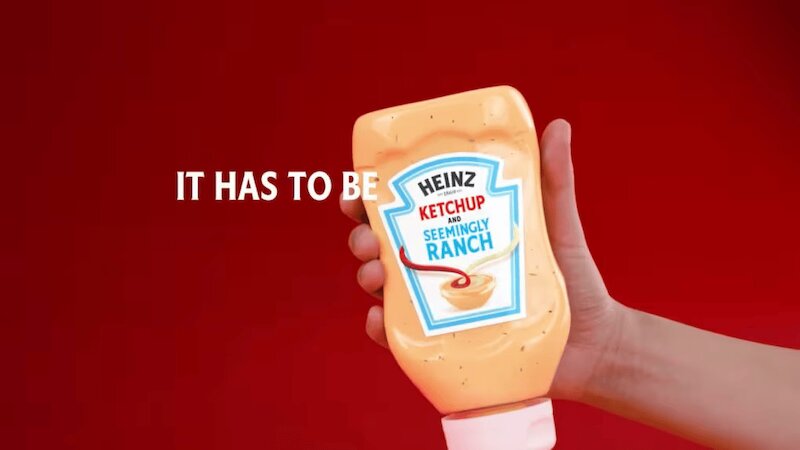
It worked far beyond a normal post. According to the campaign’s agency Rethink, the moment drove 6.1 billion earned impressions, the most in Heinz’s history, and an estimated $160 million in earned media. That is the power of social media trends done right.
Here is what that moment proves, and it should change how you think about reach. The post won because someone was timely, not because someone was a genius.
Most social managers watch the content they were proud of disappear and assume they are not creative enough to go viral. The more hopeful story is that the brands getting outsized reach are usually more timely than the rest, and timing is a skill you can learn.
By the end of this guide you will know how to use social media trends to get real reach, which trends to skip, and how to go from spotting one to a published post, image included, in minutes.
“I know many people who get 2,000-3,000 views on posts and generate lots of leads, versus people who get 50,000 views and get zero.”
— Devin Reed, founder of The Reeder
Table of contents
Why trends are the cheapest reach in marketing
A trend is attention that already exists. You are not trying to manufacture interest from nothing, you are showing up relevant while everyone is already looking in the same direction.
It works because the algorithms are built to reward it. Timely, relevant content gets amplified, which is how a small account can suddenly punch far above its follower count on the back of one well-timed post.
Showing up in the moment signals something a scheduled-six-weeks-ago feed never can: that there is a real, awake human behind the account. That is the opposite of the brand everyone scrolls straight past.
There is a newer reason too. AI search tools like ChatGPT, Perplexity, and Google’s AI Overviews surface fresh, relevant takes fast, so being early and useful in a moment can earn a kind of visibility the old metrics never measured.
What does it mean to use a trend
Using a social media trend means adding your brand’s relevant, timely take to a conversation that’s already happening, so you ride the attention it is generating instead of building attention from scratch.
Two words get thrown around for this, and they are worth knowing because people search them. Newsjacking is reacting fast to breaking news, where the window is often measured in hours.
Trendjacking is joining a cultural moment, a meme, or a trending sound, where the window stretches across days or weeks. Brands can turn these moments into branded content using a meme maker to create and publish a relevant response quickly. The mechanics differ, but the principle behind both is the same: relevance plus timing.
It helps to picture where these moments come from. Some are scheduled, like an awards show or a product launch everyone expects, and you can prepare an angle days ahead.
Others arrive with no warning, like a stadium going dark or a meme that catches fire overnight, and those reward a team that can move without a long approval chain. Knowing which kind you are looking at tells you how much time you actually have to work with.
The catch: the window is tiny and the risk is real
If trends are such cheap reach, why doesn’t everyone win with them? Because catching one well is hard, and the difficulty hides in four places.
- You find out too late: By the time a trend reaches your radar, it often peaked yesterday, and the window to add something fresh has closed.
- Monitoring everything is impossible: Trends break across X, YouTube, Google Search, and the open news web, and a spike on one platform alone is usually noise, not a real wave.
- The production scramble: Even when you catch one in time, turning it into a post is a fire drill of briefing a designer, writing a caption, finding an image, and chasing approval, and the moment is gone before you hit publish.
- The cringe risk: Force a trend that does not fit your brand and you dent your credibility, and audiences can usually tell when a brand is reaching. That fear keeps a lot of cautious teams on the sidelines.
Add those up and a missed trend can come at a cost. The reach you would have earned for free goes to a faster competitor, the hours your team spent scrambling produce nothing, and the near-misses chip away at morale until people stop raising ideas at all. A trend you spot two days late is worse than one you never saw, because you paid the cost of noticing without ever getting the upside.
And the stakes keep climbing, because this is now where attention lives. DataReportal’s Digital 2025 report finds that staying up to date with trending topics is now one of the main reasons younger users open social platforms at all. Ahead of older habits like reading the news.
When trends are the reason your audience is scrolling, being absent from the ones that fit you means you’re deliberately giving that space to your competition.
So the upside is real and the window is tiny. The brands that win aren’t the most creative; they’re the ones who spot a validated, relevant trend and act before it passes.
That is a speed-and-judgment problem, and speed-and-judgment problems are what the right system solves.
How to spot the right trends and skip the wrong ones
The discipline is what separates alive and relevant from embarrassing. Before you jump on anything, run it through four quick tests, and if a trend fails one, let it go.
These tests are not there to slow you down, they are there to protect the times you do move fast. A team that trusts its filter can commit in minutes without second-guessing, because the judgment work is already baked into the routine.
- The relevance test
Is there a real, non-tortured link between this moment and your brand? Lidl had a history with the Gallagher brothers before it touched the Oasis reunion, and that fit is why the move landed. - The speed test
Can you publish while the moment is still peaking? If your approval chain means you will arrive two days late, the honest answer is to skip it. - The brand-safety test
Is this a moment you want your name attached to? Some trends look fun and turn out to be traps, so check what you are associating with. - The value test
Are you adding something, a take, some humor, useful data, or are you just chasing clout? If you cannot name what you are adding, you have your answer.
Here’s how to know it’s working
The trends you jump on feel obvious in hindsight, like your brand had a reason to be there, and the ones you skip never make you wince later.
There is one more trap worth naming, and it catches careful teams more than reckless ones. Overthinking a fit can cost you the window just as surely as a bad fit can cost you your credibility, so set a short deadline for the decision and hold yourself to it.
If a trend clearly passes your four tests, the right move is to commit and publish, not to keep polishing while the moment cools. Speed is part of the relevance, and a good-enough post inside the window beats a perfect one that lands a day late.
Case study: when a brand caught the wave
In the summer of 2025, the Oasis reunion was the single biggest cultural moment in the UK, and Lidl did not have official sponsorship rights to any of it. So it made its own lane.
The supermarket launched a tongue-in-cheek fashion brand called Lidl by Lidl, a play on the Oasis song Little by Little, fronted by a thirty pound anorak with drink-cooling pockets and a bottle-opener zipper. It unveiled the jacket on a giant mural outside Manchester City’s stadium.
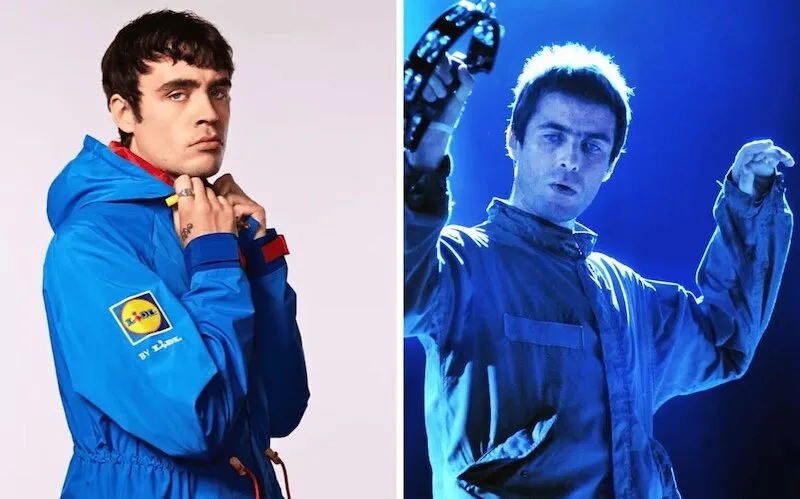
The numbers backed it up. According to The Drum, the campaign earned around 1.1 billion in reach across 279 publications, the jacket sold out in two minutes, and roughly 195,000 people tried to buy one.
It pulled more share of voice than Lidl’s biggest competitors combined, with all profits going to charity. The lesson is not do a stunt.
The stunt worked because the fit was real and the move was fast and confident, the same two ingredients behind Heinz’s seemingly ranch moment. Lidl did with a campaign what Heinz did with a single bottle.
Relevance plus speed equals reach, whether you are a global retailer or a one-person team, because the principle does not care about your budget.
Notice what Lidl did not do. It did not wait for a perfect campaign or a sign-off from six departments, and it did not chase the trend with a generic post that could have come from any brand.
It found the one angle only Lidl could own, then moved while the moment was loud. That is the part a smaller team can copy without a stadium mural or a charity tie-in: pick the angle that is unmistakably yours, and ship it before the wave breaks.
How to find trends worth jumping on
The manual reality is rough. To catch trends early you are supposed to watch X, scan YouTube, refresh Google Trends, and keep an eye on the news. All day, across tabs, while doing the rest of your job.
Even then, a spike on one platform might be a real wave or might be nothing. You often cannot tell until it is too late to matter. The better way is to let validated trends come to you instead of hunting them across five tabs.
This is where social listening and trend tracking earn their place. Inside Vista Social’s listening tool, you set up a topic to track, then open its Activity tab to see the Themes, News, and Mentions building around it. The Themes view pulls in trending themes from sources like Google Trends, and each theme comes with a search-interest score out of 100 so you can tell a real rising wave from background noise.
Each theme card shows its score, how many times it has matched, when it was last seen, and a small trend line, with tags like “Rising” so a climbing wave stands out. Click a card and you can check it in Google Trends or jump straight to creating a post from it. You catch the window without living inside the dashboard.
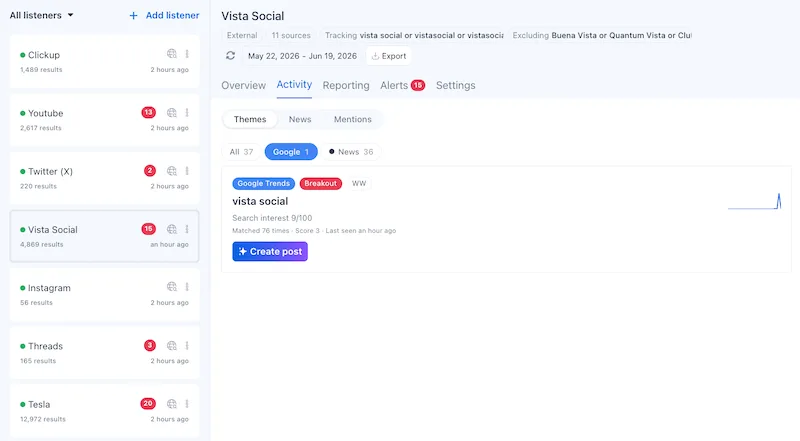
The score matters more than a gut feeling about whether something is taking off. A theme that barely registers can fizzle by lunchtime, while one that is scoring high and tagged “Rising” is a wave with real momentum behind it, which is exactly the kind worth moving on fast.
You can also just ask. Ask Vista lets you pose a plain question like “What’s trending in beauty in the UK right now?” and get a useful answer back, which turns discovery into a conversation instead of a chore.
From trend to published post in minutes
This is the part that usually kills good ideas, and it is the part Vista Social is built to collapse. Once you have a validated trend card in front of you, the scramble disappears.
Every trend card has a Create post button. You pick an angle, with options like Newsjack it, Educational, Hot take, Promotional, or Ask the audience, and choose a tone. Then toggle on a matching AI-generated image and the source link if you want them.
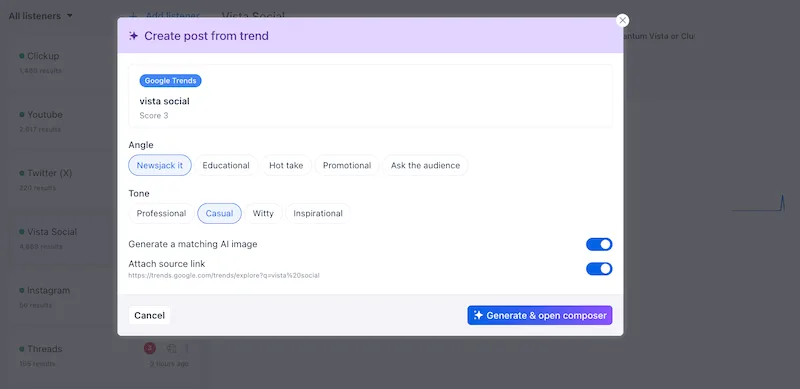
Vista writes a brand-voiced caption grounded in that specific trend and opens the composer fully prefilled. From there you pick your networks, schedule for an optimal time, and publish.
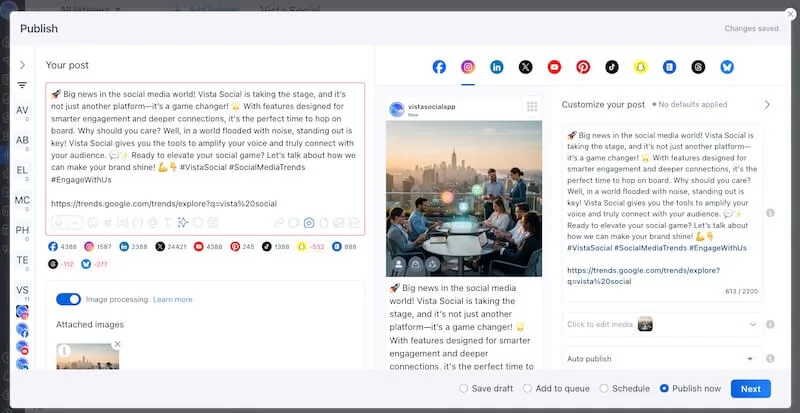
Discovery, the writing, the image, and the scheduling collapse into a few minutes. Fast enough to beat the window and on-brand enough that you do not have to worry about looking try-hard. The fire drill becomes a few clicks.
Making trends a repeatable part of your content plan
One well-timed post is luck. A habit of well-timed posts is a system, and the difference is whether you set it up on purpose.
Turn trend-riding into a standing part of your plan rather than a thing you scramble at.
- Monitor continuously: track your brand, your competitors, and your whole category on an ongoing basis. The relevant moments surface without you hunting for them.
- Keep a reactive lane: leave space in your social media calendar for fast, in-the-moment posts. A good trend does not have to fight your scheduled content for room.
- Act on alerts, not anxiety: let real-time alerts tell you when something is worth a look. You can stay off the dashboard until there is a reason to open it.
- Measure what the waves drove: use your social media analytics to see which trend posts moved reach and engagement. You learn which waves are worth catching next time.
Run that loop and trend-riding stops being a stressful gamble and becomes a reliable source of reach, tied to your short-form video output and your best posting times.
A small habit helps the loop stick. After each trend post, jot one line on whether the fit felt right and what the reach looked like. A few weeks of those notes teach you which kinds of moments your audience actually rewards. Your judgment sharpens instead of resetting every time.
Conclusion
Come back to that blurry stadium photo for a second. Heinz did not win the moment because it outspent anyone or because someone in the room was a once-in-a-generation creative.
It won because it was paying attention and it moved fast on a wave everyone was already riding. You were never short on creativity, you were short on timing and a way to act before the moment passed.
With validated trends coming to you and a finished, on-brand post a few clicks away, catching the wave turns into a habit instead of a fire drill. Catch the next trend before it passes, with Vista Social
Try Vista Social for free
A social media management platform that actually helps you grow with easy-to-use content planning, scheduling, engagement and analytics tools.
Get Started NowAbout the Author

Content Writer
Orion loves to write content that refuses to be boring. As part of Vista Social, he helps brands, creators, and agencies stop doom scrolling and start winning with social media. When he's not in front of a keyboard, he's watching films in IMAX with his wife, dissecting football tactics (the European kind), and getting lost in a good book.