


2026 Social Media Holiday Calendar: A Strategic Guide for Brand SMMs
June 8, 2026
13 min read

Summarize with AI

Table of contents
Share

Vista Social

X (Twitter)


Pull up any 2026 social media holiday calendar and you’ll find hundreds of dates, sorted by platform and labeled with varying levels of urgency. They’re comprehensive, and they’re also all essentially the same document. A list annotated with moments you “shouldn’t miss,” with no guidance on how a brand social team is supposed to prioritize multiple dates against a finite production budget and an approval chain that needs three weeks’ notice for anything significant.
That gap matters more than it might look like. When every holiday feels equally represented on the calendar, the ones that could actually move business metrics for your brand end up getting the same level of planning as National Coffee Day.
This guide goes deeper than the dates. You’ll get the full 2026 social media holiday calendar organized by quarter, a tier system for deciding how much each moment warrants, lead time benchmarks based on typical enterprise production cycles, platform recommendations per season, and real campaign examples from brands that planned ahead and executed well.
Table of contents
The framework behind this calendar
Most social teams run on quarterly cycles. Budgets are set quarterly, agency retainers are scoped quarterly, and production resources are allocated in the same 13-week windows. Organizing your holiday calendar the same way your resourcing works means your prioritization decisions are easier to make and easier to defend in planning conversations.
There’s a natural audit rhythm that comes with it, too. At the end of each quarter, you can review what performed against what was planned and carry those findings directly into the next 90-day brief. A flat annual calendar doesn’t give you that stopping point, so you end up reviewing everything at once in December and hoping you remember why certain moments underdelivered.
The tier system is what makes the quarterly structure actually useful.
- Tier 1 campaigns: Full production, dedicated budget, paid amplification, cross-channel creative. Briefing typically starts 8-12 weeks out. Examples include Christmas, Valentine’s Day, Black Friday, and Mother’s Day.
- Tier 2 activations: A strong post or two, sometimes a UGC push or a creator collaboration. Creative can often be templated at the start of the quarter and refined closer to the date. Allow 4-6 weeks. Examples include Earth Day, International Women’s Day, and Labor Day.
- Tier 3 reactive moments: On-brand engagement with cultural conversations using pre-approved assets, handled in real-time without a full production run. Allow 2-3 weeks to pre-build the templates. Examples include World Emoji Day and National Pet Day.
The timeframes above and throughout the quarterly tables below are general benchmarks based on typical enterprise production cycles, not hard industry standards. Your team’s actual timelines will vary depending on creative complexity, the number of approval layers involved, and whether you’re working with an in-house team, an agency, or both.
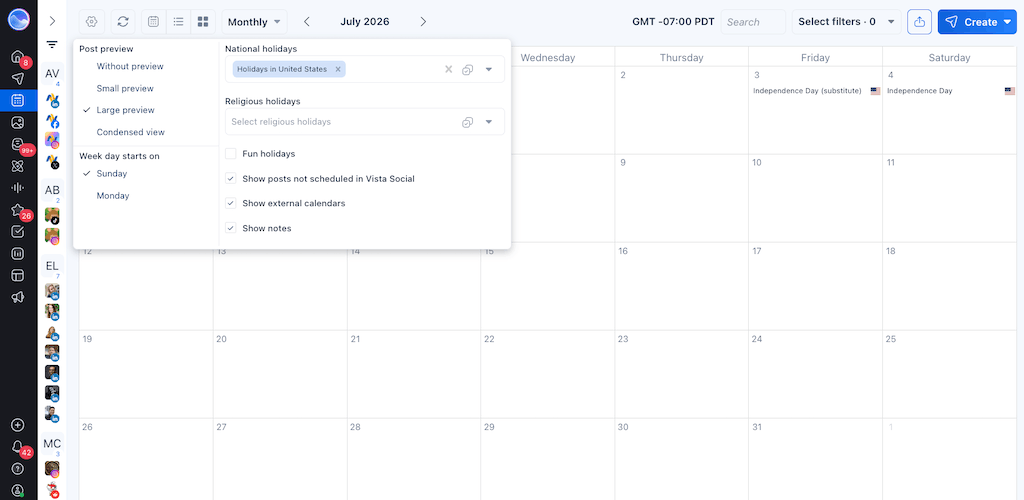
Vista Social’s content calendar includes a Social Events and Holidays layer that maps upcoming moments directly to your publishing queue, so nothing slips through during a busy production cycle.
What high-performing holiday campaigns actually look like
The dates tell you when to show up. These campaigns show you what’s worth building toward.
John Lewis “The Gifting Hour” (Christmas 2024)
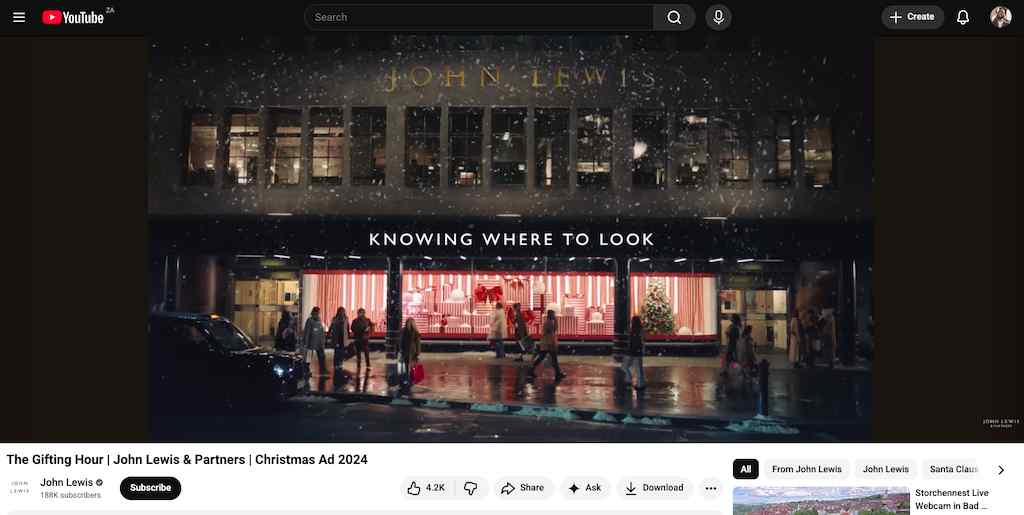
John Lewis’s “The Gifting Hour” is one of the more instructive examples of enterprise Tier 1 execution in recent years. The campaign architecture is as worth examining as the creative quality: John Lewis built a three-part trilogy across the full quarter, with “The Window” in late September, “Give Knowingly” in early November, and “The Gifting Hour” as the anchor film on November 14. By the time the flagship piece launched, audiences who’d followed the series were already invested before a single ad impression was served.
A post-launch OnePulse survey found that 62% of viewers considered the ad memorable and 46% said the campaign made the brand feel more relatable than in previous years. Beyond the film, John Lewis ran a TikTok competition inviting users to cover the Richard Ashcroft track featured in the ad, with the winning version airing on national TV on Christmas Day and being officially released through BMG, all proceeds going to the brand’s Building Happier Futures program for care-experienced young people.
Social media wasn’t a support channel bolted onto this campaign; it was structural. The practical takeaway: if your Q4 brief starts in late October, you’ve already missed the window for that kind of depth.
Spotify Wrapped (December 2025)
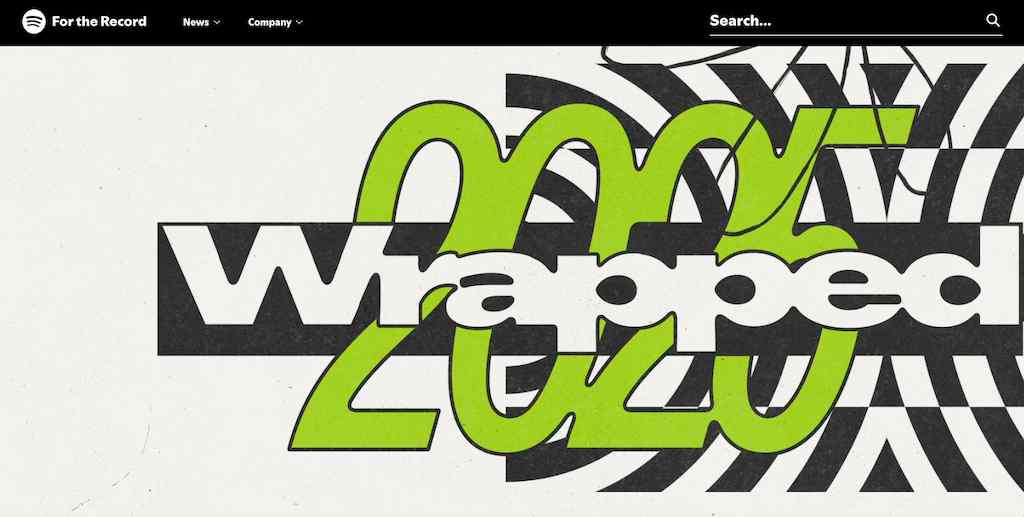
Spotify Wrapped 2025 reached 200 million engaged users within 24 hours of launch, a 19% year-over-year jump, alongside 500 million shares in the same window, a 41% increase on the prior year. For context, the 2024 edition had taken 62 hours to reach the 200 million mark and ultimately engaged 245 million total users. The 2025 iteration introduced a live multiplayer feature letting users compare their listening stats with friends directly inside the app, adding a social participation layer on top of the already share-optimized format.
What Wrapped demonstrates at scale is the strategic difference between owning a cultural moment and participating in one. Spotify didn’t react to the December conversation but rather created it by turning a year’s worth of behavioral data into something people actively wanted on their Stories. Brands in every category sit on similar behavioral data about their customers, and those building year-in-review experiences, loyalty recaps, or personalized milestone content are drawing from the same underlying model.
Starbucks #RedCupSeason (Q4, annual)
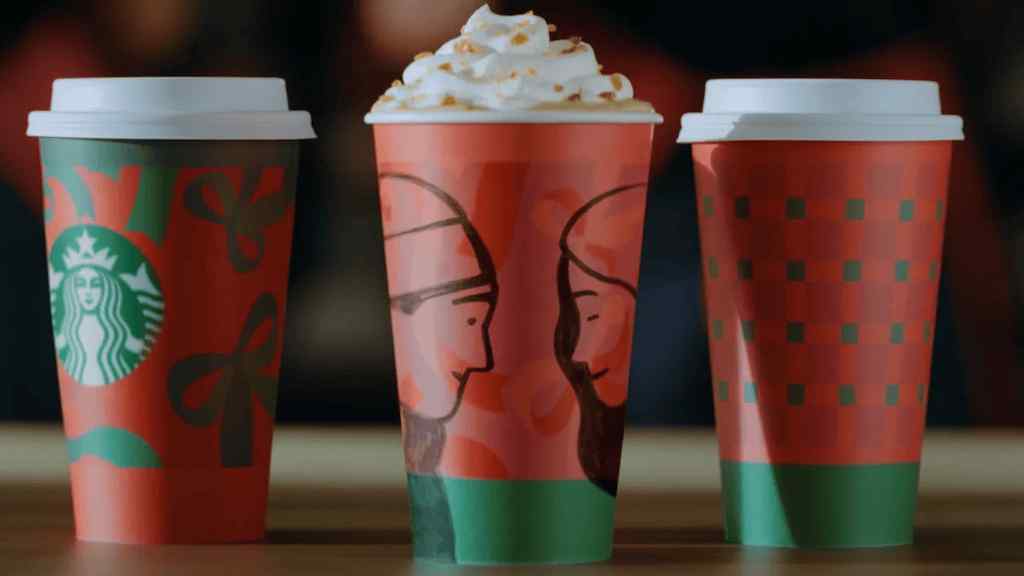
Starbucks has activated its Red Cup moment every Q4 for years, and the staying power of the format is worth examining. The 2024 campaign, built around a “Warmth and Togetherness” theme, invited customers to share photos of their holiday cups under #RedCupSeason and layered in a digital rewards component where participants earned loyalty points for sharing their cup moments online, creating a direct feedback loop between social activity and program value.
What makes the format durable has less to do with any single year’s execution and more to do with the anticipation built up around the annual cup reveal. Starbucks customers actively look forward to seeing the new design each autumn, which means the social conversation is pre-motivated well before the brand schedules its first post. That kind of built-in audience interest accumulates through years of activating the same moment with care, and the most valuable seasonal moments a brand can develop are often the ones its audience eventually comes to associate exclusively with that brand.
REI #OptOutside (Black Friday, 10th year in 2025)
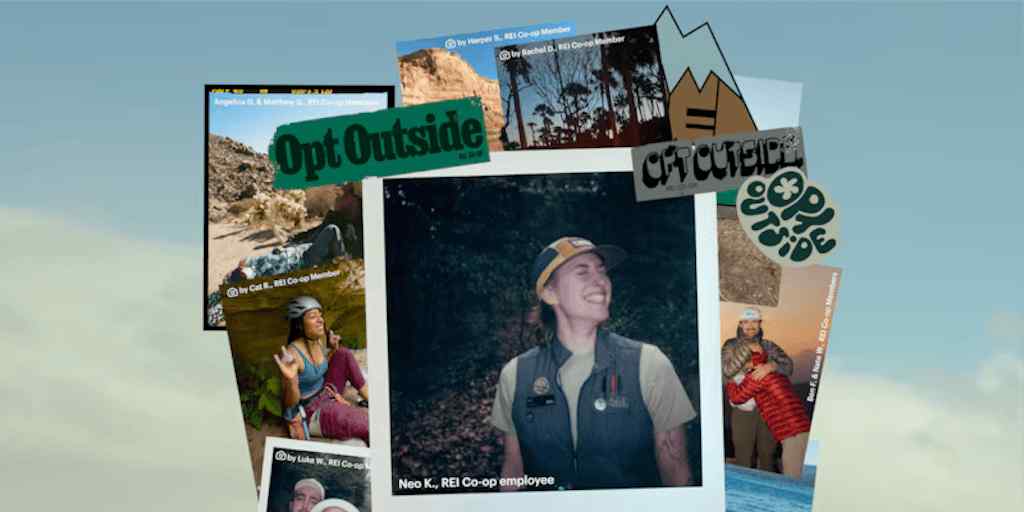
In 2025, for the tenth consecutive year, REI closed its 195-plus retail locations, headquarters, and distribution centers on Black Friday and paid its employees to spend the day outside. Beyond the store closures, REI paired the 2025 campaign with outdoor cleanup events in the weeks leading up to Black Friday, giving the community an active way to participate rather than simply observe. The campaign has run without a single promotional discount behind it since 2015 and has become one of the most recognizable annual brand moments in outdoor retail.
The lesson here has nothing to do with avoiding commercial moments when your brand has values. It’s that a viewpoint held publicly over many years eventually removes the need for creative novelty, because the stance itself becomes what the brand is known for during that moment.
Which platforms own each season
Matching your format and production approach to how each platform’s audience behaves at different points in the year matters as much as the content quality itself.
- Instagram: Best suited to high-production visual moments: Valentine’s Day, the holiday season, Pride Month, and Mother’s Day. Stories and Reels are the primary delivery surfaces, and UGC drives strong secondary reach for moments with a community or celebration angle.
- TikTok: Works well for participatory and trend-led moments: Halloween costumes, holiday challenges, Back to School, summer content. Native-feeling creative and creator collaborations tend to outperform polished ad formats here. The John Lewis TikTok competition is a useful model for activating an audience rather than broadcasting at one.
- LinkedIn: Most receptive to International Women’s Day, MLK Day, Veterans Day, Juneteenth, and any moment with a workplace or professional dimension. Values-led content tends to outperform product-first messaging during cultural moments on this platform.
- X/Twitter: Real-time commentary, Super Bowl second-screen activity, reactive holiday engagement, and April Fool’s campaigns all perform well here. The platform rewards speed and precision over production value, so if your brand can’t be first to a moment, it needs to be the sharpest voice in it.
- Facebook: Still carries strong reach among older consumer demographics for gift guides and community-oriented events, and it’s effective for paid amplification driving traffic to seasonal landing pages, especially across BFCM.
A solid social media analytics setup lets you carry real post-level performance data from each quarter’s campaigns directly into the next planning cycle rather than relying on instinct.
Plan your 2026 holiday calendar with Vista Social
A calendar’s only valuable if the execution behind it is tight. Vista Social puts upcoming seasonal moments directly inside your publishing queue, so planning and scheduling share the same workspace rather than living across separate docs, drives, and platform dashboards.
For brand teams managing multiple profiles, markets, or client accounts, Vista Social’s approval workflow tools keep sign-off from becoming the bottleneck it so often is during high-stakes campaign periods. Drafts reach the right reviewer, feedback’s tracked, and nothing goes live until the process is complete.
One thing that makes a practical difference for holiday content production is Vista Social’s AI image and video generation, available on every plan. When you’re building creative for Valentine’s Day or the Q4 holiday season, you can generate seasonal imagery directly inside the Composer or Ask Vista without switching to an external design tool, cutting out one of the most common context-switching costs in a busy production cycle.
Image generation works from a text prompt and returns results in 10-30 seconds. You can refine through natural language: “make this for an Instagram story,” “change the background to an outdoor winter scene,” or “add warm golden-hour lighting,” and the output adjusts right away. For video, there are three input routes: text to video, image to video (upload a product photo or event shot and the AI animates it), and library to video using assets already saved in Vista Social. Once you’re happy with the result, you can send it straight to a scheduled post without leaving the platform.

The image-to-video capability is particularly useful for seasonal campaigns where you have product shots or event photography but no video budget. Rather than sourcing generic stock footage, you can animate your actual assets and publish something that looks like your brand.
The hashtag generator helps validate seasonal hashtag choices before they’re locked into production, which matters since relevance and traction vary considerably by platform and audience for holiday-specific tags.
If your team’s currently running all of this across a spreadsheet, a shared drive, and multiple separate platform dashboards, centralizing on a single platform for scheduling, collaboration, and reporting is one of the few structural changes that reduces friction across the entire production cycle.
Make 2026 the year your calendar works ahead of you
The difference between brands that produce standout holiday content year after year and those that scramble through Q4 comes down to timing far more often than budget or creative talent. John Lewis built its Christmas series across a full quarter, REI’s Black Friday position is the product of a decade of holding the same public stance and Spotify turned behavioral data into the year’s most anticipated social tradition, by iterating on the format every year and keeping it useful to the people sharing it.
Your 2026/2027 planning window is open right now. The teams that’ll get the most from it are starting by categorizing each moment, working lead times backward from key dates, and deciding which moments their brand has a credible story to tell before committing production resources.
When you’re ready to pull everything into one place for scheduling, collaboration, and analytics, start your Vista Social free trial and see how much smoother the quarter runs when it’s all in the same workspace.
About the Author

Content Writer
Orion loves to write content that refuses to be boring. As part of Vista Social, he helps brands, creators, and agencies stop doom scrolling and start winning with social media. When he's not in front of a keyboard, he's watching films in IMAX with his wife, dissecting football tactics (the European kind), and getting lost in a good book.